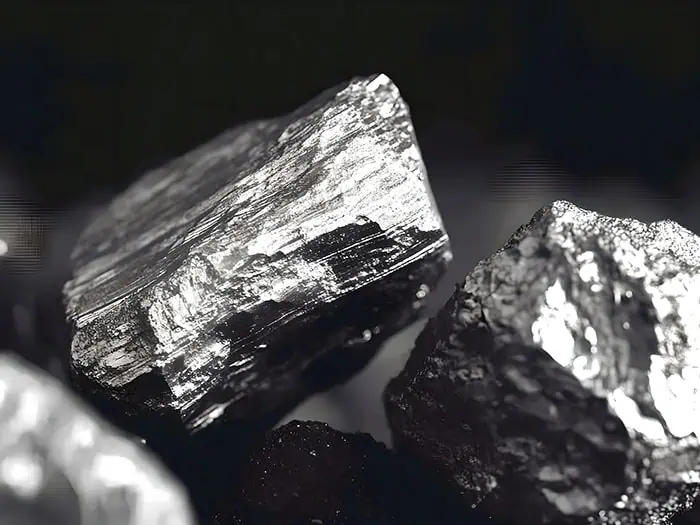
The U.S. Department of Energy (DOE) is awarding millions to boost U.S. power reliability and capacity, and is emphasizing coal power modernization and mineral recovery from waste streams. This funding repositions coal within the energy mix to counter the high cost of new natural gas plants and current storage limitations of renewables. The value of existing coal assets and capacity is surging as funding announcements revive ready-to-use coal plants and support new technologies and processes that will keep America’s lights shining as energy demand escalates.
Jon Yang, a senior geochemist at SCS Engineers, has been eagerly following the dollar trail and client opportunities. “Power providers and coal plants are in a great spot to develop new value streams while mitigating risks of coal-centric operations. This is a mega-win for everyone,” says Jon.
As utilities and coal plants pursue funding and explore new markets, Jon offers guidance to maximize progress, derisk their market entry, and avoid setbacks.
Quickly Identify the Economic Opportunity of Mineral Recovery
The DOE dedicated $355 million to expand domestic recovery and production of Critical Minerals (CM) and Rare Earth Elements (REE) from waste streams. This investment will help commercialize recovery technologies, meaning the 4.4 billion tons of coal waste (including 2 billion tons of coal ash) dispersed across the country could be worth $8.4 billion. Simultaneously, this opportunity for CM and REE recovery can also mitigate risks of coal waste handling and storage, which are currently significant liabilities for power providers and coal plants. But, how do you know whether ash equals cash?
“Rare earth elements are often misunderstood and misinterpreted—they can be difficult to quantify and interpret accurately,” Jon says. “Moreover, technologies for the extraction of REEs from these types of materials are still in their infancy and require careful vetting. SCS has the expertise to bridge these gaps in the form of expert analysis, quick-turn feasibility studies, and strategic relationships.”
To assess the economic opportunity of coal waste, SCS collects small-scale samples and works with specialized laboratories to analyze the composition, concentration, and extractability of valuable elements. With this data, utilities and coal plants can pinpoint their opportunity, attract investors, and green-light projects with limited early investment. Building on the feasibility study, SCS can conduct a full resource assessment for a comprehensive market analysis that considers extraction technology, production costs, and market potential.
“Our client experience in coal waste mineral and metal valuation is proven,” Jon says. “We excel as owner-advisors because we are experts in CM and REE geochemistry, techno-economic evaluations to determine feasibility, and business case development.”
Invest in Fundamental Coal Plant Processes to Better Support Innovation
The DOE earmarked $100 million to restore coal plants—including water and wastewater management, and environmental monitoring and controls—to enable them to run longer and enhance byproduct and mineral recovery. As utilities and coal plants pursue new value streams, they should also bolster critical foundational systems.
“Coal waste stream recovery requires precise systems and approaches to manage water use, wastewater management, and environmental standards. You won’t get far without them,” Jon says.
Extraction technologies, such as high-pressure acid leaching, require large amounts of water and produce difficult-to-treat wastewater containing dissolved metals and acids. By strengthening the critical systems that support the beneficial reuse of coal waste streams, utilities and coal plants maximize waste-stream value, increase extraction efficiency, reduce environmental liabilities, and meet environmental standards.
Start with a Strong Grant Application
Applicants seeking DOE funding must submit grant applications and, in some cases, work proposals. When dealing with technical requirements, applicants who partner with a specialized company are better able to address the complexities inherent to engineering and scientific grants. As a technical partner, SCS can manage the entire application process, allowing utility and coal plant teams to remain focused on operational priorities.
With millions of grant dollars up for grabs, now is the time to lock in a strong partner. Jon says there are three essential priorities to look for:
“We frequently succeed in securing federal grants because our technical specialization translates to specific, measurable, achievable projects that are aligned to government missions and priorities,” explains Jon. “With the right partner, utilities and coal plants will win grants and lead coal down new, sustainable paths.”

Related Mineral Recovery Resources:
Corporate Headquarters