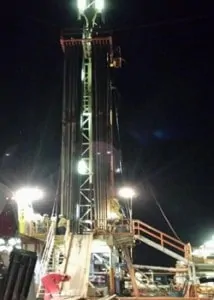
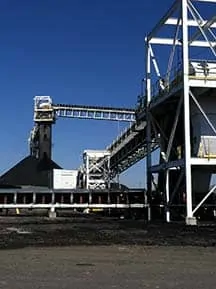
Deep well injection and carbon sequestration (carbon capture and underground storage, or CCUS) permanently isolates fluids and gases in deep geologic formations, ensuring they remain there and don’t affect usable resources or the environment. It encompasses geologic consulting, reservoir engineering, and deep drilling to plan, obtain permits, and execute projects that support environmental objectives. Our services include compliance monitoring, testing, reporting, and optimizing the geologic sequestration asset.
SCS Engineers has provided wastewater/fluid treatment, isolation, storage, and deep well disposal solutions for over 35 years. During this time, the treatment and disposal of liquid wastes have become increasingly challenging. This is due in part to regulations designed to protect surface and groundwater. Deep well injection is a safe and viable solution when properly planned and permitted. If deep well injection isn’t suitable for your region or business, we offer carbon casting as an alternative carbon removal and sequestration option.
Trends and the 2026 Outlook for Carbon Sequestration Projects
See Parts II and III in the series below.
A deep well injection is the safe storage or disposal of liquids deep underground. It involves drilling beneath drinking-water aquifers (1,500 to >3,000 feet deep) to trap liquid waste beneath multiple impermeable rock layers. It requires favorable geology, so it is not suitable for all locations.
However, where the geology permits, deep well injection has considerable advantages, such as:
Quickly removes large volumes of liquid – eliminates NPDES permits
Provides a long-term solution that can operate over decades
Uses proven methods and technologies from the oil and gas industry that meet modern regulatory criteria
Provides a financially competitive solution with low ongoing operation and maintenance costs
Does not impact drinking water sources, thereby avoiding regulatory issues that affect other alternatives
SCS Engineers has extensive experience with a broad range of successful deep well injection projects, including clients working in these business sectors and industries:
Injection-control well drilling.
Chemical industry
Food processing
Landfills/waste management
Municipalities
Mining industry
Oil and gas operations
Power plants and utilities
Many communities use industrial waste disposal wells for stormwater, large-capacity septic systems, and agricultural drainage. They are regulated and are not allowed to endanger underground drinking water sources. SCS’s UIC services encompass a wide array of underground injection well classifications, including those for carbon sequestration and geologic sequestration, which are strategic to achieving CO2 reduction goals in the U.S. The EPA classifies the wells for municipal and industrial use as follows:
Class I industrial and municipal waste disposal wells
Class II oil and gas-related injection wells
Class III solution mining wells
Class IV hazardous and radioactive waste injection wells
Class V wells for non-hazardous fluids
Class VI geologic sequestration wells
In Illinois, an underground longwall coal mine uses a regulated Class I underground injection well to sequestrate native brine groundwater.
SCS can provide a turnkey solution or assist at any stage of a deep well injection project, including:
Planning and Regulation: Our experienced geological engineering team can assess the viability of deep well injection and produce fully costed project plans. Having worked across all EPA regions, we have developed a thorough understanding of the complexities of the Underground Injection Control (UIC) program and its regional variations. Our professionals have also built good working relationships with many regulatory bodies.
Drilling and Operation: SCS staff have worked on liquid waste injection wells nationwide and supervised drilling of dozens of deep wells with horizontal and vertical completions. Whether the liquid waste requires pre-treatment or must be injected under pressure, we have the knowledge base built over decades to deliver projects safely, on time, and within budget.
Monitoring and Safety: SCS can monitor wells during injection and afterward for leakage or contamination. Our commitment to the safety of our clients, employees, and the wider public has earned us an excellent reputation with outside stakeholders and regulators.
Part II of the Carbon Sequestration Series – The Class VI Area of Review, Critical Pressure Update. – 17-minute video explores how critical pressure informs the definition and refinement of a carbon sequestration project’s AoR under the Class VI permitting framework.
Part III of the Carbon Sequestration Series – Class VI Project Interference. – 16-minute video explores how to avoid project interference which can occur when two or more Class VI carbon sequestration projects are close enough that their pressure fronts may affect each other’s operations or area of review.
You are about to leave the SCS Engineers’ website and be directed to an external third-party site, ICIMS. SCS is not responsible for the collection and use of information on the ICIMS site, which is governed by its own privacy practices, not this Notice. We encourage you to review their privacy notices for additional information. Do you want to continue?
To provide the best experiences, we use technologies like cookies to store and/or access device information. Consenting to these technologies will allow us to process data such as browsing behavior or unique IDs on this site. Not consenting or withdrawing consent, may adversely affect certain features and functions.
✕
We use cookies and similar technologies for the following purposes:
Cookie usage
We use cookies to ensure the basic functionalities of the website and to enhance your online experience.
You can choose for each category to opt-in/out whenever you want.
Functional
Always active
The technical storage or access is strictly necessary for the legitimate purpose of enabling the use of a specific service explicitly requested by the subscriber or user, or for the sole purpose of carrying out the transmission of a communication over an electronic communications network.
Statistics
The technical storage or access that is used for statistical and/or tracking purposes.The technical storage or access that is used exclusively for anonymous statistical purposes. Without a subpoena, voluntary compliance on the part of your Internet Service Provider, or additional records from a third party, information stored or retrieved for this purpose alone cannot usually be used to identify you.
Marketing
The technical storage or access is required to create user profiles to send advertising, or to track the user on a website or across several websites for similar marketing purposes.