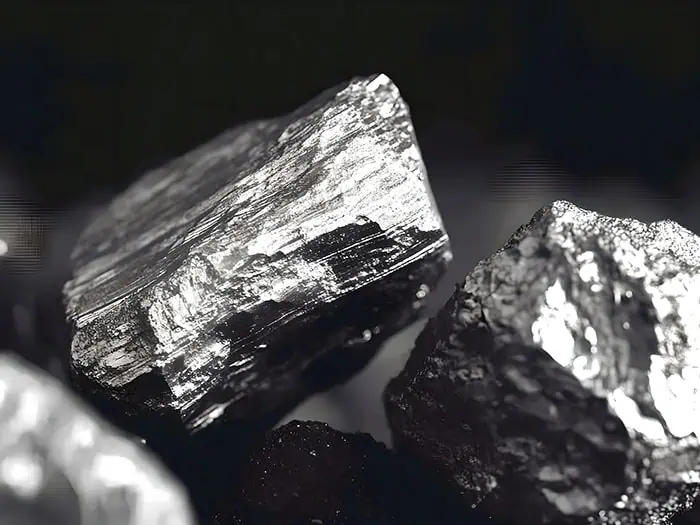
The U.S. Department of Energy (DOE) is awarding millions to boost U.S. power reliability and capacity, and is emphasizing coal power modernization and mineral recovery from waste streams. This funding repositions coal within the energy mix to counter the high cost of new natural gas plants and current storage limitations of renewables. The value of existing coal assets and capacity is surging as funding announcements revive ready-to-use coal plants and support new technologies and processes that will keep America’s lights shining as energy demand escalates.
Jon Yang, a senior geochemist at SCS Engineers, has been eagerly following the dollar trail and client opportunities. “Power providers and coal plants are in a great spot to develop new value streams while mitigating risks of coal-centric operations. This is a mega-win for everyone,” says Jon.
As utilities and coal plants pursue funding and explore new markets, Jon offers guidance to maximize progress, derisk their market entry, and avoid setbacks.
Quickly Identify the Economic Opportunity of Mineral Recovery
The DOE dedicated $355 million to expand domestic recovery and production of Critical Minerals (CM) and Rare Earth Elements (REE) from waste streams. This investment will help commercialize recovery technologies, meaning the 4.4 billion tons of coal waste (including 2 billion tons of coal ash) dispersed across the country could be worth $8.4 billion. Simultaneously, this opportunity for CM and REE recovery can also mitigate risks of coal waste handling and storage, which are currently significant liabilities for power providers and coal plants. But, how do you know whether ash equals cash?
“Rare earth elements are often misunderstood and misinterpreted—they can be difficult to quantify and interpret accurately,” Jon says. “Moreover, technologies for the extraction of REEs from these types of materials are still in their infancy and require careful vetting. SCS has the expertise to bridge these gaps in the form of expert analysis, quick-turn feasibility studies, and strategic relationships.”
To assess the economic opportunity of coal waste, SCS collects small-scale samples and works with specialized laboratories to analyze the composition, concentration, and extractability of valuable elements. With this data, utilities and coal plants can pinpoint their opportunity, attract investors, and green-light projects with limited early investment. Building on the feasibility study, SCS can conduct a full resource assessment for a comprehensive market analysis that considers extraction technology, production costs, and market potential.
“Our client experience in coal waste mineral and metal valuation is proven,” Jon says. “We excel as owner-advisors because we are experts in CM and REE geochemistry, techno-economic evaluations to determine feasibility, and business case development.”
Invest in Fundamental Coal Plant Processes to Better Support Innovation
The DOE earmarked $100 million to restore coal plants—including water and wastewater management, and environmental monitoring and controls—to enable them to run longer and enhance byproduct and mineral recovery. As utilities and coal plants pursue new value streams, they should also bolster critical foundational systems.
“Coal waste stream recovery requires precise systems and approaches to manage water use, wastewater management, and environmental standards. You won’t get far without them,” Jon says.
Extraction technologies, such as high-pressure acid leaching, require large amounts of water and produce difficult-to-treat wastewater containing dissolved metals and acids. By strengthening the critical systems that support the beneficial reuse of coal waste streams, utilities and coal plants maximize waste-stream value, increase extraction efficiency, reduce environmental liabilities, and meet environmental standards.
Start with a Strong Grant Application
Applicants seeking DOE funding must submit grant applications and, in some cases, work proposals. When dealing with technical requirements, applicants who partner with a specialized company are better able to address the complexities inherent to engineering and scientific grants. As a technical partner, SCS can manage the entire application process, allowing utility and coal plant teams to remain focused on operational priorities.
With millions of grant dollars up for grabs, now is the time to lock in a strong partner. Jon says there are three essential priorities to look for:
“We frequently succeed in securing federal grants because our technical specialization translates to specific, measurable, achievable projects that are aligned to government missions and priorities,” explains Jon. “With the right partner, utilities and coal plants will win grants and lead coal down new, sustainable paths.”
Related Mineral Recovery Resources:
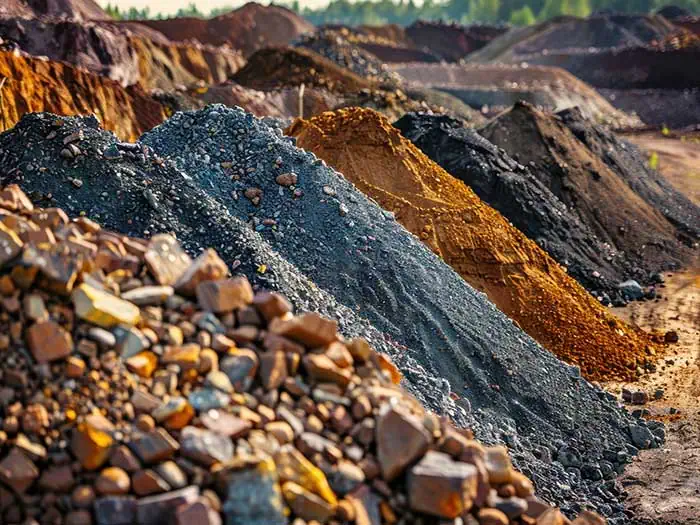
In the United States, increased production of renewable energy products, computer components, catalysts, and superconductors drives an increased need for Rare Earth Elements (REEs). In 2021, the United States government passed the Bipartisan Infrastructure Law (BIL), devoting millions of federal dollars to research and development of technologies to begin domestic production of REEs (SME, 2024).
SCS Engineers is involved in regional assessments of rare earth elements and critical minerals across the United States. Below we describe the process, science, and potential benefits of these studies that aim to help meet the increasing REE demands, provide coal mines with additional markets for their product, and transition coal into feedstocks for the REE market.
Exploration, Characterization, and Extraction for REE Potential
Under exploration are the characterization and extraction efforts within unconventional feedstocks like coal, coal refuse, coal fly ash, acid mine drainage (AMD), mine waste, oil and gas waters, and brines extracted for carbon sequestration. Waste streams related to mining in Pennsylvania also have proven potential for REE production.
Research relating to REE characterization and acquisition within Pennsylvania has identified sources of REEs within coal refuse and AMD. There are approximately 2 billion cubic yards of coal refuse within Pennsylvania (Verba, 2019) and AMD across the commonwealth. Universities and research groups are researching coal refuse and AMD solids in Pennsylvania to determine the viability of REE production.
Appalachian Basin Contains REEs and Treatment Potential
Research finds that host formations within the Appalachian Basin contain clays with REE. In 2019, electron microscopy, image processing, and complementary synchrotron methodologies were used to characterize the Pittsburgh formation. These methods utilized image processing to determine the distribution of the REEs and identified the individual elements, including yttrium, between 1.5-2.4% of the total volume. This method allows for pinpointing coal seams and waste coal refuse containing these clays for REE production once advanced extraction technologies are available (Verba, 2019).
While AMD is a pollutant to waters across Pennsylvania, its acidity can leach REE from host minerals in the surrounding rock. Treatment of AMD produces AMD solid waste in which REEs are present and extractable. Similar to the characterization of the Pittsburgh formation, a study was conducted on AMD solids from three AMD treatment systems using x-ray diffraction, sequential extraction, and synchrotron methodology to characterize REE materials and determine extraction potential. The study concluded that, during the treatment process for AMD, initial REE concentrations in AMD are reduced by 90% and sequestered into solid phases of iron, aluminum, or manganese, of which the manganese (Mn) and aluminum (Al) contain gadolinium and dysprosium. Mobilizing these REEs in AMD solids via sequential extractions with mild acidic and reducing treatments makes AMD solids a potential production source of REEs (Hedin, 2024).
REE Studies Across the United States
SCS Engineers is conducting a regional assessment of rare earth elements and critical minerals in parts of Iowa, Kansas, Missouri, Nebraska, Oklahoma, and the Osage Nation as part of a multi-state effort led by the Kansas Geological Survey. This survey includes a correlation of coal resources in the Cherokee-Forest City Basin via drill cores and coal mine waste to assess this region’s REE and critical mineral potential. This study and the studies in Pennsylvania aim to help meet the increasing REE demands, provide coal mines with additional markets for their product, and transition coal into feedstocks for the REE market.
References
Hedin, Benjamin C.; Stuckman, Mengling Y.; Cravotta III, Charles A.; Lopano, Christina L.; Capo, Rosemary C. (2024). Determination and Prediction of Micro Scale Rare Earth Element Geochemical Associations in Mine Drainage Treatment Wastes.
Society for Mining, Metallurgy, and Exploration (2024). Why the U.S. Needs a National Materials and Minerals Council.
Verba. Circe; Yang, Jonathan; Montross, Scott; Sanville, Henri; Lopano, Christina; and Stuckman, Mengling (2019). Microanalysis of Rare Earth Elements in Coal Prep Fines.
About the Author:
 Aaron Pysher, PG, has years of technical and consulting experience as a geologist serving commercial real estate, industrial, manufacturing, land acquisition firms, and energy utilities. He specializes in e geophysical surveys using gravimetry, seismic reflection, electrical resistivity imaging, and magnetics. His geophysical projects include karst feature delineation, bedrock depth and rippability, ArcMap/GIS for georeferencing, conducting road network evaluations, executing suitability analyses, and digitizing features from high-resolution aerial photography.
Related Information:
SCS Joins Search For Domestic Supply of Critical Minerals SCS Engineers is working to complete a regional assessment of rare earth elements and other critical mineral (CM) opportunities within parts of Iowa, Kansas, Missouri, Nebraska, Oklahoma, and…
Solving the Saltation Problem What is Saltation? Wind, sand, and dust storms will become more prevalent as the dry season approaches. One phenomenon that occurs during dust storms is saltation…
SCSers Visit Lithium Valley Early one Saturday morning, SCSers Chuck Houser, Luke Montague, Allison O’Neal, and me, Jen Morton, headed out to Brawley in the Imperial Valley region of Southern California…
A variety of CCB/CCP related topics guaranteed to enhance your knowledge. Click the title to read or share these papers.

Jeff Marshall – Mitigating Hydrogen Sulfide Issues at Coal Combustion Residuals and Municipal Solid Waste Co-disposal Sites – Learn about the biological, chemical and physical conditions necessary for FGD decomposition and hydrogen sulfide generation. Marshall will explore technologies that remove and treat hydrogen sulfide from landfill gas and present recommendations for reducing the potential for FGD decomposition at co-disposal facilities.
 Eric Nelson and Lindsay Motl – Working Through Location Restrictions to Expand the Ottumwa Midland Landfill – The final Coal Combustion Residual (CCR) rule introduces new challenges for companies developing new landfills or expanding existing sites. Join us to learn how Alliant Energy overcame these challenges and expanded the Ottumwa Midland Landfill (OML) to accommodate increased byproduct disposal rates from new emission control projects.

 Steve Lamb and Floyd Cotter – Selecting the Right Closure Cap Option for Your Surface Impoundment or CCR Landfill – Alternative capping options have recently emerged in the industry, such as exposed geomembrane liners or synthetic turf/geomembrane liner systems. Some of these alternative capping options have many advantages over their traditional counterparts. These experts describe the advantages and disadvantages of alternative capping options.
Alliant Energy wanted to consolidate coal combustion residuals waste at its Ottumwa Midland Landfill in Ottumwa, Iowa, but the site was quickly running out of capacity. To create a sustainable, long-lasting landfill with the capacity to support its operations for the next 25 years, Alliant carefully assessed how to best use the available land at the site.
Learn how Alliant Energy worked with SCS Engineers achieving its vision and is now in a position to build on its success.
Client Profile – Alliant Energy
On Friday, Dec. 16, 2016, President Obama signed The Water Infrastructure Improvements for the Nation Act or the “WIIN Act.” Section 2301 of the WIIN Act allows states to establish permit programs to regulate the disposal of coal combustion residuals (CCR) units in lieu of the Environmental Protection Agency’s (EPA) CCR regulations and published at 40 CFR 257, Subpart D, also known as the federal CCR rule, that were effective as of October 19, 2015.
Under the federal CCR rule, enforcement has been through citizen suits brought under Section 7002 of the Resource Conservation and Recovery Act (RCRA). Following WIIN, for CCR disposal facilities operating under an approved permit program, citizen enforcement will be replaced by more traditional state and federal enforcement authorities. It will take time for states to apply for permit authority and to issue permits, and in the meantime the federal CCR rule will continue to be enforced by citizen suits, and utilities will be subject to potentially conflicting interpretations of what is required to comply at a given facility.
Other CCR-related highlights from the WIIN Act include:
The WIIN Act that was passed by the U.S. Congress on Dec. 10, 2016, is based on CCR legislation that has been introduced in the House of Representatives and Senate in various forms over the past 6 years with the support of many in the utility industry. The WIIN Act has been lauded by the U.S. Senate Committee on Environment and Public Works and utility groups alike.
For example:
“This new permitting authority fixes the main problems with the recent coal ash regulation issued by the Environmental Protection Agency, by removing citizen suits as the sole means of enforcement and allowing states to tailor permit requirements on a case-by-case basis.”
“The coal ash language will ensure that states have the authority and flexibility they need to regulate coal ash while protecting the environment as much as the current EPA coal combustion residuals rule,” said APPA Vice President of Government Relations and Counsel Desmarie Waterhouse.
Coal Ash Language Backed by APPA Is Headed to President’s Desk
“…these legislative provisions will enable states to be more involved in the permitting process for the closure of basins.”
EII Applauds Passage of the Water Infrastructure Improvements for the Nation Act
“The bill also injects greatly needed certainty into the regulation of coal ash by giving states clear permitting and enforcement authority and reducing litigation, while providing for its continued beneficial use.”
SCS Engineers will continue to track the WIIN Act and provide you with updates as states consider and make known their approach to developing a CCR permit program, or not.
For questions about the Act or more information, please contact:
Mike McLaughlin, PE, Senior Vice President
Eric Nelson, PE, Vice President
Steve Lamb, PE, Vice President
Kevin Yard, PE, Vice President
Or contact your local SCS Engineers office.
Jeff Marshall, PE, SCS Engineers will be presenting the topic of Hydrogen Sulfide Issues at CCR and MSW Co-Disposal Sites during the EREF and NWRA sponsored Coal Ash Management Forum in July.
The co-disposal of municipal solid waste and coal combustion residuals – particularly flue gas desulfurization (FGD) material – poses a significant concern regarding the generation of hydrogen sulfide gas. Hydrogen sulfide has an exceptionally low odor threshold, and can pose serious health concerns at higher concentrations. This presentation will identify the biological, chemical and physical conditions necessary for FGD decomposition and hydrogen sulfide generation. Recommendations for reducing the potential for FGD decomposition at co-disposal facilities will be presented. Technologies for the removal and treatment of hydrogen sulfide from landfill gas will also be addressed.
Jeff Marshall, PE, is a Vice President of SCS Engineers and the Practice Leader for Environmental Services in the Mid-Atlantic region. He also serves as the SCS National Expert for Innovative Technologies. He has a diversified background in environmental engineering and management, with emphasis on the chemical and human health aspects of hazardous materials and wastes. Mr. Marshall’s experience with hydrogen sulfide, odors, sulfate decomposition in landfills, and ash issues includes scores of projects dating back to the 1980s.
SCS Coal Combustion Residual Services
by Mike McLaughlin, P.E.

Coal combustion residuals (CCR) are one of the nation’s largest industrial waste streams, with more than 100 million tons produced annually. Roughly 40 percent of CCR produced is used beneficially, with the remainder disposed in landfills and surface impoundments.
Public and private waste management facilities will have new customers, as utilities that formerly operated their own disposal facilities seek reliable offsite disposal capacity. The cost of managing CCR is going up—EPA estimates the annual costs of its new CCR standards will be between $500 million and $750 million. Other estimates are as high as $2 billion.
However, before accepting CCR materials, MSWLFs should make sure they have modified procedures and otherwise accounted for the unique characteristics of CCR. CCR can have high sulfur content (on the order of 10,000 to 40,000 ppm), and under the right circumstances sulfur compounds can form hydrogen sulfide if CCR is mixed with MSW. To the extent high-sulfur wastes are disposed under conditions that can produce hydrogen sulfide, those conditions should either be controlled (or avoided), or appropriate precautions taken to manage the resulting hydrogen sulfide gas in gas collection and other systems.
There could be other reasons for segregating CCR. For example, placing CCR in a monofill areas might increase the potential for later beneficial use, especially if the materials can be kept dry. Moisture content is a critical factor affecting CCR use in pozzolanic cements, but not all ash materials are suitable for pozzolanic cement in any case. CCR also can affect structural stability of fill mass, operation of gas and leachate collection systems (e.g., through clogging with fines), and dust generation.
Read the entire Technical Bulletin by clicking here.
Corporate Headquarters