Updated Chromium Toxicity Values and Implications for Soil Cleanup in Florida
Where Does Chromium Come From?
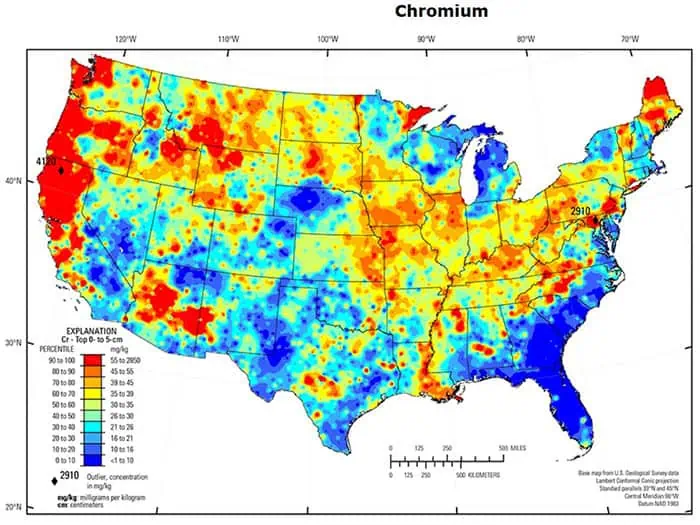
Chromium (Cr) occurs in the Florida environment due to a combination of natural conditions and historical land-use practices. In Florida, chromium is most commonly encountered in agricultural areas because phosphate-based fertilizers are derived from locally mined phosphate rock that naturally contains trace metals, including chromium. Chromium is also associated with solid-waste landfills and filled areas, such as lakefills and reclaimed lands, where materials, including construction debris, treated wood, metals, pigments, plastics, urban fill, and dredged sediments, may contribute chromium to soil and groundwater. In addition, chromium may be present in composts and biosolid-based fertilizers derived from municipal biosolids and organic waste, which are commonly used in Florida landscaping and agricultural applications. Historical use of certain pesticides and herbicides may also represent a minor source of chromium as an impurity in older metal-based formulations.
How is Chromium Regulated in Soil?
In the environment, chromium occurs in two primary oxidation forms: Cr III, which is more stable and less toxic, and Cr VI, which is more mobile and more toxic and is known to be a human carcinogen. While Florida has soil cleanup target levels (SCTLs) for both Cr III and Cr VI, Cr VI is typically used for risk evaluation because it is more conservative. Therefore, Cr VI is used as the default risk driver unless site-specific data demonstrate that chromium is predominantly present in the Cr III form.
In 1998, the U.S. EPA’s Integrated Risk Information System (IRIS) classified Cr VI as a “known human carcinogen by the inhalation route of exposure” based on strong evidence linking inhaled Cr VI to lung cancer in humans. More recently, in August 2024, the EPA released an updated toxicological review for Cr VI, including proposed changes to key toxicity factors.
These toxicity values are widely used by federal, state, and local agencies to develop environmental cleanup standards. In Florida, for example, both the State of Florida and Miami-Dade County rely on IRIS values to set soil cleanup target levels (SCTLs), as outlined in Chapter 62-777, Florida Administrative Code (FAC), and Chapter 24-44(2), Code of Miami-Dade County. If the updated toxicity values are adopted, cleanup standards for chromium will decrease significantly.
What Has Changed?
Two key changes to the toxicity factors include the following:
The updated IRIS assessment proposes an oral CSFo of 0.27 (mg/kg·day)⁻¹, (lifetime exposure, with Age-Dependent Adjustment Factors (ADAF) applied) and an IUR of 0.018 µg/m³ (also ADAF-adjusted). These toxicity factors would be used for land uses that involve childhood exposure (e.g., residential areas, parks). Additionally, the update proposes adult-based values, specifically an oral CSF₀ of 0.16 (mg/kg·day)⁻¹, and an IUR of 0.011 µg/m³. These adult-based values can be used for exposure scenarios that do not include early life (<16 years of age, e.g., commercial/industrial).
Using the updated IURs and oral CSFo, we recalculated the Florida SCTLs; the resulting SCTLs are substantially lower than the current SCTLs:
For comparison, the above estimates assume that all input parameters remain unchanged. However, several exposure parameters, such as body weight, exposure duration, ingestion rate, and the calculated dermal cancer slope factor (based on the adopted oral cancer slope factor), have already been updated by the state. When those updated parameters are applied, the residential SCTL is 4.0 mg/kg, which remains significantly below the current standard.
What Does this Change Mean?
Because of the lower cleanup standards, background studies will be important for both residential and commercial/ industrial sites. Stricter cleanup levels may require engineering or institutional controls, such as deed restrictions or limits on property use, to manage concentrations that cannot be attributed to background conditions.
Although the updates to Chapter 62-777, FAC, and Chapter 24-44 of the Code of Miami-Dade County have not yet reflected the latest CSFO and IUF, it remains crucial to monitor both state and county regulatory changes. Staying up to date allows us and our clients to plan.
Knowing this in advance can make a real difference. For example, if a client has a pending transaction or redevelopment plan, understanding potential changes in cleanup standards can help them expedite efforts to address environmental concerns under current rules, rather than face delays or stricter requirements later.
Beyond transactional planning, this knowledge is also essential for environmental risk assessments. Changes in SCTLs can influence decisions about remediation strategies and resource allocation. In other words, staying informed isn’t just about compliance; it’s about making smarter, proactive decisions that save time, money, and effort in the long run.
The following links will direct you to the proposed toxicological review and additional resources:
 Anabel Rodriguez-Garcia is an environmental scientist with a decade of experience in the sustainable management of soil, heavy metal contamination in soils and organic fertilizers, and in the physical, chemical, and biological characterization of soils, including sample collection and documentation. She serves SCS clients as a senior project professional and is particularly valuable for environmental site assessments. She has worked on projects for government agencies, including the Florida Department of Transportation and Miami-Dade County Regulatory and Economic Resources; public utilities; and the private sector.
 Lisa L. Smith has three decades of experience across a variety of roles in environmental science. Lisa serves SCS clients as a senior technical advisor and expert in risk-based corrective action (RBCA). She has worked as an environmental regulator at the Miami-Dade County Department of Environmental Resources Management (DERM), a risk assessor at a national environmental consulting firm, and a research chemist at the University of Florida.
 On October 16, 2023, US EPA’s Integrated Risk Information System (IRIS) Program released an updated toxicological review for inorganic arsenic, which includes proposed changes to the toxicity factors. Many federal, state, and local agencies use IRIS toxicity factors to assess environmental risk and establish risk-based environmental standards.
For example, the State of Florida and Miami-Dade County derived their direct exposure Soil Cleanup Target Levels (SCTLs) using these toxicity values, per Chapter 62-777, Florida Administrative Code and Chapter 24-44(2), Code of Miami-Dade County. If adopted, the updated toxicity values will lead to lower arsenic cleanup standards and, as a result, will significantly impact the assessment and remediation of contaminated sites throughout Florida.
Toxicity Factors Under Review and Potential Impact
The specific toxicity factors under review are the oral cancer slope factor (CSFo) and the oral reference dose (RfDo). In the current draft of the updated assessment, the IRIS Program has proposed a CSFo of 53 mg/kg/day for combined cancer risk and an overall RfDo of 0.031 µg/kg/day to protect against all noncancer adverse health effects associated with inorganic arsenic across all life stages.
To illustrate the significance of these updates, we used the proposed CSFo to re-calculate the State of Florida SCTLs. The resulting SCTLs would decrease from the current Residential SCTL of 2.1 mg/kg to 0.1 mg/kg and from the current Commercial/Industrial SCTL of 12 mg/kg to 0.4 mg/kg (assuming all other exposure factors remain the same). If the proposed changes to the toxicity factors are approved, remediation in Florida could feel the impact. An environmental engineer/consultant knowledgeable in due diligence, background assessments, and risk assessment/management can help you navigate these changing regulatory requirements.
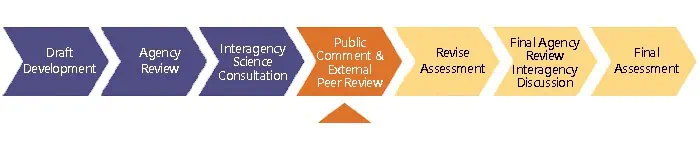
Rulemaking Process At Midpoint
The following links will direct you to the proposed toxicological review, a summary of the comments received during the public comment/peer review process, and information on the general assessment review process:
Given the potential impact on the cleanup standards, it is important to remain current with this updated assessment’s development and keep our clients informed of the potential changes. EPA is reviewing over a hundred comments received on the October 2023 draft IRIS Toxicological Review of Inorganic Arsenic. We understand that the final document’s projected release date will be announced once the Science Advisory Board delivers its peer-reviewed report. We’ll keep you informed.
Additional Resources:
About Arsenic
Arsenic is a naturally occurring trace element in the environment. It is in geological formations, and levels in soil can range from 1–40 milligrams per kilogram (mg/kg). Erosion, leaching, and some human activities can increase arsenic levels in soil. Arsenical pesticides were once commonly used in agriculture to maintain turf (e.g., golf courses, parks, etc.) and treat wood. While their use has been significantly restricted, residual concentrations can still be detected during an environmental site audit/assessment.
Land Remediation and Brownfields: Information, case studies, grants, and educational materials.
Meet our Authors: Environmental Scientist Anabel Rodriguez Garcia and Lisa Smith, a principal technical advisor and expert in risk-based corrective action.
Corporate Headquarters