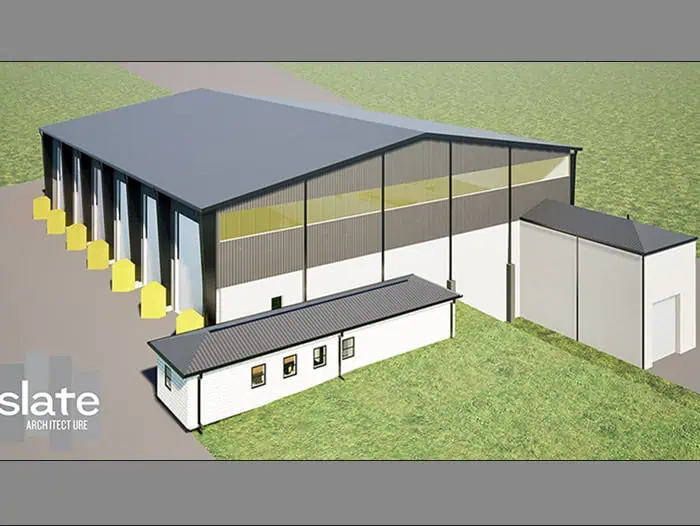
To better serve their constituents and operate their solid waste systems more efficiently, the City of Grand Island Public Works and Solid Waste Division partnered with SCS Engineers to perform the analyses, planning, financial modeling, engineering design, and permitting necessary to increase the capacity of the existing transfer station located on W. Old Potash Highway.
Grand Island is the principal city of the Grand Island metropolitan area, and is the county seat of Hall County, Nebraska. It is Nebraska’s 4th-most populous city, growing by over 6 percent annually since 2002. Population growth means more waste generation and greater strain on waste management systems, as resource demand drives increased consumption and, ultimately, more waste from household and industrial activities.
City Engineer and Public Works Director Keith Kurz sought an economical waste management solution, including expanding the transfer station to accommodate increasing waste tonnage. Kurz worked with SCS Engineers to develop a sustainable plan for the facility that could grow with the municipality and incorporate efficiency measures to limit costs.
SCS’s Senior Project Manager, Morgan Sykes, said, “We are grateful to the City of Grand Island for entrusting us to support its citizens with this essential service.”
SCS conducted engineering, growth, and waste audits, as well as economic studies, resulting in a plan that meets the growing municipality’s waste management needs through 2030. The new plan and transfer station will significantly improve traffic flow, preventing backups in and out of the facility. Other attributes include:
A Waste Advantage article said.
According to a memo to the City Council from Jeff Wattier, Solid Waste Superintendent, and Keith Kurz, Public Works Director and City Engineer, customer counts at the Transfer Station have increased by 173 percent, with a tonnage increase of 124 percent, from FY 2000 to FY 2017. In FY 2007, there were 10,345 customers and 28,578 tons of waste. In FY 2017, there were 28,236 customers and 63,910 tons of waste. [Link]
Additional Resources:
Increased separation and segregation correlate to additional space needs in transfer stations. Given the move to automation in solid waste collections, it is reasonable to assume that the processing of MSW is going to move toward automation as well.
In his most recent article, Mike Kalish discusses some of the key considerations for the development, or redevelopment of transfer stations today.
Mike Kalish, P.E., LEED AP, is a Vice President of SCS Engineers and SCS’s National Expert on Transfer Stations. He has been the Project Manager for major transfer station renovations and expansions in several states.
Corporate Headquarters