Author: Ann O’Brien
Alert: Toxic Release Inventory Form A and Form R Reports were due July 1, 2016
The Toxics Release Inventory (TRI) was created by EPA in response to several events that raised public concern about local preparedness for chemical emergencies and the availability of information on hazardous substances.
Printing is one of the industry sectors required to annually report releases of certain chemicals. A printing facility with 10 or more full-time equivalent employees is required to report if the facility exceeds established chemical thresholds. Note that TRI reporting is not based on the amount of emissions to atmosphere or how much waste is generated. Instead, a company that manufactures or processes more than 25,000 pounds or otherwise uses more than 10,000 pounds of a TRI-listed chemical were required to report releases of these chemicals by July 1, 2016.
There are currently over 650 chemicals covered by the TRI program including chemicals commonly used by printers, such as toluene, xylene, ethylbenzene, 1,2,4-trimethylbenzene, glycol ethers, solvents, and metals. Of particular interest to lithographic printers is the wide use of glycol ethers in fountain solutions and more recently in cleaning solutions, to take the place of solvents with high vapor pressures. It is important to mention that “glycol ethers” is a chemical category and within this category there are hundreds of individual chemicals that are reportable. Safety Data Sheets (SDS) do not indicate the presence of “glycol ethers” as a constituent of a raw material so a printer must look up each listed constituent and compare it to the list of TRI chemicals to determine whether is it reportable.
For more information, contact Ann O’Brien () or Cheryl Moran () at SCS Engineers.
Ann O’Brien is a Project Manager with SCS Engineers. During her 32-year career in the printing industry she was responsible for environmental compliance programs, including, but not limited to, air and water quality permitting, environmental recordkeeping, reporting and monitoring programs, hazardous waste management, environmental compliance audits, and environmental site assessments and due diligence associated with real estate transactions and corporate acquisitions.
Cheryl Moran is a Project Manager with SCS Engineers with more than 20 years of experience in the printing industry. She is a Certified Hazardous Materials Manager (CHMM) and has worked with air, water, and waste issues including permitting, environmental recordkeeping, reporting and monitoring programs, hazardous waste management, environmental compliance audits, and sustainability programs.
SCS periodically prepares technical bulletins to highlight items of interest to our clients and friends. These are published on our website. This SCS Technical Bulletin addresses:
Read and share the SCS Technical Bulletin here.
SCS Coal Combustion Residual Services
Do you have NSPS or EG sites per the new definitions of “new” and “existing”?
Does your EG site have any upcoming planned or permitted expansions, or will it be commencing construction on an expansion permitted after July 17, 2014?
Will you need to submit/resubmit Design Capacity and NMOC reports to establish your sites status as subject to the new NSPS? Over, or under 34 Mg/year of NMOCs?
Are you a candidate for Tier 4? In the closed landfill subcategory?
For EG sites contact the SCS state representative by sending a request to
SCS Engineers will be publishing Pat Sullivan’s Technical Bulletin Summary of Final NSPS/EG Rules for Landfills as soon as it is published in the federal register. Meanwhile, please contact your SCS Project Manager or for answers to your questions or advice. Follow SCS Engineers on your favorite social media site or check our events for new presentations, publications, and webinars explaining the rules in more detail.
On July 11, 2016, multiple organizations representing the full value chain of cellulosic waste feedstock conversion to transportation fuel sent a letter to Gina McCarthy, Administrator of the U.S. Environmental Protection Agency (EPA). The letter supporting the Renewable Fuel Standard Program: Standards for 2017 and Biomass-Based Diesel Volume for 2018 (Proposed Rule) noted that additional information and factors need to be considered.
Read or share a copy of the letter here, contact SCS Engineers, or one of the organizations below:
Sensitive natural resources include but are not limited to the following: Threatened and Endangered (T&E) species and their habitats, wildlife refuges, wetlands, and tribal burial grounds. These are areas where federal or states have identified protected resources. SCS Engineers has the expertise and credentials to perform surveys for clients with projects requiring the identification of these sensitive resources, along with the regulatory permitting with specialization in threatened and endangered species, wetlands, and critical habitats.
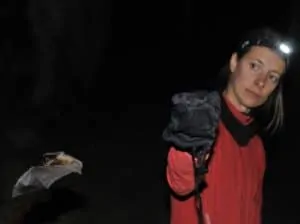
Development and construction often occur near or within areas identified as sensitive natural resources. Responsible developers identify sensitive resources near or within their proposed project area as part of their development plans because protecting our nation’s natural resources is important. The protection of sensitive natural resources is the basis of the Federal Endangered Species Act, Clean Water Act, and National Historical Preservation Act. Projects under consideration in sensitive areas require special permits; without which projects can be shut down causing costly contractor delays and schedule disruptions. Post-permitting and the associated fines can be severe, so even if you are not a conservationist, it makes good sense to complete the permitting process before breaking ground.

When considering a project in potentially sensitive ecological areas, SCS Engineers recommends a constraint analysis be performed. The analysis will determine if the proposed project location is within wetlands, critical habitat, threatened and endangered species range, and other potential constraints. If it is, SCS recommends that a site assessment is performed and initiate agency consultation to protect the sensitive resources.
Both the permitting process and the preliminary ecological assessments are not difficult but do require credentialed specialists. SCS has geologists, hydrologist, hydro-geologists, and environmental compliance professionals nationwide. SCS Engineers even has credentialed biologists for specialized threatened and endangered species monitoring and assessments for several species that include but not limited to the American Bury Beetle, Arkansas Shiner, Arkansas Darter, Topeka Shiner, Neosho Mucket Mussel, Rabbitfoot Mussel, Northern Longear Bat, and Indiana Bat in the Central U.S.
To determine if a project is within a sensitive natural resource area or to schedule an ecological consultation, contact .
About the Author: Vaughn Weaver
 Vaughn Weaver has over 20 years of environmental services experience with a strong background in water quality and bio-monitoring and is currently a senior field technician at SCS in our Wichita office. He provides project assistance to a diverse team of environmental professionals made up of geologists, hydrogeologists, engineers, chemists, and biologists. His responsibilities include surveying project sites, mitigation monitoring, well sampling and monitoring, and report writing for clients.
In addition, he has 15 years of water quality experience with National Pollution Discharge and Emissions Systems (NPDES) for point source and non-point source permits. Vaughn is also a Certified Wetland Delineator – USACOE.
It’s not just that we like wine and happen to live and work in every wine producing region of the U.S.; SCS Engineers understands the need for clean water resources and how important they are to the wine industry and for agriculture in general. SCS helps wineries face an array of environmental and regulatory challenges including:
SCS is pleased to announce we are the newest member of WIN, the Wine Industry Network.

SCS Engineers offers sustainable environmental solutions to businesses with environmental challenges. SCS provides these services to private and public sector clients through a network of nationwide offices. For more information about SCS, please visit our website at www.scsengineers.com, or contact us at .
Jeff Marshall, PE, SCS Engineers will be presenting the topic of Hydrogen Sulfide Issues at CCR and MSW Co-Disposal Sites during the EREF and NWRA sponsored Coal Ash Management Forum in July.
The co-disposal of municipal solid waste and coal combustion residuals – particularly flue gas desulfurization (FGD) material – poses a significant concern regarding the generation of hydrogen sulfide gas. Hydrogen sulfide has an exceptionally low odor threshold, and can pose serious health concerns at higher concentrations. This presentation will identify the biological, chemical and physical conditions necessary for FGD decomposition and hydrogen sulfide generation. Recommendations for reducing the potential for FGD decomposition at co-disposal facilities will be presented. Technologies for the removal and treatment of hydrogen sulfide from landfill gas will also be addressed.
Jeff Marshall, PE, is a Vice President of SCS Engineers and the Practice Leader for Environmental Services in the Mid-Atlantic region. He also serves as the SCS National Expert for Innovative Technologies. He has a diversified background in environmental engineering and management, with emphasis on the chemical and human health aspects of hazardous materials and wastes. Mr. Marshall’s experience with hydrogen sulfide, odors, sulfate decomposition in landfills, and ash issues includes scores of projects dating back to the 1980s.
SCS Coal Combustion Residual Services
On June 1, 2016, the National Waste & Recycling Association (NWRA), the Solid Waste Association of North America (SWANA), and the Coalition for Renewable Natural Gas (RNG Coalition) provide comments on Pipeline Safety: Safety of Gas Transmission and Gathering Pipelines (FR20722) proposed rules to Mr. Mike Israni, Deputy Associate Administrator for Pipeline Safety – Field Operations at U.S. Department of Transportation. Comments by the three not-for-profits were made on behalf of the solid waste industry including companies, municipalities, and professionals.
The letter reflected the solid waste industry support for the efforts made by the Pipeline and Hazardous Materials Safety Administration (PHMSA) to ensure pipeline safety and included comments on the Advance Notice of Proposed Rulemaking, (ANPRM) as follows:
The revised definition for gathering line (onshore) as the basis for determining the beginning and endpoints of each gathering line requires further clarification. The definition remains too broad for applications that do not have the same level of risks since they are not accessible to the public.
PHMSA has elected not to propose rulemaking for landfill gas systems. However, it notes that pipelines that transport landfill gas away from the landfill to another facility are transporting gas and that PHMSA may consider this in the future.
The associations pointed out that the same rulemaking for landfill gas systems should apply to all forms of biogas that are collected and managed in a similar manner to landfill gas. Also noted was that low-pressure gas lines delivering biogas off-site to a dedicated end user need not be considered for further regulation as they do not present the same level of risk that natural gas or other high-pressure gas lines do. Landfill gas/biogas systems fall under federal, state and local regulators. Because landfill gas/biogas systems are regularly inspected for safety, generally use plastic piping, and do not present a substantial risk to the public the Associations feel that it is not necessary to consider additional regulation.
Contact NWRA, SWANA, RNG Coalition or SCS Engineers for more information.
The Environmental Protection Agency (EPA) has recently proposed increases in renewable fuel volume requirements across all types of biofuels under the Renewable Fuel Standard (RFS) program. The proposed increases would boost renewable fuel production and provide for ambitious yet achievable growth.
The Clean Air Act requires EPA to set annual RFS volume requirements for four categories of biofuels: cellulosic biofuel, biomass-based diesel, advanced biofuel, and total renewable fuel. EPA implements the program in consultation with the U.S. Department of Agriculture and the U.S. Department of Energy.
EPA will hold a public hearing on this proposal on June 9, 2016, in Kansas City, Missouri. The period for public input and comment will be open through July 11, 2016.
For more information on the proposal, see www.epa.gov/renewable-fuel-standard-program/proposed-renewable-fuel-standards-2017-and-biomass-based-diesel.
For more information on the public hearing, see www.gpo.gov/fdsys/pkg/FR-2016-05-25/pdf/2016-12358.pdf.
Glass accounts for almost 5% of the municipal solid waste stream; state and local agencies have set ambitious zero waste goals; many agencies are not ready to give up on glass recycling. How do they manage to keep their programs viable despite the cost of processing, transportation, and the challenge of cross contamination?
Sustainable Solid Waste Managment Planning and Programs
Corporate Headquarters