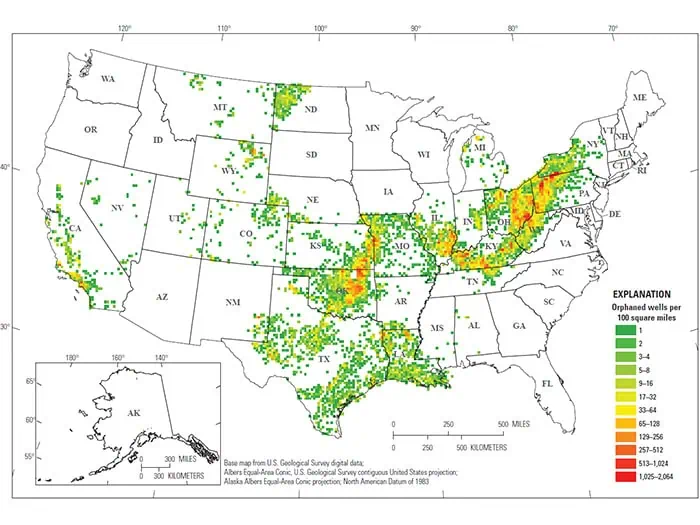
Today’s blog discusses the challenges and opportunities related to the redevelopment of land with idle or abandoned oil wells, also known as orphan wells. At least twenty-eight states currently face the same challenge and are spending federal funds on abandoned well remediation. The majority of the orphan wells are in the Gulf Coast area, including Texas, New Mexico, Oklahoma, and Louisiana. Also, the Northern Appalachia area, including Pennsylvania, Ohio, West Virginia, New York, and Kentucky, has thousands of wells. For this blog, we focus on California, a state with unique regulatory and land-use considerations.
Due Diligence First
We stress that proximity to sensitive sites isn’t the same as risk, and we support informed, technical assessments and regulatory oversight to enable safe redevelopment, especially in urban areas. When first drilled, many wells in California were likely not in urban areas, but over time, the growth of our cities and towns has shown that they can literally now be in property owners’ backyards as well as underneath residential and commercial buildings. Conducting thorough technical evaluations is essential for safe redevelopment practices.
Understanding Risks and Redevelopment Potential
Let’s address the common misconception that proximity to orphan oil wells near schools, parks, and homes inherently means danger. We understand your concerns and will address public health and environmental risks to ensure redevelopment proceeds safely. Redeveloping former oil-field lands, often vacant lots in urban areas, can boost property values and economic growth while protecting our health through proper well-impact mitigation and access to funding sources.
Addressing Orphan Oil Wells in California (Onshore)
California faces a unique challenge: thousands of legacy oil wells are scattered across urban and rural areas. The key issue is not just their location but how these wells are evaluated, managed, and regulated amid changing land uses. The majority of oil wells are located in the Southern California counties of Kern, Los Angeles, Orange, Santa Barbara, and Ventura due to geological factors. The counties of San Bernardino, San Diego, and Riverside have the fewest number of oil wells.
California Senate Bill 1137 (2022) established health protection zones around sensitive land uses near idle or abandoned wells, reflecting California’s urban growth since many wells were drilled. Proper risk mitigation requires technical clarity on well drilling and conditions, beyond simple location maps.
Regulatory oversight is conducted by the California Geologic Energy Management Division (CalGEM), which enforces stringent standards (California Public Resources Code [PRC] § 3208.1) for well access, integrity, and abandonment. CalGEM can mandate “re-abandonment” to modern standards that emphasize cement isolation, groundwater protection, and long-term monitoring to ensure redevelopment safety. Recognizing these specific regulations helps stakeholders understand the regulatory environment guiding land reuse projects.
Integrating Development and Health Safely
There are successful redevelopment projects in areas with high numbers of abandoned wells, such as Pacific City in Huntington Beach and the 2nd & PCH shopping center in Long Beach. These projects rely on qualified petroleum engineers and geologists who conduct thorough due diligence, including review of historical well records, field verification, vapor and methane assessments, and coordination with regulators.
Where necessary, Vapor Intrusion Mitigation Systems (VIMS) are integrated into project designs to prevent toxic vapors from contaminated soil or groundwater from entering buildings, protecting indoor air quality. Early identification and mitigation during due diligence help protect public health and control costs.
Differentiating Well Types and Funding Mechanisms
Not all idle or orphan wells are the same. You can use CalGEM’s Well Finder to distinguish between well types and operators. Many wells remain under active operators with Idle Well Management Plans and bonding requirements. Truly orphaned wells mean that no responsible operator remains, but California can proceed with state plugging and sealing. These are addressed through a state-run orphan well program with four funding sources:
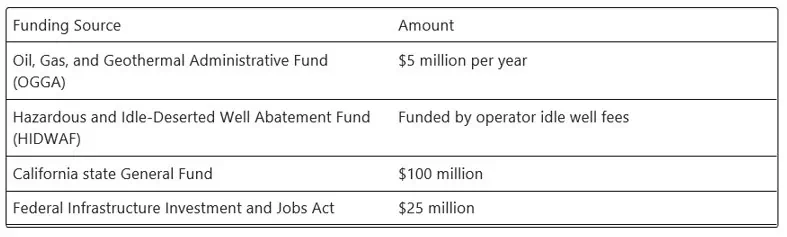 These funds are specifically for California to support safe plugging and abandonment of orphan wells. (Source: https://conservation.ca.gov/calgem/Pages/State-Abandonments.aspx)
Ensuring Effective Regulatory Enforcement and Collaboration
The Center for Biological Diversity’s 2026 report highlighted sensitive land-use areas near wells, raising public awareness. However, effective risk reduction depends on collaboration among regulators, landowners, developers, environmental advocates, and local governments, fostering trust and shared responsibility.
CalGEM recommends engaging qualified petroleum professionals who are familiar with California’s regulatory framework for the safe, responsible evaluation of legacy wells. Early, transparent evaluations integrated into land-use planning protect communities and enable urban infill and redevelopment without undue fear or delay.
Finding the Appropriate Support to Minimize Risk
We recommend finding an engineering firm, preferably with a background in the petroleum industry and a successful track record in remediating brownfields and performing highly structured due diligence. The engineer will likely rely on the expertise of a geologist or hydrogeologist, depending on the location. You’ll want more than a due diligence consultant; you’ll need, in states like California, a California-licensed professional petroleum engineer (PE) and a California-licensed professional geologist (PG) as well. Assessing risks is complex. Firms like SCS Engineers provide the expertise to evaluate the land, complete the plug-and-abandonment process for the wells, and make properties valuable, sustainable, and useful again.
Author: Senior Project Manager and Geoscientist Tim Rathmann. Confer with Tim or an expert in your area at SCS Engineers, or reach Tim on LinkedIn.
Additional Resources:
Corporate Headquarters