
A Guide to the Statewide Stormwater Rule and Its Impact on Compliance
Florida’s stormwater regulations have undergone significant changes recently, impacting how we assess water quality and manage stormwater systems. Senate Bill 7040 (SB 7040), known as the Statewide Stormwater Rule Ratification Bill, was signed into law on June 28, 2024. The legislation establishes minimum stormwater treatment performance standards for project design, mandates cost estimates for the annual operation and maintenance of stormwater management systems, and establishes criteria for qualified stormwater inspectors.
The central component of the updated SB 7040 regulations is the concept of net improvement. According to Florida Administrative Code R. 62-330.301(2), net improvement refers to the enhancement of water quality through the implementation of onsite mitigation measures. These measures can include changes in land use or the implementation of stormwater Best Management Practices (BMPs). The goal is to demonstrate that the proposed activity will result in a net improvement of the nutrient parameters regulated by the state, specifically Total Nitrogen (TN), Total Phosphorus (TP), and Total Suspended Solids (TSS).
In practice, net improvement can be achieved through enhanced BMPs such as increased retention volume, nutrient-reducing media, biofiltration systems, or other onsite measures that provide additional pollutant removal capacity. Tools such as BMPTrains or equivalent modeling or manual calculations may be used to support net improvement evaluations.
Before the 2024 rule change, only projects discharging directly or indirectly to impaired water bodies were required to demonstrate net improvement for TN and TP. Following the ratification of Senate Bill 7040, this requirement now applies to all sites, regardless of the impairment status of the receiving water body, and includes TSS as an additional parameter. Net improvement must be demonstrated using the more protective of the two approaches: a pre- versus post-development runoff analysis for TN, TP, and TSS, or a nutrient reduction efficiency method that specifies required reduction percentages for each parameter.
The Statewide Stormwater Rule also introduced more rigorous operation and maintenance requirements for stormwater management systems. Entities responsible for these systems must now submit a cost estimate for perpetual operation and maintenance, along with a financial capability certification, as part of the Environmental Resource Permit (ERP) application package. In addition, the updated rule mandates the development of a comprehensive operations and maintenance plan that outlines procedures to ensure long-term system functionality and continued compliance with water quality standards. These requirements ensure that stormwater systems remain functional throughout their lifespans, rather than meeting performance targets only at construction.
The new rule also requires that stormwater management system inspections be conducted, certified, and submitted by a qualified inspector. To meet this requirement, the inspector must either be a registered professional, work under the supervision of one with proper documentation, or have completed training within the past five years that covered key topics such as reading construction plans, understanding traditional and non-traditional BMPs, identifying system failures, and performing inspections in compliance with applicable regulatory standards. As part of the certification process, the qualified inspector must also submit a Stormwater Facility Inspection Checklist.
The stormwater rules do not apply retroactively to existing site developments with valid, unexpired conceptual, general, or Individual ERPs issued before the effective date of June 28, 2024. Existing developments are not required to retrofit their stormwater management systems unless a major modification is proposed. Minor modifications remain subject to the original permitting rules, provided they do not result in significant water resource impacts. To qualify for this grandfathering provision, applicants must demonstrate that the proposed changes will not affect treatment, attenuation, or discharge functions; increase off-site discharge or environmental impacts; or reduce retention/detention capacity, flood control elevations, or pollution removal efficiency. Additional grandfathering provisions for public transportation projects, projects submitted to local government agencies, projects involving ecosystem management agreements, and Developments of Regional Impact, defined as developments that substantially affect the health, safety, or welfare of citizens in multiple counties, are outlined in Section 3.1.2 of the ERP Applicant’s Handbook, Volume I, effective June 28, 2024.
The new net improvement requirements established by the Statewide Stormwater Rule will take effect 18 months after its enactment on June 28, 2024, making the implementation date December 28, 2025. ERP applications that are deemed complete before this deadline are exempt from these updated standards. In contrast, other components of the rule took effect immediately on June 28, 2024, including the requirements for operation and maintenance plans, long-term cost estimates, and system inspections. The qualified inspector provisions, which outline specific credentials and training standards for those conducting inspections, became effective one year later, on June 28, 2025.
Understanding these requirements early in project planning is critical, as incorporating net improvement strategies and O&M obligations upfront can prevent costly redesigns later in the permitting process. By staying informed and adapting to the new regulations, we can ensure that our projects do not adversely impact Florida’s water quality or environmental health.
Meet the Co-Authors: Sara Perez Lopez is a staff professional in SCS Engineers’ Tampa, Florida office. Sara provides engineering and permitting support for stormwater projects, including design, regulatory compliance, and technical report preparation. Her background includes working for the Florida Department of Environmental Protection and the Southwest Florida Water Management District in their respective Environmental Resource Permitting programs.
Mike Radford, PE, is a senior project manager in SCS’s Orlando, Florida, office. Mike has over 15 years of experience in civil and environmental engineering. He manages the design and construction of landfills, gas management systems, drainage improvements, and site developments. He is a Professional Engineer licensed in Florida and has a Master’s degree in Environmental Engineering.
Questions about Stormwater Compliance in your state? Contact us at SCS Engineers.
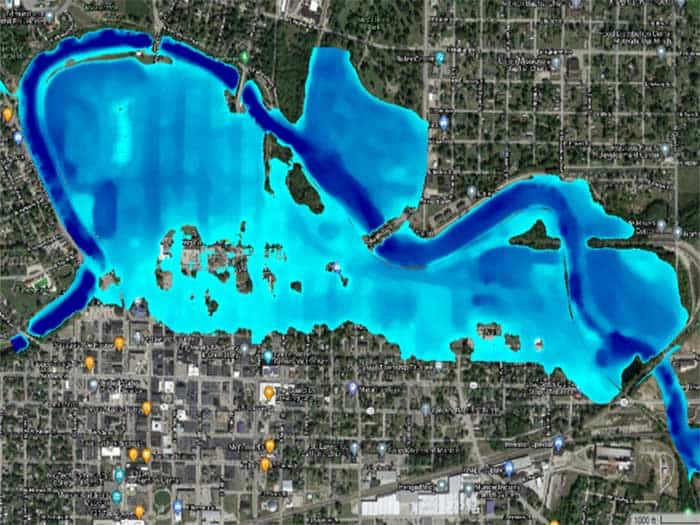
Hydrologic and hydraulic modeling software are critical for managing our nation’s surface waters. Quantitative models help local communities and environmental engineers better understand how surface waters change in response to development and pollution, and how to protect them. Surface water modeling software has been useful for solving large-scale watershed and local stormwater studies for over 50 years. Over time, these tools have evolved dramatically.
Early versions of Hydrology & Hydraulics (“H&H”) software were developed by the US Army Corps of Engineers Hydraulic Design Center (HDC). Examples are the early hydrologic modeling tool HEC-1 and the early open channel hydraulics tool, HEC-2. When a model was executed, results were in a simple tabular format, generally without notes about unusual results or troubleshooting tips.
These pieces of software were slow and cumbersome to use – generally, one needed a pad of paper and a pencil to make notes on printouts of the input code. Using these tools was a hassle, but – you knew every inch of the information entered. Back in the early days of these tools, specialty modeling firms flourished. Generally, “modelers” had master’s degrees supporting hydrologic or hydraulic study, which helped inform modeling.
Fast Forward to 2024
The picture of H&H modeling has changed dramatically. Understandably, the light-speed growth of software and computing power has enabled us to enter information and get results out of almost any model many times faster than the equivalent effort 40 years ago. Software user interfaces have become Windows-based, with 3D charts and output tools that give the whole story of a simulation with very easy access.
Moreover, an increasing number of public agencies are publishing their own HSPF-based long-term statistical hydrology simulation software. HSPF stands for “Hydrologic Simulation Program -FORTRAN,” originally developed by the EPA as a flow/duration model. It gives statistical returns of rainfall/runoff events over a period of years. A sophisticated but cumbersome to use platform, many agencies have incorporated the HSPF engine into a locally focused “Black Box Model,” which reduces user input down to the general characteristics of tributary areas and then directly produces a necessary BMP (pond, swale, etc.) footprint.
Legacy to HydroCAD
The legacy USACE tools mentioned previously evolved from HEC-1 and HEC-2 to HEC-HMS and HEC-RAS in their current versions. Both current models feature advanced data input, computation, and output modes. HEC-RAS, in particular, has evolved to perform dynamic flow simulations, GIS-based mapping, and 2-D flow calculation (not just straight down the channel, but also coming in/out of the channel from all directions).
Some newer, practicality-based tools, such as HydroCAD, enable the general civil engineer to perform H&H calculations to a significant level of detail for single-event storms. Additionally, today’s younger engineers have developed an ability to use new software that exceeds any previous generation.
Field Experience and Expertise Matters
Challenges can arise when adeptness at locating and entering data exceeds the user’s experience in hydrologic or hydraulic studies. Balancing this knowledge is crucial since both are essential for accurate water resources study (environmental, stormwater, and work related to climate change).
The aspect of current progress that gives one pause is how easy it has become to get results. Today’s users are adept at running simulations and getting results. However, sometimes these results are wrong or at least should raise questions.
Unfortunately, a novice user can get results that may look “fine” to them but odd to an experienced water resource engineer. If not carefully reviewed for engineering judgment, the less experienced user could inadvertently issue plans or study results with costly errors—This is a critical reason for a seasoned modeling professional’s review for quality assurance.
H&H software is more accessible and rapid than ever before but offers new challenges in ensuring those using, interpreting, and reviewing output have sufficient background in the subject matter. Moving forward, modelers who receive assistance with the “buttons and levers,” as well as a review of results by an experienced water resources professional, will learn to start thinking critically about their analysis results more quickly.
More formally, a project-specific QC process geared toward the review of applied hydraulics in H&H modeling helps maintain a firm’s quality of modeling performance and documentation
Hydrologic and Hydraulic Modeling Resources:
 About the Author: Jon Archibald, PE, has over two and a half decades of experience. He has strong expertise in leading multidisciplinary design teams, stormwater facility design, site civil engineering, and capital project execution. Jon has served clients in the solid waste, municipal, aviation, military, high-tech, hydroelectric, and flood risk sectors.
He successfully delivered several capital programs as a public works project manager for the City of Oregon City, OR. He has also assisted public agencies as an owner’s engineer. His combination of public and private experience helps foster collaboration on challenging design and permitting efforts.
Jon has delivered dozens of successful civil and water resource projects in the Pacific Northwest, California, and Alaska. Projects include site civil infrastructure, private and public utility design, hydrologic and hydraulic modeling studies, and design and accreditation of flood control systems. You can reach Jonathan or any of our Stormwater experts at or on LinkedIn.
Join SCS Engineers stormwater professionals, including our National Stormwater Expert, Jonathan Meronek, at StormCon 2024, August 27-29 at the Grand Sierra Resort and Casino in Reno, NV.

StormCon 2024 is the stormwater industry’s premier event connecting stormwater and surface water managers, erosion control specialists, and engineers from around North America for idea-sharing, information exchange, and networking. Featuring a multi-track conference program led by top leaders in the industry, StormCon 2024 provides exceptional opportunities to learn, engage and build key contacts. Topics this year may include:
The StormCon 2024 conference provides plenty of networking opportunities, certification courses, and an exhibit hall.
Click for more conference details and registration information.
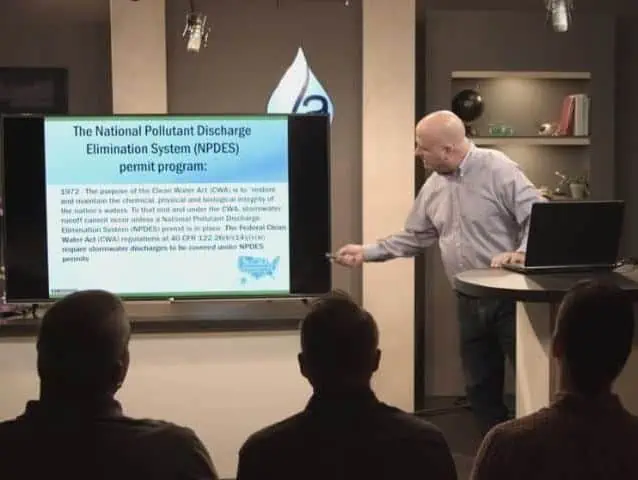
Jonathan Meronek specializes in comprehensive stormwater management programs. He has conducted BMP and Pollutant Source Assessments (PSAs), written Stormwater Pollution Prevention Plans (SWPPPs), performed Training and Education classes and implemented Monitoring Implementation Plans (MIPs) for hundreds of facilities in the United States. His accreditations include IGP-TOR, QISP, ENV-SP, CPESC, QSP/D, with over eighteen years of supporting clients at SCS Engineers. As a State of California Industrial General Permit (IGP) Qualified Industrial Storm Water Practitioner (QISP) and QISP Trainer-of-Record (ToR), he finds stormwater solutions for a multitude of industrial clients.
When Endeavor Media (Stormwater Magazine, Wastewater Mag, and Water World) decided to launch their new education platform called “Stormwater University,” they reached out to Jonathan. He now has the good fortune of being one of twelve people to sit on Endeavor’s National Technical Advisory Board.
Jonathan is excited and looks forward to supporting his colleagues in stormwater management. He has promised not to add another post-nominal after his name.
Corporate Headquarters