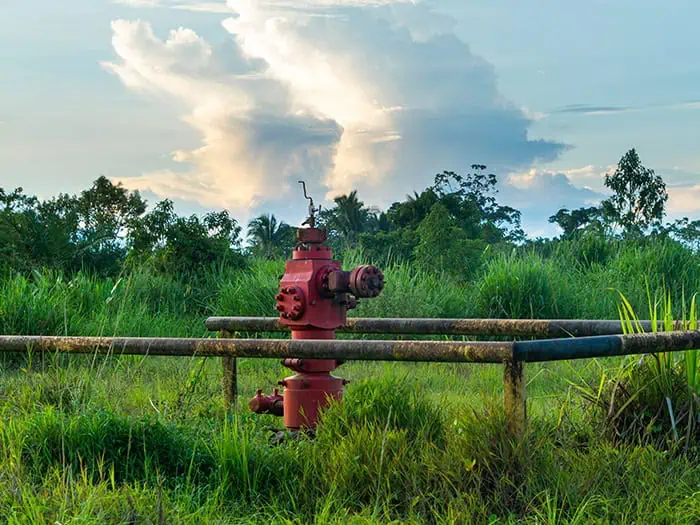
The debate unfolding in California over idle or abandoned oil wells located near schools, parks, homes, and care facilities risks drifting toward a familiar misconception: confusing proximity with danger.
No parent or caregiver wants to imagine industrial infrastructure posing a risk near places meant to protect vulnerable people. There are hazards associated with old oil wells, but steps can be taken to mitigate them and accommodate redevelopment and vibrant new land uses on sites with existing oil wells.
Land scarcity and housing demand are driving redevelopment into former oil fields, some of which appear as vacant lots surrounded by urban development. Redevelopment of these lands can unlock property value and support economic development, while protecting our health by mitigating the impacts of abandoned oil wells before and during the development process. In addition, various funding sources are available through multiple federal and state agencies.
Addressing Abandoned Oil Wells in California
California contains thousands of legacy oil wells embedded in developed cities as well as rural lands used for agriculture or environmental preservation (i.e., wetlands). California’s challenge is not simply where legacy wells are located, but how they are evaluated, managed, and regulated as land use changes.
San Diego County has far fewer oil and gas wells than counties such as Los Angeles, Ventura, Kern, and Santa Barbara. That difference is due to geology and the presence of petroleum reservoirs inherent in these areas.
Senate Bill 1137, enacted in 2022, created health protection zones around homes and other sensitive land uses in areas where idle or abandoned oil wells are present. The law reflects a long-overdue reckoning: California is far more urban today than when many of these wells were drilled decades ago. Mitigating any risk to the environment, public health, and safety requires technical clarity of when and how the wells were drilled, not just maps showing the location.
Idle and abandoned oil wells in California are not unregulated relics. Oversight falls to the California Geologic Energy Management Division, or CalGEM, which enforces detailed standards (California Public Resources Code [PRC] § 3208.1) for access to the well, wellbore integrity, and abandonment under state law.
CalGEM can require the well to be “re-abandoned” to modern standards—standards that are far more stringent than those in place decades ago. They emphasize verified cement isolation, groundwater protection, monitoring, and testing to confirm long-term integrity for redevelopment.
Development and Health Can Go Hand-in-Hand
Even in locations with disproportionately high numbers of abandoned oil wells, a strategic redevelopment project with qualified petroleum engineers or geologists (e.g., Pacific City in the City of Huntington Beach or the 2nd & PCH shopping center in the City of Long Beach) is successful. The due diligence team reviews historical well records (available from CalGEM), verifies well locations in the field, assesses vapor and methane conditions, and coordinates closely with regulators and local agencies using a systematic approach.
Where necessary, Vapor Intrusion Mitigation Systems (VIMS) are built into the project design. VIMS are proven to prevent toxic chemical vapors from contaminated soil and groundwater from entering buildings, thereby protecting indoor air quality. Done early during due diligence — before construction begins — helps identify potential hazards and addresses them, protecting public health and preventing costs from escalating.
Differentiating Wells and Funding
It is important not to treat all idle or abandoned oil wells the same. Most publicly available maps from CalGEM’s Well Finder show the different types of wells and the operator on record. Many wells remain the responsibility of active oil and gas field operators and are subject to idle well management plans, bonding requirements, and escalating plugging obligations under recent legislation.
Others are truly orphaned, with no viable operator remaining. For those wells, California has established a state-run orphan well program, which includes a process for safely plugging and abandoning wells and four funding sources. The sources are:
Ensuring Regulatory Enforcement
In February 2026, the Center for Biological Diversity highlighted sensitive land-use areas with vulnerable populations where oil and gas wells exist. Public awareness is essential, but the conversation cannot stop at cataloging proximity. The real challenge is ensuring that regulatory enforcement, redevelopment planning, and funding mechanisms are aligned to meaningfully reduce site-specific risk.
This requires collaboration among regulators, landowners, developers, environmental advocates, and local governments. It requires acknowledging uncertainty where it exists while recognizing the technical frameworks already in place. And it requires moving beyond headlines toward informed decision-making.
CalGEM recommends that engaging qualified professionals—those who understand CalGEM’s requirements and California’s regulatory framework—is critical to evaluating legacy wells safely and responsibly. The opportunity now is to apply those evaluations consistently, transparently, and early in the land-use planning process, so communities are protected and urban infill and redevelopment can proceed without unnecessary fear, delay, or oversimplification.
Finding the Appropriate Support to Minimize Risk
We recommend finding an engineering firm, preferably with a background in the petroleum industry and a successful track record in remediating brownfields and performing highly structured due diligence. Your engineer will likely rely on the expertise of a geologist or hydrogeologist, depending on the location. You’ll want more than a due diligence consultant; you’ll need, in states like California, a California-licensed professional petroleum engineer (PE) and a California-licensed professional geologist (PG). Evaluating risks is complex, and firms like SCS Engineers provide the expertise to assess the land, complete the required plug-and-abandonment process for the wells, and make properties valuable, sustainable, and useful again.
Author: Senior Project Manager and Geoscientist Tim Rathmann. Confer with Tim or an expert in your area at SCS Engineers, or reach Tim on LinkedIn.
Additional Resources:
Corporate Headquarters