State-level methane rules and plans in 2026 are heavily focused on implementing restrictions for multiple states across the U.S. This article focuses on Colorado’s Regulation 31 and the California Air Resources Board’s updated Landfill Methane Regulation, which are shifting landfill methane compliance from periodic monitoring to faster detection, documented repairs, stronger gas collection, and more transparent reporting. For landfill owners and operators, the economic impact across the U.S. will be felt less as a single new cost and more as a sustained shift in capital planning, staffing, operations, data management, and risk management.
These rules address methane’s role as a high-impact greenhouse gas and evidence that traditional monitoring can miss short-duration or hard-to-access emission events. Colorado’s rule applies to a subset of municipal solid waste landfills and requires stronger controls, expanded monitoring, and the phaseout of open flares. California’s amendments, effective in 2027, tighten an already mature landfill methane program by emphasizing advanced detection technologies, faster leak response, improved gas collection system performance, correction of recurring issues, and public data transparency.
The Economic Impact of Methane Rules: Compliance Becomes an Ongoing Operating Model
The immediate impact will be higher compliance costs. Landfills that previously relied on less frequent inspections or limited gas-control infrastructure will need to invest in engineering, equipment, monitoring technology, and documentation systems. Colorado’s Regulation 31 is expected to affect up to 32 of the state’s municipal solid waste landfills, including active and closed sites, while California’s program applies broadly across the state’s landfill sector.
Those costs will not stop after the initial installation. Operators should expect recurring expenses for inspections, corrective actions, third-party technical support, maintenance crews, reporting, quality assurance, data retention, and public transparency. Publicly owned landfills may need to absorb these costs through local budgets, tipping fees, or rate adjustments. In contrast, private operators may need to renegotiate service agreements, gas rights, and responsibilities with landfill gas-to-energy or renewable natural gas partners.
At the same time, spending will create opportunities for captured methane, which support beneficial-use projects, including electricity generation, pipeline-quality renewable natural gas, or other energy recovery strategies. However, revenue potential will depend on site conditions, gas quality, contracts, credit markets, and interconnection options.
What Landfills Will Spend Money On
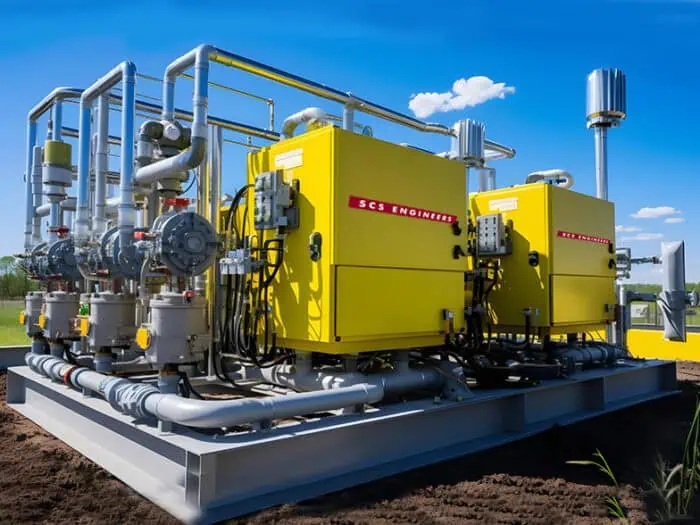
Gas collection and control systems. Many affected landfills will spend heavily on new or expanded gas collection and control systems, including extraction wells, headers, laterals, condensate management, blowers, controls, and treatment equipment. Sites with existing systems may need upgrades to improve capture efficiency, address recurring leaks, and meet tighter performance expectations.
Flares and control equipment. Colorado’s rule includes a phaseout of open flares in favor of enclosed flares, which allow for better performance testing and emissions verification. Closed landfills may also need biofilters or other controls when combustion devices are removed. These requirements can trigger design work, permitting, procurement, construction, testing, and long-term maintenance costs.
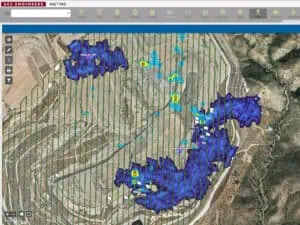
Advanced methane monitoring. Both regulatory trends place greater emphasis on detecting methane more quickly. Landfills will spend on surface emissions monitoring, optical gas imaging, tunable diode laser equipment, drone-based surveys, satellite or aerial plume response protocols, and alternative monitoring technologies approved by regulators. These tools, such as SCS RMC®, are especially important for steep slopes, active working faces, closed areas, and places that are unsafe or impractical to access on foot.
Leak repair and corrective action. Shorter detection-to-repair windows will require operators to spend more on maintenance readiness. That may include spare parts, on-call contractors, wellfield tuning, cover repairs, pipe replacement, valve work, condensate removal, and follow-up monitoring to prove that a leak has been fixed. Repeated exceedances may require root-cause analysis rather than simple spot repairs.
Cover integrity and wellfield management. Operators will need to monitor and maintain landfill covers more closely, as cover defects can create pathways for methane release. Spending may include intermediate cover improvements, geomembrane or soil repairs, settlement correction, vegetation management, stormwater controls, and wellhead monitoring for temperature, oxygen, liquid levels, and other indicators of system performance.
Data systems, reporting, and records. The new compliance environment depends on defensible records, which SCSeTools® already provides in real time to hundreds of landfills across North America. Landfills without, or using systems that are not in real time, will need to invest in tracking monitoring results, exceedances, repair deadlines, re-monitoring dates, equipment status, reports, and five-year recordkeeping obligations concurrently. This will likely increase spending on software, GIS tools, field tablets, dashboards, document control, and internal quality review.
Professional services and staffing. Compliance will require more engineering, environmental, legal, and operational support. Landfills may need professional engineer-certified design plans, applicability analyses, methane generation modeling, permit applications, compliance audits, contractor oversight, and staff training. Smaller public operators may rely more heavily on outside consultants because they may not have in-house air compliance teams.
How Costs May Flow Through the Market
Some compliance costs will likely move downstream through tipping fees, municipal solid waste contracts, host fees, or utility rates. The effect on individual households may be modest in many markets. However, the impact on landfill budgets can still be significant, as operators must simultaneously plan for capital projects, recurring inspections, accelerated repairs, and expanded documentation.
The rules may also change contract negotiations. Third-party landfill gas system owners, renewable natural gas developers, and landfill operators will need to clarify who pays for monitoring, who performs repairs, who owns data, who responds to remote plume detections, and who bears enforcement risk. As compliance responsibilities expand beyond the landfill owner, contracts will need a clearer allocation of operational and financial obligations.
Credit and energy markets may also feel the effects. Better gas capture can improve the volume and reliability of landfill gas available for energy recovery. Still, tighter rules can also affect how avoided methane emissions are calculated for low-carbon fuel or renewable energy programs. Operators pursuing renewable natural gas projects will need to consider how compliance costs, credit values, gas quality, uptime, and long-term regulatory obligations interact.
Why Regulators See Net Benefits to Methane Rules
Regulators frame these rules as measures for climate, public health, and the economy. Methane reductions deliver near-term climate benefits because methane is more powerful than carbon dioxide over shorter time horizons. Improved landfill gas control can also reduce co-pollutants, including volatile organic compounds, toxic air contaminants, and odor-causing compounds. Those reductions can help lower community exposure, nuisance complaints, enforcement risk, and long-term climate-related costs.
For operators, the business case is more practical: spend earlier to avoid larger failures later. Modern monitoring can identify leaks before they become recurring enforcement issues, public relations problems, or major gas-system failures. Stronger wellfield management can also protect energy recovery assets and improve system reliability.
Bottom Line
Regulation 31 and CARB’s methane restrictions will require landfill operators, and likely those in other states, to invest in the infrastructure, technology, personnel, and systems needed to detect methane more quickly and fix it sooner. The largest expenditures will likely center on gas collection and control systems, enclosed flares or other control devices, advanced monitoring, cover and wellfield maintenance, data management, professional services, and accelerated repair programs.
Although these rules create near-term financial pressure, they also push the landfill sector toward more predictable methane management, stronger operational controls, and potential energy recovery opportunities. Landfills that plan early will be better positioned to control costs, reduce enforcement risk, protect community trust, and turn compliance spending into long-term infrastructure improvement.
Click to Additional Landfill Methane Resources:
Corporate Headquarters