SCS Engineers

February 27, 2023

integral environmental consulting
Dane County has regular landfill tours and education days to help teach the public and kids about how landfills work, and how environmental consultants help manage them.


What’s Environmental Consulting?

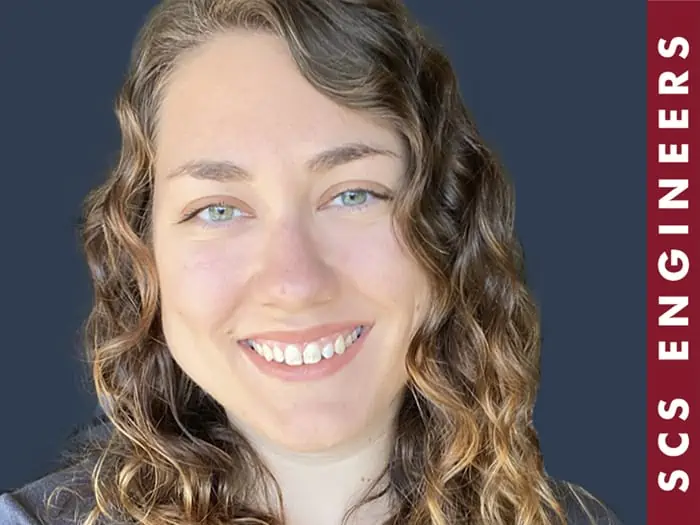
Jackie Rennebohm stands on a landfill in Madison, Wisconsin, pops open a monitoring well, bails some water, and dumps it on the ground while a cluster of neighbors looks on. They see she had no qualms about coming into contact with the liquid— it’s what a young professional does in a day’s work, she tells them.

“I explain that we strategically place the wells to monitor for contaminants that could leak from the landfill but let them know the site is lined for protection. In 30 years, there’s been no detection of pollutants from the landfill,” Rennebohm says.

She’s upbeat, sincere, and informative; they are interested and feel confident in her explanation of landfill science and engineering. Being a good neighbor is a goal of every landfill.

Gaining trust can go a long way on the job and is something Rennebohm has always prioritized. She figures it’s played a big role in her ability to climb the ropes at SCS Engineers and to offer her clients and project managers what they need—that and her attention to detail and her thirst to keep learning.

Her earliest charge as a new geology graduate seven years ago was logging soils and documenting details for groundwater management. She quickly began learning about different soil types; how to classify them; the features of each that affect their ability to carry contaminants; and how and where those contaminants might migrate.


Moving into new territories

how to get into environmental consulting
Jackie with Sujata Gautam, Dane’s Solid Waste Engineer.

As she’s developed in her career, she’s taken on greater roles and now owns more parts of larger environmental consulting projects.

Beyond monitoring groundwater at landfills and water in nearby private wells and reporting her findings to regulators, the ambitious scientist dedicates her time to the remediation of real estate properties. She begins with Phase 1 Environmental Site Assessments (ESAs), scrutinizing topographic maps, soil maps, investigation reports from local regulatory agencies, and other historical data to determine if a property likely has hazardous contaminants. Depending on her findings, she digs deeper, conducting a Phase 2 ESA by testing soil and groundwater to confirm if the site is contaminated.

“I like doing Phase 1 Assessments, especially because they really challenge you to be meticulous in identifying issues that could be material concerns. You can’t miss a single detail, or an issue could come up later that could cost time and money for our clients.”

“Developers make huge investments, and if it were mine, I’d want to know I hired someone who will be as conclusive as possible.”

If Rennebohm’s due diligence confirms contamination to resolve, she transitions to remediation planning mode.

“That’s when we move from investigator to developing a sound strategy to protect the health of the neighbors, the environment, and the property developer’s bottom line,” she says.

The plan may entail removing or cleaning impacted soil and, in some cases, installing a vapor barrier to prevent volatile gases from migrating into buildings. The solutions are unique to each site, ensuring the groundwater stays pristine and any new structures are in healthy environments.

She’s gotten good at getting to the route of a problem and coming up with an action plan leveraging conceptual site models. She relies on these models to form a hypothesis, gather data, and then does more research to build on her initial findings. With that comes more knowledge to piece the puzzle together ultimately. “I might start by looking for potential groundwater contaminants, then work to determine where those contaminants would likely move downgradient. Once I collect enough preliminary data about the subsurface, I can form a scientific hypothesis. The deeper I go, the closer I get to having answers to inform possible next steps,” she says.


It takes a keen eye

One of her college professors would say that the best research geologist sees the most rocks. In her eyes, it’s the same principle as being the best environmental consultant.

“It’s about being out there and physically looking at soil sample after sample and analyzing groundwater in multiple scenarios. You get a solid understanding of site conditions across different parts of the state, weighing many variables. The more you observe, the more you learn, and you apply that learning in the field,” she says.

Expanding her knowledge and showing what she can do with it has been key to advancing in her career – and it ties into that priority she broached earlier: gaining trust.

She says you must show your project managers you are ready to work on more environmental consulting tasks.

“It’s been important to my supervisors to see that I understand the conceptual site model to know where we are starting with a project and where we need to go to reach the end goal. As important is offering ideas for how to get there instead of waiting to be told what to do. It’s rewarding that my team trusts my judgment.”


From researcher to environmental consultant

Rennebohm’s found her sweet spot in environmental consulting.

“In school, I really liked geological research, learning about life, time, processes, and change. Research is important, though I also enjoy working in the field to help make meaningful changes. It’s gratifying to see blighted properties transform into valuable assets with purpose. Or to be part of a team drawing up a proposal and winning it. You own your work, and it’s a proud feeling,” she says.

She’s left to run with more these days. She serves as the primary author and reviewer of large environmental reports when she formerly contributed short summaries. And she spends more time with clients than in the days when she’d make a quick call from the field to brief them on one point in the big picture. Now Rennebohm’s their point of contact for scheduling requests, coordinating work, writing proposals, and preparing quotes.


scs engineers environmental young professionals
Jackie says hiking in North Dakota through bentonite deposits, an expansive clay we use quite a bit in our work, is somewhat relatable for her!


What’s ahead

“I see myself doing a lot more on the client relations side. I like interacting with them and coordinating the work needed to meet their goals,” she says.

And she wants to venture further into another territory: business development, a space she hadn’t envisioned herself entering a few years ago.

“While I have a customer service backbone, I thought, I’m a scientist, not a salesperson. But I think differently now that I’ve grown at SCS.”

She’s networking at business conferences and meetings, explaining to residents the important roles of landfills and telling developers how consultants who do environmental site assessments can help them protect their investments.

“I’ve come to realize business development isn’t exactly selling. It’s listening, then working with people. It’s providing clients with the insight to reach their goals,” she says.

Environmental consulting builds mental dexterity. She believes that branching out into more roles and working with more people helps build character.

“I’m becoming more open-minded and breaking out of my shell, and I can contribute more to the big picture. In all I do, I’m working to protect people and the environment.”


Contact SCS Engineers to join our professionals with rewarding careers. in environmental consulting.


Posted by Diane Samuels at 6:00 am

February 23, 2023

carton council
Carton Council Award Program Supporting Wisconsin Recycling Education


Today’s blog highlights successful K-12 recycling education programs in Wisconsin’s green schools that walk the walk in teaching kids and their parents important lessons about sustainability and the environment. Wisconsin’s Green Schools Webinar entitled “Re-imagine, Re-design & Re-cycle: School Waste Collection Systems That Work!” is taking advantage of the Carton Council funding to further zero waste in schools. The webinar is free to attend and open to everyone, with content designed specifically for K12 champions leading recycling programs for their school or district.

As schools set their sights on zero waste goals and seek to shift as much material from the trash to recycling and composting streams, they need an efficient material management system that is easy to use for students and staff alike and is sustainable to operate. Attendees of this webinar will hear directly from three different school districts about their recent innovations in bin design, construction, and placement.

The event includes students building receptacles and hallway recycling programs that are helping to maintain one district’s classroom eating program. The programs are re-imagining unique systems for collecting valuable items such as milk carton material.

Panelists include Brittney Albin, Sustainability Coordinator for Lincoln Public Schools; Chris Jimieson of SCS Engineers and a parent recycling advocate; and Madison Metropolitan School District’s Jeremy Drake, a Principal at Strategy Zero Waste Solutions.


Mar 22, 2023, 04:00 PM in Eastern Time (US and Canada)


The Carton Council will award $2,000 each to 25 communities that improve their resident education, with special attention paid to food and beverage cartons. Additionally, there will be first, second, and third-place prizes to recognize winners who provide outstanding communications and marketing efforts. 1st place will receive an additional $3,000, 2nd place an additional $2,000, and 3rd place an additional $1,000. More information about how communities can participate is here.


Recycling Tips and Resources for schools, parents, and municipalities:


Posted by Diane Samuels at 6:00 am

February 21, 2023

SCS Engineers Project Manager Chris Jimieson is a panelist on the Carton Council’s Green Schools Webinar: Re-imagine, Re-design & Re-cycle: School Waste Collection Systems That Work!, on March 22 (3:00 – 4:00 pm Central).

As schools set their sights on zero waste goals and shift trash to recycling and composting streams, they need an efficient material management system that is sustainable to operate and easy for students and staff to use.  Webinar attendees will hear directly from three different school district leaders about their recent innovations in bin design, construction, and placement, including students who are building their own eating and recycling programs that are conducive to sustainability, including systems to collect valuable items such as milk carton material.

This webinar is free and open to everyone.  The content is designed specifically for K12 champions leading recycling programs for their school or district.

Panelists:
Chris Jimieson, parent recycling advocate, Madison Metropolitan School District (Program Manager for SCS Engineers)
Brittney Albin, Sustainability Coordinator, Lincoln Public Schools
Jeremy Drake, Principal/STRATEGY Zero Waste Solutions

This webinar is sponsored by the Carton Council.

Register today!


Posted by Laura Dorn at 10:15 am

February 21, 2023

Meet SCS Engineers’ carbon sequestration and deep well injection experts at BOOTH 729 at the 39th annual International Fuel Ethanol Workshop (FEW) & Expo, June 12-14, in Omaha, Nebraska.

The FEW provides cutting-edge content and unparalleled networking opportunities to the global ethanol industry within a dynamic business-to-business environment. It is the largest, longest running ethanol conference in the world—and is powered by Ethanol Producer Magazine.

The FEW delivers timely presentations with a strong focus on commercial-scale ethanol production – from quality control and yield maximization to regulatory compliance and fiscal management. The FEW is also the ethanol industry’s premier forum for unveiling new technologies and research findings. The program extensively covers cellulosic ethanol while remaining committed to optimizing existing grain ethanol operations.

We invite you to attend the presentation by SCS expert, Kacey Garber, on “Applications of Solution Storage Efficiency via Multiphase Flow Modeling to Carbon Dioxide Storage Project Scoping”
[Carbon Capture & Storage Summit, Wednesday, June 14, Track 2, 8:30 -10:00 am]

Abstract: Carbon Capture and Storage (CCS) is becoming increasingly attractive due to growing climate change concerns as well as tax incentives related to conducting CO2 capture. Facilities that capture CO2 may consider storing captured CO2 via geologic sequestration (GS). GS at a given location requires a Class VI Underground Injection Control (UIC) permit for a Class VI UIC well(s) to inject supercritical CO2. These permits require multiphase flow modeling to delineate both the extent of the supercritical CO2 plume and areas that exceed a critical pressure threshold as a result of injection. We have found numerical modeling is also valuable during project scoping to provide a sense of what the total CO2 storage capacity may be for a given project. To determine long-term storage capacity, CO2 trapping (storage) mechanisms must be considered, including structural/stratigraphic, capillary, solution, and mineral trapping (depending on geochemistry). Solubility trapping appears to be the ultimate trapping mechanism for injected CO2 under most geochemical conditions; therefore, solution storage efficiency will be a key metric for project scoping. Solubility trapping occurs when the CO2 dissolves from its separate, buoyant phase into formation pore water. If the total available pore space for the project and the solubility limit of CO2 can be estimated, then the total solution storage capacity can also be estimated. Then numerical modeling can be used to estimate design and operational parameters to quickly examine under what conditions the most efficient use of pore space occurs. In this example, we investigated what factors may promote solution storage efficiency using a multiphase flow model. This includes how supercritical CO2 injection rate, duration, and location(s) affect solution storage efficiency. This simplified study concluded that injection rate, duration, and location(s) all affect solution storage efficiency. Project-specific considerations need to be incorporated into the model in order to determine the conditions ideal for maximizing solution storage efficiency.

The 2023 FEW program has four concurrent tracks and three additional events:

  • Track 1: Production and Operations – Biological Processes
  • Track 2: Production and Operations – Mechanical Processes and Plant Control
  • Track 3: Coproducts and Product Diversification
  • Track 4: Leadership and Financial Management
  • Co-located: Biodiesel & Renewable Diesel Summit
  • Preconference: Carbon Capture & Storage Summit (June 12), topics will include:
    • Tax Policy
    • Impact on Carbon Intensity of Fuel
    • Required Plant Infrastructure
    • Environmental Permitting
    • Pipeline Requirements and Construction
    • Low Carbon Fuel Markets and Mandates
  • Preconference: Ethanol 101 Summit

The FEW typically draws industry professionals from all 50 states and more than 30 countries. Upwards of 550 biofuels producers from 209 facilities all over the world attend each year.

The 2023 FEW proudly visits Omaha, NE. We look forward to seeing you there!

Click for more information as speakers and topics are announced.  Early Bird Registration ends May 3.


Posted by Laura Dorn at 9:39 am

February 21, 2023

SCS Engineers
Environmental Consultant Michael Wright, SCS Engineers


SCS Engineers welcomes Michael Wright to the firm as Senior Project Manager in Environmental Services. Wright’s work takes underutilized or contaminated properties and returns them to productive use.

Wright comes to SCS as a licensed professional geologist, geophysicist, hydrogeologist, and licensed general contractor. He has more than 35 years of experience on national projects, including work for the Federal Department of Defense, Army Corps of Engineers, EPA, Forest Service, and Caltrans. His clients include those in commercial real estate, finance and manufacturing, and port authorities, including the Port of Los Angeles. Wright also has an extensive background in conducting environmental insurance claim investigations and providing litigation support.

Wright holds specialty certifications in OSHA Health and Safety, OSHA Hazard Recognition, and Constructions Quality Management for Contractors. Wright holds professional affiliations with the Bay Area Geophysical Society, Groundwater Resources Association, and National Ground Water Association.

Welcome to SCS, Michael!


Posted by Diane Samuels at 6:00 am

February 17, 2023

EPA grant funding

On February 13, 2023, the EPA announced the availability of $2 billion of grant funding to address emerging contaminants, like Per- and Polyfluoroalkyl Substances (PFAS) in drinking water across the country. This investment, which is allocated to states and territories, will be made available to communities as grants through EPA’s Emerging Contaminants in Small or Disadvantaged Communities (EC-SDC) Grant Program and will promote access to safe and clean water in small, rural, and disadvantaged communities while supporting local economies.

This initial allotment of $2 billion to states and territories can be used to prioritize infrastructure and source water treatment for pollutants, like PFAS and other emerging contaminants, and to conduct water quality testing. EPA awards funding to states based on an allocation formula that includes factors such as population, number of water systems, and data related to emerging contaminants. EPA’s implementation documents contain information on how EPA will award and administer the EC-SDC grants. Participating states and territories should submit application packages for the grant funding at https://www.grants.gov.


Additional Resources:


Posted by Diane Samuels at 6:00 am

February 16, 2023

The Mississippi “Magnolia” Chapter of SWANA invites you to attend their 2023 SWANA Spring Conference at the IP Casino Resort Spa in Biloxi, MS, April 4-6, 2023.

The conference provides the chance to learn from experts who deal with the technical, practical, and regulatory aspects of safe and successful solid waste management. There will also be several opportunities to network with our sponsors, exhibitors, and other attendees.


Posted by Laura Dorn at 3:57 pm

February 16, 2023


SCS Engineers Green Hydrogen
Renewable hydrogen provides an opportunity for a zero emissions fuel and is potentially an excellent feedstock for production of zero emission liquid fuels and some chemical and heat end-uses.


Green hydrogen is a clean fuel that produces only water when consumed in a fuel cell. Because it is produced from domestic resources, such as natural gas, nuclear power, biomass, and renewable power like solar and wind it is an attractive energy option for transportation and electricity generation applications.

SCS Engineers’ recent publication “Green Hydrogen – A New Frontier in Energy” evaluates the feasibility of hydrogen as green energy from production, transportation, storage, infrastructure investment, and environmental impact aspects. He discusses the technical and environmental challenges being addressed now through research, design, and development, and addressing the environmental obstacles to successful implementation of fuel cells and the corresponding hydrogen infrastructure.

Keep an eye on the Department of Energy’s Hydrogen and Fuel Technologies Office site where DOE publishes the developing and testing complete system solutions that address all elements of infrastructure and vehicle technology, integrated hydrogen and fuel cell technologies validations for transportation, infrastructure, and electric generation in systems using real-world operating conditions.


Additional Related Resources:


Posted by Diane Samuels at 6:00 am

February 14, 2023

SCS Engineers
One of many unplugged wells is shown here, which presents several environmental hazards, such as surface water or groundwater contamination, and the potential for greenhouse gas emissions.


Pennsylvania has a problem. A $2 billion problem.

From 2005 to 2015, I managed the plugging of nearly 1,000 wells in Pennsylvania, New York, and West Virginia. Many of the wells were old wells open to the atmosphere, leaking water, gas, or oil. My research indicated one firm had drilled tens of thousands of wells until the 1990s. Responsible companies like Shell Oil Company plugged many of the wells during my tenure after they learned they had acquired old wells through land transactions.


Many more wells were abandoned or orphaned for every responsibly plugged well.

SCS Engineers
Drake Property, Bradford, PA, 1940

The Pennsylvania Department of Environmental Protection (PADEP) stated there are nearly 27,000 abandoned and orphaned wells on the state and private property. PADEP estimates it will cost $1.8 billion to plug the known wells. In addition, there may be as many as 200,000 unaccounted wells. Large and smaller operators abandoned many of these wells 50-100 years ago. By 1880, 4,000 wells were producing in the Bradford Oil District alone, yielding 50,000 barrels of oil daily. Oil City had 2,000 wells along the shores of the Allegheny River. In the 1940s, the Drake property near Bradford, Pennsylvania, had over 800 wells on 1,200 acres. Many of these wells had since been abandoned or orphaned.

The abandoned/orphaned wells present several potential problems: surface water contamination, groundwater, or drinking water; methane migration to water wells or basements; hazardous air pollutants and greenhouse gas (GHG) emissions; and open holes.


Why have so many operators abandoned their wells without plugging them? And why are wells not properly plugged? The answers are multifaceted.

  • Loss of ownership. According to regulations, the last entity to receive economic benefit from the well is responsible for plugging the well. However, if the last entity is economically unable to plug the well, the responsibility falls on the prior owner or operator. Orphan wells, in most cases, have long lost ownership through death, bankruptcy, or abandonment.
  • SCS EngineersInadequate plugging. In the early days, regulation of the oil and gas industry was motivated by the need to protect the oil and gas resources and not the environment. Many wells before the 1950s were either not plugged or plugged with little cement. Often tree stumps, brush, wood, and rocks, with a sack of cement thrown in, were used to plug wells. Even wells plugged in the 1950s and 1960s are not adequately plugged. When cleaning out old wells, we found junk in the hole like a deer skull, tools, brush, wireline, and trash.
  • Loss of surface casing. During World War II, steel was in short supply, so people pulled the surface casings and sold them. In some cases, leaving behind a hole big enough to swallow a man.
  • The process of plugging a well can be a daunting task and expensive undertaking.


Funding and Grant Programs

To address these environmental and safety issues, on November 15, 2021, the federal government enacted the Bipartisan Infrastructure Law, which allocated $4.7 billion to create a new federal program to address orphan wells. Nearly every state with documented orphaned wells submitted a Notice of Intent (NOI) indicating interest in applying for a formula grant to fund the proper closure and cleanup of orphaned wells and well sites.

Pennsylvania applied for and has received an initial grant of $25 million. The state applied for and received a Phase One Formula Grant of $79 million and is eligible for an additional $315 million Performance Grant in future years. The law also provides a separate $500 million program for the remediation of orphan wells on federal land, which the Department of the Interior (DOI) Bureau of Land Management will implement.

The DOI released draft Formula Grant Guidance to the states and the public on January 23.

Pennsylvania Act 136 of 2022 (Act of November 3, 2022, P.L. 1987, No. 136 Cl. 58 – OIL AND GAS) became effective January 3, 2023. This legislation amends Title 58 (Oil and Gas) of the Pennsylvania Consolidated Statutes to provide a mechanism for using grant money. It provides $40,000 for every eligible orphan well plugged with a depth of 3,000 feet or less or the actual cost of the qualified well plugger to plug the well, whichever is less. The Statutes also provide $70,000 for every eligible orphan well plugged at a depth greater than 3,000 feet or the actual cost of plugging, whichever is less.

In the event the qualified well plugger encounters unusual technical difficulties due to the condition of an orphan well, the department may, at its discretion, amend the grant award to cover the additional cost, with adequate documentation of those unexpected additional costs, if it doesn’t exceed the amount of the grant for a specific orphan well.


Success in managing this pressing issue requires dedicated effort and expertise from environmental professionals, in addition to government funding, who consider these factors:

Ownership due diligence. Researching ownership through title and tax records.

  • Engineering services. Engineering services for managing all the non-drilling and permitting required to protect human health and the environment.
  • Locating abandoned wells using historical documents, maps, GIS/GPS, site walks, magnetometer, and physical uncovering by excavation. On a 100-acre property, wells could be spaced at 200-foot intervals, leading to nearly 100 wells on just one property. Usually, a few scattered single wells drilled earlier could be found. Sites with hundreds of wells require significant time to locate and evaluate their environmental impact.
  • Shale drilling. In areas where unconventional shale-gas reservoirs are under development, plugging of older wells has become an issue due to the potential for stray gas to migrate from the shale formation to other formations that are open to the old wells in the area. The old wells can transmit gas from the formation to freshwater or even the surface, posing an environmental risk to the local area. Older wells are a risk if they are inadequately plugged or not plugged across the shale production zone.
  • Type of well. All current orphan wells are conventional wells, either gas, oil, or a combination. The type of well and the condition must be identified and evaluated. Does it have an open casing? Casing size? Gaping hole? Casing, rods, and tubing? Damaged or broken tubing/casing? Wood casing? Are there tanks and pipelines?
  • Methane qualification. One of the considerations for obtaining grant money is methane quantification. Methane emissions monitoring before and after plugging the well is required to determine the net GHG reductions for wells.
  • Access issues. Landowners, permits for stream crossings, permits for wetland areas, traffic considerations, and highway occupancy permits.
  • And finally, there is site remediation and cleanup.


Where there are challenges, there are opportunities.

The investments to plug and remediate abandoned and orphaned wells create jobs, advance economic growth, reduce hazards, and greatly reduce GHG emissions to meet carbon reduction goals.

The process requires close coordination between the state, geologists, environmental engineers, and drillers. All are benefactors, and beneficiaries, along with the general public and the environment.


Posted by Diane Samuels at 6:00 am

February 11, 2023

SCS Engineers Sustainability
In an age where everyone is expected to do more with less, Environmental Managers are being “volunteered” to figure out this Sustainability “thing.” Company leaders, customers, shareholders, and community stakeholders expect more than just compliance these days.


A couple of decades ago, industry Environmental Managers (EM) reviewed and interpreted regulations, permit requirements, and reporting obligations and educated their operations personnel on requirements from the Clean Air Act and Clean Water Act. As usual, time flies, and those major pieces of environmental legislation are more than 50 years old now, and much of the framework remains unchanged. There have also been advances in the best control technologies and great strides in automated record keeping and reporting, enabling us as environmental compliance professionals to be more efficient and offering “clear skies” regarding a manageable workload. Sure, occasional exceedances, deviations, or releases require a four-alarm fire drill as an appropriate response or the integration of the most recent ISO 14001 version release. Still, for the most part, times were good.


Sustainability changes everything.

Environmental Managers read press releases from CEOs making bold claims that their company is adopting “zero” carbon or “net neutral” goals without a real baseline carbon inventory or a roadmap for accomplishing such aggressive measures. Not to say that setting stretch targets are a “bad thing.” On the contrary, they are good targets that improve environmental stewardship for companies that may not otherwise focus on such activities. John F. Kennedy’s famous “We choose to go to the Moon” speech set a bold target for landing on the moon, stretching our space program to new limits.


Meeting the New Challenge

The challenge for you, the EM, comes into play when the responsibility of this relatively new sustainability practice is now on your desk. Larger companies are hiring Sustainability Directors at a record pace which is vital to the planning and programming of new sustainability initiatives. But even then, there are situations where EMs are responsible for implementation and retrofitting plans or projects that are conceptual in nature. And if you don’t have the luxury of a Sustainability Director to lean on, you now have the additional responsibility of developing road maps and strategies.


Where can an Environmental Manager focus on impactfully?

After concluding your version of the Serenity Prayer, we suggest starting in these three areas:

  • Have a clear understanding of your baseline. Whether your company’s leadership has decided to voluntarily tackle greenhouse gases or focus on other environmental stewardship goals such as waste or water reduction, recycling, or greener supply chains, collect detailed information on your current inventory or consumption/production data. You may think this is a “no-brainer,” but many companies don’t have a complete snapshot of baseline data, whether it is waste, emissions generation, or consumption information. Many companies have not established a complete baseline and are implementing sustainability projects that may be difficult to quantify the impacts of later on.


  • Develop a list of projects prioritizing cost benefits and environmental impacts. Companies are in business to make a profit – your firm cannot be sustainable unless balancing economic viability with environmental objectives. You will likely find yourself competing for CapEx dollars with operations and other departments who are jockeying for projects with a stronger return on investment. Most sustainability projects will reduce costs and have a respectable payback period, and EMs should calculate those impacts to the bottom line and get credit where deserved. However, it also requires discussion in advance with leadership on appropriate budgets needed to implement the projects and discuss how to fund and prioritize sustainability projects over others with higher returns. Most companies have an annual planning cycle for CapEx projects and have criteria to rank and prioritize. Make sure you understand the timing and the criteria.


  • Think Circular Economy. The terms “reshoring” or “near-shoring” indicate that companies identify suppliers closer to where they make or sell their products. Globalization has been rolling back for a while, and we’re adapting to supply chain vulnerabilities exposed during the pandemic and other recent trade wars. Companies focus on identifying suppliers “closer to home” to reduce risks like lead times and transportation logistics, resulting in greener Scope 3 emissions. However, there is a larger benefit to a company’s sustainability program. For example, local or regional suppliers will be more receptive to collecting and re-using shipping containers, pallets, and other packaging materials. Having suppliers close by will also result in additional companies focused on recycling and processing materials or byproducts you may have in common with the suppliers. Research and collaborate within your regions to identify the “highest and best uses” of materials that otherwise may end up in a landfill.

These steps will go a long way toward planning, programming, and launching sustainability initiatives with measurable results. Environmental Managers are making a difference by collaborating with operations to convert sustainable ideas and goals into reality. SCS works with large and small public and private entities to support their actions.


steven stewartAbout the Author: Steven D. Stewart, P.E. PMP, SCS Engineers. Project Director. LinkedIn. I look forward to hearing, ‘One small step for man, one giant leap for Environmental Managers.’ If you need help with your sustainability program, don’t hesitate to contact us at SCS Engineers. Look for Steve this week at the GreenBiz 2023.


Additional Resources:


Posted by Diane Samuels at 4:35 pm
SCS Address

Corporate Headquarters

SCS Engineers
3900 Kilroy Airport Way Suite 300
Long Beach, CA 90806
FAX: 1 (562) 427-0805

Contact Us

Required Posting
Send us a message
×