Now in its 42nd year, the Fuel & Ethanol Workshop & Expo delivers cutting-edge content and strong networking opportunities for the global ethanol industry. The FEW is the largest, longest running ethanol conference in the world—and the only event powered by Ethanol Producer Magazine.
From its inception, the mission of the event has remained constant: The FEW delivers timely presentations with a strong focus on commercial-scale ethanol production – from quality control and yield maximization to regulatory compliance and fiscal management. The Fuel & Ethanol Workshop & Expo is also the ethanol industry’s premier forum for unveiling new technologies and research findings. The program extensively covers cellulosic ethanol while remaining committed to optimizing existing grain ethanol operations.
FEW will be collocated with the Carbon Capture & Storage Summit. This event brings together biofuels producers, technology experts, developers, and policymakers to explore CCS in low-carbon fuel production. As CCS continues to grow in the biofuels industry, the summit will cover economics, infrastructure needs, and market impacts for producers. With CCS helping position ethanol and biodiesel as the lowest-carbon liquid fuels available, SCS Engineers is proud to join the conversations at the 2026 Carbon Capture & Storage Summit shaping the future of carbon management. Register now!
Join SCS Engineers at CCUS 2026 March 30 – April 1 2026 at the Woodlands Waterway Marriott Hotel & Convention Center. This is a global event where carbon capture, utilization, and storage take center stage. This conference unites geoscientists, engineers, government leaders, and academic experts to explore the latest advancements across the full CCUS value chain, from capture and transport to storage, utilization, and economics.
CCUS 2026 delivers cutting-edge insights, real-world applications, and dynamic discussions that shape the future of carbon management. With opportunities for professionals at all stages of their careers, the event fosters fresh ideas, innovative solutions, and meaningful collaboration across the carbon storage community.
SCS Engineers is proud to participate in this forum, contributing our expertise in subsurface characterization, carbon storage design, environmental compliance, and emerging technologies that drive successful CCUS projects. We look forward to connecting with industry peers and advancing the next generation of carbon management solutions. More details to come.
Join SCS Engineers at the 2025 Groundwater Protection Council (GWPC) Annual Forum in New Orleans, September 16–18, 2025. This event brings together state and federal regulators, academia, industry leaders, and consultants from across the country to collaborate on the latest strategies for groundwater protection and water quality.
SCS Engineers is proud to participate in discussions covering underground injection control (UIC) best practices, carbon capture and storage, PFAS, produced water, aquifer storage and recovery, source water protection, geothermal energy, and more.
SCS Presentations:

Class VI Critical Pressure Calculations – Tara Gross
Current EPA guidance for calculating threshold pressure often underestimates risks by overlooking time-dependent processes. This session introduces a kinetic, time-based modeling framework that better reflects real project conditions and provides a practical, reliable approach for evaluating pressure buildup in Class VI CO₂ injection projects.

Pretreatment Design for UIC Wells – Jon Yang & Siamak Modarresi
As industries face stricter discharge provisions and PFAS regulations, deep well injection is re-emerging as a secure wastewater solution. This session explores pretreatment approaches across the well life cycle, from feasibility and operational window assessment to technology selection and design integration—ensuring optimal well performance, cost efficiency, and environmental protection.
The GWPC Annual Forum offers insightful sessions on today’s most pressing environmental challenges and valuable opportunities to network with peers, experts, and decision-makers shaping the future of groundwater management. Register today!
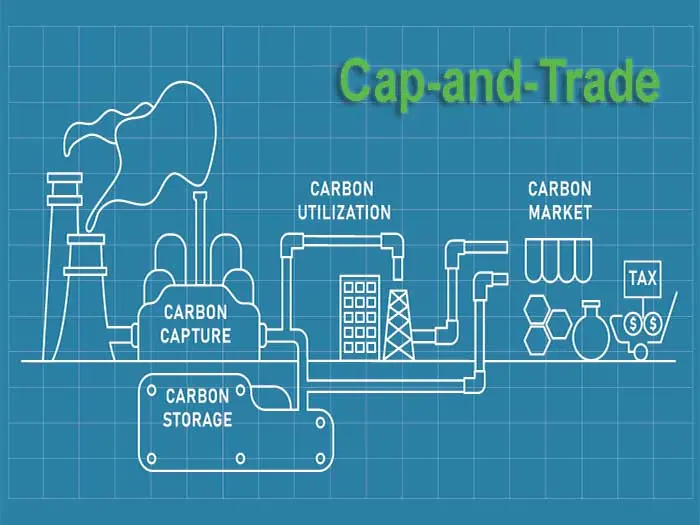
In our first Carbon Credit Series, we learned that there are two types of carbon markets: regulatory and voluntary. We covered the basics of the voluntary carbon market and shared a list of protocols that carbon offset project registries use for verification of Greenhouse Gas (GHG) emission reductions. We also covered the Organic Waste Composting Project protocol developed by the Climate Action Reserve (CAR) for voluntary carbon offset credits.
On our website you’ll find videos, presentations, blogs, and articles about carbon capture, storage, utilization, and the carbon market by our national experts and environmental professionals. Today, we direct you to a new paper by Erik Martig and Victoria Evans entitled The Cap and Trade Market.
The authors step you through the navigating the California cap and trade regulatory market for potential opportunities and pathways to credits. We hope you find the paper and additional resources valuable. As always, our writers and staff professionals are available to answer your questions or provide information specific to your industry, state, and goals.
About the Authors:
 Erik Martig is a Project Director with 15 years of environmental experience. He is a Certified Compost Operations Manager (CCOM) responsible for managing the design of composting facilities and project management. He has technical expertise in organics processing technologies and equipment and regulatory aspects of compost siting and development. Erik is SCS’s National Expert in Organics Management. Contact Erik at SCS Engineers or via LinkedIn.
 Victoria Evans is SCS’s Climate Change Practice Leader and One of our National Experts on Greenhouse Gas and Climate Change. She has over four decades of experience in greenhouse gas emissions (GHG), energy, air quality, and environment. She has over 25 years of experience in climate and GHG management, having directed or performed over 300 GHG studies for US and global corporations and government organizations. Contact Victoria at SCS Engineers or via LinkedIn.
Additional Carbon Credit and Market Resources:
SCS Engineers’ authors Kacey Garber, PG, and Charles Hostetler, PhD, conclude that the Illinois Safety and Aid for the Environment in Carbon Capture and Sequestration Act (SAFE CCS Act) of 2024 plays a crucial role in providing clarity for prospective project owners interested in developing value-added products based on low-carbon intensity ethanol. The Act’s potential to expand the market for low-carbon intensity ethanol through products such as sustainable aviation fuel and other chemicals can significantly enhance the financial incentives for carbon sequestration projects, paving the way for a more sustainable future.
Several U.S. states have obtained or are pursuing ‘primacy ‘, which refers to the authority to regulate, for regulating Class VI Underground Injection Control (UIC) wells for carbon sequestration through a state agency. In Illinois’ case, U.S. EPA Region 5 will continue to hold primacy under the Safe Drinking Water Act (SDWA) to regulate Class VI UIC wells. However, the Illinois SAFE CCS Act, emphasizing state-level accountability, prohibits project operators from implementing CCS without meeting additional state-level requirements and receiving state agency approval. This design is intended to provide clarity for project operators and build confidence in the development and implementation of CCS projects.
Illinois manufacturers, and manufacturers in other states with similar legislation, who are pursuing or plan to pursue CCS and are subject to the requirements of SAFE CCS will acknowledge these requirements and the impacts on project schedule, cost, and scope for the permitting, operation, and post-closure phases as the authors explain in their article:
Additional Resources:
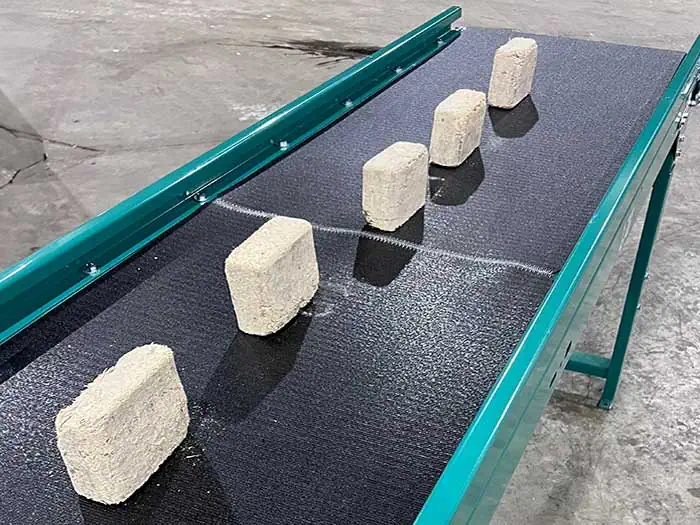
Graphyte is a carbon removal and sequestration firm backed by Bill Gates’s Breakthrough Energy Ventures. Operations began at its Arkansas-based plant in February 2024. What is notable about this carbon sequestration solution is its price, which is considerably lower and can work faster than other sequestration solutions.
Carbon removal is essential to fighting climate change. Billions of tons of carbon dioxide need to be removed from the atmosphere annually by 2050 to achieve climate change goals, but unfortunately, the world is not on track to make the goal. In the spirit of doing more with less, SCS Engineers supports Graphyte’s new solution to capture more carbon. As a leading environmental engineering firm in the Americas, we are experts in designing and implementing safe and long-lasting solutions that reduce, reuse, or store waste.
How Graphyte’s Carbon Casting Works
By-products of the timber and agriculture industries, otherwise burned or left to decompose, are collected. These by-products are considered biomass, dried to stop decomposition, and then condensed into dense blocks. The blocks wrapped with an impermeable polymer sheet make them environmentally safe and ensure that decomposition does not restart.
Then, the blocks are stored in state-of-the-art sites with sensors and tracers, enabling robust long-term monitoring. Storage sites can serve multiple purposes, such as solar farms or agricultural land, designed to last up to 1,000 years.
Sustainable Solution
Industries and businesses are moving to be as carbon-neutral or carbon-negative as possible, looking at carbon sequestration as an attractive reduction solution because it ticks so many boxes that make it sustainable. It sequesters carbon and does it for centuries while meeting environmental, social, and economic considerations that are extremely important. To be sustainable, a solution’s return on investment must be reasonable so customers can still afford the product or service.
Closing the Gap Between Plans and Results
Many industries and businesses combine sequestration with additional strategies that lower their produced carbons. For example, landfills and municipalities encourage diversion and recycling programs to lower methane and produce useful by-products from a large portion of what remains. Energy audits identify how to run facilities and processes more efficiently and may incorporate renewable energy from organic material, methane, or solar to power facilities.
Carbon removal is necessary to manage Climate Change and ultimately save the planet. Using an upstream and downstream approach, Graphyte offers a safe, affordable, and scalable way to sequester carbon dioxide as North America implements more reuse and recycling infrastructure to lower waste generation upstream.
Additional Resources for Carbon Mitigation and Sequestration
SCS Engineers and a Pennsylvania Department of Conservation and Natural Resources (DCNR) state geologist presented a webinar as part of the Pennsylvania Council of Professional Geologists (PCPG) educational series. The educational webinar is timely as Governor Josh Shapiro recently signed Senate Bill 831 into law, creating a regulatory framework for the Commonwealth’s carbon capture, utilization, and sequestration (CCUS).
The webinar, titled CCUS in the US and a Glimpse into What is Possible in Pennsylvania, Part I, includes SCS geologists from across the nation providing a technical overview of CCUS project planning, permitting, operations, and closure referencing current, active Class VI projects based on case studies. The webinar is available for a nominal fee on PCPG’s website, and professional credits (PDH or CEU) are available as allowed by your licensing state and entity.
The DCNR’s state geologist provides an overview of the CCUS work in Pennsylvania by DCNR for over 20 years, including coordinating with the Department of Energy, other states’ geological surveys, and public-private organizations to explore CCUS in the Commonwealth and neighboring states.
Questions and Follow-Up
During the live webinar, SCS received multiple inquiries from the audience, similar to our clients’ questions. We’ve created a separate video to answer them, which is available on the SCS website at the bottom of the carbon capture and DWI page. We hope you find the videos informative and valuable. Our geologists are passionate about their work and helping clients navigate regulations and implement sustainable projects.
Pennsylvania Senate Bill 831 and Other States
Our professionals continue to work on Class VI projects with multiple clients across the US where primacy has been granted, or states have regulations in place, including the outlook for CCUS in Pennsylvania.
Pennsylvania Senate Bill 831 establishes the legal and regulatory framework for the Commonwealth’s potential carbon dioxide capture, utilization, and sequestration (CCUS). SB831 provides “for the injection of carbon dioxide into an underground reservoir for the purpose of carbon sequestration, for the ownership of pore space in strata below surface lands and waters of the Commonwealth, for conveyance of the surface ownership of real property; imposing duties on the Department of Environmental Protection and the Environmental Hearing Board; and establishing the Carbon Dioxide Storage Facility Fund.”
View a copy of the Bill here: https://www.legis.state.pa.us/cfdocs/billinfo/billinfo.cfm?sYear=2023&sInd=0&body=S&type=B&bn=0831.
CCUS | CCS | Deep Well Educational Video Resources:
Published CCUS Resources:
June 26-27 in Houston
Today’s oil and gas technologies such as carbon capture hold significant potential to address future energy challenges. Innovations in drilling techniques, such as horizontal drilling and hydraulic fracturing, have unlocked previously inaccessible natural gas reservoirs, providing a bridge toward a lower-carbon energy future. Utilizing this technical know-how, traditional oil and gas companies are exploring alternative energy streams like geothermal and hydrogen solutions.
Furthermore, advancements in carbon capture, utilization, and storage (CCUS) technologies offer a promising avenue for reducing greenhouse gas emissions. We can develop integrated energy systems that prioritize efficiency and reliability by leveraging these technologies.
Join SCS Engineers to solve future energy challenges.
Join SCS Engineers professionals at the Illinois Manufacturer’s Association’s Environment & Energy Conference on October 18 at Governors State University in University Park, IL (Chicago south suburbs).
The conference is taking shape. Check back as more details are available.
Meet SCS Engineers at the 2023 FECM / NETL Carbon Management Research Project Review Meeting, August 28-September 2, at the David L. Lawrence Convention Center in Pittsburgh, Pennsylvania.
Attendees will share knowledge and insights gained by more than 150 Department of Energy-sponsored research and development (R&D) projects from the Office of Fossil Energy & Carbon Management R&D programs, including Point Source Carbon Capture, Carbon Dioxide Removal, Carbon Conversion, and Carbon Transport & Storage. The National Energy Technology Laboratory is also a co-sponsor of the conference.
The FECM/NETL meetings will feature a mixture of plenary, multi-topic breakout, and interactive poster sessions to share research results and provide opportunities for discussion and collaboration on the research efforts, and they will be co-located with the United States Energy Association’s inaugural Carbon Management Technology Showcase (CMTS). (Note registration for the CMTS is separate from the registration for the 2023 FECM/NETL Carbon Management Research Project Review Meeting.)
Click for more FECM/NETL meeting details and registration information
Corporate Headquarters