Brownfield development continues to be a hot topic for developers and investors, and they offer excellent opportunities – when you do your homework. SCS Engineers, an environmental consulting firm with 40 years of experience, offers a few tips when considering a Brownfield site.
Although we’ve successfully redeveloped hundreds of properties, one of SCS’s most visible Brownfields projects is the San Diego Padres Petco Park in downtown San Diego, completed in the early 2000s. The site for Petco Park was once a commercial and industrial area with former land uses such as auto repair facilities and gas stations, laundry facilities, and paint and lumber storage facilities. On top of that, it also stored petroleum hydrocarbon and hazardous materials.
What is a Brownfield?
Brownfield land is any previously developed land that is not being used or is under-utilized and may require environmental mitigation to redevelop. These properties are common in many urban areas and often present cost-effective, profitable redevelopment opportunities.
The development of Petco Park is a classic example of a brownfield project, which brought the San Diego Padres to downtown San Diego within a 26-city block portion of the East Village area now known as the Ballpark District. Before developing this beautiful stadium, as well as the new hotel, residential, and commercial development that blossomed around it, this area of East Village San Diego was underutilized. The area housed various commercial and industrial properties dating back to the 1800s, many of which had a legacy of environmental issues.
Because of the aggressive development schedule, and to streamline the redevelopment of the Petco Park and the Ballpark District, SCS and the local health department (the County of San Diego Department of Environmental Health) worked together to create a dynamic approach to its redevelopment of contaminated properties. This approach, embodied in the Property Mitigation Plan (PMP) (also known as a Soil Management Plan), is tailored to the specific property uses as an efficient means to address and mitigate environmental issues (such as dealing with contaminated soils) during the property construction and development process. If enrolled under oversight by the appropriate regulatory agency, the PMP serves as the blueprint for mitigation, soil management, and soil reuse. And when followed, it is designed to result in the closure of environmental cases for the site’s approved uses.
Overall, brownfields typically have environmental issues that can impede new development. But suppose these issues are identified during the due diligence process and integrated into the development and construction processes. In that case, redevelopment protecting future occupants and the environment is achieved while often presenting cost-effective and profitable redevelopment opportunities.
What can you put on a brownfield? Can it be used for residential units?
A brownfield is potentially useful for any structures – including residential. San Diego has numerous examples of brownfield redevelopment, including former burn dumps and landfills, railroad facilities, gas stations, automobile repair facilities, dry cleaners, and more. The feasibility and cost are dependent upon the environmental issues unique to each site. Cleanup standards will be stricter for residential uses, and in some cases, it may not be cost-effective to achieve those standards. Evaluations determine what uses are feasible.
How do you evaluate a Brownfields site?
One should proactively address environmental issues to reduce the risk of cost and schedule overruns or future liability issues while operating these properties as-is or during the due diligence or pre-development process. Identifying environmental risks before acquiring properties is critical, as is assigning potential costs to these risks. Depending on the nature of the transaction, these items are often useful as leverage during negotiations.
Brownfields are normally evaluated by performing a Phase I Environmental Site Assessment (ESA) to first study historic site information and previous uses. A Phase II study may be performed if the Phase I ESA identifies potential issues (known as Recognized Environmental Conditions). Phase II includes collecting and analyzing samples (i.e., soil, soil vapor, and groundwater) to assess whether environmental impacts are present. If enough sampling is completed, the extent of impacts can be estimated.
The American Society for Testing and Materials (ASTM) has standard protocols for Phase I ESA studies. However, as an integral part of your team, your environmental consultant can do more than meet these technical standards. The result of the evaluation provides you with an understanding of how this information will impact your project.
If contamination exists, what do I do?
Your first concern is to get an estimate of how much contamination is present and what it will cost to address, which will affect your bottom line and project feasibility. It’s also important to know that cleaning up contamination is manageable and can even be left on-site during construction and through your planned use in some cases. Your environmental consultant helps you mitigate any risks.
Is funding available to help pay for the site investigation and remediation?
The U.S. Environmental Protection Agency has grant programs that can pay for the assessment and cleanup of brownfields, but these programs are only available to governmental and non-profit organizations. However, a private entity may be able to team with these eligible parties. In addition, grants are available from agencies such as the California State Water Resources Control Board or the Department of Toxic Substances Control for certain soil and groundwater contamination types from gas station or dry cleaner releases. Each grant has its eligibility criteria, and in general, the entity that “caused” the contamination is not eligible. Federal, state, and local tax incentives may also be available.
Obtaining a grant or loan with the help of a qualified environmental consultant or an environmental attorney can be the difference in acquiring, cleaning up, and redeveloping a property. The grants don’t typically cover all the costs associated with the necessary cleanups, but they can cover most of these costs.
I hear insurance can help pay for cleanups as well as help protect buyers.
It can. A new property owner can obtain an environmental insurance policy to cover cleanup requirements, third-party claims for bodily injury and property damage, and associated legal expenses resulting from pollution or contamination. These insurance policies are available with various term lengths, and deductible amounts to satisfy the concerns of lenders or equity investors.
Other solutions include “insurance archaeology” to find old insurance policies that may have coverage for “pollution conditions.” Many firms, including SCS, do this type of work, sometimes on a contingency fee basis.
What are some good risk management strategies for brownfields?
The most important risk management strategy is to have a thorough understanding of the environmental issues on the site and how those issues can impact your redevelopment plans and bottom line. It is critical to have environmental and legal support experienced in strategies for identifying, anticipating, and managing risks on Brownfields.
Are brownfields sites good investment opportunities?
Brownfields can be excellent investment opportunities if you perform thorough due diligence and understand the risks of each site. Many potential sites exist in desirable locations or emerging areas. They should be available below market value and may have been on the market for a long time.
With proper planning and the help of a qualified environmental consultant, the mitigation or remediation of these impacts can be incorporated into the acquisition and development processes and result in a vibrant, profitable project that is protective of human health and the environment.
 Author Luke Montague is a vice president with SCS Engineers in its San Diego office.
You’ll find resources for funding brownfield redevelopment here.
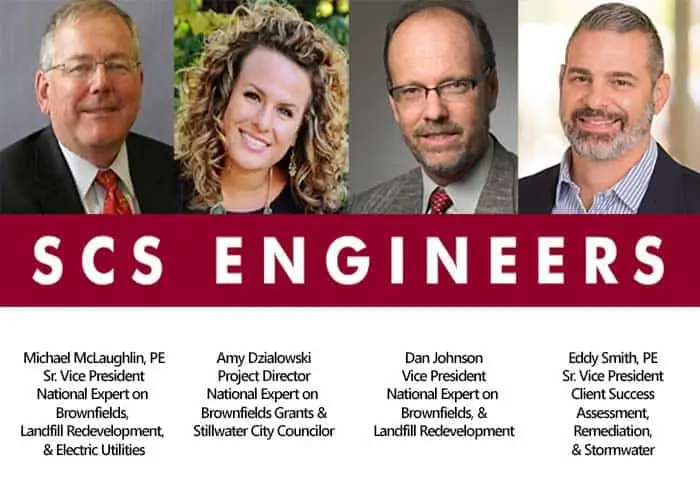
SCS’s next webinar helps our clients prepare to capitalize on upcoming opportunities to redevelop contaminated properties as a result of market demands, stimulus funding, and traditional Brownfields grant programs. In this live, non-commercial presentation we’ll cover the following:
This educational, non-commercial webinar with a Q&A forum is free and open to all who want to learn more about meeting the environmental challenges these new opportunities offer. We recommend this month’s discussion for developers, contractors, municipal officials, city managers interested in using stimulus funds for local development, and advisors such as banks, insurance firms, and attorneys to private and public entities.
DATE: Thursday, April 29, 2021
TIME: 2 p.m. ET, 1 CT, Noon MT, 11 PT
You will receive a Zoom email with your link to attend. Do not share this link.
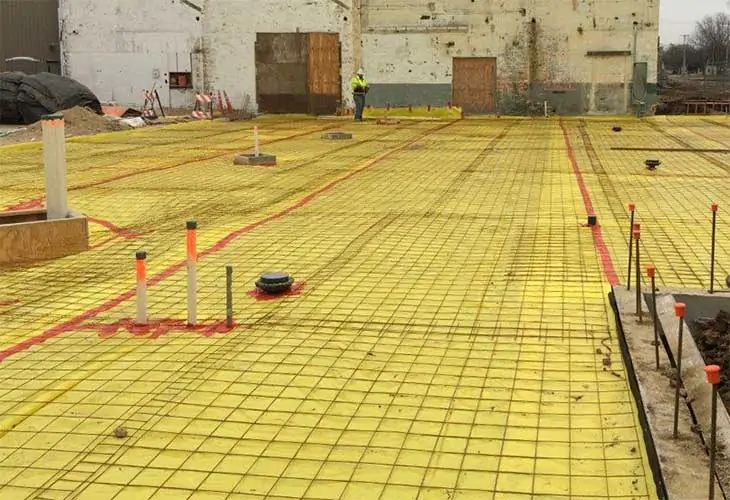
Vapor intrusion is a regulatory hot button gaining traction on states’ radar nationwide. This is driven by a growing understanding of how vapors travel through the soil into structures, posing health risks to occupants, coupled with research showing volatile vapors can be problematic even at very low concentrations.
As in California, conservative assumptions by regulatory agencies call for careful due diligence during the assessment process. These salient concerns recently brought a real estate developer in Monrovia to seek a professional engineer.
The client plans to convert a commercial property to residential use. But before moving forward, it needs to assess potential environmental issues associated with the property. That’s where SCS comes in, drawing on its concrete knowledge base in geology and chemistry—and leveraging its grasp of regulatory requirements.
The work in Monrovia entails a detailed soil vapor assessment, looking for volatile organic compounds (VOCs); the discovery at this site came as little surprise to Julio Nuno, Senior Vice President, and Project Director, as these constituents are often found during evaluations of this kind.
Assessing for VOCs
In this case, the soil contained eight VOCs, some at non-compliant levels. The good news is, after an extensive, multi-step vetting process, Nuno and his team came up with a relatively inexpensive solution to tackle a potentially daunting problem.
“As part of the soil vapor assessment, we compare concentrations we find on-site to screening levels established by the Department of Toxic Substances Control. We often see levels in exceedance of regulatory thresholds, particularly in industrial areas with releases that can travel from groundwater to soil into the building through the slab,” Nuno says.
Most prominent at the Monrovia site were two chlorinated compounds that have been used as solvents in industrial applications: tetrachloroethylene, also called PCE, and trichloroethene, or TCE. PCE is commonly present in industrial settings and communities as drycleaners widely and routinely used the chemical for decades.
Nevertheless, the work begins even before confirming VOC levels and other specifics around these compounds. The first step is a Phase I Environmental Assessment looking to see if past use of the property or surrounding property may have left a significant environmental impact. The SCS team discovered the adjacent property had a release of VOCs they identified as a ‘recognized environmental condition,’ meaning it needs further evaluation using a Phase II to determine if vapors could migrate onto the client’s property.
During the Phase II Environmental Assessment –the collection of soil and soil vapor samples –the SCS team gets even more specific, determining what’s present, specific locations, what degree of contamination, and what these findings mean for redeveloping the property and its final use.
“We confirm subsurface concentrations and if they exceed state screening levels, and if the site represents a potential risk for future residential use. The information informs our possible solutions to mitigate any migration of certain VOCs into the building and the indoor air,” Nuno explains.
Redevelopment Goals – safety and cost containment
Safety comes first, but containing project costs is a priority, which comes down to knowing design options, how to piece components together with both function and economics in mind. At this site, achieving safety and controlling costs centered largely around looking at the mandatory infrastructure– a ventilation system for a planned underground parking garage to prevent accumulation of carbon monoxide and other vehicle exhaust emissions.
“We knew the underground parking would require a ventilation system. It makes sense to look at the parameters associated with that design to verify if it serves dual purposes to ventilate the garage and mitigate the potential for VOCs to enter the building,” Nuno says.
By studying air exchanges that would occur, the number of times replacing air-containing pollutants with cleaner air per hour, Nuno gets his answer. “We determined that a second, separate system would not be necessary for sufficient ventilation; the assessment enabled us to confirm vapors would not travel into the residential portion of the building.”
The client can save $50,000 to $75,000 in capital expenses upfront while achieving their safety goals and avoids ongoing operations and maintenance costs for added infrastructure.
An added layer of protection
Identifying the issues for site developers and their tenants, then plotting the best course of action to ensure safety and regulatory compliance takes experience and knowledge. SCS devises a soil monitoring plan, alerting developers of indications of potential contamination to the soil, of odor, or anything unusual that could suggest an environmentally adverse condition. The plan advises on how to respond should there be an unexpected condition adding a further protection layer.
“It’s essential that an engineer understand the applicable federal, state, and local standards for completing assessments, as well as understand regulatory stipulations. You must also know the variations in those stipulations to effectively design a sustainable plan,” Nuno says. “In Monrovia, we comply with the Department of Toxic Substances Control requirements, the requirements of the Los Angeles Regional Quality Control Board, and others. Each has specific stipulations for evaluating each contaminant. So, we stay on top of which rules apply to which location,” he says.
Nuno has submitted a draft report for review by his client and its legal counsel; he’ll meet with them to discuss findings and explain their meaning. SCS includes an executive summary, explaining in plain language what is salient; often, a backup report includes thousands of pages. “It’s a lot of complex information, so we work on the language,” Nuno says.
“It’s important to paint an accurate picture and use terms that all parties, whether the client, investors, or other stakeholders understand. These redevelopments are major projects with many due diligence considerations. We want to provide accurate findings and recommendations that the client and their advisors can digest to help them with their decision making.”
More resources:

Cities like Oviedo, Fla. are investing in the cleanup of defunct brownfield sites, converting even highly contaminated properties from liabilities to assets that pump economic vitality into their communities. And municipalities are getting reimbursed for doing so. But these ambitious undertakings require the expertise of professionals with strong environmental engineering and remediation backgrounds and an understanding of federal and state regulations aimed to protect public health and the environment.
This spring, after over two years of working closely with SCS Engineers and the development team, the City of Oviedo will unveil its redevelopment project: a 3.7-acre public park with a walking and jogging trail. The loop trail will be part of a larger trail system interconnecting through the City and the Cross-Seminole trail, with the latter running throughout the county.
The walking and jogging path surrounds a pond with a dual purpose: to serve as an added feature to this peaceful retreat and part of an enhanced stormwater management system that will allow business owners to convey drainage from their properties via an underground stormwater management system. Along the park perimeter, historical displays will tell the story of the nearly century-and-a-half-old City’s past.
SCS helped the City navigate regulatory issues associated with redeveloping environmentally impacted land, ensuring safe and environmentally sound practices, and maximizing financial reimbursement through the Florida Brownfields Program.
In the 1940s, the site operated as a farm but lay idle and overgrown with vegetation decades after. When SCS came in to complete the environmental assessment, the team confirmed that years of pesticide application did leave arsenic behind in the soil.
“It appears that the pesticides were used appropriately, but with the change in land use and to meet the state’s environmental criteria, we need to address the residuals to redevelop the property as a park. It would otherwise remain as unusable land without this cleanup,” says Kirk A. Blevins, SCS senior project manager.
SCS completed site assessment activities according to Chapter 62-780 FAC, which includes additional testing to delineate the extent of arsenic-impacted soil further and evaluate groundwater conditions. Assessment activities indicated that while not impacting groundwater, the soil contained arsenic above acceptable regulatory levels. In its next step, the team designed a remedial action plan with multiple considerations for success.
“Given that the site would include both a stormwater management pond and a public park, we recommended that rather than cap the soil to reduce potential exposure, the City meet the strictest cleanup criteria. This option is the most protective of human health and the environment,” Blevins says.
The plan included removing approximately 47,000 cubic yards of arsenic-impacted soil, then placement of clean import fill for areas open to the public. Blevins and his team proposed excavating to the property boundary, and they provided technical guidance to the City contractor on how to efficiently and safely execute this undertaking. “It was important to excavate to the property boundary to assure removal of the impacted material so that the City would receive unconditional closure approval from the regulatory agency,” explains Blevins.
Concise reporting of the work is key to securing that approval, so SCS documented the excavation of impacted soil to the appropriate depths and lateral extents, managing it appropriately onsite, and transporting it to an approved landfill for disposal.
The team worked with the City’s environmental counsel to bring the site into the Florida Brownfields Program and prepared its voluntary cleanup tax credit (VCTC) applications for submission to the Florida Department of Environmental Protection (FDEP). All expenses and payment, confirming the expenditures “integral to rehabilitation,” are documented. With this validation, the City of Oviedo is getting back about half of its $1,432,000 related investment. It will receive another 25% bonus once FDEP issues a letter stating that no further action is required.
Documentation and communication with the state regulators is an ongoing process requiring a detailed review of contractor proposals, invoices, pay applications, proof of payment, and a summary of progress each year over the project’s life. “In particular, a line-item review of invoices can sometimes establish additional actions that are critical to remediation that otherwise might have been overlooked and not captured. This process is vital to maximize reimbursement,” Blevins explains.
Cost, as always, is a client priority. So, SCS and the remedial team focused on minimizing offsite disposal of the impacted soil, proposing over-excavating the pond, using the unimpacted soil as the onsite fill, and placing a portion of the impacted soil at the pond’s bottom.
“This was possible because testing indicated that the impacted soil would not leach arsenic into the pond water at a rate that would adversely affect water quality. We confirm that arsenic concentrations are below the strictest regulatory level before any soil from over-excavating the pond can be of beneficial reuse onsite. Safety of people and environmental protection always comes first,” Blevins says.
The ultimate outcome: Oviedo has a regional stormwater pond suited for potential commercial operations to use for drainage, maximizing available land for economic development, as well as a recreational park for the community and visitors.
SCS’s technical expertise was crucial to successfully remediating this site, attests Bobby Wyatt, Public Works Director at City of Oviedo, Florida.
“The team easily navigated and sped up the permitting process for the arsenic removal and provided continuing assistance with monitoring during construction. The process for completing the specific remediation/permitting was unfamiliar to City staff, and SCS provided efficient and competent assistance to get us where we needed to go.
Their experience provided a sense of confidence that we were going to be able to make the park project successful,” Wyatt says.
SCS has worked on brownfields projects and voluntary remediation across the U.S. for over 45 years. We convert once nonproductive commercial and industrial properties into revenue-generators and affordable housing.
Resources:
Brownfields and Voluntary Remediation
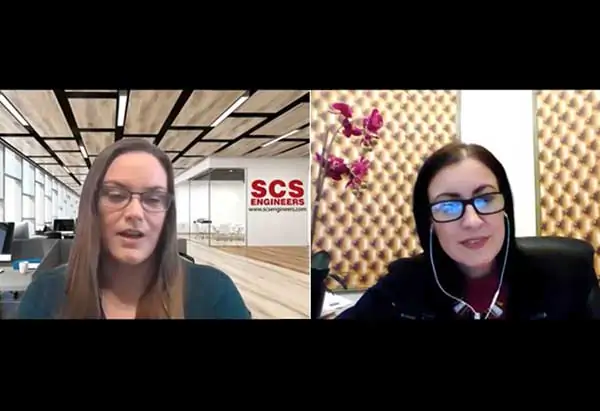
Marketing Specialist Dana Justice of SCS Engineers shares her favorite snack on Snacks with a Surprise while discussing Brownfields’ economic potential, the environmental impact, and the opportunity to serve communities through her support. Her work with SCS’s environmental consultants and engineers provides land remediation and Brownfields grants bringing properties with a past back to pristine condition. The redevelopment of these properties, typically with developed infrastructure already in place, provide jobs, housing, parks, and tax revenues for the surrounding community.

Learn more about the Urban Land Institutes’s Women’s Leadership Initiative or
more about Brownfield Remediation and Grants here.
Blighted properties are common in many urban areas, and with due diligence often present cost-effective and profitable redevelopment opportunities. Redevelopment of these types of projects is often referred to as Brownfield projects if considering the presence or potential presence of contaminants in the subsurface. Brownfields redevelopments can present great benefits and advantages to the surrounding community.

Advantages of the redevelopment of these properties include: revitalizing a property and surrounding properties, creating jobs, rejuvenating businesses, adding much-needed housing, increasing tax revenue, reducing crime, and increasing the efficiencies and quality of life for residents and workers.
Redevelopment of blighted properties does come with challenges, such as density, parking, financing, city approvals, and more. Blighted properties can have environmental issues that are best addressed proactively to reduce the risk of cost and schedule overruns as future liability issues during redevelopment.
These issues should start to be addressed during due diligence and before construction activities commence to reduce the uncertainty on potential project costs and timeline implications. Environmental issues can sidetrack the development process of some properties but most sites, if handled correctly, can present significant upside if these issues are identified during the due diligence and integrated into the development processes.
Common environmental concerns include:
Identifying environmental risks before the acquisition of properties is critical, as is assigning potential costs to these risks. Depending on the nature of the transaction, these items are often useful as leverage during negotiations.
A Phase I Environmental Site Assessment is a good starting place for identifying whether environmental issues may exist at a property. If a Phase I identifies potential risks, these reports may recommend additional investigation (Phase II) in the form of soil, soil vapor, and groundwater sampling. Phase II is used to identify whether contamination is present (i.e., from fuels, solvents, pesticides, toxic metals), and with enough sampling can determine the extent and magnitude of contamination.
Resolving these impacts can include leaving and managing impacted soil in place as much as possible since the significant cost from impacted soil is digging it up and paying to dispose of it. Regulatory agencies such as the local health departments, if approached under voluntary cleanup assistance programs, can accommodate leaving all or a good portion of impacted soil in place if the risks to human health and the environment are identified and resolved in a mitigation plan.
For more significant contamination issues, such as extensive soil and groundwater contamination from a gas station or dry cleaner releases, funding in the form of State or Federal grants can be available. Obtaining a grant with the help of a qualified environmental consultant can be the difference-maker in acquiring, cleaning up, and redeveloping a blighted property. These grants don’t typically cover all the costs associated with these cleanups but can cover the majority of these costs with some additional time required to do a cleanup.
Developers can also take out an environmental insurance policy to console a nervous lender or investor. Environmental insurance can cover clean-up requirements, third-party claims for bodily injury and property damage, and associated legal expenses resulting from pollution or contamination. Policies with various term lengths and deductible amounts are available to satisfy the concerns of lenders or equity investors.
The redevelopment of blighted urban properties is a necessary part of the life cycle of a property and a community. It’s critical to identify potential environmental risks during the due diligence process – before you choose to purchase the site. With proper planning, the mitigation or remediation of these impacts can be incorporated into the development process and result in a vibrant, profitable project that protects human health and the environment, and help owners, lenders, investors, and users of these properties sleep well at night.
 Luke Montague is a professional geologist (PG) and licensed contractor with 19 years of experience primarily in environmental consulting, as well as in the areas of geotechnical engineering, general contracting, commercial and residential development, and property and asset management.
Learn more about Brownfields | Learn more about Due Diligence
Joseph Dinan heads the SCS Engineers new office at 101 Arch Street, Boston, MA 02110,
Tel: 857-444-6302
SCS Engineers opened a new office in Boston’s Downtown Crossing district. The new location is more convenient for clients and enhances support to the firm’s growing client base in New England.

Joseph Dinan, an accomplished project manager and senior scientist heads Boston’s SCS team. Dinan has an excellent record meeting regulatory compliance and accountability for his clients to efficiently permit projects, keep them on budget and maintain the redevelopment schedule while meeting all environmental guidance. His background includes applied sciences including chemistry, microbiology, and environmental and soil sciences. Dinan has successfully managed hundreds of environmental assessment and remediation projects, both domestically and internationally.
Dinan’s Boston team resolves complex environmental challenges through the application of comprehensive analytical skills and technologies. Approaching each project with decades of expertise, mitigating the financial risk through careful assessment, analysis, and planning protects clients and the environment during all phases of redevelopment.
The Boston location supports the growing demand for environmental scientists, engineers, and consultants. SCS professional staff specializes in meeting federal, state, and local clean air, water, and soil goals, and the restoration of property once thought impractical to revitalize. The firm also provides vapor intrusion systems for protecting existing properties and a range of comprehensive environmental services for public and private entities.
As with most established urban environments, many properties may have previously been industrial or mass transportation sites, which often means that extra care is taken during redevelopment. Commercial real estate transactions must take environmental issues into consideration. Complex laws can impose significant environmental liabilities on purchasers, sellers, and lenders, whether or not they caused the problem, and whether or not they still own the property.
Important rules published by the U.S. Environmental Protection Agency – USEPA and in Massachusetts and other states offer defenses against environmental liabilities provided that the defendant conducted “all appropriate inquiries” regarding the property at the time of the acquisition, and then took reasonable steps to mitigate the effects of hazardous substances found on the property.
For more information, case studies, events, and articles visit these pages:
On October 19, 2018, the Treasury issued proposed guidance related to the new Opportunity Zone tax incentive created by the 2017 Tax Cuts and Jobs Act. Opportunity Zones are communities where new investments may be eligible for significant tax incentives. The incentive is designed to spur economic development and job creation.
New tax code Section 1400Z-1 provides the rules for designating Opportunity Zones and Section 1400Z-2 allows a taxpayer to elect to defer certain gains based on timely investment in Qualified Opportunity Fund (QOF) and excludes post-acquisition gains on investments in QOFs held for at least 10 years. The proposed guidance under Section 1400Z-2 addresses the gains eligible for deferral, types of taxpayers who are eligible, the type of eligible interest, the timeframe to invest in the QOF, and the requirement to include previously deferred gains. The proposed regulations also provide rules for self-certifying as a QOF, valuation of QOF assets (90% test), and guidance on qualified businesses. The proposed rule would permit an investor making an investment as late as the end of June 2027 to hold the investment in the QOF for the entire 10-year holding period plus another 10 years through 2047.
In a nutshell, the new law allows a taxpayer who would otherwise owe capital gains tax on an investment to roll-over the proceeds into an Opportunity Zone and thereby defer (or eliminate) capital gains taxes provided certain conditions are met. As many of the Opportunity Zones will be designated in areas containing Brownfields redevelopment opportunities, SCS expects many of our clients will be interested in this opportunity to do well by doing good. If you are interested in investing in a potential brownfield site, contact SCS Engineers to help you evaluate and manage environmental concerns associated with your site. Visit www.scsengineers.com to learn more.
The following are links to the press release and proposed guidance:
https://home.treasury.gov/news/press-releases/sm530
https://www.irs.gov/pub/irs-drop/reg-115420-18.pdf
The Treasury plans to present additional guidance before the end of the year, and a public hearing is scheduled for January 10, 2019. Taxpayers may submit comments by 60 days (around the third week in December 2018) after the publication of the proposed guidance in the Federal Register at www.regulations.gov. Additional guidance is expected to include the meaning of “substantially all”; transactions that may trigger the inclusion of gain that has been deferred; the reasonable period for a QOF to reinvest without paying a penalty; administrative rules regarding the investment standard; and, information-reporting requirements. SCS will provide an update when the additional guidance becomes available.
For additional information, you may contact SCS Engineers at or the blog Author, Christine Stokes.
Additional Resources:
Duluth, GA – SCS Engineers, a leader in environmental and solid waste engineering, recently relocated from Alpharetta to a larger, more strategically located office in Duluth, Georgia. The new office supports SCS’s continued development in the Southeast, our client success-driven growth, and accommodates our growing professional staff.
SCS is always on the lookout for talented senior level professionals in the environmental consulting community. The Atlanta Environmental Services (ES) group is seeking experienced, humble, hungry, and smart senior level consultants with client relationships and business development capabilities to join our team.
SCS Engineers – Atlanta
3175 Satellite Blvd
Building 600, Suite 100
Duluth, GA 30096
(678) 319-9849
If you are interested or know anybody who is interested, reach out to . You may also review our open positions on the SCS Careers Page.
Vapor intrusion (sometimes known as soil gas intrusion or soil vapor intrusion) is a potential environmental risk that can occur at a wide variety of properties, from former industrial facilities, shopping malls, and even residential properties. Knowing how to assess the risk and mitigate potential harm from soil vapor intrusion is critical to reducing health impacts and mitigating financial and other liability from potential exposures.
What is Vapor Intrusion?
Developers and the public understand that soil and water contamination can pose a health hazard, but vapor intrusion is an environmental health risk that can be overlooked. It is a hazard that can result from both heavy industrial operations and small “mom-and-pop” businesses so that it can be an issue both at industrial properties, suburban strip malls, and even residential developments.
Vapor intrusion is the migration of soil or water contamination from below structures into businesses or homes as a vapor. Common vapor intrusion contaminants from small businesses include benzene from gasoline and perchloroethylene (perc) from dry-cleaners, while large industrial facilities may have a wide range of industrial chemical contaminants. Less common vapor intrusion hazards are mercury, polychlorinated biphenyls, and pesticides.
Determining Whether Vapor Intrusion is an Issue
Environmental due diligence is key to determining whether vapor intrusion is a likely issue. An environmental site assessment (ESA) is critical in assessing the potential for vapor intrusion issues and the current state of vapor intrusion based on past site history. A Phase I ESA will review the current and historical use of the property and surrounding properties to determine where and when potential sources of contamination were present. Leaky underground gasoline storage tanks and poor chemical handling practices at dry cleaners lead to chemical contamination that can create vapor intrusion issues, so the “corner” gas station or the strip mall dry cleaner can be the source of vapor intrusion hazards.
Vapor intrusion can also come from groundwater plumes that originate outside the property boundary, so it is important that any assessment looks for potential contamination issues from nearby properties as well as on-site.
When the potential for a vapor intrusion issue exists, a Phase II ESA should be conducted to determine whether there is contamination, the extent and magnitude of the contamination, and whether the contamination poses a significant health risk. In the Phase II ESA, samples of soil and groundwater are collected from the property and analyzed for evidence of contamination.
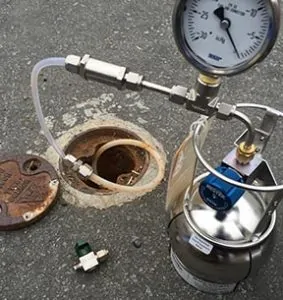
If contamination is present, results are compared to screening levels established by regulatory agencies or a health risk assessment (HRA) can be prepared. Either of these strategies can potentially be used to demonstrate that health risks are not significant for the property’s current or future use or to determine the level of remediation necessary.
Dealing with Significant Soil Vapor Contamination
If soil vapor intrusion poses a significant health risk, there are ways to mitigate that risk. Mitigation can include removal of the contamination, active mitigation of the contamination source, and protection against indoor air exposure. The approaches are not mutually exclusive, and multiple risk reduction strategies may be used.
The most effective way of reducing soil vapor risk is to remove or treat the soil or water that is the source. This remediation is the most cost-effective for small sources of contamination and when that contamination can be easily accessed. It is often not feasible to remove the source when contamination originates offsite and moves onto the property in a groundwater plume. It may also be more cost-effective to mitigate risk through other means when the source of the vapor intrusion is extensive or difficult to remove.
In active mitigation, soil vapor intrusion is mitigating by reducing contamination at the source. Active systems can include soil vapor extraction, in which vapor is collected and removed; in situ treatment, which uses chemical reagents to transform the contamination into less toxic chemicals; and containment of the contamination source by some form of barrier. Under ideal conditions, these methods have the potential to be highly effective in reducing contamination but monitor treatment for effectiveness and to determine that the resulting contamination levels are acceptable.
It is also possible to mitigate indoor air exposure to soil vapor intrusion. Underground vents, membranes, and seals beneath the foundation and slab depressurization can reduce the flow of soil vapor into a building. This type of passive mitigation leaves the contamination source in place, which may limit future uses for the contaminated property, but it may be more cost-effective than active mitigation, especially in cases where contamination originates off the property. Regulatory agencies typically require that properties mitigating the movement of soil vapor into buildings monitor the ongoing mitigation on a continuous basis with sensors and alarms or periodic resampling.
What You Need to Know
Soil vapor intrusion is a potential environmental liability, but it is manageable. Environmental due diligence can significantly reduce unforeseen costs of vapor intrusion by identifying the issue for proactive management before development, which is always easier and more cost-effective than trying to address a problem after development. It is possible to mitigate health risk from soil vapor intrusion on developed sites. Developers should work with qualified environmental consultants to address vapor intrusion through each stage of the process to adequately minimize risk.
Corporate Headquarters