Duluth, GA – SCS Engineers, a leader in environmental and solid waste engineering, recently relocated from Alpharetta to a larger, more strategically located office in Duluth, Georgia. The new office supports SCS’s continued development in the Southeast, our client success-driven growth, and accommodates our growing professional staff.
SCS is always on the lookout for talented senior level professionals in the environmental consulting community. The Atlanta Environmental Services (ES) group is seeking experienced, humble, hungry, and smart senior level consultants with client relationships and business development capabilities to join our team.
SCS Engineers – Atlanta
3175 Satellite Blvd
Building 600, Suite 100
Duluth, GA 30096
(678) 319-9849
If you are interested or know anybody who is interested, reach out to . You may also review our open positions on the SCS Careers Page.
Vapor intrusion (sometimes known as soil gas intrusion or soil vapor intrusion) is a potential environmental risk that can occur at a wide variety of properties, from former industrial facilities, shopping malls, and even residential properties. Knowing how to assess the risk and mitigate potential harm from soil vapor intrusion is critical to reducing health impacts and mitigating financial and other liability from potential exposures.
What is Vapor Intrusion?
Developers and the public understand that soil and water contamination can pose a health hazard, but vapor intrusion is an environmental health risk that can be overlooked. It is a hazard that can result from both heavy industrial operations and small “mom-and-pop” businesses so that it can be an issue both at industrial properties, suburban strip malls, and even residential developments.
Vapor intrusion is the migration of soil or water contamination from below structures into businesses or homes as a vapor. Common vapor intrusion contaminants from small businesses include benzene from gasoline and perchloroethylene (perc) from dry-cleaners, while large industrial facilities may have a wide range of industrial chemical contaminants. Less common vapor intrusion hazards are mercury, polychlorinated biphenyls, and pesticides.
Determining Whether Vapor Intrusion is an Issue
Environmental due diligence is key to determining whether vapor intrusion is a likely issue. An environmental site assessment (ESA) is critical in assessing the potential for vapor intrusion issues and the current state of vapor intrusion based on past site history. A Phase I ESA will review the current and historical use of the property and surrounding properties to determine where and when potential sources of contamination were present. Leaky underground gasoline storage tanks and poor chemical handling practices at dry cleaners lead to chemical contamination that can create vapor intrusion issues, so the “corner” gas station or the strip mall dry cleaner can be the source of vapor intrusion hazards.
Vapor intrusion can also come from groundwater plumes that originate outside the property boundary, so it is important that any assessment looks for potential contamination issues from nearby properties as well as on-site.
When the potential for a vapor intrusion issue exists, a Phase II ESA should be conducted to determine whether there is contamination, the extent and magnitude of the contamination, and whether the contamination poses a significant health risk. In the Phase II ESA, samples of soil and groundwater are collected from the property and analyzed for evidence of contamination.
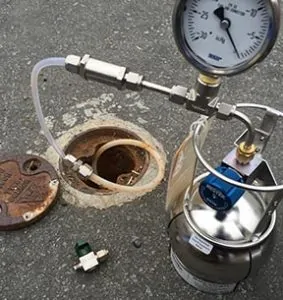
If contamination is present, results are compared to screening levels established by regulatory agencies or a health risk assessment (HRA) can be prepared. Either of these strategies can potentially be used to demonstrate that health risks are not significant for the property’s current or future use or to determine the level of remediation necessary.
Dealing with Significant Soil Vapor Contamination
If soil vapor intrusion poses a significant health risk, there are ways to mitigate that risk. Mitigation can include removal of the contamination, active mitigation of the contamination source, and protection against indoor air exposure. The approaches are not mutually exclusive, and multiple risk reduction strategies may be used.
The most effective way of reducing soil vapor risk is to remove or treat the soil or water that is the source. This remediation is the most cost-effective for small sources of contamination and when that contamination can be easily accessed. It is often not feasible to remove the source when contamination originates offsite and moves onto the property in a groundwater plume. It may also be more cost-effective to mitigate risk through other means when the source of the vapor intrusion is extensive or difficult to remove.
In active mitigation, soil vapor intrusion is mitigating by reducing contamination at the source. Active systems can include soil vapor extraction, in which vapor is collected and removed; in situ treatment, which uses chemical reagents to transform the contamination into less toxic chemicals; and containment of the contamination source by some form of barrier. Under ideal conditions, these methods have the potential to be highly effective in reducing contamination but monitor treatment for effectiveness and to determine that the resulting contamination levels are acceptable.
It is also possible to mitigate indoor air exposure to soil vapor intrusion. Underground vents, membranes, and seals beneath the foundation and slab depressurization can reduce the flow of soil vapor into a building. This type of passive mitigation leaves the contamination source in place, which may limit future uses for the contaminated property, but it may be more cost-effective than active mitigation, especially in cases where contamination originates off the property. Regulatory agencies typically require that properties mitigating the movement of soil vapor into buildings monitor the ongoing mitigation on a continuous basis with sensors and alarms or periodic resampling.
What You Need to Know
Soil vapor intrusion is a potential environmental liability, but it is manageable. Environmental due diligence can significantly reduce unforeseen costs of vapor intrusion by identifying the issue for proactive management before development, which is always easier and more cost-effective than trying to address a problem after development. It is possible to mitigate health risk from soil vapor intrusion on developed sites. Developers should work with qualified environmental consultants to address vapor intrusion through each stage of the process to adequately minimize risk.
It is challenging to restore properties with a past, but you can do it on time and on budget if you plan ahead to address contaminated historic fill. Follow these tips and use the brownfield redevelopment checklist to keep your next redevelopment on track.
Design Phase
Consider how contaminated historic fill impacts the following:
Site feature locations – You can reduce or even eliminate landfill disposal costs by carefully selecting locations for your building, underground parking, parking lot, utility, and green space.
Storm water infiltration – Do you know that storm water infiltration devices must be located in areas free of contaminated historic fill? Infiltration devices cannot be located where contaminants of concern (as defined in s. NR 720.03(2)) are present in the soil through which the infiltration will occur.
Subslab vapor mitigation system – Already know you have contaminated historic fill on site? Consider adding a subslab vapor mitigation system to the design of your new building. It is usually much cheaper to install this system in a new building than to retrofit one into an existing building. It can also mitigate radon gas.
Planning & Design
Determine if contamination requires the following plans to manage the construction phase:
Material management plan – It establishes how you will separate excavated contaminated material from material that is not contaminated. It also outlines how you will handle contaminated material, either by disposing of it off site in a landfill or reusing it on site in an approved area such as a paved parking lot. This plan also covers screening, sampling, and testing contaminated materials, if required.
Dewatering plan – If the development requires excavation through contaminated historic fill to depths below groundwater, you will need a dewatering plan to properly manage discharge of the water. You may be able to discharge the water to the storm sewer or the sanitary sewer depending on the type and concentration of contaminants. You must determine local and state permit requirements before implementing your dewatering plan.
Demolition plan – The demolition plan for removing existing structures during redevelopment should include handling, removal, and disposal of potential contaminants such as lead and asbestos. The demolition plan should also address recycling and reuse of existing on site materials like concrete. You may be able to save money by crushing and reusing concrete on site as fill material, or by hauling and crushing it off site to reuse it as fill at another property. This approach can save you considerable money compared to landfill disposal.
Ready to start saving time and money addressing contaminated historic fill at your next redevelopment? Contact Ray Tierney for help evaluating your options in the Upper Midwest, or using the SCS Brownfield Redevelopment Checklist .
Live in another part of the country? SCS Engineers offers brownfields, remediation, due diligence, and all appropriate inquires services nationwide. Contact us today at .
Learn more about these services at SCS Engineers; read our case studies and articles:
Brownfields and Remediation
Due Diligence and All Appropriate Inquiries
Join an esteemed panel of redevelopment and land reuse experts for a practical and interactive workshop that will provide project managers, real-estate developers and investors, the public sector, and allied professionals with the tools, techniques, and funding resources required to bring projects in on time and on-budget.
The Center for Creative Land Recycling is offering a free half-day workshop and walking tour in Vista, CA focused on fostering economic development and creating vibrant communities through land reuse. The workshop focuses on economic development through infill and reuse of underutilized and potentially environmentally challenged properties, such as brownfields, to create stronger economies. Come and learn how to jump-start your community’s redevelopment programs.
Then, end your day with an urban brew-newal tour of brownfields that were redeveloped as affordable housing and breweries.
May 23, 2017, 1:00 pm – 4:00 pm
Vista Public Library
700 Eucalyptus Ave.
Vista, CA 92084
To register: Click Here
Did you know Wisconsin has more than 80,000 properties with a history of contamination or remediation? What if you could transform even the most challenged property into a center of economic prosperity? You can with three well-established reimbursement programs.
PECFA
The Petroleum Environmental Cleanup Fund Award (PECFA) program is administered by the Wisconsin Department of Natural Resources (WDNR) and is funded by a petroleum inspection fee. PECFA has provided funding for investigation and cleanup of petroleum contamination from petroleum product storage systems at tens of thousands of properties in Wisconsin since it started in the 1980s.
The WDNR estimates there are more than 100 eligible, enrolled sites that have stalled and are at risk of not being reimbursed for eligible costs. If you have an open PECFA project, and especially if you have a stalled PECFA project, act now or you may lose your funding. The program is closed to new applicants and will sunset on June 30, 2020. No claims will be accepted after this date.
ACCP
The Agricultural Chemical Cleanup Program (ACCP) provides financial assistance for agricultural chemical investigations and cleanups to property owners and people who have caused or own/control spilled agricultural chemical(s). Companies that apply for ACCP funds include ag-chem cooperatives, ag-chem transport companies, farm enterprises, and other ag-chem suppliers and users. Cleanup costs can be reimbursed at 75% of eligible costs between the deductible and the $400,000 discharge site maximum with a proposed increase to $600,000 per site maximum in the Governor’s 2017 budget. To qualify, you typically need a site investigation and remediation by a professional engineer and hydrogeologist.
DERF
The Dry Cleaner Environmental Response Fund (DERF) provides financial protection for Wisconsin dry cleaner owners if contamination occurred from their operations. The program began in 1997 and is funded by fees on dry-cleaning receipts and the solvents used in the dry-cleaning process. The maximum award is $500,000 per facility. DERF is closed to new applicants; however, eligible owners can still receive reimbursements for site investigation and remediation activities. The estimated reimbursement time is two to three years from claim submittal.
Thousands of Wisconsin property owners have used PECFA, ACCP, and DERF to address contamination on their properties. Contact SCS Engineers to learn how you can use these programs to ease your redevelopment costs.
Contacts in Wisconsin:
Ray Tierney, PG
608.216.7332
SCS Engineers’ Vice Presidents Tom Rappolt and Dan Johnson have collectively been named the 2015 IEA Associate of the Year by the Industrial Environmental Association (IEA) of San Diego. An award will be presented at the 31st Environmental Awards Luncheon on October 29, 2015, at the San Diego Convention Center.
IEA promotes responsible, cost-effective environmental laws and regulations, facilitates environmental compliance among member companies and provides educational activities for the San Diego community and Southern California.
“This award recognizes SCS Engineers’ many years of support for IEA and our mission,” said Meridith Marquis, President of IEA. “Several SCS staff members have provided critical technical expertise, helped IEA members and staff in evaluating the impacts of regulatory and legislative proposals, and actively participated in several IEA committees and conferences.”
Learn more about SCS Services by clicking here.
At SCS Engineers, we often receive calls requesting environmental due diligence prior to a property purchase. Due diligence includes anything from a desktop survey of publicly-available websites to a transaction screen, to a full Phase 1 Environmental Site Assessment, to Phase 2 activity such as collecting soil and groundwater samples for analysis.
You may be completely unaware of the property’s contamination, or in some cases contamination is known to be present on a property. In either instance, SCS Engineers can recommend a tailored review of the existing environmental records, and we’ll work with you and your advisers to structure a deal that protects you from the liability for contamination. The result will protect you during the redevelopment of the property or when selling the property in the future.
Corporate Headquarters