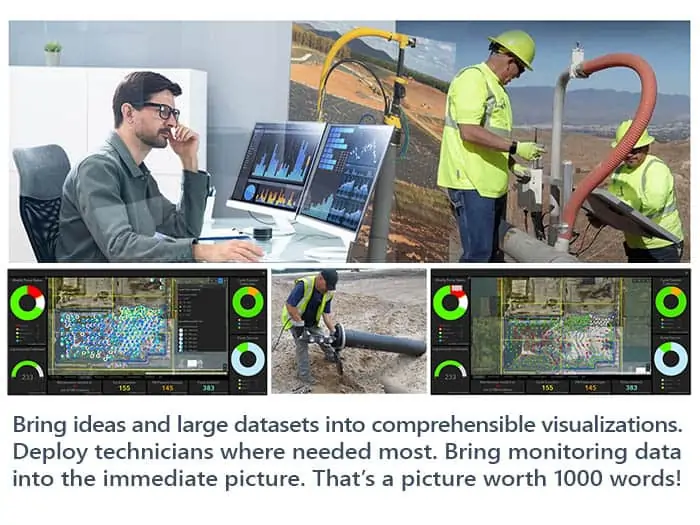
Landfill data collection and analysis are more tactical than ever, and landfill technology provides methods to manage and use the data to create efficiencies. With the implementation of the NESHAP, NSPS/EG requirements, Landfill Operators will monitor more often and maintain more records. Data collection mechanisms will likely broaden soon to include drone and satellite data collection as acceptable for agency requirements.
Our September 23, 2021, SCS’s Client Webinar focuses on landfill gas maintenance and how Operators find efficiencies by monitoring and collecting LFG data. Using SCS eTools, the webinar includes common scenarios at landfills and answers several questions, including:
Demonstrations include:
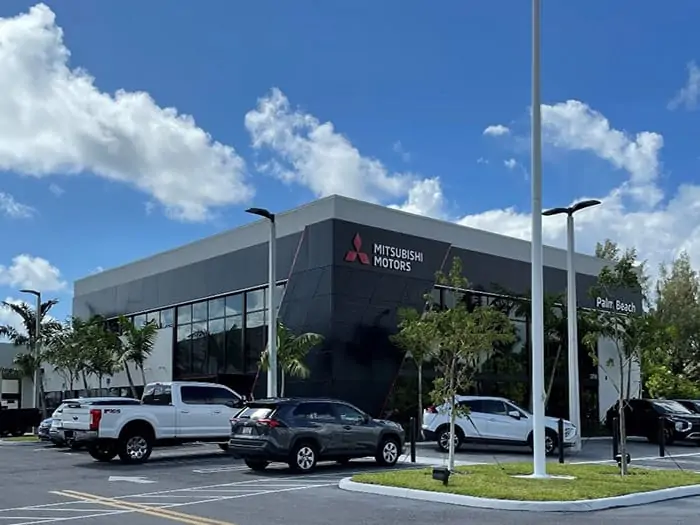
AKD Real Estate Investments, LLC (AKD) acquired a brownfields property to build a new Mitsubishi car dealership in West Palm Beach. AKD and Mitsubishi Motors, North America, considered the site because it offered existing infrastructure and prevented additional environmental degradation from building on undeveloped property, or Greenfield, increasingly scarce in south Florida. Brownfields are often centrally located in metro areas with good connections to local infrastructure, including roadways and stormwater utilities. National and state brownfields programs also offer grants and tax credits available to businesses with environmentally-friendly goals.
The property under consideration was on the former Servico Landfill operated by the City of West Palm Beach. Before the landfill closed, the City used it for landfilling municipal incinerator waste, medical waste, and garbage from the 1920s to the 1950s.
The Florida Brownfield Redevelopment Program encourages the redevelopment of potentially contaminated properties, following a careful process that includes environmental engineers and compliance specialists. AKD reached out to SCS Engineers, an environmental engineering and consulting firm specializing in landfills and remediation, to turn this property into a business haven.
SCS Senior Project Manager Kirk Blevins and Project Professional Sanaul Khan met with the AKD to review the dealership’s construction plan. “Understanding the client’s challenges and objectives, Kirk and I worked backward from their business goals and developed a plan to achieve their environmental needs in a way that would minimize delays and conflicts with their construction schedule,” stated Khan.
The team went to work performing environmental due diligence by uncovering records to assess the state of the property. Next, they modified the existing Remedial Action Plan by proposing a cost-effective and practical strategy to address specific environmental concerns.
The Plan is useful to inform regulators and environmental agencies before construction begins. It helps ensure the general contractor is aware and responsible for keeping construction on track and adhering to the remedial strategy, including environmental and safety protocols.
SCS also prepared and submitted all certification documents to be reviewed, approved, and recorded before the dealership’s grand opening while preparing an application to receive Voluntary Cleanup Tax Credits.
“Brownfields remediation is a complex process, but it offers benefits to businesses, investors, and most importantly – the community,” says Blevins.
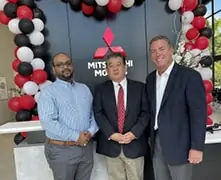
The Palm Beach Mitsubishi dealership is open for business. Shown here at the opening are Sanaul Khan (left), President and CEO of Mitsubishi Motors North America, Yoichi Yokozawa (center), and Chris Berian of AKD (right).
Resources
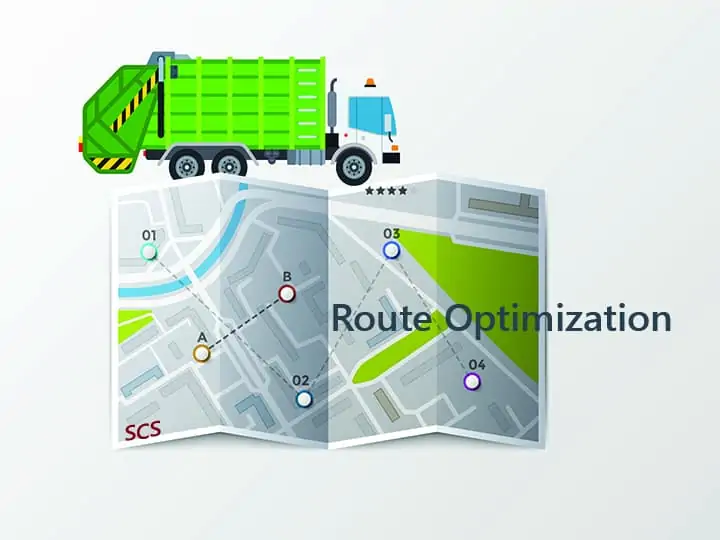
Route Optimization for Waste Collection Finds Surprising Benefits for Even Small Municipalities
Running optimized collection routes is critical for a waste company’s or municipality’s bottom line; it’s also a dauntingly complex job. This is where experts skilled in waste collections route optimization come in. There could be thousands or more ways to get from one service point to the next along a single route; now think about an intricate web of routes traversed by a whole fleet. Then throw in other possible variables, like different route densities, overlapping vs. non-overlapping routes, and holiday and inclement weather schedules. And if you are like one fast-growing Midwestern city, you have plenty more to take on as you work to stay on top of that growth and changes that come with it.
Geographical Information Systems (GIS) help achieve collection route optimization.
One way this Midwest municipality stood up to the challenges is with GIS, which stores, processes, analyzes, and maps spatial data. SCS Engineers’ Emily Smith helped the city leverage the technology to identify and make needed changes, better serve customers, and ultimately save money and time.
“When we came in to help, they had multiple small routes scattered across their service area, which was a problem that became more difficult as the city was growing. Haulers were putting in a lot of overtime to meet deliverables while complying with regulations restricting driving hours. They needed to take more breaks between driving time to stay within those limits, which stretched out their days further,” Smith says.
“Then there’s the wear and tear on tires and the trucks themselves and fuel cost, among issues.”
Working with route optimization consultant Kevin Callen, she used GIS to help restructure and better balance routes.
An ecologist, Smith started using the technology years ago to map out wetlands and for groundwater monitoring. That gave her the knowledge base to figure out how to develop maps to optimize collection routes; these powerful systems are flexible, with broad capabilities and applications.
“I like identifying where there is room for improvement and making visual representations of projects so clients can see the scenario as more than numbers on a page. It tells a story and makes it easier to grasp when they have a visual, color-coded representation,” Smith says.
GIS is useful to map out garbage carts and recycling carts down to an individual customer or street and the number of houses in a neighborhood. It can identify one-way streets or low bridges that larger trucks may need to bypass, among relevant information to plan the most efficient paths. We layer these details and other customizable data to get a comprehensive picture to help design the plan.
Smith began by teasing out information that the city already had. Using surveys created with targeted questions, she could obtain information about specific route challenges (tight alleyways, street parking, confusing setout locations, etc.). The information helped inform potential route modifications.
The outcomes for the Midwest municipality:
Existing waste routes can be modeled in GIS and revised that show impact before and after revisions under consideration. This capability extends beyond fine-tuning residential collection routes. For instance, GIS can do geoprocessing of data to calculate where to put a recycle drop-off center or transfer station that will service a given number of customers.
Additional supports weaved into GIS.
Besides saving labor, travel time, and fuel and vehicle maintenance expenses, routing has more qualitative aspects of gaining efficiencies.
“By talking to collectors with boots on the ground, we find ways to enhance driver safety by identifying problem areas like locations prone to flooding and those with low-hanging tree branches or power lines. Leveraging GIS can also help reduce truck impacts to roads and neighborhoods and reduce emissions. And it can help address customer service issues — for instance, by mapping and taking notes on special backdoor service customers with limited mobility, collectors know to pick up their bins closer to their homes,” says Ryan Duckett, an SCS engineer who leverages GIS to support clients on the East Coast.
For one Texas city, it was a way to systematically and quickly clean up volumes of existing data that had inaccuracies. This was key to later being able to perform an analysis providing intel for route load balancing.
“There were approximately 200 points that needed to be updated to reflect their actual locations. We provided a method to verify and change the information via an online interactive GIS mapping application. They can edit each field, inputting appropriate route information,” says SCS’s Brooke Aumann, who has 14 years working with GIS. The municipality used this same system to review the new routes and provide comments, allowing its staff to be an active collaborative partner in optimizing each route, Aumann says.
Curbside waste collection is hard work. It involves a lot of physical labor, operating heavy equipment, adhering to tight schedules, and sometimes pivoting fast.
“Having this powerful tool that enables us to streamline the process and make collections easier and more efficient is a big plus, especially as we continue to expand and improve other waste and recycling services that depend on, or impact, collections. GIS is a unique opportunity to apply computer technology to come up with practical approaches to real-life problems and realize substantial savings in time and money,” Duckett says.

Popular Mechanics recently published an article entitled The Pungent History of America’s Garbage Mountains. The article starts with a little-known ferryman on Lake Michigan when a storm beached his craft on an offshore sandbar in July 1886. Thus started Chicago’s open dump on today’s Lake Shore Drive, home to landmarks such as the Museum of Contemporary Art, the Wrigley Building, the Chicago Tribune Tower, Northwestern University, and the Magnificent Mile – all on turn-of-the-century garbage.
Transportation centers, stadiums, and even entire neighborhoods are now built on landfills. This is a fascinating, well-written article on the history and possibilities of building on remediated properties and brownfields.
“Landfill redevelopment projects tend to be real estate projects, and you know what matters in real estate: location, location, location,” says Mike McLaughlin of SCS Engineers, who specializes in brownfields and landfill redevelopment. “A landfill in an urban area might be the only piece of open land in that area. People go to extraordinary lengths to redevelop because the property is so valuable.”

With the frequency and severity of storms on the rise, municipal solid waste landfill operators have to think differently to keep their workers and environment safe. Planning is key to safely hit the ground running in the wake of severe weather.
Federal law does not hold household hazardous waste (HHW) to the same standards as what is classified as hazardous waste (generated by businesses and received at subtitle C landfills). Yet, these materials have the same compounds and are potentially dangerous too.
“Subtitle D landfills routinely receive these wastes, but under normal conditions, it’s in much smaller quantities, and they are typically segregated. So managing them is not a big deal. But, after a storm, operators can be inundated with these oxidizers, corrosives, flammable gases, and flammable solids. It’s all coming in at once and mixed with other storm debris, posing a risk for reactions and workers’ safety,” says Mike Knox, SCS Quality Advisor. He supports landfill operators in safely managing hazardous wastes. Storm season is a busy time for him and his clients. Those unprepared find themselves pulled in multiple directions and need to act quickly and smartly.
If a structure blows down, it may generate waste that contains gallons of dangerous liquid, gas containers, propane tanks, and pesticides mixed in. It’s dangerous, especially if a waste worker does not see it.
Mike’s Planning Advice
Operators set themselves up for success when they’re ready to go with a plan before that first 80-mile-an-hour wind gust hits.
“You must know how to identify hazardous wastes ahead, train staff ahead, and look at worse-case scenarios ahead,” Knox says.
He and his team start by looking at operators’ facilities and identifying materials, workers’ roles, and available equipment and assets. They identify safety areas and set up classrooms. Important are preparing the staging areas to manage the influx, screen, and segregate by waste type.
Then they look at government rules; help operators determine what they need to do; and execute a plan.
Minimizing Risk
Operators need to secure waste, make sure it’s packaged right, and minimize it where possible to stave off mishaps.
The safety of people and equipment is part of a proactive strategy. Trucks can tip over with heavy, wet loads, so do not overload them. Space trucks in the tipping area are at least 10 feet further apart than the dump trailer is long. For a 30-foot trailer, that’s 40 feet.
Setting up this extra space can be difficult unless you’ve established a large tipping area, and don’t take chances with dump trailers; the results have proven deadly in the past, Knox advises.
Check that backup alarms and strobe lights are working. Train equipment operators to look for vehicles and pedestrians. Do not allow cell phones at the working face; a distraction that no one needs. Mandate the use of high-visibility vests and restrict people to stay within five feet of their vehicle. Strictly control scavenging. People cannot wander and pull items from the trash.
Fuel Up
Fuel is the item most often overlooked in Knox’s experience.
“Having enough fuel to operate heavy landfill equipment and hauling fleets is essential to keep waste moving. Severe storms have impacted fuel supplies for several days to a week or more, so stock up,” he recommends. Mike typically arranges for temporary fuel storage tanks so haulers and heavy equipment operators can stay on their mark through and after the storm.
Scenarios in Preparation
Part of safety management is asking “what if” and then answering ahead of a problem. Depending on where ‘what if’ leads, you prioritize and go after the big things first. One big one is, what if floods occur? That question leads to more specifics to plan for, such as roads likely to be impacted and establishing alternate routes available. What other actions will help traffic flow?
Remember: if there’s a lot of rain or clay, trucks can slip going up hills. So alternate tipping areas that are lower and flatter may be needed to accommodate inclement weather access. “And that takes preparation. Sometimes you have to build a road to reroute to an area you are not using. It can take days,” Knox says.
Building wet weather access roads are important, as are measures like cleaning out stormwater ditches. Nevertheless, know that, depending on location, rising water may flood out areas despite these efforts. Pumping water into berms and ponds from flooded ditches can be a temporary solution if your plan and local regulations allow it. Coordinate with regulatory and permit agencies to set up such actions.
You will want to bolster protections of maintenance facilities, the scale house, and other structures that could be damaged or lose power – stock up on tarps, lumber, and power generators.
Many operators find waste screening towers to be especially useful. Knox and his team will build them in advance to prepare for what’s coming. Waste screeners at the gate radio to active face supervisors if hazardous materials are arriving so they can properly place them, ensuring they are covered with dirt before sending staff to the active face.
Knox completes quality evaluations guided by a 200-item checklist to ensure proper procedures are in place. He compliments this list with many questions to prepare.
Know Your Jurisdiction’s Rules and Storm Accommodations
Operators check local permit conditions to take advantage of possible modifications they may make. Some jurisdictions have more lenient weight restrictions for hauling vehicles or the option to set up temporary staging areas.
Knox also suggests coordinating with the local permit and regulatory agencies following the storm to take advantage of emergency relief funds and coordinate across the area’s public and emergency services.
Local government, emergency responders, regulatory and permitting agencies often have Emergency Operations Centers (EOC) to coordinate resources, information, and crisis management. Mayors, County Commissioners, fire departments, hospitals, police, environmental regulatory agencies, and other key industry leaders are typically part of this team.
These groups practice response coordination and stage tabletop exercises or mock disasters. “Take time to participate and plan with the EOC. Check for whatever else may be available in your area to help prepare, and work as a team with these local entities to respond to severe weather or other emergency events,” Knox says.
Circling Back to Planning
“Knowing what to do before the storm hits will make your recovery easier. You will keep your employees, your community, and your site safe. And be ready to go back to normal operations much faster.”
 About the Author: Mike Knox has over 30 years of Ordnance and Hazardous Materials experience. He is a Regional OM&M Compliance Manager with extensive supervisory abilities in hazardous waste emergency response and large-scale clearance operations.

The recent MWEA Conference covered a wealth of other important topics on water management and safety, including this presentation with SCS Engineer’s Remote Monitoring Control specialist, Brett Heist. Brett and Jarod Stuyvesant co-presented “More Than a Pretty Map – GIS Covers Your Assets,” including demonstrations of how the City of Zeeland is using GIS to enhance the efficiency of maintenance and inspection activities and improve the reliability of physical infrastructure throughout its community, leading to increased public safety and financial savings.
Click here to view these demos!
DEMOS: There are some unique methods to plan for capital improvements and streamline data storage and access being implemented in the City of Zeeland. The City has an integrated GIS map for its storm, sanitary, water, and streets, including information about each asset within the system: material, size, inverts, condition, business risk, and even televised inspection videos for some of the storm and sanitary lines.
The GIS maps’s information is used daily by public works and to create a comprehensive capital improvement map that the City uses to plan for 5-year improvements, significantly improving planning and budgeting efficiency while ultimately providing the public with safer infrastructure.
Features include televised inspection videos attached to a respective asset after uploading and accessible with the click of a mouse. Access entire buildings in the same manner as horizontal assets using a 3D online viewer.
The Zeeland Clean Water Plant RAS Building: Using AutoCAD data, the City created a 3D GIS viewer of this building and its assets. Asset information, such as blower and pump sizes and operation and maintenance tasks, are accessible without having to sort through shop drawings and as-builts.
Another example of implementing 3D GIS data like this is for MobileGR who uses a 3D GIS model to store asset data and maintenance tasks for every one of their nine parking ramps in downtown Grand Rapids.
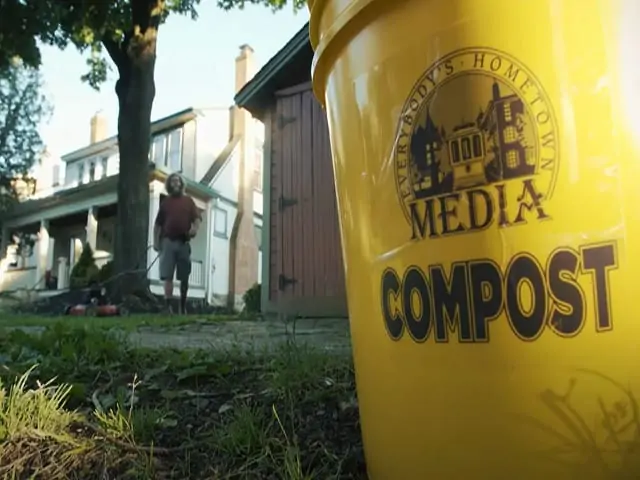
Media Borough, Pennsylvania’s Food Compost Program uses a witty video encouraging participation in its organic waste diversion and composting program. We had to share – not only is it fun – it works!
The Borough launched its pilot program to gauge the feasibility of adding food scrap collection to its current recycling efforts. This month the program is available to all residents. The food scrap collection program provides residents the opportunity to separate food from the rest of their household waste for collection and composting at a local compost farm.
Media Borough estimates it has 70% recycling participation in the community – that’s an impressive number. Its current recycling and yard waste programs divert close to 30% of residential solid waste from landfills and incinerators. Adding a food scrap collection program can reduce residential waste by another 30% and create compost.
The Borough’s Public Works website explains the reasons why organic matter, matters.
Thank you to this Pennsylvania community and its Public Works department for helping to sustain future generations with their reduce, reuse, and recycling actions. We hope by sharing their video and results, we’ll see greater participation in communities nationwide.
SCS periodically prepares Technical Bulletins to highlight items of interest to our clients and friends. We publish these on our website.
Our most recent Bulletin summarizes and updates the TCEQ’S New Rules Implementing Compliance and Registration Requirements for Coal Combustion Residuals (CCR) Management. In addition, this Bulletin covers TCEQ’s development of a program for implementing the Federal rules governing CCR facilities in Texas. While TCEQ’s CCR program needs to be as protective as the federal CCR rules, there are important distinctions in Chapter 352.
SCS’ Texas-based professionals are experts on TCEQ’s new program for registering coal combustion residue (CCR) sites. We are currently working to support multiple sites needing to meet the application deadline. Our engineers and geologists know how to use site-specific design and related technical documents to complete TCEQ’s detailed application for a registration consistent with TCEQ’s new regulatory program.
For additional information on the updated regulations, deadlines, and compliance requirements, contact:
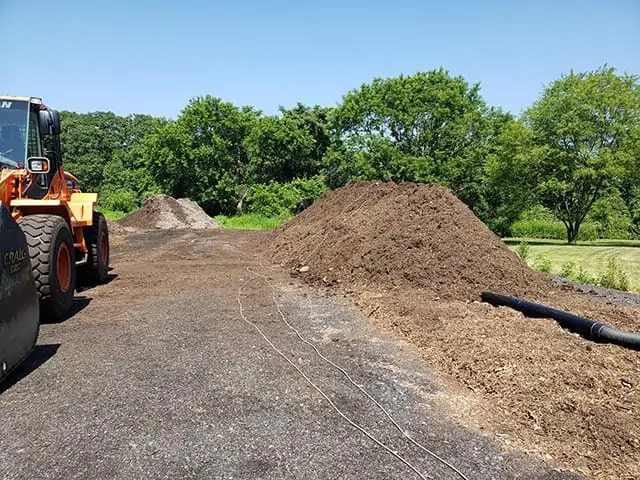
With support from the Town of Stonington, the Southeastern Connecticut Regional Resources Recovery Authority (SCRRRA) began a four-month food waste composting demonstration project at the Stonington Town Transfer Station on June 30, 2021. The environmental consulting and contracting firm SCS Engineers is supporting the project.
SCRRRA currently manages approximately 135,000 tons of garbage for its 12 member municipalities (East Lyme, Griswold, Groton, Ledyard, Montville, Preston, New London, Norwich, North Stonington, Sprague, Stonington, and Waterford). About one-quarter of the volume of garbage, or 33,750 tons, is organic waste.
The development of an organics facility could convert organic waste into a valuable organic soil amendment. The demonstration project is an integral part of a larger study that SCRRRA has undertaken to determine the feasibility of developing a commercial-scale food waste composting facility in Southeastern Connecticut.
Pilot projects such as this allow the region to quickly gather information about the collection and sources of organic materials, then test and refine a high-quality compost mix. The project also provides hands-on experience and can help spark innovative waste management practices.
Compost is produced using a mix of feedstocks, raw organic materials, such as leaves, wood, and food scraps. The composting process in the SCRRRA demonstration project uses wood mulch produced by SCRRRA at the Stonington Transfer Station and food waste supplied by two Connecticut companies Blue Earth Composting of Hartford and Willimantic Waste of Willimantic.
Communities across the U.S. report success diverting organic waste from landfills and producing a viable commodity with significant benefits, as the U.S. Composting Council describes in its Factsheet. For more information and outcomes from the SCRRRA project, contact SCRRRA Executive Director David Aldridge.
The U.S. Environmental Protection Agency (EPA) is seeking applications on Grants.gov for projects from states, tribes, territories, and non-profit organizations to help reduce food loss and waste and divert food waste from landfills by expanding anaerobic digester (AD) capacity in the United States.
To qualify, EPA is asking that your project application achieve one or more of the following objectives:
State, local, Tribal, interstate, and intrastate government agencies and Non-profit organizations (as defined by 2 CFR Part 200) may apply. In addition, up to approximately $800,000 of the estimated total will be set-aside specifically for awards to the following organizations:
Applications are due by October 7, 2021. Additional information is available on the EPA site or by requesting grant assistance at .
Corporate Headquarters