SCS periodically prepares Technical Bulletins to highlight items of interest to our clients and friends. We publish these on our website.
Our most recent Bulletin summarizes and updates the TCEQ’S New Rules Implementing Compliance and Registration Requirements for Coal Combustion Residuals (CCR) Management. In addition, this Bulletin covers TCEQ’s development of a program for implementing the Federal rules governing CCR facilities in Texas. While TCEQ’s CCR program needs to be as protective as the federal CCR rules, there are important distinctions in Chapter 352.
SCS’ Texas-based professionals are experts on TCEQ’s new program for registering coal combustion residue (CCR) sites. We are currently working to support multiple sites needing to meet the application deadline. Our engineers and geologists know how to use site-specific design and related technical documents to complete TCEQ’s detailed application for a registration consistent with TCEQ’s new regulatory program.
For additional information on the updated regulations, deadlines, and compliance requirements, contact:
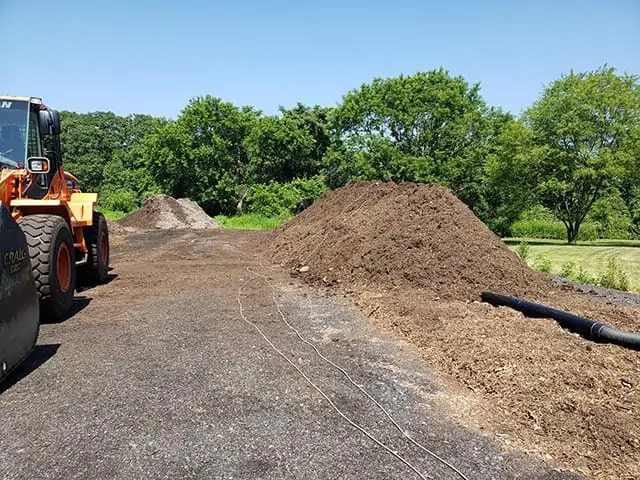
With support from the Town of Stonington, the Southeastern Connecticut Regional Resources Recovery Authority (SCRRRA) began a four-month food waste composting demonstration project at the Stonington Town Transfer Station on June 30, 2021. The environmental consulting and contracting firm SCS Engineers is supporting the project.
SCRRRA currently manages approximately 135,000 tons of garbage for its 12 member municipalities (East Lyme, Griswold, Groton, Ledyard, Montville, Preston, New London, Norwich, North Stonington, Sprague, Stonington, and Waterford). About one-quarter of the volume of garbage, or 33,750 tons, is organic waste.
The development of an organics facility could convert organic waste into a valuable organic soil amendment. The demonstration project is an integral part of a larger study that SCRRRA has undertaken to determine the feasibility of developing a commercial-scale food waste composting facility in Southeastern Connecticut.
Pilot projects such as this allow the region to quickly gather information about the collection and sources of organic materials, then test and refine a high-quality compost mix. The project also provides hands-on experience and can help spark innovative waste management practices.
Compost is produced using a mix of feedstocks, raw organic materials, such as leaves, wood, and food scraps. The composting process in the SCRRRA demonstration project uses wood mulch produced by SCRRRA at the Stonington Transfer Station and food waste supplied by two Connecticut companies Blue Earth Composting of Hartford and Willimantic Waste of Willimantic.
Communities across the U.S. report success diverting organic waste from landfills and producing a viable commodity with significant benefits, as the U.S. Composting Council describes in its Factsheet. For more information and outcomes from the SCRRRA project, contact SCRRRA Executive Director David Aldridge.
The U.S. Environmental Protection Agency (EPA) is seeking applications on Grants.gov for projects from states, tribes, territories, and non-profit organizations to help reduce food loss and waste and divert food waste from landfills by expanding anaerobic digester (AD) capacity in the United States.
To qualify, EPA is asking that your project application achieve one or more of the following objectives:
State, local, Tribal, interstate, and intrastate government agencies and Non-profit organizations (as defined by 2 CFR Part 200) may apply. In addition, up to approximately $800,000 of the estimated total will be set-aside specifically for awards to the following organizations:
Applications are due by October 7, 2021. Additional information is available on the EPA site or by requesting grant assistance at .
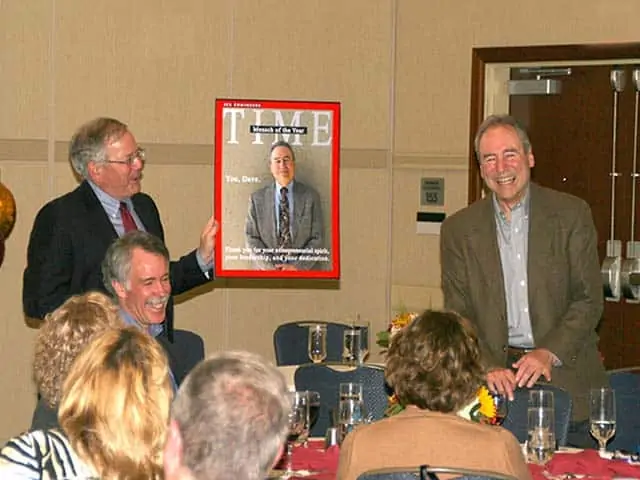
Michael W. (Mike) McLaughlin has been elected to the Virginia State Bar Environmental Law Section Board of Governors. His four-year term began on July 1. Mike began his career with SCS as a summer intern as a rising sophomore at Virginia Tech. After receiving his civil (environmental) engineering degree, he received his J.D. from Washington & Lee University School of law. He has been with SCS ever since, applying his combination of law, science, and engineering expertise to environmental matters. His knowledge helps businesses and communities protect air, water, and land resources while serving the needs of their clients or constituents.
McLaughlin recalls his early career choices: “It was exciting to work on some of the earliest research projects sponsored by the then-new Environmental Protection Agency. I chose W&L Law because it had Professor Andrew (Uncas) McThenia on its faculty. Uncas was a Virginia State Water Control Board member and taught one of the few environmental law classes in the country. When I told him he was the reason I came to W&L, Uncas apologized and said he would not teach environmental law anymore—the field had too much politics involved. That was an early and important lesson for me.
“Not to worry,” says Mike. “Turner Smith of the Hunton & Williams law firm taught the environmental law class; he was one of the country’s most well-known Clean Air Act attorneys. His knowledge of the subject matter and teaching ability inspired several of us to seek careers in the field.”
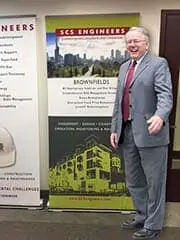
Mike is SCS Engineers’ Senior Vice President of Environmental Services. He advises developers, contractors, lenders, and land development professionals on the technical and regulatory requirements for construction on brownfield sites nationwide. Landfill redevelopment is an area of special interest. His combined engineering and legal background provides an unusual perspective on land development where hazardous wastes or other environmental challenges are present.
In addition to his extensive brownfield redevelopment experience in North America, Mike has worked at more than three dozen Superfund National Priorities List sites in 17 states and on scores of regulatory compliance, voluntary cleanup, and remediation projects for commercial, industrial, municipal, and military clients. His work for electric utilities began in 1980 with research on upgrading solid waste management and has evolved to support greenhouse gas mitigation measures and support the transition to renewable energy.
Mike’s new role with the VSB builds on his decades of experience with the American Bar Association Section of Environment, Energy, and Resources, where he is completing a two-year term as Budget Officer and a member of the Executive Committee.
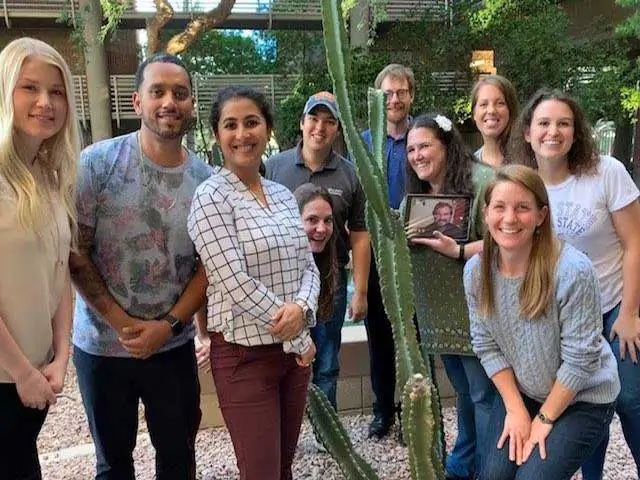
Recently published in Zweig is an article by two SCS Engineers professionals discussing career growth. Montgomery Spillane, PG, a project professional, and Dillon Reio, GIT, a senior project professional at the firm, provide their perspectives in this short and inspiring article entitled Accelerating Development.
The co-authors make valuable points, including that career growth is not a linear path, then provide advice for career accelerating growth and responsibilities.
SCS’s CEO, Jim Walsh records Town Halls every two weeks for employees – our executives like to stay in touch. He just happened to finish a segment on SCS’s Mentorship Program for his Town Hall. Both mentor and mentee reflect the same advice in the Zweig article; they point out a few more benefits for both managers and young professionals during the discussion, such as discovering new pathways, networks and staying on goal.
It is gratifying to observe SCS YPs not only embracing our 51+ year culture of client focus, but they’re also growing our pay-it-forward attitude to build even more value into SCS Engineers every day. It’s truly wonderful to work with so many gifted people.
Our SCS Co-Authors:
Montgomery Spillane, PG, a project professional
 Dillon Reio, GIT, a senior project professional
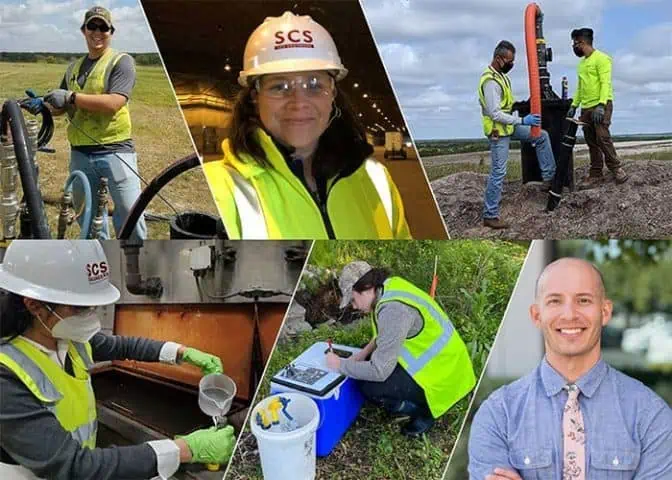
If you thrive in a friendly, collaborative, and client-focused company, SCS Engineers is the place for you. We’re looking for field technicians to work collaboratively on our Field Services teams nationwide. Use our job search to find your desired location. Specific information is posted for each open position.
Under general supervision, our technicians operate, monitor, and maintain gas migration control and recovery systems, including gas well monitoring and adjustment, troubleshooting, and system repairs. Be part of a team working for the good of our clients, communities, and the environment.

The American Rescue Plan Act of 2021 was signed into law on March 11, 2021. It provides funds to address health outcome disparities from pollution and the COVID–19 pandemic.
EPA is assisting under-resourced communities by quickly getting out ARP funding to leverage important programs that improve air quality, drinking water, revitalization of brownfields, diesel emissions from buses in low-income communities and communities of color. In addition, the agency is awarding its first competitive grants focusing directly on the unequal impacts the COVID-19 pandemic has had on communities of color, low-income communities, and other vulnerable populations.
Projects include training, developing citizen-science tools, pollution monitoring, and educational campaigns to enable EJ advocates such as SCS Engineers, scientists, and decision-makers to address pollution and create thriving communities.
Funding currently being distributed totals approximately $2.8 million for 14 EJ-focused projects, with more to be announced soon throughout the country. In addition to the Baltimore City grant, today’s announcement includes funding for the following projects in underserved communities:
EPA also announced for the first time how the agency would distribute the $50 million in ARP funds.
A breakdown is provided below:
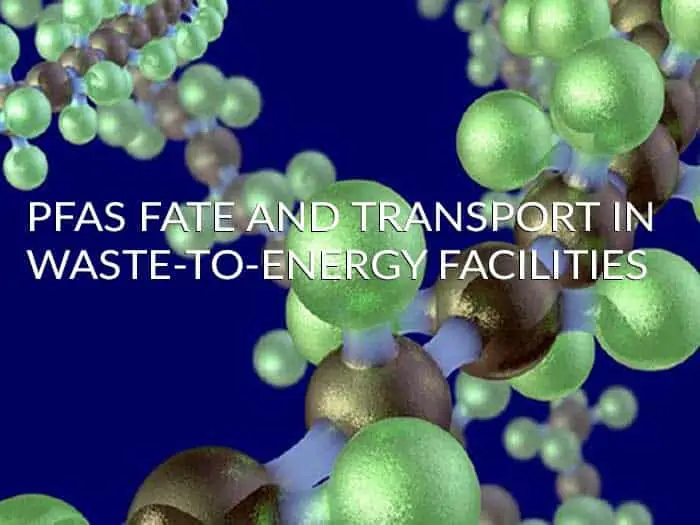
The findings of the studies reviewed in this report are encouraging concerning the ability of today’s U.S. WTE facilities to effectively treat solid waste that contains PFAS and not emit detectable levels of PFOA in the process. For the formation of PICs, the pilot-scale investigation conducted at the Karlsruhe Institute of Technology is encouraging in its findings that the combustion of PTFE did not create any of the 31 types of PFAS suspected of being potential PICs produced during the combustion process.
In conclusion, based on this research, SWANA is cautiously optimistic regarding the role of WTE facilities in the destruction of PFAS in MSW. The thermal destruction of PFAS in high-temperature combustion systems such as WTE facilities may represent one of the few commercially proven options available to society to destroy these problematic, forever chemicals.
The full report, PFAS Fate and Transport in Waste-to-Energy Facilities, is currently only available to SWANA ARF subscribers. SWANA members receive free access to ARF industry reports one year after publication; the abstract is available online and worth reading.
SCS periodically prepares Technical Bulletins to highlight items of interest to our clients and friends. We publish these on our website.
Our most recent Bulletin summarizes and updates the TCEQ’S New Rules Implementing Compliance and Registration Requirements for Coal Combustion Residuals (CCR) Management. In addition, this Bulletin covers TCEQ’s development of a program for implementing the Federal rules governing CCR facilities in Texas. While TCEQ’s CCR program needs to be at least as protective as the federal CCR rules, there are important distinctions in Chapter 352.
SCS’ Texas-based professionals are experts on TCEQ’s new program for registering coal combustion residue (CCR) sites. We are currently working to support multiple sites needing to meet the December application deadline. Our engineers and geologists know how to use site-specific design and related technical documents to complete TCEQ’s detailed application for a registration consistent with TCEQ’s new regulatory program.
For additional information on the updated regulations, deadlines, and compliance requirements, contact:
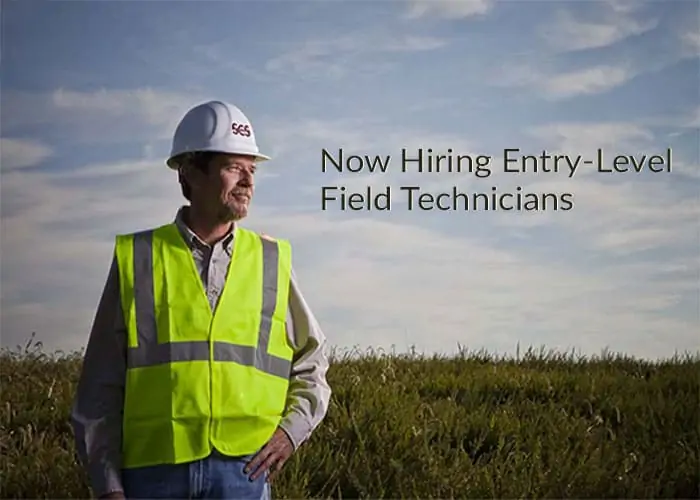
If you thrive in a friendly, collaborative, and client-focused company, SCS Engineers is the place for you. We’re looking for field technicians to work collaboratively on our Field Services teams nationwide. Specific information is posted for each open position. Use our job search to find your desired location.
Under general supervision, our technicians operate, monitor, and maintain gas migration control and recovery systems, including gas well monitoring and adjustment, troubleshooting, and system repairs.
Become one of the engineers, consultants, scientists, and technicians that help private and public entities run cleaner and more efficiently. A very rewarding place to have a career!
Corporate Headquarters