
Application Process for $275M in California Grants Opened Jan. 31
A couple of months ago, I wrote about the opportunities and challenges of getting brownfields back into productive use. There are certainly viable strategies for remediation of contaminated property that will make them safe for a range of developments. Of course, the cleanup costs are a significant factor in any project analysis. But the state of California is providing some assistance that could make more brownfield sites pencil out for redevelopment.
I am happy to report in this article that the passage of SB 158 by the California legislature provides $500 million in cleanup funding for brownfields. Approximately $270 million of that total is targeted for grants.
The California Department of Toxic Substance Control (DTSC) administers the Equitable Community Revitalization Grants funded through SB 158. On January 31 of this year, the DTSC started accepting full applications for these grants. The application window closes on April 4, 2022, with award announcements expected on May 31, 2022.
The DTSC gives the highest priority for grants in disadvantaged communities with significant housing needs.
$270 million is a big investment. The USEPA has a similar program, with typical funding for the entire country, of less than $100 million (https://www.epa.gov/newsreleases/epa-announces-selection-151-communities-receive-665-million-brownfields-assessment-and). Since DTSC started accepting applications at the end of January, nonprofits, public agencies, municipalities, tribes, and private developers must act quickly.
Eligible entities may apply for ECRG grants for properties they own or control in high poverty areas with a CalEnviroScreen score of 75 percent or more for reuse. DTSC will also accept applications outside of the CalEnviroScreen score of 75%+ if the proposed reuse provides significant community benefit.
As I outlined in my previous article, it is important to have a risk management strategy that includes a thorough understanding of the environmental issues on the site and how those issues can impact your redevelopment plans and bottom line. Environmental and legal support experienced in identifying, anticipating, and managing risks on brownfields is critical to success.
There are an estimated 200,000 brownfields currently identified in California, many of which are useful for housing after remediation. Many of these sites are in the urban core and perfectly fit infill strategies for solving the housing crisis by reducing commute times and related greenhouse gases.
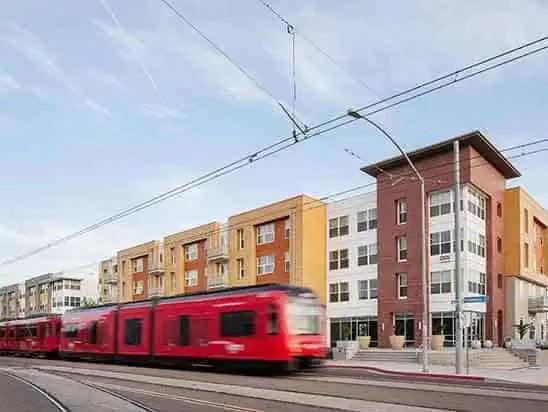
An example of such a project is COMM22 in San Diego, developed by BRIDGE Housing, in which SCS provided environmental oversight during remediation. COMM22 is a mixed-use, mixed-income, transit-oriented development located at Commercial and 22nd streets in San Diego.
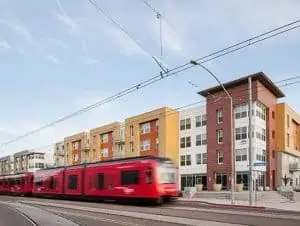
The site where COMM22 stands today was a former San Diego Unified School District vehicle maintenance and general maintenance facility. The site included leaking underground storage tanks and fill soils containing various metals, including lead.
After successful remediation, the parcel today hosts 211 affordable housing units, including apartments for low-income seniors (including HUD-subsidized units), supportive housing for youth transitioning out of the foster care system, and eleven townhomes for low- and moderate-income families.
Many more badly needed projects, like COMM22, could become a reality thanks to SB 158. If you have a brownfield in mind that fits the criteria or have questions about the grant application process, contact the Center for Creative Land Reuse (www.cclr.org). CCLR partners with the DTSC to give free assistance in applying for funding.
 About the Author: Luke Montague is a Vice President of SCS Engineers and a Project Director. He is a Professional Geologist and licensed contractor with nearly two decades of experience in environmental consulting, general contracting, commercial and residential development, and property and asset management. He has performed and reviewed over 500 Phase I environmental site assessments (ESAs) and has completed subsurface investigations, human health risk assessments, removal action work plans, site remediation activities, geotechnical investigations, asbestos and lead-based paint surveys, and asbestos air monitoring.
Learn more about funding and land remediation here.

Recent changes to regulatory guidance in California are arguably making obtaining closure on sites with vapor intrusion health risk concerns more difficult to achieve. The Draft Cal-EPA Supplemental Vapor Intrusion Guidance (DSVIG) suggests changes to the methods in which vapor phase transport and potential health risks are modeled and calculated for occupants of buildings with known soil or groundwater contamination beneath them. These changes, which result from a multi-year working group collaboration, recommend a more extensive and site-specific data collection effort. They include indoor air quality calculation methods relying on EPA work and guidance and empirically derived attenuation factors (AFs) which some would argue lead to overestimating potential health risks.
The consequences of the DSVIG are potentially significant if adopted as is and appear likely to result in more sites being “screened in” with vapor intrusion issues and more sites requiring mitigation. The impact, resultant costs, and possibly detrimental secondary effects include decreases in affordable housing production, particularly in urban infill areas. And while none would argue with appropriate protection of health risk, the question is whether the studies and empirical data used to support the DSVIG represents the best available science and is truly representative and predictive of risk.
The DSVIG adopts an attenuation rate of 0.03 for the flux of both soil and sub-slab vapor to indoor air based on a previous 2012 EPA Study comprised of empirical data collected from buildings arguably not representative of modern construction in California. The development of a reliable screening level attenuation factor for California based on high-quality, recent, California-specific data:
1) Will be protective of human health, as no toxicological imperative or basis supports a call for accelerated or immediate action (as evidenced by the fact that the DSVIG workgroup commenced its work in 2014 and issued the review draft in 2020).
2) Will ensure California’s environmental policy satisfies the gold standard for data quality and insightful analysis in which the state once took pride.
3) Will not unnecessarily decimate the California housing development market. The empirically derived screening level AF in the DSVIG is overly conservative based on the available data. More accurate empirical data and measurement methods for site-specific measurement are available.
Oversimplifying the VI health risk assessment methods has constrained the environmental community’s ability to apply science-based health risk screenings, often resulting in costs associated with additional environmental assessment and mitigation. An additional revision to the DSVIG to utilize a screening level AF more reflective of the current California data and building specifications could save state resources, increase infill development by reducing urban sprawl, promote housing development, all while protecting human health.
Take a deeper dive into this topic in the Daily Transcript article Vapor intrusion rules hamper infill projects.
The Department of Toxic Substances Control’s Office of Brownfields’ Equitable Communities Revitalization Grant (ECRG) provides funds to incentivize cleanup and investment in disadvantaged areas of California. ECRG is setting a new path for land use that will have immediate and lasting benefits for communities, parks and green spaces, commercial enterprises, and housing.
Apply for grant funding to help Californian government units, nonprofit organizations, and Tribes assess, clean up and reuse idled and contaminated properties in the state’s environmental justice communities.
The application deadline is April 4, 2022.
Don’t miss this unique opportunity for grant assistance to clean up and revitalize our communities.
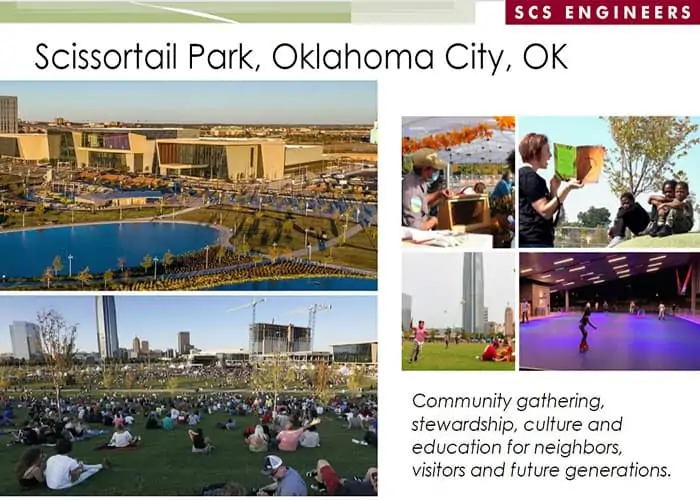
“The Infrastructure Investment and Jobs Act, signed into law last month, will dedicate more than $1.5 billion to the U.S. EPA Brownfields program. The Act includes hundreds of millions of dollars allocated to Multipurpose Grants, Assessment Grants, Cleanup Grants, Revolving Loan Fund Grants, and technical assistance intended to improve equity, create jobs, and mitigate environmental degradation.”
CCLR has provided the expected breakdown and timelines from EPA. The EPA has hundreds of millions of dollars allocated for FY22 that will be applied for in July and awarded in November 2022. This timeline is different and with much larger individual grants possible, up to $10mil per grant.
SCS Engineers has a stellar win rate for brownfields grant writing and implementing brownfields programs. Please let our brownfields and remediation experts know if you have any questions or if we can provide assistance in grant support.
Click here to learn more and obtain support and funding for your community’s brownfields project.
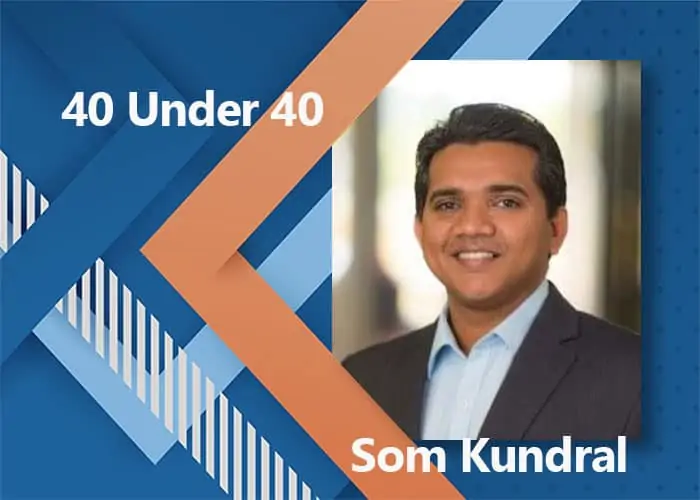
With great pleasure, we announce the American Academy of Environmental Engineers Certification Board granted Som Kundral certification in the specialty of Hazardous Waste Management and Site Remediation this month. Board Certified Environmental Engineers (BCEE) such as Kundral make up the top four percent of environmental engineering experts.
Kundral and his work are well established and recognized across the nation. As a rising star and SCS Engineers’ Young Professional, Kundral’s teamwork is not only recognized by his clients but by the American Council of Engineering Companies and the Environmental Business Journal with a Business Achievement Award for Groundwater and Stormwater Remediation Solution. Kundral is also a Waste360 40 Under 40 award recipient.
Well done, Som! We’re so proud of you and all of our SCS Young Professionals helping our clients build a better world.
California’s 2021 and 2022 budgets provide $500 million to the Department of Toxic Substances Control to support community revitalization. The funds are available over four years to accelerate the investigation and cleanup of contaminated properties in environmental justice communities. This funding is referred to as the Cleanup in Vulnerable Communities Initiative. A portion of this funding is for establishing the Equitable Community Revitalization Grant (ECRG)—a grant program to incentivize cleanup and investment in disadvantaged areas of California.
Equitable Community Revitalization Grant – Learn more about the program and how to use this funding to advance your communities brownfields and remediation projects.
Brownfields and Voluntary Remediation – Brownfield and voluntary remediation projects protect human health and the environment while restoring beneficial use to properties. SCS Engineers is a pioneer in supporting the public-private partnerships for these types of redevelopment. SCS helped redevelop environmentally impaired real estate more than 25 years before the term Brownfield was coined. Learn more about the possibilities for your community and how to select a brownfields remediation professional for timely and compliant delivery of the benefits.
ECRG Flyer – Provides the basics on this new and important funding along with a timetable.
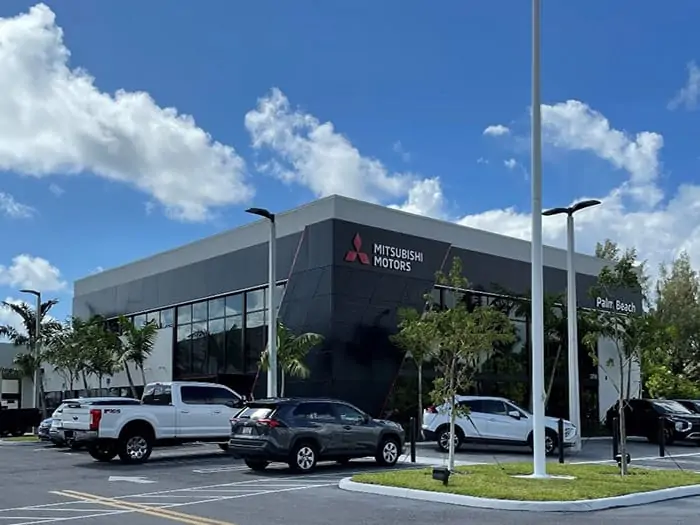
AKD Real Estate Investments, LLC (AKD) acquired a brownfields property to build a new Mitsubishi car dealership in West Palm Beach. AKD and Mitsubishi Motors, North America, considered the site because it offered existing infrastructure and prevented additional environmental degradation from building on undeveloped property, or Greenfield, increasingly scarce in south Florida. Brownfields are often centrally located in metro areas with good connections to local infrastructure, including roadways and stormwater utilities. National and state brownfields programs also offer grants and tax credits available to businesses with environmentally-friendly goals.
The property under consideration was on the former Servico Landfill operated by the City of West Palm Beach. Before the landfill closed, the City used it for landfilling municipal incinerator waste, medical waste, and garbage from the 1920s to the 1950s.
The Florida Brownfield Redevelopment Program encourages the redevelopment of potentially contaminated properties, following a careful process that includes environmental engineers and compliance specialists. AKD reached out to SCS Engineers, an environmental engineering and consulting firm specializing in landfills and remediation, to turn this property into a business haven.
SCS Senior Project Manager Kirk Blevins and Project Professional Sanaul Khan met with the AKD to review the dealership’s construction plan. “Understanding the client’s challenges and objectives, Kirk and I worked backward from their business goals and developed a plan to achieve their environmental needs in a way that would minimize delays and conflicts with their construction schedule,” stated Khan.
The team went to work performing environmental due diligence by uncovering records to assess the state of the property. Next, they modified the existing Remedial Action Plan by proposing a cost-effective and practical strategy to address specific environmental concerns.
The Plan is useful to inform regulators and environmental agencies before construction begins. It helps ensure the general contractor is aware and responsible for keeping construction on track and adhering to the remedial strategy, including environmental and safety protocols.
SCS also prepared and submitted all certification documents to be reviewed, approved, and recorded before the dealership’s grand opening while preparing an application to receive Voluntary Cleanup Tax Credits.
“Brownfields remediation is a complex process, but it offers benefits to businesses, investors, and most importantly – the community,” says Blevins.
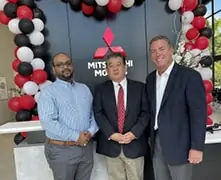
The Palm Beach Mitsubishi dealership is open for business. Shown here at the opening are Sanaul Khan (left), President and CEO of Mitsubishi Motors North America, Yoichi Yokozawa (center), and Chris Berian of AKD (right).
Resources
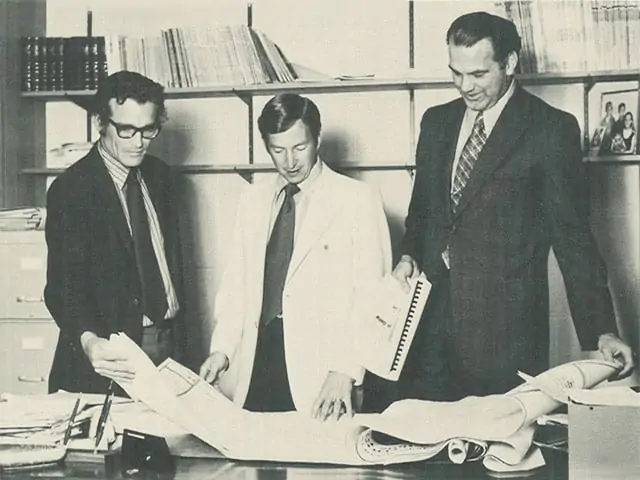
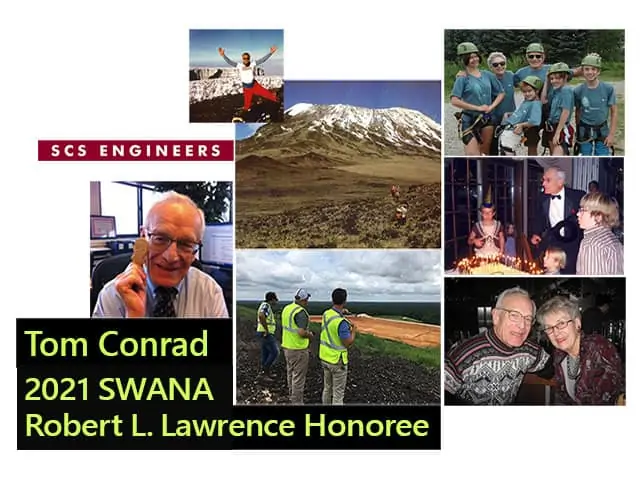
The International Awards Committee and Solid Waste Association of North America (SWANA) Board of Directors unanimously voted to honor Tom Conrad, the “C” in SCS, with the Robert L. Lawrence Distinguished Service Award at WASTECON 2021 in November. The Lawrence award is the highest accolade SWANA bestows on a member of the waste management industry, reserved for those making meaningful and lasting contributions.
“I’m honored and humbled to be selected for the Robert L. Lawrence Award. I thank you and am especially thankful for what SWANA and SCS are today,” stated Tom Conrad.
SWANA recognizes Conrad for over 60 years of significant influence on the waste management and environmental services industry. Conrad, a Founder, Executive Vice President, and Director Emeritus of SCS Engineers, dedicated his career to advancing solid waste management, most notably through the founding of SCS Engineers (Stearns, Conrad, and Schmidt Consulting Engineers) more than 51 years ago.
Tom Conrad worked on a wide range of environmental engineering projects touching almost every aspect of solid waste management throughout his career. As an environmental engineering firm and consultant to the newly created US Environment Protection Agency (EPA), the founders recognized that responsible solid waste management was increasingly important for protecting the environment and the health and safety of the general public.
Leading SCS, he helped the EPA develop the first federal regulations for sanitary landfills, managing and capturing landfill gas, waste sorting protocols, sludge management, and land remediation.
Environmental services, including wastewater management, were always a significant part of SCS services and the waste industry. When new regulatory policies began expanding in the ’80s, SCS’s techniques, technology, and expertise helped a broad range of industries comply with environmental needs and continues today with the firm’s greenhouse gas, landfill technology, renewable energy, remediation, and sustainable materials management programs.
Conrad is also known for hiring and mentoring today’s SCS leaders, many of whom are SWANA leaders, by creating and fostering SCS’s culture encouraging employee participation in industry associations, community, and SCS’s mentorship and leadership programs.
Before his retirement in 2016, Conrad held professional engineering licenses in 24 states. He was a member of SWANA, the American Society of Civil Engineers, the National Waste and Recycling Association, and the Society of American Military Engineers.
He maintains his “work hard – play hard” lifestyle. He is active at SCS, participating in Board of Director meetings and speaking at the Young Professionals Group events and celebrations. While no longer mountain climbing and biking cross-country, he has a vigorous walking, swimming, and biking schedule.

Popular Mechanics recently published an article entitled The Pungent History of America’s Garbage Mountains. The article starts with a little-known ferryman on Lake Michigan when a storm beached his craft on an offshore sandbar in July 1886. Thus started Chicago’s open dump on today’s Lake Shore Drive, home to landmarks such as the Museum of Contemporary Art, the Wrigley Building, the Chicago Tribune Tower, Northwestern University, and the Magnificent Mile – all on turn-of-the-century garbage.
Transportation centers, stadiums, and even entire neighborhoods are now built on landfills. This is a fascinating, well-written article on the history and possibilities of building on remediated properties and brownfields.
“Landfill redevelopment projects tend to be real estate projects, and you know what matters in real estate: location, location, location,” says Mike McLaughlin of SCS Engineers, who specializes in brownfields and landfill redevelopment. “A landfill in an urban area might be the only piece of open land in that area. People go to extraordinary lengths to redevelop because the property is so valuable.”

The American Rescue Plan Act of 2021 was signed into law on March 11, 2021. It provides funds to address health outcome disparities from pollution and the COVID–19 pandemic.
EPA is assisting under-resourced communities by quickly getting out ARP funding to leverage important programs that improve air quality, drinking water, revitalization of brownfields, diesel emissions from buses in low-income communities and communities of color. In addition, the agency is awarding its first competitive grants focusing directly on the unequal impacts the COVID-19 pandemic has had on communities of color, low-income communities, and other vulnerable populations.
Projects include training, developing citizen-science tools, pollution monitoring, and educational campaigns to enable EJ advocates such as SCS Engineers, scientists, and decision-makers to address pollution and create thriving communities.
Funding currently being distributed totals approximately $2.8 million for 14 EJ-focused projects, with more to be announced soon throughout the country. In addition to the Baltimore City grant, today’s announcement includes funding for the following projects in underserved communities:
EPA also announced for the first time how the agency would distribute the $50 million in ARP funds.
A breakdown is provided below:
Corporate Headquarters