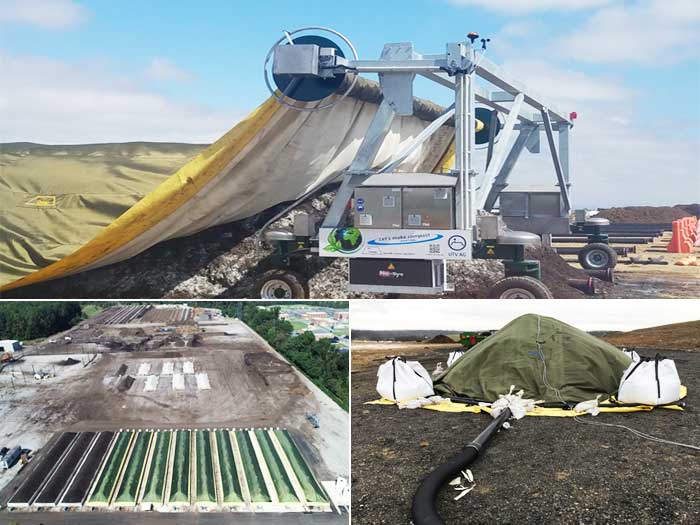
The composting industry is experiencing significant growth and evolution to help reduce the amount of organic waste placed in landfills. Solid waste departments across North America feel the strain of reducing and controlling methane emissions, saving valuable landfill space, and creating sustainable solutions.
Municipalities, regions, and private companies are turning to organic composting to divert organic wastes from landfills and reuse them as feedstock for a high-quality compost by-product. While theoretically simple, there is a logical series of processes and parameters, some specific to each site, to reach the goals communities and solid waste management organizations hope to achieve.
Whether your community or region already has composting and is scaling to include food waste, or you want to establish a new composting facility or regional composting site, a free educational session entitled Design, Siting, & Permitting of a Municipal Compost Facility can help.
The Southeastern Connecticut Regional Resources Recovery Authority’s proposed compost facility reflects a well-thought-out strategy that leverages circularity, advanced composting technologies, and engineering best practices to create a sustainable and economically viable operation.
SCRRRA’s Executive Director, David Aldridge, walks us through his proposed regional compost facility, which reflects a well-thought-out strategy that leverages advanced composting technologies and engineering practices to create a sustainable and economically viable operation.
Dave with Greg McCarron, Professional Engineer, and Certified Compost Professional, discuss hybrid systems and incorporating rigorous process controls, resulting in a forward-thinking approach to composting at scale.
Participants and viewers will appreciate and understand applying the science and practice of composting and what is critical to successful site, design, permit, and manage composting programs that support circularity and operational efficiencies – creating value for all stakeholders.
Our experts will field your questions during the live session, and we offer the ability to ask questions anonymously if you prefer. We ask that you register, but SCS never shares or sells any contact information.
Learn More About Design, Siting, & Permitting of a Municipal Compost Facility
Join SCS at the 24th Annual Joint Fall Conference, September 4th – 5th, hosted by the Pennsylvania Waste Industries Association (PWIA) and the SWANA Keystone Chapter at the Hilton Harrisburg in Harrisburg, Pennsylvania. Billed as Pennsylvania’s premier solid waste management event, this year’s conference features a welcome reception, program, and trade show. The technical program includes live learning and networking opportunities for industry professionals, and engaging topics on emerging technologies, PFAS, and financial considerations for energy projects.
SCS Experts are excited to present on the following topics this year.
LFG Recovery Forecasting Uncertainty on the Effects of Organics Diversion Presenter: Christopher Woloszyn, Senior Project Professional.
Drones, Lasers and Satellites, Oh My! Remote Methane Monitoring Techniques and Landfill Air Regulatory Update Presented by: Josh Roth and David Hostetter.
SCS is proud to be a sponsor and exhibitor for this exciting event, bringing together leaders and organizations across the solid waste industry.
Join SCS Engineers at the 2024 PWS Permian Basin Summit. The Produced Water Society brings together industry-leading speakers such as Neil Nowak to address the produced water issues faced by operators, water midstream companies, and water service providers.
Neil will present “Produced Water Recycling and Evaporation Facilities” as a Roundtable Presentation at the event.
August 13, 2024
2:00 – 3:15 PM
Produced water experts with Permian Basin experience will discuss the existing solutions, technological innovations, and produced water management best practices needed to keep the most productive unconventional shale play in the world pumping hydrocarbons while ensuring sustainable business operations and safeguarding the local environment and freshwater resources.
Join SCS Engineers to solve environmental challenges.
• Carbon Sequestration & Deep Well Injection
• Greenhouse Gas Services
• Oil and Gas Services
Meet with SCS Engineers at the 2024 Railroad Commission (RRC) of Texas Regulatory Conference July 30-31 at the AT&T Hotel and Conference Center to inform the oil and gas sector on the applicable laws, rules, and procedures for hydrocarbon production in Texas.
Join SCS Engineers to solve future energy challenges like:
The U.S. Environmental Protection Agency and the U.S. Department of Energy announced on June 21st that applications are open for $850 million in federal funding for projects that will help monitor, measure, quantify, and reduce methane emissions from the oil and gas sectors. The funding aims to specifically help small oil and natural gas operators reduce methane emissions and transition to available methane emissions reduction technologies, while also supporting partnerships that improve emissions measurement and provide accurate, transparent data to impacted communities.
A competitive solicitation for this funding will enable a broad range of eligible U.S. entities to apply, including industry, academia, non-governmental organizations, Tribes, and state and local governments. This funding opportunity is expected to achieve measurable outcomes for skilled workforce training, community involvement, and environmental justice. Funding applicants are required to submit Community Benefits Plans to demonstrate meaningful engagement with and tangible benefits to the communities in which the proposed projects will be located. These plans must provide details on the applicant’s commitments to community and labor engagement, quality job creation, diversity, equity, inclusion and accessibility, and benefits to disadvantaged communities.
The primary objectives of this funding opportunity announcement are to:
1. Help small operators significantly reduce methane emissions from oil and natural gas operations, using commercially available technology solutions for methane emissions monitoring, measurement, quantification, and mitigation.
2. Accelerate the repair of methane leaks from low-producing wells and the deployment of early-commercial technology solutions to reduce methane emissions from new and existing equipment such as natural gas compressors, gas-fueled engines, associated gas flares, liquids unloading operations, handling of produced water and other equipment leakage.
3. Improve communities’ access to empirical data and participation in monitoring through multiple installations of monitoring and measurement technologies while establishing collaborative relationships between equipment providers and communities.
4. Enhance the detection and measurement of methane emissions from oil and gas operations at regional scale, while ensuring nationwide data consistency through the creation of collaborative partnerships. These partnerships will span the country’s oil and gas-producing regions and draw in oil and natural gas owners and operators, universities, environmental justice organizations, community leaders, unions, technology developers, Tribes, state regulatory agencies, non-governmental research organizations, federally funded research and development centers, and DOE’s National Laboratories.
Additional Resources:
1. Read more details of this funding opportunity.
3.GHG Monitoring, Control, Verification, Reporting
Join SCS Engineers at the 2024 Connecticut DEEP State Solid Waste Advisory Committee (SWAC) Meeting on June 25th from 9:30 to 11:30 am at DEEP Headquarters. For those who cannot attend in person, you can join via Zoom by registering
SCS Engineer Greg McCarron will be presenting at this event. The SWAC plays a vital role in the successful implementation of Connecticut’s solid waste management plan. The committee’s responsibilities include assisting the Department in executing the plan, identifying emerging issues and proposing solutions, and participating in necessary revisions to the plan. Don’t miss this opportunity to engage with industry leaders and contribute to the future of waste management in Connecticut!
Join SCS Engineers at the 2024 SWANA FL Summer Conference, the premier solid waste conference and tradeshow in the Southeast, from July 14-16 at the Rosen Plaza Hotel in Orlando, FL. This event offers a unique opportunity to network with top professionals in the solid waste industry, earn continuing education hours, and experience the vibrancy of International Drive.
The conference agenda will feature engaging sessions and speakers who will discuss the latest advancements in solid waste management. Industry suppliers and service providers will have the chance to showcase their products and services. Don’t miss out on this chance to connect, learn, and grow in your profession. Mark your calendars and register today to join us at Synergy 2024: Uniting to Advance Florida Resource Management!
Several of our professionals are presenting, including:


Laila Al-Khalaf & Stephen Townsend
Surface and Subsurface Landfills Fires
Tuesday, July 16, 1:00 -3:00 pm, Location: Ballroom B
 Kayla Ouellette
GIS Technology for Landfills
Tuesday, July 16, 3:30-5:00 pm, Location: Ballroom B
Join SCS Engineers at the Sustainability Delivery Summit from June 24 to June 26 at the Hyatt Regency Boston! This premier event, organized by Environment Analyst, brings together a global community of sustainability leaders with a unified mission: to translate sustainability goals into actionable steps.
Engage with sustainability and business leaders, policymakers, and stakeholders from the infrastructure and built environment sectors, along with technical solution providers in environmental consultancy, software, and engineering. This summit will empower you to focus on the delivery of climate commitments, develop collaborative strategies for a sustainable future, find partners to accelerate your sustainability journey, and reinforce the business case for ESG. Don’t miss this chance to be part of the conversation and drive impactful change.
Join SCS Engineers at WASTECON 2024 from October 21st – October 24th at the Gaylord Texan Resort and Convention Center! This premier event is the ultimate platform for leaders and engineers to come together, collaborate, and innovate towards a more sustainable future. At WASTECON 2024, you’ll have the chance to connect with SCS Engineers at booth 701. Meet our team of experts and leaders who are at the forefront of advancing sustainable practices in waste management.
 Ketan Shah will be presenting Enhancing Landfill Gas (LFG) Modeling Through Emerging Technologies and Data Integration for Emission Reductions and Sustainable Energy on October 22nd from 8:30 – 9:15 am. The presentation will identify emerging technologies for improved LFG modeling, explain the benefits of enhanced LFG modeling for decision-making, and analyze the importance of data collection and integration for effective LFG modeling.
 You’ll want to attend David Hostetter’s presentation, Smart Landfills: Transforming Waste Management with Remote Monitoring. Dave will explain how landfill owners and operators are using technology to create more efficient landfill operations.
 Jeff Phillips will be presenting Facility Fires: 2AM Isn’t the Time to Make a Plan on October 22nd from 3:15-4:00 pm. This presentation provides an update on fires within the industry and present real-world case studies of fires so that we can learn from other events (the good and bad).

Stacey Dolden will be presenting Navigating Workforce Trends: Understanding and Adapting to Personnel Challenges Across All Job Functions on October 24th from 11am-12:15 pm. The discussion will explore what is happening in the industry and share strategies for effective recruitment and retention for a range of position types and levels.
Don’t miss this unique opportunity to bridge the gap between leadership and technology, accelerate transformative change, and gain valuable insights to better serve your stakeholders. Improve your organization and operations while enriching your career and those of your team members. Register today and be a part of the future of sustainability with SCS Engineers at WASTECON 2024. See you at the Gaylord Texan Resort and Convention Center!
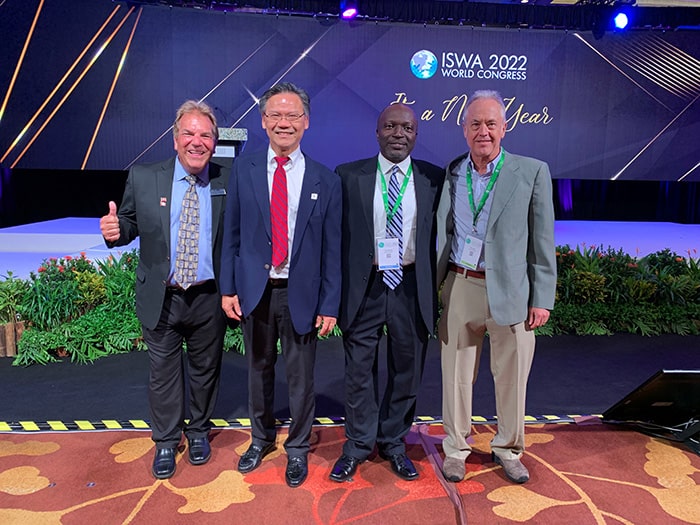
Open dumpsites have a devastating impact on the environment and public health. Waste Management World spoke to James Law, Chair of the ISWA Landfill Working Group and the Task Force on Closing Dumpsites Initiative, about the key steps and economics of closing dumpsites, the climate benefits, and the pros and cons of biomining.
James Law explains that since the operation of a dumpsite does not include the application of daily cover or waste compaction and also it does not have a bottom liner or gas and leachate collection system, the most common risks are groundwater contamination, fire hazards that could generate black carbon fume and toxic gases to impact the air quality and thus affect the public health in the immediate area or areas miles away in downwind direction.
The gas emissions from open dumpsites have a direct impact on climate change. Then there are odor issues, either from the decomposed waste mass itself or from the leachate seep outbreaks located on the side slopes of a dumpsite. The leachate seeps will impact the surface water bodies such as rivers and lakes nearby in the downstream direction as well as the groundwater below the dumpsite. Most dumpsites have people or informal waste pickers on them. Therefore they have a direct impact on their health and safety point of view.
Read and Share the Complete Article and Interview:
Additional Resources:
Corporate Headquarters