 EPA has issued a revised NESHAP standard for municipal solid waste landfills. The new rule reflects EPA’s conclusions regarding the residual risk and technology rule, resolves confusion created when the previous rule was not updated at the same time as the landfill NSPS and updates landfill gas well head criteria for temperature. EPA is also clarifying that the standards are applicable during periods of startup, shutdown and malfunction, and requiring electronic reporting of performance test results.
This action finalizes the residual risk and technology review (RTR) conducted for the Municipal Solid Waste (MSW) Landfills source category regulated under National Emission Standards for Hazardous Air Pollutants (NESHAP) contained within 40 Code of Federal Regulations (CFR) Part 63, Subpart AAAA. Additionally, the U.S. Environmental Protection Agency (EPA) is taking final action to:
The EPA is also finalizing minor changes to the MSW Landfills NSPS and Emission Guidelines (EG) and Compliance Times for MSW Landfills contained within 40 CFR Part 60, Subparts XXX and Cf. Specifically, the EPA is finalizing provisions to the most recent MSW Landfills NSPS and EG that would allow affected sources to demonstrate compliance with landfill gas control, operating, monitoring, recordkeeping, and reporting requirements by following the corresponding requirements in the MSW Landfills NESHAP. According to EPA, these final amendments will result in improved compliance and implementation of the rule and eliminate some of the confusion created by the previous version of the EPA rule.
We’ve pulled this information from the Final Amendments to Air Toxics Standards for Municipal Solid Waste Landfills and SCS will publish an SCS Technical Bulletin on our blog and social media sites. Please contact your Project Manager for details specific to your operation.
Approximately 738 MSW landfills are subject to the NESHAP.
On February 25, 2020, EPA finalized amendments to the 2003 NESHAP for MSW Landfills. EPA issued air toxics standards for the MSW Landfills source category in 2003 that established emission limitations based on maximum achievable control technology (MACT) standards for hazardous air pollutants (HAP) from major and area sources.
The rule required MSW landfills greater than 2.5 million megagrams (Mg) and 2.5 million cubic meters with uncontrolled emissions greater than 50 Mg/year of non-methane organic compounds (NMOC) to install and operate a gas collection and control system (GCCS). Most emissions from MSW landfills come from the continuous biodegredation of the MSW. Landfill gas contains methane, carbon dioxide and more than 100 different NMOC, including, but not limited to, vinyl chloride, ethyl benzene, benzene and toluene.
Based on the RTR, EPA is finalizing no changes to the existing standards because the agency determined the risks to be acceptable with an ample margin of safety to protect public health and the environment. In addition, EPA did not identify any new cost-effective emission controls for MSW landfills. However, EPA is finalizing several minor amendments to reorganize and streamline requirements for MSW landfills that will improve the clarity, compliance and implementation of the rule. These include:
The Clean Air Act (CAA) requires EPA to regulate toxic air pollutants, also known as air toxics, from categories of industrial facilities in two phases. The first phase is “technology-based,” where EPA develops standards for controlling the emissions of air toxics from sources in an industry group or “source category.” EPA bases these MACT standards on emission levels that are already being achieved by the best-controlled and lower-emitting sources in an industry. Within 8 years of setting the MACT standards, the CAA directs EPA to assess the remaining health risks from each source category to determine whether the MACT standards protect public health with an ample margin of safety and protect against adverse environmental effects. This second phase is a “risk-based” approach called residual risk. Here, EPA must determine whether more health-protective standards are necessary.
Every 8 years after setting MACT standards, the CAA requires EPA to review and revise the standards, if necessary, to account for improvements in air pollution controls and/or prevention and to address any residual risks that still remain after the MACT is implemented.
The CAA requires EPA to assess the risk remaining after application of the final air toxics emission standards; known as a residual risk assessment. Based on the completed risk assessment, available health information, and associated uncertainties, EPA determined risks from the MSW Landfills source category are acceptable and provide an ample margin of safety to protect public health. EPA estimates the maximum individual lifetime cancer risk for inhalation for the source category to be less than 10-in-1 million.
The CAA requires EPA to assess, review and revise air toxics standards, as necessary, taking into account developments in practices, processes and control technologies. The technology review of the standards for MSW Landfills did not identify any developments that would further reduce HAP emissions beyond the original NESHAP.
Download a copy of the final rule notice from EPA’s website at the following address: https://www.epa.gov/stationary-sources-air-pollution/municipal-solid-waste-landfills-national-emission-standards.
SCS will publish an SCS Technical Bulletin on our blog and social media sites. Please contact your Project Manager for details specific to your operation.
SCS Customer Support:
800-767-4727
Local Offices or Find a Specialist
Despite the many impacts on our lives right now, our thanks go to the many public and private solid waste management employees, and organizations such as SWANA and the NWRA, for continuing to serve our communities to keep them clean and safe nationwide. Solid waste management is definitely an essential service on the frontline.

During this COVID-19 outbreak, many employers, property managers, and property owners are tirelessly working to maintain clean and safe environments for tenants and employees. Cleaning contractors and janitorial services are working overtime, expending considerable efforts trying to maintain clean and disinfected workspaces and buildings. While providing their services, they face continual challenges of not having enough information regarding COVID-19 behavior, and the dwindling supply of cleaning and disinfecting agents. Many have inquired about microbial sampling and analytical methodologies to evaluate the effectiveness of these cleaning measures.
Some of us have been here before. Twenty years ago, property managers and tenants faced similar challenges in the wake of anthrax contamination of mailrooms in several prominent buildings. The approach we took then—collecting wipe samples from areas of concern for analysis at a nationally-recognized specialty laboratory—can offer peace of mind and an empirical basis for the evaluation of cleaning/disinfection effectiveness.
While specific testing for viruses, including the novel coronavirus (SARS-CoV-2), is not generally available, it is possible to test environments and surfaces for the presence of surrogate clinical pathogens and bacteria—these should be absent if cleaning and disinfection are effective.
Every building, tenant space, and office work environment is unique, and therefore it is important to develop site-specific plans. Staff collecting the samples should be trained in hazardous incident response, including microbiological and chemical impacts on structures and the environment, and should have the proper personal protective equipment (somewhat scarce at present in many locations).
About SCS Engineers
SCS Engineers is a 50-year-old, employee-owned environmental consulting and contracting firm that designs and implements sustainable and innovative environmental solutions. With 70 offices nationwide and nearly 1,000 employees, we are a full-service provider in the solid waste, hazardous waste, and environmental engineering industries. We study challenges and design solutions; we remediate, build and operate environmental and energy projects and systems; and, we evaluate the public health risk of hazardous materials exposure scenarios. As technologies, industry, and public needs change and expand, SCS evolves to provide innovative solutions to our clients’ challenges.
Most states’ guidance considers SCS’s services as essential to protect public health.
Contact SCS today at 800-767-4727 or for additional information and consultation regarding the effectiveness of cleaning/disinfection at your properties and workspaces in your state. Further information about SCS is on our website at https://www.scsengineers.com/.
To our valued clients, partners, and friends, we would like to pass on our wholehearted concern for you and your families’ well-being. We hope that those affected by the virus recover fully and quickly, and those healthy remain that way.
We look forward to the day we can meet again in a less socially-distant way, but in the meantime, know that we are here to serve and are available to help you carry the load in a challenging time.
The employee-owners of SCS Engineers
Both associations are providing guidance, as many waste management activities must continue. SCS is following association advice, state protocols, and our clients’ recommendations in our own procedures as we continue to perform essential work. We share the SWANA resources and recommendations here and thank them for their dedication. SCS employees should use SCS resources available on the SCS intranet and through our Health & Safety protocol, which reflect the safety precautions advised here.
Reprinted Letter to SWANA Members dated March 23, 2020
As communities and companies throughout the United States and Canada respond to the Coronavirus pandemic, SWANA will continue to provide assistance to its members and the waste industry.
A growing number of states and localities are issuing orders identifying certain industries as “essential” during the pandemic, and these orders typically include the solid waste industry and other categories of employees who may be SWANA members. In those locations, employees and contractors may need to demonstrate proof to law enforcement personnel or others that they work in an essential industry. See this template letter that employers can customize to their needs and provide to employees and contractors. The letter should be on agency/company letterhead and include a contact person and a telephone number to call. The contact person should be familiar with the applicable emergency declarations.
Employees and contractors should carry the customized letter with them at all times, and particularly when they are going to or from work. Several waste industry employees in California in their personal vehicles were stopped on their way to work by law enforcement personnel late last week, but fortunately, their employer had created a letter similar to the attached and the employees were able to show that letter and proceed to their places of employment.
This letter is intended to allow workers to demonstrate that they work in a job category identified as an essential service, including solid waste and recycling operations. It should not be used for any other purpose or by employees that are not actively supporting these operations.
In addition, attached is a notification document for solid waste employers and others to place in their work vehicles to demonstrate they are covered by recent emergency order guidance. It cites the Department of Homeland Security’s Cybersecurity & Infrastructure Security Agency, March 19, 2020 memo that identifies workers engaged in the removal, storage, and disposal of residential and commercial solid waste and hazardous waste as essential infrastructure workers.
Please do not hesitate to contact Jesse Maxwell at or me at if you have any questions about this letter, or need assistance responding to the Coronavirus pandemic. Please stay safe and healthy.
NWRA resources are plentiful and include these:
COVID-19 WORK PRACTICES At this time CDC and OSHA are not issuing waste and recycling specific guidelines for the handling of waste and recycling materials related to COVID 19. If this changes, NWRA will alert its members. Use this industry guidance.
COVID-19 RESOURCES Resources and information provided by agencies and organizations.
Thank you!
We know our valued clients, partners, and associations are busy assessing the impact and the disruptions caused by the COVID-19 coronavirus. Our thoughts are with your employees and their families during this health crisis.
SCS is committed and well prepared to continue the delivery of our services.
Our business model includes 70 regional and satellite offices located near client sites throughout the United States, with additional mobile offices co-located on project sites. The model has always worked well for us because our professionals and technicians live nearby; our distributed service network means we can drive to project sites instead of flying, for example. We do use national resources as well; if a lab closes in one region or state, we have access to other resources. We are monitoring local conditions (including regulatory guidance) for COVID-19 just as we do for other regulatory programs.
We put health and safety above any other consideration.
This includes the health and safety of our employees, the client representatives with whom we work, contacts we make during our work, and the public. Our employees can work remotely with full access to our infrastructure and technologies. Our field staff continues working with our clients to keep critical infrastructure running, and our SCS Remote Monitoring and Control and SCSeTools help. In most cases, government agencies understand that the services we provide to our clients are essential.
We are helping our clients prioritize critical functions to inform decisions that might have to be made in these rapidly-evolving circumstances. We have increased the frequency of our internal communications to assure that our back-up resources quickly mobilize when needed.
We continue to monitor the COVID-19 situation and have assembled a task force at the highest level of our firm to make sure our important work continues. As circumstances change, we will provide general updates on this website and via client updates from our project and regional managers. We continue adapting to meet our responsibilities safely and thank our clients, vendors, and colleagues for their diligent work and care.
With appreciation,
Jim Walsh, President, and CEO
SCS Customer Support:
In light of public concerns related to COVID-19, SCS Engineers has proactive measures and contingency plans in place to protect our employees and our clients, while continuing our work. SCS’s Health & Safety practice, in consultation with our executives, the Centers for Disease Control, and industry associations, endeavors to make the most responsible decisions as circumstances demand.
SCS will post updates here as needed, and is in regular and consistent communication with all employees and with our clients.
National Emission Standards for Hazardous Air Pollutants: Stationary Combustion Turbines Residual Risk and Technology Review 40 CFR Part 63
This action finalizes the residual risk and technology review (RTR) conducted for the Stationary Combustion Turbines source category regulated under national emission standards for hazardous air pollutants (NESHAP). In addition, EPA is taking final action addressing requirements during periods of startup, shutdown, and malfunction (SSM)
and to add electronic reporting requirements.
The EPA is finalizing its proposed determination that the risks from this source category due to emissions of air toxics are acceptable and that the existing NESHAP provides an ample margin of safety to protect public health. The EPA is also finalizing its proposed determination that EPA identified no new cost-effective controls under the technology review that would achieve further emissions reductions from the source category.
This final rule is effective on March 9, 2020. The incorporation by reference (IBR) of certain publications listed in the rule is approved by the Director of the Federal Register as of March 9, 2020.
For questions about this final action and electronic reporting requirements, contact:
Melanie King, Sector Policies and Programs Division (D243-01), Office of Air Quality Planning and Standards, U.S. Environmental Protection Agency, email
address: .
For specific information regarding the risk modeling methodology, contact Mark Morris, Health and Environmental Impacts Division (C539-02), Office of Air Quality Planning and Standards, U.S. Environmental Protection Agency, email address: .
For information about the applicability of the Stationary Combustion Turbines NESHAP to a particular entity, contact Sara Ayres, Office of Enforcement and Compliance Assurance, U.S. Environmental Protection Agency, email address: .
The Environmental Protection Agency (EPA) plans to make available approximately $5 million to provide supplemental funds to Revolving Loan Fund (RLF) cooperative agreements previously awarded competitively under section 104(k)(3) of the Comprehensive Environmental Response, Compensation and Liability Act (CERCLA). EPA will consider awarding supplemental funding only to RLF grantees who have demonstrated an ability to deliver programmatic results by making at least one loan or subgrant.
The award of these funds is based on the criteria described at CERCLA 104(k)(5)(A)(ii). The Agency is now accepting requests for supplemental funding from RLF grantees. Specific information on submitting a request for RLF supplemental funding is described below and additional information may be obtained by contacting EPA’s Regional Brownfields Coordinators, your SCS Project Manager, or the Brownfield’s Practice at .
Requests for funding must be submitted to the appropriate EPA Regional Brownfields Coordinator by April 8, 2020. A request for supplemental funding must be in the form of a letter addressed to the appropriate Regional Brownfields Coordinator with a copy to Rachel Congdon at and to Rachel Lentz at . Contact your SCS Project Manager or for more information regarding filing if you are unsure.
Background
The Small Business Liability Relief and Brownfields Revitalization Act added section 104(k) to CERCLA to authorize federal financial assistance for brownfields revitalization, including grants for assessment, cleanup and job training. Section 104(k) includes a provision for EPA to, among other things, award grants to eligible entities to capitalize Revolving Loan Funds and to provide loans and subgrants for brownfields cleanup. Section 104(k)(5)(A)(ii) authorizes EPA to make additional grant funds available to RLF grantees for any year after the year for which the initial grant is made (noncompetitive RLF supplemental funding) taking into consideration:
Eligibility
In order to be considered for supplemental funding, grantees must demonstrate that they have significantly depleted funds (both EPA grant funding and any available program income) and that they have a clear plan for utilizing requested additional funds in a timely manner.
Grantees must demonstrate that they have made at least one loan or subgrant prior to applying for this supplemental funding and have significantly depleted existing available funds. For FY2020, EPA defines “significantly depleted funds'” as uncommitted, available funding is 25% or less of total RLF funds awarded under all open and closed grants and cannot exceed $600,000. For new RLF recipients with an award of $1 million or less, funds will be considered significantly depleted if the uncommitted, available funding does not exceed $300,000.
Additionally, the RLF recipient must have demonstrated a need for supplemental funding based on, among other factors, the list of potential projects in the RLF program pipeline; demonstrated the ability to make loans and subgrants for cleanups that can be started, completed, and will lead to redevelopment; demonstrated the ability to administer and revolve the RLF by generating program income; demonstrated an ability to use the RLF grant to address funding gaps for cleanup, and demonstrated that they have provided for past and will provide for future community benefit from past and potential loan(s) and/or subgrant(s).
The EPA encourages innovative approaches to maximize revolving and leveraging with other funds, including the use of grant funds as a loan loss guarantee or combining with other government or private sector lending resources. Applicants for supplemental funding must contact the appropriate Regional Brownfields Coordinator to obtain information on the format for supplemental funding applications for their region.
Blighted properties are common in many urban areas, and with due diligence often present cost-effective and profitable redevelopment opportunities. Redevelopment of these types of projects is often referred to as Brownfield projects if considering the presence or potential presence of contaminants in the subsurface. Brownfields redevelopments can present great benefits and advantages to the surrounding community.
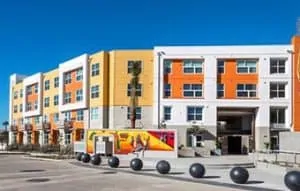
Advantages of the redevelopment of these properties include: revitalizing a property and surrounding properties, creating jobs, rejuvenating businesses, adding much-needed housing, increasing tax revenue, reducing crime, and increasing the efficiencies and quality of life for residents and workers.
Redevelopment of blighted properties does come with challenges, such as density, parking, financing, city approvals, and more. Blighted properties can have environmental issues that are best addressed proactively to reduce the risk of cost and schedule overruns as future liability issues during redevelopment.
These issues should start to be addressed during due diligence and before construction activities commence to reduce the uncertainty on potential project costs and timeline implications. Environmental issues can sidetrack the development process of some properties but most sites, if handled correctly, can present significant upside if these issues are identified during the due diligence and integrated into the development processes.
Common environmental concerns include:
Identifying environmental risks before the acquisition of properties is critical, as is assigning potential costs to these risks. Depending on the nature of the transaction, these items are often useful as leverage during negotiations.
A Phase I Environmental Site Assessment is a good starting place for identifying whether environmental issues may exist at a property. If a Phase I identifies potential risks, these reports may recommend additional investigation (Phase II) in the form of soil, soil vapor, and groundwater sampling. Phase II is used to identify whether contamination is present (i.e., from fuels, solvents, pesticides, toxic metals), and with enough sampling can determine the extent and magnitude of contamination.
Resolving these impacts can include leaving and managing impacted soil in place as much as possible since the significant cost from impacted soil is digging it up and paying to dispose of it. Regulatory agencies such as the local health departments, if approached under voluntary cleanup assistance programs, can accommodate leaving all or a good portion of impacted soil in place if the risks to human health and the environment are identified and resolved in a mitigation plan.
For more significant contamination issues, such as extensive soil and groundwater contamination from a gas station or dry cleaner releases, funding in the form of State or Federal grants can be available. Obtaining a grant with the help of a qualified environmental consultant can be the difference-maker in acquiring, cleaning up, and redeveloping a blighted property. These grants don’t typically cover all the costs associated with these cleanups but can cover the majority of these costs with some additional time required to do a cleanup.
Developers can also take out an environmental insurance policy to console a nervous lender or investor. Environmental insurance can cover clean-up requirements, third-party claims for bodily injury and property damage, and associated legal expenses resulting from pollution or contamination. Policies with various term lengths and deductible amounts are available to satisfy the concerns of lenders or equity investors.
The redevelopment of blighted urban properties is a necessary part of the life cycle of a property and a community. It’s critical to identify potential environmental risks during the due diligence process – before you choose to purchase the site. With proper planning, the mitigation or remediation of these impacts can be incorporated into the development process and result in a vibrant, profitable project that protects human health and the environment, and help owners, lenders, investors, and users of these properties sleep well at night.
 Luke Montague is a professional geologist (PG) and licensed contractor with 19 years of experience primarily in environmental consulting, as well as in the areas of geotechnical engineering, general contracting, commercial and residential development, and property and asset management.
Learn more about Brownfields | Learn more about Due Diligence
Corporate Headquarters