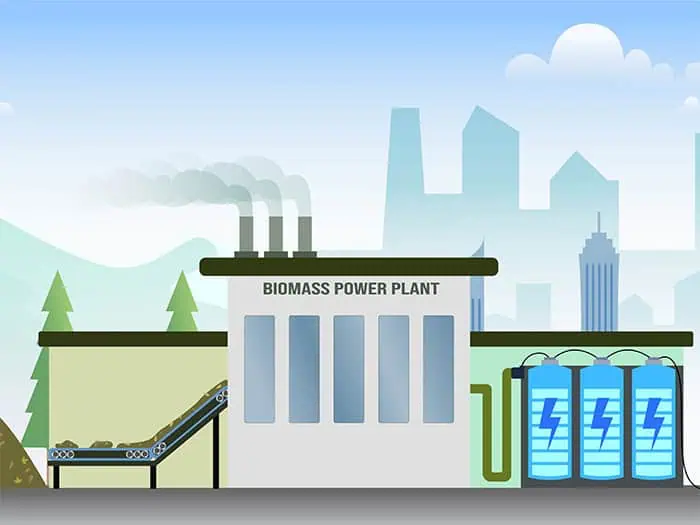
The future of sustainable agriculture is taking shape on 400 dairy, poultry, hog, and beef farms across the U.S. Farmers from California to Massachusetts are integrating anaerobic digestion into their waste management practices to slash emissions and generate biogas for on-farm energy savings and revenue streams. Their impact is nothing to cluck at. Collectively, these farms reduced greenhouse gas emissions by 14.8 million metric tons of CO2 equivalent, and generated the equivalent of 3.29 million MWh of electricity.
“On-farm anaerobic digestion is becoming a more common component of the U.S. livestock model,” says Dr. Erik Anderson, Senior Project Manager and National Expert on Anaerobic Digestion at SCS Engineers. “Farmers use covered lagoons to sustainably manage waste, optimize their operations, and monetize waste streams.”
In the U.S., 43% of livestock farms with anaerobic digestion use covered lagoons as their digesters because lagoons are common and already facilitate biological decomposition. While a passive lagoon digester is a good low-cost option, its performance can be as fickle as the weather.
“Most passive lagoons only achieve about 60% of a material’s potential, sometimes lower,” says Erik.
Focusing on five elements, SCS’s hybrid approach, led by Erik, controls system conditions to boost biogas production and system efficiency. “A well-designed hybrid system closes the performance gap without overbuilding.”
Feedback and Control Loops
Digesters give “warning signs” that microbial conditions are imbalanced, such as changes in alkalinity, pH, volatile fatty acid, chemical oxygen demand, and overall methane production and concentrations in the biogas. Automated feedback systems read these warning signs and monitor essential parameters. “Real-time data enables active management to resolve problems quickly,” Erik says, “It is the rooster that wakes us up.”
Insulation and Heating
Many passive lagoons suffer from seasonality. When digester temperatures dip below 68°F, microbial activity slows significantly. Erik’s cure for these winter blues includes an insulated floating cover and an insulated lagoon bottom (typically made of reinforced or high-density polyethylene or clay-lined) that protects against the season’s colder temperatures.
“Insulation is only useful if there is heat to retain. If cost-effective, pre-heating lagoon waste would be the first design consideration…and it is often the most impactful,” says Erik.
Energy recovery systems that preheat the incoming lagoon feed are smart additions to new builds and retrofits. These systems either recover waste heat produced onsite through daily operations or economize the heat in the final effluent stream to cool and heat the two streams simultaneously.
Mixing
Passive lagoons do not typically incorporate mixing, often resulting in the accumulation of solids at the bottom and/or “fat” caps that form along the lagoon surface. SCS’s hybrid design incorporates mixing (and heating) and/or zone recirculation in either the staging tank or in the first lagoon of a two-lagoon system to create a homogenous flow and avoid microbial dead zones. This design also tolerates more total solids, generating more biogas.
“Mixing helps break down materials faster and transfers heat evenly throughout the system,” says Erik. “Properly designed mixing helps create a stable environment, which reduces the impacts of environmental changes, so microbes can thrive, improving digestion rates.”
Organic Loading Rates
How much volatile solids are fed into the digester is like Goldilocks trying porridge: it’s best when it’s just right. “Many slurry streams are too dilute, and given the sheer size of the digester, it could handle more material than it’s being fed,” Erik says. “I see that as leaving money on the table.”
While commercial digesters can run the design gamut from covered lagoons to high-solids and “dry” digesters, the nature of the project will determine the best option. It may be possible to take on higher concentrations of organic waste after evaluating project goals, mixing, material staging, feed control, and other parameters.
A hybrid design optimizes the build to the system’s upper limit, the sweet spot of maximum biogas production for the smallest footprint and the lowest price tag. Testing the effluent would reveal how much organic loading the system can accept, and thus, how much biogas it can optimally produce.
“If a system has capacity, it can take on more waste products to make more biogas and increase revenue,” says Erik.
Sustainable Energy Use
With minor adjustments, such as removing particulate and contaminants like H2S, biogas can be burned in onsite boilers to heat buildings, equipment, or the incoming digester slurry. Depending on the farm’s size and design, biogas can be converted into electricity for on-site or grid use via a combined heat and power plant, or purified to become renewable natural gas. Erik’s hybrid design is flexible to accommodate all energy generation pathways and goals.
“Mainly, the hybrid design encourages sustainable energy use,” says Erik. “Why not leverage our waste material and use the lagoon digester and onsite waste heat to its full potential? We have the opportunity to reduce farm costs and increase sustainability for the greater good.”
 Meet Dr. Erik Anderson at the International Biomass Conference and Expo. Dr. Anderson will be on a panel session discussing hybrid anaerobic digestion entitled “Data Driven Strategies for High Performance Biogas Systems” on Wednesday, April 1 (1:00 pm – 2:30 pm).
As biogas and RNG projects scale, data-driven decision-making is becoming essential to maximizing performance, reliability, and returns. This session explores how operators are using high-quality data, advanced analytics, and AI-enabled tools to optimize anaerobic digestion, improve productivity, and reduce operating costs. The panelists examine practical applications ranging from real-time process monitoring and AI-enhanced operations to chemistry-based optimization and hybrid reactor design, offering actionable insights into how data and technology can unlock higher efficiency and resilience across modern biogas systems.
You may also reach him at SCS Engineers or visit Anaerobic Digestion for Industry and Agriculture.