Meat and Poultry Industry Effluent Limitation Guidelines – ELGs
July 3, 2025
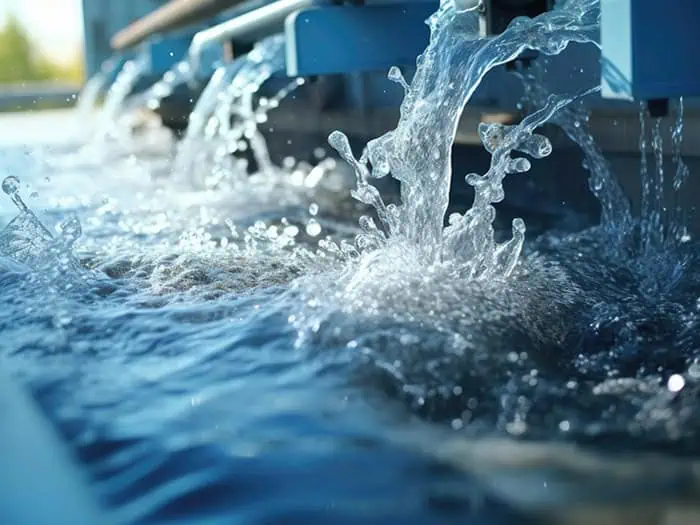
Wastewater treatment unit captures and removes contaminants from industrial wastewater before releasing it back into the environment.
The EPA proposes updated effluent limitation guidelines (ELGs) for meat and poultry product facilities, aiming to reduce wastewater pollution, particularly nitrogen and phosphorus discharged from meat and poultry processing facilities. These changes affect meat and poultry industry facilities, including those that would apply to additional direct and indirect dischargers.
There is growing concern as local and state ELGs are also beginning to appear. These new guidelines can impact the meat and poultry industry and the food and beverage industry. In summary, the federal guidelines are influencing state and local plans.
The EPA is considering multiple regulatory options, including those that would apply to additional direct and indirect dischargers. At the federal, state, and local levels, WTPs (water treatment plants) will likely mandate more FOG restrictions (fats, oils, grease).
The proposed federal rule would establish more stringent effluent limitations for nitrogen and, for the first time, limitations for phosphorus. It introduces pretreatment standards for oil and grease, total suspended solids, and biochemical oxygen demand. The proposal also includes regulations for wastewater with high salt content. Stricter ELGs impact more meat and poultry facilities, including those that discharge wastewater to POTWs (Publicly Owned Treatment Works).
The new guidelines would require some facilities to treat their wastewater before discharge, potentially leading to increased costs and operational changes for treatment and trained operators to implement the new technologies and operational changes.
Impacts these Subparts within the CLEAN WATER ACT – 40 CFR 432 (link)
Meat:
Subpart A – Simple Slaughterhouses: Facilities that slaughter animals and perform minimal by-product processing (e.g., rendering, paunch handling).
Subpart B – Complex Slaughterhouses: Facilities that slaughter animals and perform extensive by-product processing (at least three operations).
Subpart C – Low-Processing Packinghouses: Facilities that slaughter animals and process a similar or lesser amount of meat into finished products.
Subpart D – High-Processing Packinghouses: Facilities that slaughter animals and process their carcasses and additional carcasses from external sources.
Subpart E – Small Processors: Facilities that produce less than 6,000 lbs/day of finished meat products (fresh cuts, smoked, canned, etc.).
Subpart F – Meat Cutters: Facilities that cut or produce fresh meat cuts (steaks, roasts, etc.) at rates greater than 6,000 lbs/day.
Subpart G – Sausage and Luncheon Meats Processors: Facilities that produce sausage, bologna, and other luncheon meats at rates greater than 6,000 lbs/day.
Subpart H – Ham Processors: Facilities that produce hams, alone or with other finished products, at rates greater than 6,000 lbs/day.
Subpart I – Canned Meats Processors: Facilities that produce canned meats (stew, sandwich spreads, etc.), alone or with other finished products, at rates greater than 6,000 lbs/day.
Subpart J – Renderers: Facilities that render animal fats, bones, and meat scraps.
Poultry Processing:
Subpart K – Poultry First Processing: Facilities that slaughter poultry.
Subpart L – Poultry Further Processing: Facilities that further process poultry products.
Overall, the proposed changes in effluent limitation guidelines by the EPA represent a significant shift in regulatory expectations for the meat and poultry industry. SCS Engineers provides webinars and resources that provide crucial insights and guidance for industry stakeholders to navigate these changes effectively.
You are about to leave the SCS Engineers’ website and be directed to an external third-party site, ICIMS. SCS is not responsible for the collection and use of information on the ICIMS site, which is governed by its own privacy practices, not this Notice. We encourage you to review their privacy notices for additional information. Do you want to continue?
To provide the best experiences, we use technologies like cookies to store and/or access device information. Consenting to these technologies will allow us to process data such as browsing behavior or unique IDs on this site. Not consenting or withdrawing consent, may adversely affect certain features and functions.
✕
We use cookies and similar technologies for the following purposes:
Cookie usage
We use cookies to ensure the basic functionalities of the website and to enhance your online experience.
You can choose for each category to opt-in/out whenever you want.
Functional
Always active
The technical storage or access is strictly necessary for the legitimate purpose of enabling the use of a specific service explicitly requested by the subscriber or user, or for the sole purpose of carrying out the transmission of a communication over an electronic communications network.
Statistics
The technical storage or access that is used for statistical and/or tracking purposes.The technical storage or access that is used exclusively for anonymous statistical purposes. Without a subpoena, voluntary compliance on the part of your Internet Service Provider, or additional records from a third party, information stored or retrieved for this purpose alone cannot usually be used to identify you.
Marketing
The technical storage or access is required to create user profiles to send advertising, or to track the user on a website or across several websites for similar marketing purposes.