Learn about SCS Engineers Air Emissions Services

Long story short, an escapee from San Quentin and any uncontrolled methane air molecule may be more similar than we may presume. In fact, a common LDAR practice is to use an infrared imaging camera; similar to the camera often used in search of fugitive criminals.
On a serious note, fugitive emissions are something that both industry and regulators have been focused on for decades, and the past and present efforts made to limit them are no less than remarkable.
Specific to Onshore Oil and Gas Exploration & Production, the Federal Regulations applicable to fugitive emissions are fairly young. Finalized in 2012, NSPS OOOO is no longer a toddler and is in the middle of growing into NSPS OOOOa (Public Comment Deadline March 11, 2016). On a national scale, NSPS OOOOa will expand fugitive emission monitoring and control requirements (VOC’s and methane) to several facility types associated with the industry and is expected to be finalized before the close of 2016.
In California, fugitive emissions from Onshore Oil and Gas Exploration & Production have been regulated for a long time. In fact, the O&G industry in Santa Barbara County has dealt with fugitive emission requirements since 1979. Since then SCS Engineers has been assisting with fugitive emission monitoring for our valued clients. Today, SCS Engineers provides the Oil and Gas Exploration and Production industry with efficient and effective LDAR services.
So fear not, SCS Engineers is ready to supply the knowledge and skill set you need to stay compliant, maintain your operations, and respect your bottom line. Remember, unless the doors are closed, pumps are turned off, and equipment is flushed and plugged; fugitive emissions requirements and LDAR will likely still apply.
Applicability: Determining Federal vs. State oversight is the first step. Non-Major Source Oil and Gas Production facilities are either subject to NSPS OOOO (soon to be OOOOa) or a related State specific rule (i.e. Colorado Regulation 7). Once oversight is determined, then there may still be exemptions for your facility (i.e. facility constructed before August 23, 2011). And finally, once regulatory oversight is confirmed and you determine that LDAR is required for your facility, then the last step is to figure out which equipment is applicable (i.e. VOC content > 10% by weight). Basically, an applicability determination can be daunting.
Equipment: EPA’s Method 21 is historically and currently referenced in all LDAR regulations. Method 21 requires an instrument such as the Flame Ionization Detector (FID) or Photo Ionization Detector (PID). More recently the Optical Gas Imaging (OGI) Camera has been included in LDAR regulations and utilized in LDAR programs. Presently, there are several instrument technologies that exist and are in the works, but not yet mainstream in Oil and Gas sector. Ultimately, if you were to find yourself conducting LDAR monitoring at your oil and gas facility tomorrow per an established regulation, you would most likely need to use an FID or OGI.
Recordkeeping: Personally, I like the simplicity of using paper forms for field notes; however, the old-fashioned way comes with risk. The up-front and ongoing data involved with an LDAR program is too much for maintaining a paper to computer process, regardless of how organized you think you are. Therefore, a computer database platform is recommended and necessary for managing your LDAR recordkeeping. Beyond just recordkeeping, a database platform can organize schedules, alerts, generate reports, extract trends, and many other applications to help keep your LDAR program compliant. One such platform worth considering is SCSeTools™. This cloud-based software can provide the database capabilities used on the desktop, but almost more importantly, provides mobile data input capabilities with the SCS MobileTools™ application fit for Android and IOS systems. Keep the fugitives from escaping, and document containment for the authorities!
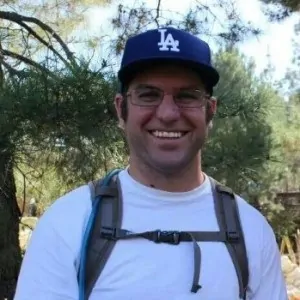 About Lucas Marsalek: Lucas has been an Environmental Consultant for over 8 years; he applies his expertise as a leader for oil and gas production environmental and regulatory compliance projects. Marsalek has a B.S. in Forestry and Natural Resource Management from California Polytechnic State University, San Luis Obispo, CA.
Whether you want to discuss LDAR or Dodger baseball, don’t hesitate to contact me, or SCS Engineers.
Resources:
Learn more on the SCS service pages and read SCS project case studies from across the nation to help fine tune your program.
Outside links to the EPA proposed rulemaking website:
Thirty-four senators and 171 representatives argue in a brief filed February 23, that the EPA overstepped its boundaries in creating the carbon-cutting Clean Power Plan. In short, the brief states that they feel that Congress never gave the EPA a clear statutory directive or authority to transform the nation’s electricity sector. The brief points out that the EPA seeks to make “decisions of vast economic and political significance” under a “long-extant statute,” and in doing so must point to a “clear statement from Congress.”
Yesterday’s brief comes just two weeks after the U.S. Supreme Court ruled the EPA cannot begin enforcing the rule until legal challenges filed by 25 states and four state agencies are resolved.
The D.C. Circuit Court of Appeals will hear oral arguments on the merits of the states’ case on June 2.
With the brief it is clear that the Clean Power Plan is not only facing legal challenges but also political ones. It may be left for the next Administration to pick up this pieces and decide the fate of the Plan.
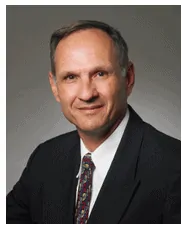
Meet Chuck Pryatel, the newly appointed Industrial Environmental Association (IEA) Secretary.
Chuck Pryatel is a Senior Project Advisor for SCS Engineers with over 30 years of experience in environmental regulatory compliance. He manages projects that include hazardous materials and waste compliance audits, preparation of spill prevention control and countermeasure plans, hazardous waste tank system assessments and certifications, and assists as a regulatory liaison resolving complex environmental issues. His experience includes completing environmental site assessments, subsurface investigations, preliminary endangerment assessments, health risk assessments, and environmental mitigation and clean-ups.
Prior to his private sector work Chuck served in positions of leadership at the County of San Diego Department of Environmental Health including Chief of the Hazardous Materials Division and Chief of the Site Assessment and Mitigation Division.
Chuck has a Masters of Business Administration from San Diego State University and a Bachelors of Arts in Biology from the University of California San Diego. He is a Registered Environmental Health Specialist in the State of California.
Congratulations Chuck!
The Industrial Environmental Association was formed in 1983 to promote responsible, cost-effective environmental laws and regulations, facilitate environmental compliance among member companies and provide related education activities for the community at large. The IEA’s evolution, however, has included an expanding role as the “voice” for manufacturing and associated companies in San Diego and Southern California, not only on legislative matters but on a variety of environmental issues that affect the quality of life of businesses in the region.
The Industrial Environmental Association actively insists on strong environmental compliance efforts among member companies as a matter of written policy. The IEA organizes a number of educational opportunities for member companies and the greater community including information exchanges, technical workshops, written papers, committees, and an annual conference.
IEA activism aims to prove with deeds as well as words that industrial companies care about the community, both environmentally and economically. IEA believes that industry must be involved in the process of environmental policy-making, and urges reliance on scientific, analytical data to evaluate regulations. The IEA willingly works closely with city and county government officials in an effort to realize environmental and community health protection.
Technical bulletins provide salient information in a condensed format. These summaries are useful to understand and start to plan for potential impacts to your business. Both bulletins posted today include deadlines and additional resources with contact information to help answer your questions. The two bulletins posted today are as follows:
Clicking the title of each Technical Bulletin will take you to the full text. Each Bulletin may be shared, emailed, or printed.
About Pat Sullivan:
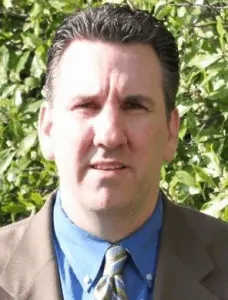
Pat Sullivan, BCES, CPP, REPA, is a Senior Vice President of SCS Engineers and our National Expert on the Landfill Clean Air Act and the New Source Performance Standard (NSPS). Mr. Sullivan has over 25 years of environmental engineering experience, specializing in solid and hazardous waste-related issues.
Click on Pat’s name to see his full qualifications and experience.

The U.S. Environmental Protection Agency (EPA) issued a final rule on September 29, 2015, seeking to further control emissions of hazardous air pollutants (HAPs) and volatile organic compounds (VOCs) from petroleum refineries.
This action finalizes the residual risk and technology review conducted for the petroleum refinery source category regulated under the National Emission Standards for Hazardous Air Pollutants (NESHAP; 40 CFR Part 63, Subpart UUU), including the refinery Maximum Achievable Control Technology Standard (MACT) 1 and Refinery MACT 2.
Click here to read the Technical Bulletin
 Today, the National Waste & Recycling Association hosted a webinar concerning the revised NSPS (New Source Performance Standards for Landfills) Rule. EPA is revising the NSPS rules which will be tentatively published in the Fall, 2015. These rule changes may impact the way air emissions from landfills are being managed and is a significant change from 1996 published standards. During this informative session, attendees learned:
If you missed this presentation, NWRA has granted SCS permission to post the slide show on our website. We welcome everyone to view the slide show and thank the NWRA for sponsoring the webinar. Webinar presenters include:
For more information and answers to your questions please contact Pat Sullivan, SCS Engineers or the webinar presenters.
Click for information about NSPS/NESHAP Compliance Services.
SCS Engineers’ Vice Presidents Tom Rappolt and Dan Johnson have collectively been named the 2015 IEA Associate of the Year by the Industrial Environmental Association (IEA) of San Diego. An award will be presented at the 31st Environmental Awards Luncheon on October 29, 2015, at the San Diego Convention Center.
IEA promotes responsible, cost-effective environmental laws and regulations, facilitates environmental compliance among member companies and provides educational activities for the San Diego community and Southern California.
“This award recognizes SCS Engineers’ many years of support for IEA and our mission,” said Meridith Marquis, President of IEA. “Several SCS staff members have provided critical technical expertise, helped IEA members and staff in evaluating the impacts of regulatory and legislative proposals, and actively participated in several IEA committees and conferences.”
Learn more about SCS Services by clicking here.
Corporate Headquarters