Vapor intrusion (sometimes known as soil gas intrusion or soil vapor intrusion) is a potential environmental risk that can occur at a wide variety of properties, from former industrial facilities, shopping malls, and even residential properties. Knowing how to assess the risk and mitigate potential harm from soil vapor intrusion is critical to reducing health impacts and mitigating financial and other liability from potential exposures.
What is Vapor Intrusion?
Developers and the public understand that soil and water contamination can pose a health hazard, but vapor intrusion is an environmental health risk that can be overlooked. It is a hazard that can result from both heavy industrial operations and small “mom-and-pop” businesses so that it can be an issue both at industrial properties, suburban strip malls, and even residential developments.
Vapor intrusion is the migration of soil or water contamination from below structures into businesses or homes as a vapor. Common vapor intrusion contaminants from small businesses include benzene from gasoline and perchloroethylene (perc) from dry-cleaners, while large industrial facilities may have a wide range of industrial chemical contaminants. Less common vapor intrusion hazards are mercury, polychlorinated biphenyls, and pesticides.
Determining Whether Vapor Intrusion is an Issue
Environmental due diligence is key to determining whether vapor intrusion is a likely issue. An environmental site assessment (ESA) is critical in assessing the potential for vapor intrusion issues and the current state of vapor intrusion based on past site history. A Phase I ESA will review the current and historical use of the property and surrounding properties to determine where and when potential sources of contamination were present. Leaky underground gasoline storage tanks and poor chemical handling practices at dry cleaners lead to chemical contamination that can create vapor intrusion issues, so the “corner” gas station or the strip mall dry cleaner can be the source of vapor intrusion hazards.
Vapor intrusion can also come from groundwater plumes that originate outside the property boundary, so it is important that any assessment looks for potential contamination issues from nearby properties as well as on-site.
When the potential for a vapor intrusion issue exists, a Phase II ESA should be conducted to determine whether there is contamination, the extent and magnitude of the contamination, and whether the contamination poses a significant health risk. In the Phase II ESA, samples of soil and groundwater are collected from the property and analyzed for evidence of contamination.
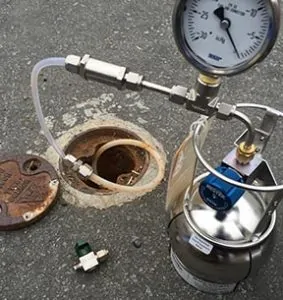
If contamination is present, results are compared to screening levels established by regulatory agencies or a health risk assessment (HRA) can be prepared. Either of these strategies can potentially be used to demonstrate that health risks are not significant for the property’s current or future use or to determine the level of remediation necessary.
Dealing with Significant Soil Vapor Contamination
If soil vapor intrusion poses a significant health risk, there are ways to mitigate that risk. Mitigation can include removal of the contamination, active mitigation of the contamination source, and protection against indoor air exposure. The approaches are not mutually exclusive, and multiple risk reduction strategies may be used.
The most effective way of reducing soil vapor risk is to remove or treat the soil or water that is the source. This remediation is the most cost-effective for small sources of contamination and when that contamination can be easily accessed. It is often not feasible to remove the source when contamination originates offsite and moves onto the property in a groundwater plume. It may also be more cost-effective to mitigate risk through other means when the source of the vapor intrusion is extensive or difficult to remove.
In active mitigation, soil vapor intrusion is mitigating by reducing contamination at the source. Active systems can include soil vapor extraction, in which vapor is collected and removed; in situ treatment, which uses chemical reagents to transform the contamination into less toxic chemicals; and containment of the contamination source by some form of barrier. Under ideal conditions, these methods have the potential to be highly effective in reducing contamination but monitor treatment for effectiveness and to determine that the resulting contamination levels are acceptable.
It is also possible to mitigate indoor air exposure to soil vapor intrusion. Underground vents, membranes, and seals beneath the foundation and slab depressurization can reduce the flow of soil vapor into a building. This type of passive mitigation leaves the contamination source in place, which may limit future uses for the contaminated property, but it may be more cost-effective than active mitigation, especially in cases where contamination originates off the property. Regulatory agencies typically require that properties mitigating the movement of soil vapor into buildings monitor the ongoing mitigation on a continuous basis with sensors and alarms or periodic resampling.
What You Need to Know
Soil vapor intrusion is a potential environmental liability, but it is manageable. Environmental due diligence can significantly reduce unforeseen costs of vapor intrusion by identifying the issue for proactive management before development, which is always easier and more cost-effective than trying to address a problem after development. It is possible to mitigate health risk from soil vapor intrusion on developed sites. Developers should work with qualified environmental consultants to address vapor intrusion through each stage of the process to adequately minimize risk.
When Virtual Care Providers, Inc. (VCPI) set out to sell their company, David Bartlett, VCPI Chief Financial Officer, thought they had their environmental due diligence squared away. “We did our due diligence in 2006 when we purchased the property,” said Bartlett. “Unfortunately we discovered that the original Phase 1 Environmental Site Assessment (ESA) missed some potential issues.”
To complete the sale, VCPI needed to conduct a new Phase 1 assessment. That’s when David hired SCS Engineers to help VCPI through the environmental due diligence process. “When Ray Tierney and his team went through the Phase 1 process, they discovered there was something there. The original Phase 1 from our prior consultant missed some things.”
Long before it was a data center, the property owner used hazardous chemicals in their manufacturing process. As part of that process, they stored some of the chemicals on the exterior of the property. Although the chemicals had been removed long ago, some of them had spilled onto unpaved areas. While VCPI had no knowledge of the property’s prior use when they bought it, SCS Engineers uncovered detailed records and photos of the chemical storage in state agency files.
“Of course the parties involved in the sale were concerned about these past issues and the impact they could have on the sale and ongoing use of the property,” Bartlett confirmed. “We initiated a Phase 2 to gain clarification. Then we worked with the Wisconsin Department of Natural Resources (WDNR) to get the property closed.” In the end, no active remediation was required. However, these steps were necessary to get the WDNR to grant site closure.
“Being in this situation was painful,” Bartlett admitted. “But SCS Engineers’ integrity shone through in every step and was absolutely critical. Everyone that I worked with at SCS Engineers gave us peace of mind that the steps we took weren’t just to pad pocketbooks. Ray’s team showed us how each step in the process was necessary to get us past the problems, on to resolution, and on to the successful sale of our company. I completely trusted the information SCS Engineers gave us.”
“Without Ray and his team, we never would have been able to expedite the process. We simply didn’t have the connections or the relationships with the WDNR to move it along. SCS Engineers’ familiarity with the process and relationships with the WDNR really helped speed us to resolution, which allowed us to move forward with the sale of our business.”
“I don’t know what would have happened or how long it would have taken without SCS Engineers’ expertise. The depth and breadth of their knowledge shed light on issues I wasn’t aware of. Not only did Ray’s team help us uncover the issues, they gave us a plan to determine the extent of those issues and helped show us how to move past them. Their expertise, knowledge, and guidance were critical.”
VCPI kept the sale of their business on track and closed on December 22, 2016.
Thank you for your kind letter, Mr. Bartlett. We were happy to help resolve the issues leading to the sale and the safe ongoing use of the property by its new owner.
SCS’s environmental services supporting COMM22, a mixed-use, mixed-income redevelopment project in San Diego will be recognized at Environmental Industry Summit XV

When the Environmental Business Journal (EBJ) presents its 19th annual Business Achievement awards this March, SCS Engineers will receive an award of Project Merit: Redevelopment, for its investigation and design program for COMM22, a multi-family residential development by BRIDGE Housing.
COMM22 is a mixed-use, mixed-income, transit-oriented development built on a former bus maintenance facility. SCS addressed several issues including underground storage tanks and the testing of fill soils. The firm’s pre-construction characterization and three-dimensional data analysis resulted in time and budget savings.
“Our remediation effort on this property ensured that human health and the environment were protected as cost-effectively as possible,” said Dan Johnson, vice president of SCS. “Affordable housing is important to San Diego communities and we applaud the work of BRIDGE Housing and the collaboration it takes to create urban projects like this.”
BRIDGE Housing Corporation, a leading nonprofit developer of affordable housing, creates and manages a range of high-quality, affordable homes for working families and seniors. Since it was founded in 1983, BRIDGE has participated in the development of over 16,000 homes in California and the Pacific Northwest.
More award-winning redevelopment projects of interest:
Petco Park and East Redevelopment – San Diego
Emerald Ridge Homes – East Alton
NFL Stadium Site – Los Angeles
Commercial Real Estate Transactions blog
Corporate Headquarters