EPA’s FY2027 Grants
November 19, 2026
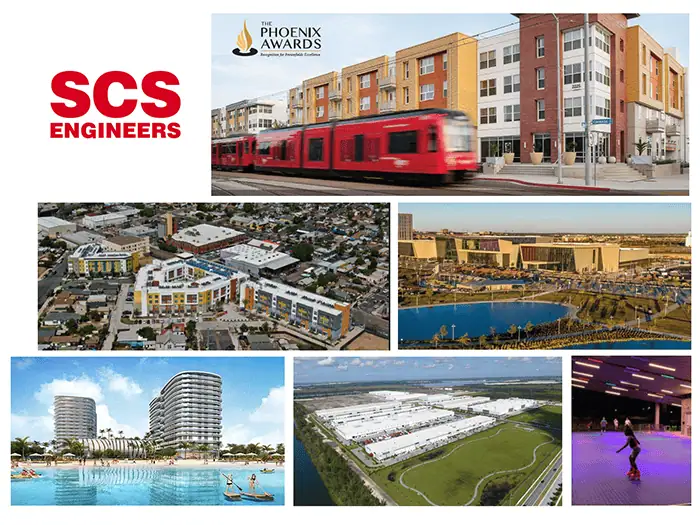
An idle industrial property or vacant commercial site can look like a redevelopment problem. With the right assessment, cleanup strategy, and reuse plan, it can become an opportunity to meet several community needs at once.
Brownfields—properties where actual or potential contamination complicates redevelopment—can support new businesses, public spaces, renewable energy, and infrastructure that helps communities manage flooding and heat. Their value lies not simply in removing environmental concerns, but in making underused land productive again.
EPA’s newly released fiscal year 2027 Brownfields grant guidelines allow eligible communities to advance new projects.
Applications for Assessment, Revolving Loan Fund, and Cleanup grants are due January 21, 2027. [EPA Releases 2027 Grant Guidelines]
Why Consider a Brownfield?
Brownfields deserve consideration because they offer communities a chance to reinvest in land they already have. Often located within established communities, these properties can reuse structures, materials, and infrastructure while addressing environmental conditions that have discouraged investment.
Redevelopment can also connect cleanup with broader priorities. A site might accommodate a business while incorporating stormwater management, restore habitat alongside public recreation, or support renewable energy and water or power reuse where other development is less suitable.
For example, Berkeley Lab research shows that a data center’s location influences its carbon and water footprint. More efficient designs exist, but local electricity supplies, water conditions, and site choices affect the results. Decisions about where data centers are built, how they are constructed, and how they use energy and water can enormously reduce their environmental impacts.
“We should begin by asking what a property can contribute to the community—not just what needs to be removed,” says Joy Stephens, an environmental scientist with SCS Engineers. “When we consider water, energy, habitat, and public use together, redevelopment can deliver benefits that extend well beyond the property boundary.”
Those benefits depend on site conditions and thoughtful design. Contamination, cleanup requirements, flood exposure, ownership, and the intended future use all influence whether a property is a good redevelopment candidate. An environmental assessment helps determine what is feasible before a community or business commits to a particular vision and can support public education. The assessment can also include:
Cleanup Remains Essential, But It Should Support a Clearly Defined Future Use
Early stormwater planning can help communities identify opportunities to manage runoff and reduce flood exposure. Native vegetation can support habitat and stabilize soils. Reusing suitable buildings and materials can conserve resources, while energy-efficient designs can reduce infrastructure and natural resource demands before adding renewable generation.
Not every approach fits every property. Infiltration, recreation, or food production must be compatible with contamination conditions, the selected remedy, and any land-use restrictions.
“A successful project connects the environmental remedy with the way people will use the site,” Stephens says. “The goal is to create practical, lasting value while protecting human health and the environment.”
How EPA’s FY2027 Grants Can Help
EPA’s FY2027 competition includes community-wide Assessment grants, Assessment Coalition grants, community-wide Assessment grants for states and Tribes, Revolving Loan Fund grants, and Cleanup grants. A new Multipurpose grant competition is not available for FY2027. [EPA]
Assessment funding can support activities such as site inventories, prioritization, community involvement, environmental assessments, and cleanup and reuse planning. These activities help communities move from an underused property to a better-informed redevelopment strategy. [SCS]
“The strongest starting point is a clear understanding of the property, the community’s priorities, and the funding requirements,” says Melissa Schick, National Expert for Brownfields and Grant Funding at SCS Engineers. “Grant strategy should support a realistic path from assessment through cleanup and reuse—not stand apart from it.”
Applicants should distinguish funding for eligible environmental work from the resources needed to complete the broader redevelopment project.
Start Before the Deadline
For communities considering 2027 funding, preparation should begin well before January 21. Eligibility, site readiness, ownership requirements, public participation, and project budgets need early attention.
Cleanup grant applicants must hold a public meeting at least seven days before the application deadline. For a January 14 meeting, the required public notice must be published no later than January 7. [EPA]
“Early preparation gives communities time to resolve gaps and connect the application to an achievable project,” Schick says. “The opportunity is not simply to pursue a grant. It is to establish a sound foundation for returning a property to productive use.”
Brownfields are not automatically the easiest redevelopment choice. But with appropriate due diligence, community engagement, and funding, they can be a strategic one—addressing environmental concerns while creating places and infrastructure communities need.
Choosing an Environmental Engineer and Consultant
Seek a consulting firm with professional engineers and dedicated Brownfields grant support. A deep bench of experts can support your Brownfields assessment and reuse planning, with the engineering and implementation needed to move redevelopment forward. These providers offer services that span site investigations, risk assessment, remedial design, construction, and long-term operation of remediation systems. By evaluating whether active remediation is necessary and which future uses are appropriate, they help clients more effectively align environmental solutions with redevelopment goals and minimize project risk.
Depending on the complexity, you may want to take an integrated approach and look for specialized experience redeveloping former landfills or heavy industrial sites where differential settlement, gas migration, or toxic chemicals can complicate construction and future use. Integrated approaches are especially valuable when considering data centers, for example, because they require evaluating decisions about energy efficiency, water use, carbon emissions, and outcomes for the surrounding community together.
A Brownfield’s past does not have to define its future. With appropriate assessment, cleanup, and engineering, an underused property can become housing, a business district, a park, a renewable energy facility, even a ski resort or another community asset. Not every use fits every site, but starting with a vision for what the property could become helps communities plan beyond cleanup—and toward lasting value.
Looking for Inspiration?
These projects illustrate the possibilities of transforming impaired properties into assets, or we welcome you to contact a Brownfields expert near you.
- Stadium
- Commercial Use and Campus
- Business and Logistics Centers
- Mixed-Use
- Transportation
- Retail
- Park
- Related article
- Brownfields and Brownfield Grant Resources