You’re not just an employee at SCS; you’re an Employee-Owner which means as you grow professionally, you develop yourself, exponentially. We value our team members, so we offer them more.
Have student debt? Join the SCS team, and we’ll make a monthly payment toward your eligible student loans up to $10,000.
 |
 |
 |
Our Employee Stock Ownership Program – ESOP provides stock ownership and retirement savings over and above our 401k program.
Instead of non-industry investors making a profit, we provide more to our employees for a job well done.
College is an excellent start to your professional career, but there’s so much more to learn. SCS offers professional and people skills development, mentoring from the best in the industry, and an environment of continual growth.
Already an experienced professional? Consider joining a firm that puts your expertise to work, creating the most innovative environmental solutions, and helping municipalities and businesses meet some of the most challenging issues of our time. SCS offers you opportunities to share your knowledge with industry peers, in publications, and with our client community.
 |
 |
 |
In addition to medical, dental, vision, Life, AD&D, LTD, STD, Accident & Hospital Indemnity, we personalize the employee experience with service achievement awards, blog and social media shout-outs, industry association networking, and community service opportunities.
Be more, do more, grow more.
Why settle for being employee #10234 when you can experience a deep sense of personal satisfaction where your achievements have a positive impact on our environment. SCS Engineers, one of the most respected environmental companies in North America, has open positions now.
EPA announced today a final policy to enhance effective partnerships with states in civil enforcement and compliance assurance work. The memorandum from EPA’s Assistant Administrator for Enforcement and Compliance Assurance Susan Bodine articulates the final policy procedures and practices for effective coordination between EPA and states when carrying out shared responsibilities under environmental laws.
The final policy memorandum is divided into three sections. The first section details requirements for joint planning and regular communication between EPA and states to promote enhanced, shared accountability. The second section of the policy provides greater detail on EPA and state roles and responsibilities in implementing authorized programs. The third and last section of the policy provides a process for the elevation and resolution of issues.
The issuance of today’s final policy replaces the interim guidance memorandum on enhanced planning and communication between EPA regional offices and states issued by Susan Bodine on January 22, 2018.
If you have questions about the final policy, please contact your SCS Project Manager, or send an email to .
Bill Lape discusses the most frequently asked questions about designing a training program that is part of your facility’s PSM and RMP programs and provides a defensible position during inspections while ensuring that your facility operators and maintainers perform their jobs safely.
Bill tackles all your questions in this article. Set-PSM-RMP-Hut-Hut
Operators know that selecting a Landfill Designer involves careful consideration of the designer’s experience and knowledge of construction to control costs and capital outlay.
Landfill operators usually seek to pay the lowest price for design work. While this is in line with the competitive market models, operators need to be sure that the designer’s experience lines up with their desired outcome, or problems may arise later for the operator. If the designer’s general or specific experience in the region is lacking, reconsider your selection parameters.
General experience is the comprehensive knowledge of landfill design and the development of expertise gained on similar projects over an extended period. A few project experiences in the remote past do not adequately qualify a designer. Experience in the region means that your designer has designed and developed similar projects in the larger vicinity of the project.
Regional experience demonstrates that the designer has significant knowledge of geology, hydrogeology, climatology, and available constructions materials in the area. Without this level of experience and understanding, the operator risks ending up with a system that does not function well and may be susceptible to environmental conditions, causing excessive project maintenance costs over time.
I recommend that operators work with a known entity; look for a designer who has done similar projects on numerous occasions in your region, and who can provide proof of their experience and knowledge to design according to your specific goals. A designer may not meet the criteria of the least expensive vendor, but a properly designed and constructed project can save a tremendous amount of money by:
Landfills are unique systems that require explicit design and construction criteria in order to operate seamlessly and safely for a very long period of time. Developing landfills generally takes several decades to complete and requires a substantial amount of knowledge and design consistency to ensure that the various landfill components function together.
Some operators change designers every few years without realizing that they risk inconsistencies in the design and construction every time a new designer comes into the picture. For this reason, I recommend that operators find the most qualified designer who is also very familiar with the construction and field maintenance of similar projects, and then stick with that designer for a long time.
At times, several different designers may be involved with various components of the landfill. To improve design consistency, I recommend that the most experienced design group review each design package regularly in order to help eliminate inconsistencies, improve the overall design integrity, and facilitate proper operation of the constructed systems during operation.
 About the Author: Ali Khatami, Ph.D., PE, LEP, CGC, is a Vice President of SCS Engineers and the firm’s National Expert for Landfill Design, CQA, and Elevated Temperature Landfills (ETLFs). Ali has 40+ years of research and professional experience in mechanical, structural, and civil engineering acquiring extensive experience and knowledge in the areas of geology, hydrogeology, hydrology, hydraulics, liquids management, construction methods, material science, construction quality assurance (CQA), and stability of earth systems.
He applies his experience in the siting of numerous landfills and the remediation of hazardous waste contaminated sites. Ali’s expertise includes the design and permitting of civil/environmental projects such as surface water management systems, drainage structures, municipal solid waste landfills, hazardous solid waste landfills, low-level radioactive waste landfills, leachate and wastewater conveyance, and treatment systems.
His cross-practice experience includes the design of gas collection and disposal systems, hazardous and non-hazardous waste impoundments, storage tank systems, waste tire processing facilities, composting facilities, material recovery facilities, leachate evaporator systems, and liquid impoundment floating covers.
SCS Engineers has just added over 40 new NH3 refrigeration training sessions to our 2019 schedule. These intensive training includes:
Contact us for on-site SOP and specific Refrigeration Training for operators customized for your system/facility. We also provide PSM/RMP and Ammonia Awareness training. Contact us today at or visit our website.
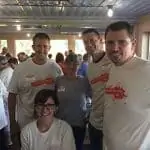
SCS Engineer’s Long Beach Headquarters sponsored and participated in the U.S. Vets Storm the Beach 5K/10K Run, Walk & Roll for Veterans event in Long Beach, CA.
U.S. Vets is an impressive organization supporting our Veterans in Long Beach, many of whom are homeless. These men and women who have served our country receive housing, employment opportunities, and counseling services from this private non-profit organization.
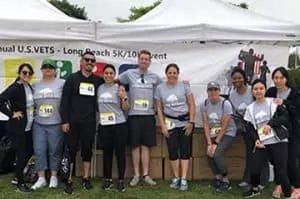 Participating this year, left to right: Sonia Aguirre, Wendy Mendoza, Sara Garcia and husband, Brendan McGarrity, Jennifer McCafferty, Stacey Dolden, Deidra McGrew and Hanna Suh and friend.
Visit our website and look for careers with our award-winning team of professionals.
When the Federal Coal Combustion Residual (CCR) rule went into effect in 2015, it was a new regulatory layer on top of a widely varying landscape of state regulations affecting CCR management in impoundments and landfills. Some states already had significant regulations on the books for CCR impoundments and/or landfills, while others did not.
Where state regulations existed, they varied widely from state to state. While a few states have moved toward closing the gap between state and Federal CCR requirements, many utilities continue to face confusing and conflicting requirements coming from different regulatory programs as they move ahead with managing their CCR facilities.
In her paper entitled State vs Federal CCR Rule Regulations: Comparisons and Impacts, Nicole Kron shares state-versus-federal regulatory challenges utilities have encountered during landfill design and management, impoundment closure, and groundwater monitoring and reporting since the implementation of the Federal CCR rule. For example, some sites have completely distinct groundwater monitoring programs under state-versus-federal rules, with different well locations, well depths, and monitoring parameters for the same facility. She highlights unique approaches to bridging regulatory gaps and resolving regulatory conflicts between state and Federal CCR requirements. Ms. Kron also provides insights gained on the long-term potential for regulatory resolution of these issues based on discussions with state regulators in multiple states.
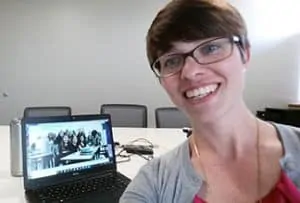
About the Author: Nicole Kron has nearly a decade of experience in the environmental consulting field. Her experiences focus on groundwater quality analysis of sites contaminated with coal gasification byproducts, coal combustion byproducts, chlorinated solvents, petroleum products, metals, and PCBs. Her experience includes managing team task coordination, groundwater modeling, and statistical analysis of CCP/CCR sites. She is experienced in planning and performing soil and groundwater contamination investigations, air monitoring, well design and installation, and soil and groundwater sampling.
SCS Engineers’ Arizona office is continuing to grow with the addition of Dana Justice, a marketing specialist, who previously worked at the award-winning firm’s office in San Diego.
“Dana brings fresh ideas, strong problem-solving skills, and creative business development tactics to the Arizona office,” said Dan Sola, Arizona project director of SCS Engineers.
Justice is responsible for supporting marketing and business development in Arizona, Nevada, and California for environmental services. Her job responsibilities include engaging in business development outreach and continuing to strengthening the firm’s client success culture. As an employee-owned environmental consultant and contractor, SCS excels at accomplishing specific technical needs and high quality but also strives to provide a superior working relationship with their clients.
“SCS has great company culture with a sense of family among the staff,” Justice said. “I’m thrilled to take on a larger role in the Southwestern region and new responsibilities at SCS.”
Justice earned a bachelor’s and master’s in business administration from California State University San Marcos. She lives in Mesa.
The Arizona office has completed 3,500 projects during the last 30 years for the solid waste industry, government, and other industries responsible for safeguarding the environment as part of doing business.
Understanding the entire range of wastewater management and disposal alternatives can be a daunting task, particularly as increasingly stringent surface water discharge standards take effect or as zero discharge facilities find the management of their waste liquid needs changing over time. Former solutions are no longer options or may be too costly. One alternative that is rapidly gaining traction is deep injection wells.
Deep well injection is a viable leachate management option in many parts of the United States, yet it is often screened out as a possible alternative due to a lack of understanding of the technology or gross misconceptions about its acceptance or applicability. The purpose of the Monte Markley’s paper The Basics of Deep Well Injection as a Leachate Disposal Option is to present the basic technical, economic and regulatory considerations of deep well injection as a technology a facility should evaluate when considering the applicability of geologic sequestration of leachate.
Technical criteria discussed are potential disposal volumes, geologic suitability, chemical compatibility, pre-treatment requirements, and leachate chemistry. The economic considerations are evaluated based on the technical criteria noted above, management of public perception/relations, current leachate management expenditures, the service life of the asset and risk to develop accurate capital, O&M costs, and return on investment. Regulatory considerations include the role of state vs. federal primacy for each state, the general stance of regulatory acceptance in specific areas of the United States, and a discussion of the permitting process and typical reporting requirements.
These key considerations are then integrated into an overall suitability evaluation that an owner can utilize to accurately determine if deep well injection is a viable option and, if so, how to educate other stakeholders and manage the process of implementation as a project moves forward.
About the Author: Monte Markley, PG, SCS Engineers
SCS Engineers is proud of the level of community involvement that many of our professional and technical staff provide to municipal governments, professional associations and organizations, charitable organizations, scholarship programs, youth mentoring programs, and similar endeavors.
We appreciate the commitment and care that local organizations such as 4-H offer within our communities nationwide. SCS continues its support of publications used by the 4-H Geology program, for example, a STEM component of the 4-H program in Kansas. 4-H provides educational materials, field trips, and mentoring to over three hundred families with children participating in this unique program. SCSers always look forward to the feedback from kids and parents, especially our future geologists and hydrogeologists!
This year the special fossil publication went into its second printing. 4-H gives these to each new family enrolled in 4-H Geology to help them with fossil identification. The 4-H State Field Trip Guidebooks are also very popular.
Rock on 4-H!
To learn more about 4-H Science, Technology, Engineering, and Math visit their website
Corporate Headquarters