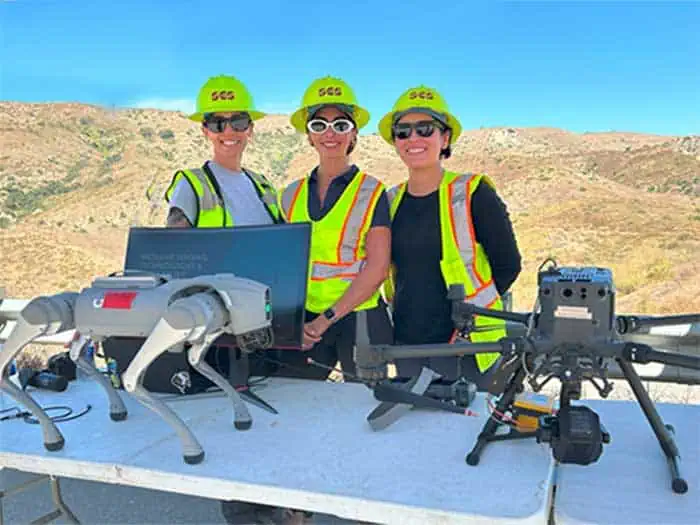
A recent SWANA Applied Research Foundation report explains how landfill systems and strategies can reduce odors, control surface emissions, and support methane reduction when properly designed and integrated into the broader gas collection strategy.
Capture Gas Earlier
Updated guidance on horizontal landfill gas collection systems explains how these systems can help landfill operators capture gas earlier in the active filling phase, before final grades are reached and before vertical wells can be installed. Horizontal collectors are installed laterally within the waste mass, usually in shallow trenches with perforated or slotted piping, permeable backfill, and connections to the landfill’s active vacuum system. Because they can be placed during filling, they provide a practical way to control odors, reduce surface emissions, and support methane reduction in areas where conventional vertical wells are not yet feasible.
Landfill GCCS
The report emphasizes that horizontal collectors are not a substitute for a full landfill gas collection system. They can be an important complement when coordinated with fill sequencing, interim grades, drainage conditions, and the future vertical well network. Common types include slope collectors, toe collectors, and floor collectors, each suited to different site conditions.
Leachate Management
A central theme is the importance of liquid management. Condensate and leachate can accumulate in pipes or trenches, reducing gas flow and system performance. For this reason, collectors must be designed with proper grades, accessible removal points, sumps, stone columns, or connections to the leachate drainage layer where appropriate. The report also highlights the importance of pipe selection, trench and backfill design, wellhead placement, settlement considerations, and ongoing monitoring.
Overall, the guidance presents horizontal collectors as a flexible, cost-effective tool for improving landfill gas control during active landfill development when they are carefully planned, site-specific, and integrated into the broader gas collection strategy.
Additional Landfill Gas Collection Resources:
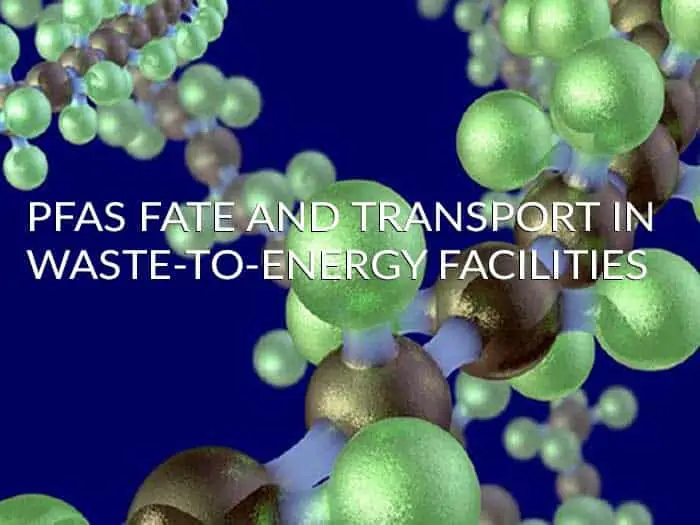
The findings of the studies reviewed in this report are encouraging concerning the ability of today’s U.S. WTE facilities to effectively treat solid waste that contains PFAS and not emit detectable levels of PFOA in the process. For the formation of PICs, the pilot-scale investigation conducted at the Karlsruhe Institute of Technology is encouraging in its findings that the combustion of PTFE did not create any of the 31 types of PFAS suspected of being potential PICs produced during the combustion process.
In conclusion, based on this research, SWANA is cautiously optimistic regarding the role of WTE facilities in the destruction of PFAS in MSW. The thermal destruction of PFAS in high-temperature combustion systems such as WTE facilities may represent one of the few commercially proven options available to society to destroy these problematic, forever chemicals.
The full report, PFAS Fate and Transport in Waste-to-Energy Facilities, is currently only available to SWANA ARF subscribers. SWANA members receive free access to ARF industry reports one year after publication; the abstract is available online and worth reading.
Corporate Headquarters