The National Waste & Recycling Association (NWRA) and the Solid Waste Association of North America (SWANA) returned comments and recommendations on the Environmental Protection Agency’s (EPA) draft Part 71 Operating Permit for Ocean County Landfill and MRPC Holdings LFGTE Operations, Permit Number: P71-0CMH-001 (Draft Permit) to EPA Region 2 Permitting Section, Air Programs Branch. The letter was sent on January 28, 2016, to Mr. Steven C. Riva of the EPA.
NWRA and SWANA expressed concerned that the EPA’s issuance of the Draft Permit, and the circumstances under which it has been prepared, represent a significant departure from practical permitting policies and will constitute a disincentive to expand existing and develop future landfill gas-to-energy (LFGTE) projects around the country.
The jointly submitted comments from both not-for-profit Associations on the Draft Permit were intended to convey their members’ strong interest in these projects, which represent an economic investment in alternative renewable energy sources and the reduction in greenhouse gas (GHG) emissions. Both Groups have expressed concern that the EPA’s actions should not undermine those investments and the benefits derived from these LFGTE projects.
The main points of the letter cover the Associations’ disagreement with the EPA’s approach to common control. NWRA and SWANA support the position that the OCL and MRPC are two separate sources that are not under common control, and they oppose the position proposed by EPA Region 2 in the Draft Permit. Both Groups are urging EPA to re-evaluate this decision and utilize an environmentally beneficial approach when making common control determinations for landfills and third-party LFGTE plants both now and in the future. Other portions of the letter address the uncertainty that EPA’s position would create for affected facilities and how it could re-open already settled compliance expectations.
Members of NWRA and SWANA have access to the letter and may continue directing comments and questions through either Association.
Questions directed to SCS Engineers should be addressed to Pat Sullivan, Senior Vice President and the SCS National Expert on the Clean Air Act.
Learn more about SCS Clean Air Act Services, or Greenhouse Gas Services, or
Landfill Gas to Energy Services
SWANA Webinar, Evaluating Impacts from LFG in a Litigation Setting, by Pat Sullivan, SCS Engineers posted with our articles and papers for viewing or download. Click here.
Learn more about Pat Sullivan, REPA, CPP, BCES.
SCS Engineers and their clients appreciate the support. The National Waste & Recycling Association (NWRA) and the Solid Waste Association of North America (SWANA) sent the Environmental Protection Agency (EPA) supportive comments on the proposed revisions to the Research, Development and Demonstration (RD&D) Permits Rule for Municipal Solid Waste Landfills (80 FR70180, November 13, 2015).
EPA’s proposed extension to the RD&D Rule would afford landfill owners the opportunity to continue to operate and develop new data and information that would influence future decision-making by regulators and industry alike. The time extension will provide additional time to help landfill owners evaluate and realize the financial value of the RD&D projects, thus increasing landfill owners’ confidence in implementing related large scale projects. These investments would be for the design, construction, additional monitoring and data collection and reporting that accompany long-term research projects, such as those associated with bioreactor landfills.
The RD&D rule provides the ability to obtain data on best practices to address both the advantages and challenges associated with bioreactor landfills. Operating these types of landfills have many advantages, they are not without their challenges. A bioreactor landfill is much more complex than a typical landfill.
NWRA, SWANA, and SCS Engineers believe this proposed rule will promote new research demonstration projects and support the continued research at existing projects so that EPA will have the information necessary to consider changes to the MSW landfill operating criteria.
The Solid Waste Association of North America – SWANA, is the largest member-based solid waste management association in the world.
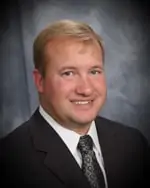
SCS Engineers proudly announces Nathan Hamm, P.E., is the recently elected President of the Kansas Sunflower SWANA chapter. Members of the chapter voted to elect Hamm to continue the leadership of John Hawk, the former chapter President and the General Manager of the McPherson Area Solid Waste Utility. Hamm’s term began on October 22, 2015, and will run for two years.
Nathan Hamm is a registered professional engineer in Kansas and five surrounding states with nearly two decades of experience in the field of environmental engineering. He is a Vice President at SCS and currently serves as the Overland Park –Kansas City Office Manager. As Office Manager, he is responsible for managing the technical and support personnel and the office’s financial performance and business development efforts. He also manages complex projects, maintains client relationships, and provides technical guidance.
“An environmental solution mandates innovative thinking and broad resources, “stated Hamm. “ Our Kansas SWANA chapter provides these and stays true to our principles; that’s how we remain effective and helpful to our members.”
Hamm’s career has concentrated on environmental solutions in solid waste management, alternative energy, power generation, and in agricultural production industries. He is a skilled leader developing and managing multi-disciplinary teams to achieve critical objectives.
Congratulations Nathan!
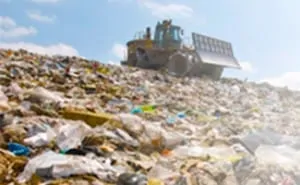 On Monday, October 27, 2015, the Solid Waste Association of North America–SWANA and the National Waste & Recycling Association– NWRA submitted joint comments to the U.S. Environmental Protection Agency– EPA on the proposed revisions of the Emissions Guidelines– EG and Compliance Times for Municipal Solid Waste Landfills and to the supplemental proposal to the Standards of Performance for Municipal Solid Waste Landfills.
SCS Engineers has also submitted comments pertaining to the proposed EG and compliance revisions to the EPA. SCS leaders are involved in many outreach activities to help landfill owners and operators understand and prepare for the impact of the proposed modifications.
Contact SCS Engineers at for more information, or visit the SCS website for upcoming events and pertinent resources.
Reprint
The SWANA Landfill Gas and Biogas Division is very busy right now with several important efforts. On the Rules and Regulations front, the U.S. EPA has promulgated two draft landfill gas (LFG) rules that were published in the Federal Register on August 27, 2015. These include a draft Emission Guideline (EG) rule and a supplemental draft New Source Performance Standards (NSPS) rule.
The proposed EG rule affects “existing” landfill sites (i.e., landfills that have not been expanded and were not newly constructed after July 17, 2014). The NSPS rule is a supplemental proposal that affects “new” landfill sites (landfills that are new or were expanded in capacity after July 17, 2014). Comments on both are due by October 26, 2015. Final issuance of both rules is expected in the first quarter of 2016. The Division Rules and Regulation and Advocacy committees are working together to develop SWANA’s industry comments on the rules.
The major focus of both rules is the current 50 Mg/year of non-methane organic compounds (NMOCs) emission threshold, which triggers the installation of a LFG collection and control system (GCCS). In the proposed rules, that threshold will be lowered to 34 Mg/year for all landfills except existing, closed sites. This appears to be the centerpiece of the U.S. EPA’s plan to create additional NMOC and methane reductions from landfills. With a lowered NMOC threshold, some landfills, particularly those that have been too small to trigger the installation of a GCCS, will be required to install them.
Other key components of the draft EG rule, which are likely to be similar in the NSPS rule, include the following:
The draft EG rule also provides clarifications on several existing rule topics, as well as topics where U.S. EPA decided not to include such items in the rule:
During the comment period, the EPA also is looking for public comment on:
The EPA will have the ability to add more provisions to the final version of the rule based on the information submitted as a part of these information requests. This means the industry must make a strong case to the EPA to get them to consider our opinions on these issues.
Comments on this article should be addressed to Patrick S. Sullivan, Senior Vice President, SCS Engineers, at 916-361-1297 or
Corporate Headquarters