ISWA, a worldwide organization, promotes and develops professional waste management to protect human health and the environment as well as to ensure sustainable resource management.
The International Solid Waste Association (ISWA) General Secretariat announced the reelection of James Law for a second term as a board member representing the Organization Members of ISWA. His second term begins on October 6, at the ISWA General Assembly held during the 2019 World Congress in Bilbao, Spain. He is currently the Chair of the ISWA Working Group on Landfill and the Task Force on Closing Dumpsites Initiative as well.
Mr. Law has been a member of ISWA for 11 years. He became active after attending a World Congress conference in Singapore as a presenter and a trainer at the Landfill training workshop on how to use HELP modeling. “I love to attend and network at the annual World Congress, it is such a rewarding and educational experience with the world top experts in waste management and sustainability,” said Law.
James Law, PE, BCEE, LEED AP BD+C, SC, IWM, and SCS Engineers’ National Expert for Geotechnical and Landfill Engineering, has over three decades of engineering and management experience in geotechnical engineering and subsurface soil investigation – exploration programs (including landfill slope stability, embankment and MSE Wall evaluations), solid waste management, landfill engineering, and closure design. Mr. Law’s solid waste management experience also includes landfill gas collection and utilization as alternate energy expertise.
He has a commendable public-service record and contributes widely and regularly to industry associations and non-profits holding the International Status certification as an International Waste Manager by ISWA. James Law is recognized globally for his work toward the remediation and closure of open dumps; imperative to mitigate the impact on the environment and adverse effects on public health.
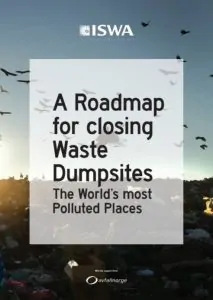 Law co-authored an ISWA publication on “The Roadmap for Closing Open Dumpsites,” released at the 2016 World Congress in Novi Sad, Serbia and has been involved in ISWA’s ongoing campaign to close the world’s 50 largest dumpsites ever since. ISWA and its national member, the Solid Waste Association of North America (SWANA) work together along with other global organizations such as Climate Clean Air Coalition (CCAC) on this globally significant movement.
Law regularly speaks and publishes papers at national and international conferences, as well as serving on the Editorial Board for the ISWA WM&R publication as a reviewer and author. His recent editorial article on “ISWA’s Closing Dumpsites Initiative: Status of Progress” co-authored with Dave Ross was published in the 2019 WM&R publication, Volume 37 (6).
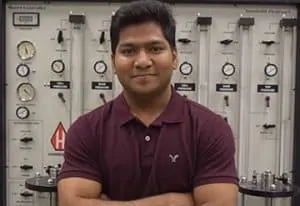
Girish Kumar, Illinois Land of Lincoln Chapter, attending the University of Illinois at Chicago is the 2019 Robert P. Stearns – SCS Engineers Scholarship recipient. The SWANA scholarship is for students entering or already enrolled in a graduate program and pursuing a degree in environmental science, engineering, or other major related to solid waste management.
Kumar’s research offers an alternative to the conventional landfills in the form of bioreactor landfills, where the collected chemical liquid derived from waste degradation and other permitted liquids recirculate into the landfills. The recirculation systems enrich the moisture conditions and accelerate waste degradation, which is beneficial to enhancing biogas production and early waste stabilization.
Kumar works at the Sustainable Engineering Research Laboratory and the Geotechnical & Geoenvironmental Engineering Laboratory, on a project to develop a practical and reliable coupled thermo-hydro-bio-mechanical model. The model can enable safe design and the operation of stable, effective and sustainable-engineered landfills.
Congratulations, Girish!
Learn about this SWANA Scholarship and more.
SCS Engineers’ Associate Professional, Lindsey Carlson recently coordinated a cleanup on the Beaver Dam River in Wisconsin. The cleanup is a part of the mission of Living Lands and Waters to clean the nation’s major rivers and watersheds. The Adopt A River Mile program enables people to support the mission in their own communities. SCS Engineers joined other members of the SWANA Badger Chapter, the Associated Recyclers of Wisconsin, and five members of the Beaver Dam community. SCS’s Adam Gorski and Phil Gearing are shown removing a tractor tire and other debris here.
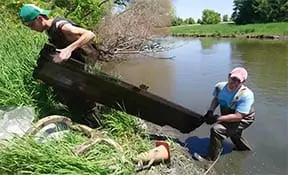
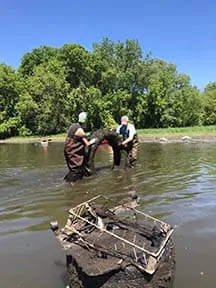
Phil called the experience “a great time and very fulfilling.”
While getting wet and muddy, the team picked up trash and debris that filled one 5’x8’ utility trailer plus two pickup truck beds – that’s about 8 cubic yards for those not in the waste management industry 😉
The trash included a tractor tire; about seven car tires; an aluminum truck topper; an office chair; two bicycles (one still ridable); a motorcycle helmet; at least 15 feet of culvert piping; about 10 trash bags full of plastic bottles and other lightweight garbage; and quite a few other miscellaneous items.
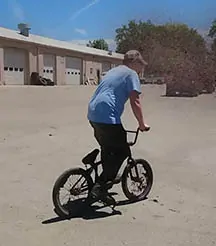
Lindsey served as a volunteer on Living Lands and Waters’ barges during a week-long cleanup in Memphis in 2017, and “that’s how I came to know and become passionate about their cause,” she says.
Contact Living Lands and Waters to clean up your mile of river. Every mile makes a difference to help watershed conservation efforts in your community. Imagine the impact thousands of volunteers of all ages, willing to roll up their sleeves and get dirty are making. Thank you!
See you in Nashville! SCS Engineers
SWANA’s new online testing platform gives members and industry professionals easy access to SWANA’s leading certification courses and exams.
The online testing platform has many benefits:
“The SWANA platform provides students the opportunity to read through the content and take their time preparing for exams; a valuable part of the learning process,” said Tracie Bills, SWANA/CRRA Zero Waste Course Instructor and Northern California Director at SCS Engineers.
On December 15, 2017, David Biderman, Executive Director and CEO of The Solid Waste Association of North America (SWANA) released comments in response to the Ministry of Environmental Protection (MEP) of the People’s Republic of China’s November 15, 2017, Notifications to the World Trade Organization (WTO) concerning restrictions on the import of solid waste.
We thank SWANA and Mr. Biderman for authorizing SCS Engineers to publish the comments for the benefit of all industry stakeholders and encourage you to share the letter.
Share this post using the icons at left, or download the SWANA letter using the button just under the letter window. SCS Engineers does not collect or share your contact information.
SCS Engineers will continue to publish articles, white papers, and blogs pertaining to this and other relevant issues on our website. You are welcome to contact us if you are looking for specific information on technical and business issues that concern you.
SCS Engineers is a proud supporter of the SWANA Evergreen Chapter. the Chapter offers an annual scholarship to qualified undergraduate and graduate students in honor of Deborah Lambert. Ms Lambert was the SWANA Evergreen Chapter President 2002-2005, and we honor her for the many years she dedicated to the solid waste management field.
Please join us for our Winterfest Annual Holiday Party, which will be held today from 4:30 to 8:30 PM at the Bellevue Club, 11200 SE 6th Street, Bellevue, WA 98004. Enjoy fabulous food with friends and colleagues at the beautiful and festive Bellevue Club, the perfect way to start the holiday season! In addition to being a fun holiday event, Winterfest is our primary fundraising opportunity for our Educational Scholarship Fund.
Bellevue Club
11200 SE 6th Street
Olympic Suite A
Bellevue, WA 98004
 These guys don’t want to miss Resource Management and Waste Diversion: Evaluating the Impact on Waste Management caused by the Changing Waste Stream Composition at WasteCon/ISWA 2017.
Solid waste management, and in particular sanitary landfilling, is being impacted by the waste composition evolution. One notable change is an overall decrease in tonnage. Reasons for the reduced quantity may be attributed to factors such as increased diversion of recyclables, increased diversion of vegetative organics, evolving diversion of food waste, changes to packaging, expansion of fresh organic foods lifestyle, expansion of fitness lifestyles, as well as other generational life choices.
Learn more about this topic and many others at the ISWA/WasteCon conference in Baltimore, MD.
Reprinted from SWANA Alert:
On Tuesday, August 1, the U.S. Environmental Protection Agency (EPA) will be holding a public hearing in Washington, DC on the proposed rule, ‘‘Renewable Fuel Standard Program: Standards for 2018 and Biomass-Based Diesel Volume for 2019.’’ In keeping with SWANA’s previous advocacy efforts in regards to the renewable fuel standard (RFS) program, we intend to submit a short written statement to be introduced into the hearing record.
The RFS program is a national policy that requires a certain volume of renewable fuel to replace or reduce the quantity of petroleum-based transportation fuel, heating oil or jet fuel. These amounts are set by EPA each year and the proposed rule will set those levels for 2018. One of the four fuel category amounts that will be set by the RFS is cellulosic biofuels, which includes compressed and liquefied renewable natural gas (RNG) produced from landfill biogas.
As a member of the SWANA Core Advocacy Group, we are notifying you that SWANA intends to submit comments to EPA on the RFS program as part of the August 1st hearing, and in post-hearing comments that EPA will be accepting through August 31st as necessary. These comments will support the testimony of other solid waste industry leaders and ask the EPA set the 2018 RVO standard for cellulosic biofuel at a level that takes into account increased generation of fuel from both existing registered projects and from new projects that will begin generating fuel in 2018. By setting the levels based upon actual current and future capacity instead of on historical data and trends, EPA will ensure that the levels set actually spur demand consistent with increased production. A failure to set the levels high enough would result in a lack of appropriate demand for these fuels, which would undercut the purpose of the RFS program
By setting the levels based upon actual current and future capacity instead of on historical data and trends, EPA will ensure that the levels set actually spur demand consistent with increased production. A failure to set the levels high enough would result in a lack of appropriate demand for these fuels, which would undercut the purpose of the RFS program.
If you or the Chapter or Technical Division members have any questions or concerns about these comments, or if you would like to discuss them further, please contact David Biderman at SWANA.
EPA is proposing a GHG SER of 75,000 tons per year (tpy) Carbon Dioxide equivalent (CO2e) and requesting comment on it as well as two lower levels, specifically 30,000 tpy and 45,000 tpy CO2e, respectively.
The Associations do not believe there is sufficient information to support lowering the GHG SER below the proposed 75,000 tpy CO2e level and provided a table utilizing equivalent criteria pollutants from combustion sources (i.e., NOx, CO) yields CO2 emissions as high as 780,000 tpy CO2.
EPA already concluded in USEPA, Proposed PSD Revisions Rule, 81 FR 68137 that the burdens of regulation at a GHG SER level between 30,000 and 75,000 tpy CO2e would yield a gain of trivial or no value from both a programmatic and individual project-level perspective. Therefore, NWRA and SWANA strongly recommend EPA retain proposed GHG SER of 75,000 CO2e (or higher), and resist pressure to lower the GHG SER.
On the Topic of Biogenic GHG Emissions, the EPA’s final rule requires clarification to remain consistent with previous documentation and research to prevent significant permitting delays and increased costs that will not result in meaningful emission reductions.
The Associations encourage the EPA to ensure that waste-derived biogenic CO2 (e.g., from municipal solid waste (MSW) landfills) is treated as carbon neutral under the final PSD Permitting Revisions Rule to be consistent with prior Agency determinations specified in this memorandum and documents as follows:S. EPA, Memorandum Addressing Biogenic Carbon Dioxide Emissions from Stationary Sources, McCabe, Janet, November 19, 2014.
S. EPA, Memorandum Addressing Biogenic Carbon Dioxide Emissions from Stationary Sources, McCabe, Janet, November 19, 2014. The documents highlight waste-derived, biogenic CO2 as a type of “carbon neutral” feedstock based on the conclusions supported by a variety of technical studies and conclusions of the Agency’s latest draft Framework for Assessing Biogenic Carbon Dioxide for Stationary Sources, which was released with the memo. The Agency memo stated that “the Agency expects to recognize the biogenic CO2 emissions and climate policy benefits of such feedstocks in [the] implementation of the CPP.”
US EPA, Emission Guidelines for EGUs, 80 FR 64855. Both the revised Framework, and the EPA’s Scientific Advisory Board (SAB) peer review of the 2011 Draft Framework, found “that the use of biomass feedstocks derived from the decomposition of biogenic waste in landfills, compost facilities, or anaerobic digesters did not constitute a net contribution of biogenic CO2 emissions to the atmosphere.”
S. EPA, Appendix N. of Revised Framework for Assessing biogenic Carbon Dioxide for Stationary Sources, November 2014, pg. N-25. In Appendix N. of the Framework, entitled Emissions from Waste-Derived Biogenic Feedstocks, EPA calculated negative Biogenic Accounting Factors (BAF) for various examples of treatment of landfill gas via collection and combustion. EPA explains, “Negative BAF values indicate that combustion of collected landfill gas feedstock by a stationary source results in a net CO2e emissions reduction relative to releasing collected gas without treatment.”
US EPA, Carbon Pollution Emission Guidelines for Existing Stationary Sources: Electric Generating Units; Final Rule [Emission Guidelines for EGUs], 80 FR 64885. “[T]he use of some biomass-derived fuels can play a role in controlling increases of [in] CO2 levels in the atmosph The use of some kinds of biomass has the potential to offer a wide range of environmental benefits, including carbon benefits.”
US EPA, Emission Guidelines for EGUs, 80 FR 94855. Types of waste-derived biogenic feedstocks may include: landfill gas generated through decomposition of MSW [municipal solid waste] in a landfill; biogas generated from the decomposition of livestock waste, biogenic MSW, and/or other food waste in an anaerobic digester; biogas generated through the treatment of waste water, due to the anaerobic decomposition of biological materials; livestock waste; and the biogenic fraction of MSW at waste-to-energy facilities.
NWRA and SWANA believe the final PSD Revisions document should follow the approach to waste-derived feedstocks enshrined in the Final Clean Power Plan, and as recommended by the SAB, and ensure that waste-derived biogenic CO2 is treated as carbon neutral. Based on EPA’s own lifecycle assessments for the Renewable Fuels Standard program, its U.S. GHG Inventory, and confirmed by the SAB, EPA has sufficient analysis to support exclusion of selected categories of biogenic emissions from PSD permitting, including those from managing landfill gas and organic components of MSW.
The EPA does not seem to consider the regulatory treatment of biogenic CO2 from stationary sources to be a key issue in the context of the PSD revisions rule, based on a comment found in a Summary of Interagency Working Comments on Draft Language. Instead, the EPA continues to believe this rulemaking to establish a GHG SER under the PSD program is not the appropriate venue to address the broader concern of the regulatory treatment of biogenic CO2 from stationary sources.
The Associations strongly disagree and are concerned that because EPA remains silent on this important issue, some permitting authorities might improperly require landfills to incorporate biogenic CO2 emissions in the PSD permitting process. Historically, few landfills triggered PSD because non-methane organics emissions rarely reached the threshold. However, if biogenic CO2 emissions become subject to PSD, many landfill projects, which are “anyway sources” due to renewable energy projects, would also be forced to do BACT analysis for GHG. Biogenic CO2 is emitted from:
From the perspective of developing new renewable transportation fuel or energy projects, subjecting biogenic emissions from landfills to PSD could be an enormous barrier. The Associations would like the EPA to clarify in its final rule that the emissions of biogenic CO2 from treating or controlling landfill gas does not increase the CO2 levels in the atmosphere, but instead, has positive emission reduction and climate benefits. Failing to clarify this important point could subject landfills to significant permitting delays and increased costs that will result in no meaningful emission reductions.
Questions? Contact SWANA, NWRA, Patrick Sullivan, or your local SCS office.
Corporate Headquarters