SWANA recently announced the winners of the SWDC competition hosted by SWANA’s Young Professionals Group. The competition aims at providing design experience to students interested in pursuing an education or career in solid waste management. The outcome is that all participants are winners, gathering real-world experience to help solve complex solid waste management issues in a supportive environment.
Seven universities participated in the competition: Arizona State University, Wayne State University, University of Southern California, University of Vermont, the University of Texas at Arlington, University of British Columbia, and the National University of Engineering in Peru.
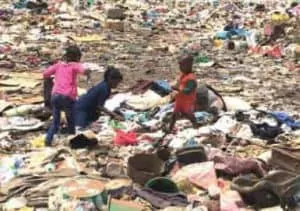 This year’s project challenged teams to find solutions for closing the Bakoteh Dumpsite and supporting changes to modern solid waste management in Kanifing, The Gambia. The dumpsite is one of the largest disposal facilities in The Gambia and the only one in the Kanifing Municipality.
“Our team of judges was impressed with how this group of student design teams engaged in understanding this solid waste challenge plaguing The Gambia,” Competition judge and SCS Engineers Project Manager, Chris Jimieson, says. “The students developed diverse designs that we believe will become part of the eventual solution of constructing The Gambia’s first engineered, sanitary landfill.”
The judging panel included John Welch, Director of the Dane County Department of Waste & Renewables; Kaba Bah, Principal Manager at the Midwest GOOH Group in Madison, WI; Lamin Sanyang, Director of Services at Kanifing Municipal Council in The Gambia; and our own Chris Jimieson. The judges have a long association with the Bakoteh Dumpsite.
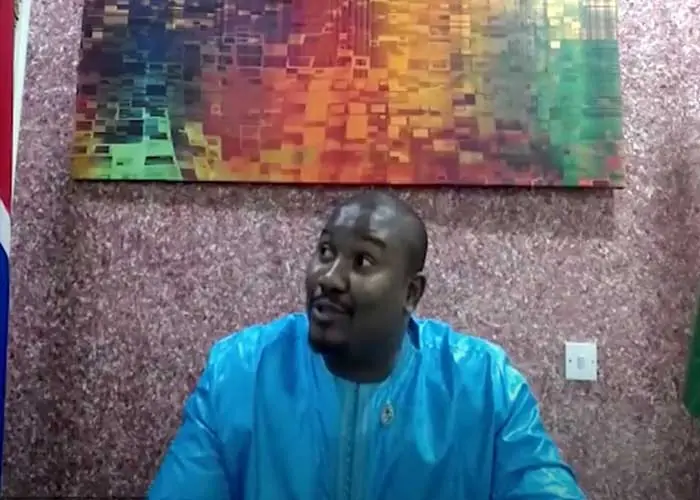
The SWANA Awards Ceremony features two guest speakers, including David Biderman, CEO and Executive Director of SWANA, and Mayor Talib Ahmed Bensouda, Lord Mayor of the Kanifing Municipality, The Gambia. Mayor Bensouda explains in the video how the Bakoteh Dumpsite became a significant problem for the growing community and the solutions they are using to fix it.
Chris Jimieson provides us with an update from his travels to The Gambia in Africa to evaluate their solid waste challenges.
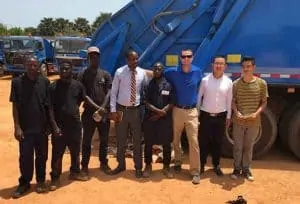 Many of you attended my presentation at the office in July 2019 following the Mayor’s visit. I have continued to stay in touch with our contacts in Kanifing, The Gambia. In February 2020, we presented the project at WIRMC to solid waste professionals across Wisconsin. During the pandemic, Lindsey Carlson and I participated in a series of weekend phone calls to stay engaged in understanding their solid waste challenges.
In October 2020, I presented The Gambia situation as a design project to college students worldwide that wanted to compete in the SWANA YP’s International Solid Waste Design Competition. We asked them to provide a closure plan for the Bakoteh Dumpsite, provide a conceptual design for a new sanitary landfill, and share some cost estimates for each of these endeavors. Seven teams from across the Americas decided to compete. If you are interested, please browse through student design posters, reports, and presentations or contact me, Chris Jimieson.
Thanks to the SWANA YPs, my SCS colleagues, and so many who volunteered to help elevate this project to the international stage.
EPA is releasing the interim guidance for public comment. The guidance provides information on technologies that may be feasible and appropriate for the destruction or disposal of PFAS and PFAS-containing materials. It also identifies needed and ongoing research and development activities related to destruction and disposal technologies, which may inform future guidance.
The interim guidance addresses PFAS and PFAS-containing materials including:
The agency is also providing guidance on testing and monitoring air, effluent, and soil for releases near potential destruction or disposal sites. EPA’s interim guidance captures the significant information gaps associated with PFAS testing and monitoring and identifies specific research needs.
The interim guidance is intended to assemble and consolidate information in a single document that generally describes thermal treatment, landfill, and underground injection technologies that may be effective in the destruction or disposal of PFAS and PFAS-containing materials.
As further research and development occur on this issue, EPA will incorporate this increased knowledge into future versions of this guidance to help decision-makers choose the most appropriate PFAS disposal options for their particular circumstances. EPA will review and revise the interim guidance, as appropriate, or at least once every 3 years.
See the EPA website: EPA Interim Guidance on Destruction and Disposal of PFAS.
Instructions: All submissions received must include Docket ID No EPA-HQ-OLEM-2020-0527 for this rulemaking. Comments received may be posted without change to the Federal eRulemaking Portal. You may send comments by any of the following methods:
According to Waste Dive, the document is the first such federal guidance on the destruction or disposal of PFAS or PFAS-containing materials. It describes the available science used in three major techniques: deep well injection, landfilling and thermal treatment. Acknowledging uncertainty about potential environmental effects, the EPA proposed the interim storage of PFAS-containing waste until further research can “reduce the uncertainties associated with other options.”
Industry groups such as the National Waste & Recycling Association (NWRA) and the Solid Waste Association of North America (SWANA) said they are analyzing the document and discussing with their members, such as SCS Engineers what the interim guidance means for daily landfill operations. The trade groups will submit comments on the document by the Feb. 22 deadline.
President, Michele Nestor
Vice President, Denise Wessels
Secretary, Tom Lock
Treasurer, Matthew Foltz
Private Sector Directors: Jill Hamill, Carolyn Witwer
Public Sector Directors: Scott McGrath and Scot Sample
Young Professionals Director: Brandon Comer
Chapter International Board Member: Robert Watts
The Solid Waste Association of North America – SWANA organization is comprised of public and private sector professionals committed to advancing solid waste management, safety, and resource management through their shared emphasis on education, advocacy, and research. Keystone SWANA serves industry professionals through technical conferences, certifications, publications, and a large offering of technical training courses which in turn keep our communities and environmental resources healthier.
SWANA is offering educational sessions as a webinar series with CEUs available from August through November. Register for just a few or pay one flat fee to participate in as many as you would like.
This week’s Webinar is on Thursday, October 1 at 10:00 am ET, 1 CEU.
State-of-the industry practices pertaining to the design, construction, operations, monitoring, and data analytics of LFG collection and control systems, as well as investigation of the quantity (mass flux) of fugitive (uncollected) LFG emissions.
Webinar Schedule and Registration
This 1 hour SWANA Training includes topics on Landfill Gas Emissions. Register through the VRA/SWANA Webinar Series. If you’d like to learn more about the services and technologies discussed during this session, try one of these links:
In lieu of the 2020 Joint Solid Waste and Recycling Conference scheduled for October 28-30, SWANA is offering educational sessions as a webinar series with CEUs available from August through November. Register for just a few or pay one flat fee to participate in as many as you would like.
This week’s Webinar is on Thursday, September 10 at 10:00 am ET, 1 CEU.
Webinar Schedule and Registration
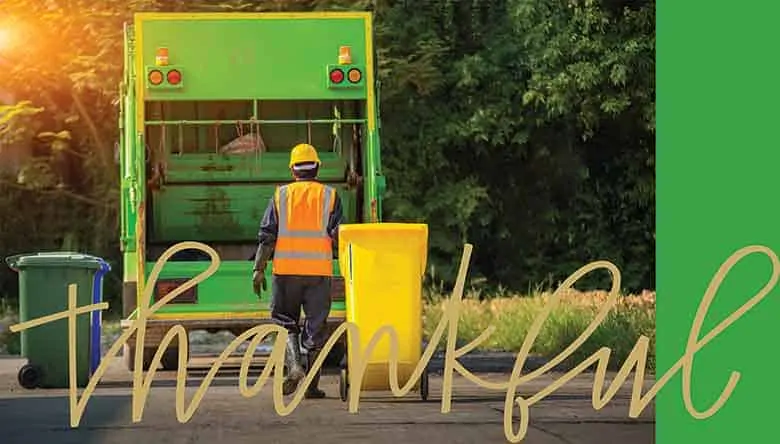
The men and women of the solid waste industry have been continuing their jobs throughout the COVID-19 pandemic. In recognition of their hard work and sacrifice, SWANA is collaborating with Glad to support sanitation workers across the United States and Canada personally affected by COVID-19 through the Sanitation Workers Support Fund (Fund). The Fund is providing financial assistance to eligible front-line solid waste and recycling collection workers in the United States and Canada adversely impacted by COVID-19.
“The solid waste industry is considered essential, and its workers have been on the front line, without failure, making sure waste is collected and disposed of since the onset of COVID-19. This fund is an important recognition of their contribution to our communities, and is a way of providing support when they are personally impacted by the pandemic,” stated Suzanne Sturgeon, Health & Safety Program Manager for SCS Field Services and SWANA Safety Committee Chair.
Lindsey is an employee-owner at SCS Engineers on the solid waste management team performing Construction Quality Assurance – CQA and reporting for field projects, as well as OM&M on landfills and assisting with landfill reporting and compliance.
Lindsey earned her BS in Soil and Waste Resources—Waste Management from the University of Wisconsin—Stevens Point in the Summer of 2018. She currently serves on the SWANA Badger Chapter Board and is co-YP Liaison, plus participates in SCS’s Young Professionals program.
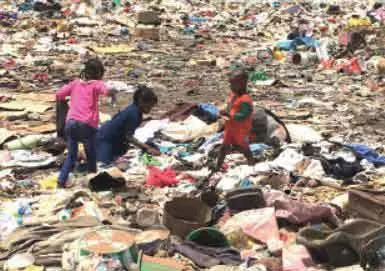 Lindsey recently published an article Finding Solutions for an Open Dumpsite: Solid Waste in The Gambia in the April edition of the Badger Chapter YP Newsletter.
The Gambia, is a tiny sliver of a country in West Africa, has a population of just under 2.5 million. About a fourth of the country’s population is under the jurisdiction of the Kanifing Municipal Council (KMC) – the most densely populated area of The Gambia. The people and leadership of the Kanifing municipality are united in their desire to have positive changes in solid waste management in the community and at the Bakoteh dumpsite. Ideally, solving the problem will implement a means of positive change for many aspects of the KMC citizens’ lives.
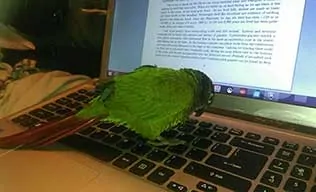
 Outside of work, Lindsey is a self-described “bird nerd” who has two parrots: A Green Cheek Conure (7 years old) and a Yellow-Naped Amazon (34 years old). She often volunteers at Feathered Friends Sanctuary and Rescue where they provide care for around 65 surrendered parrots.
Municipalities and their private sector partners will experience high costs, especially in residential collections to cover all of the costs incurred as workers transition to working from home. FEMA can help protect public health and safety by committing to cover the costs of essential services provided that aren’t paid by the service recipients.
The National Waste & Recycling Association (NWRA), and the Solid Waste Association of North America (SWANA) have both sent letters to Federal Emergency Management Agency (FEMA) Administrator Peter Gaynor requesting that the agency establish a system to compensate the waste and recycling industry for providing services to protect public health and safety that otherwise would go unpaid during the COVID-19 outbreak.
NWRA says it also shared copies of the letter with Vice President Mike Pence, who is leading the nation’s COVID-19 response task force, and the House Subcommittee on Emergency Preparedness, Response and Recovery, which has oversight of FEMA.
Solid waste management is identified as an essential critical infrastructure workforce in the Department of Homeland Security’s Cybersecurity & Infrastructure Security Agency’s (CISA) March 19, 2020 memo, and has been listed as essential in every emergency order issued at the state level in response to the COVID-19 pandemic, and in city and county responses as well.
“Providing these essential services to those unable to pay as a result of economic hardships caused by COVID-19 while continuing to employ the workforce needed to support such an effort will require assistance,” NWRA President and CEO Darrell Smith writes in the NWRA letter.
“Since both the public and private sectors collect and manage solid waste and recyclables, SWANA’s letter asserts that all sanitation departments, haulers, and post-collection companies providing services during the COVID-19 pandemic without being paid for them should be eligible for reimbursement,” said SWANA Executive Director and CEO David Biderman.
Darrell Smith points out that FEMA can establish a vehicle under disaster debris management plans or by other alternative direct compensation means as selected by the agency to compensate the waste and recycling industry for providing uncompensated services to protect public health and safety during this time of national emergency.
Both NWRA and SWANA specifically ask for funding to cover services provided in the U.S. related to customer bad debt and other uncompensated costs incurred for services being provided to the public during the national emergency.
Despite the many impacts on our lives right now, our thanks go to the many public and private solid waste management employees, and organizations such as SWANA and the NWRA, for continuing to serve our communities to keep them clean and safe nationwide. Solid waste management is definitely an essential service on the frontline.
Voting for the Old Dominion Chapter’s 2020-2021 Board of Directors ended December 13, 2019. After tallying the votes, the following professionals were elected as new Directors, including:
Congratulations!
Ryan Duckett is a Project Professional working out of SCS’s Midlothian, Virginia office. He is responsible for Sustainable Materials Management, or SMM, solid waste facilities and municipal planning solutions. Ryan also supports environmental engineering projects related to permitting, compliance, regulatory reporting, landfill gas modeling, construction quality assurance (CQA), and pollutant emission inventories at solid waste management facilities. Ryan is an active member of the SCS Engineers Young Professional Program that connects our young professionals with others providing community support, altruistic efforts, mentoring, networking, and social activities.
Virginia’s Solid Waste Association of North America (SWANA) organization works to advance environmentally and economically sound municipal solid waste management in Virginia. The “Old Dominion” Chapter as it is known consists of over 300 professionals actively working in the solid waste field throughout the Commonwealth. The membership represents the largest cross-section of solid waste managers, operators, and consultants in Virginia.
The Chapter seeks to foster networking and cooperation among solid waste professionals, including regulators and provides educational opportunities to enhance members’ expertise in the solid waste management field. Members carry out a variety of activities and programs to establish innovative research programs in the publics’ interest, scholarships and technical assistance. Learn more about membership on their website – http://www.swanava.org/.
Corporate Headquarters