Odor pollution is a significant aspect of a region’s air quality and is often regulated as a nuisance. It is estimated that over 50% of air pollution complaints received by regulatory agencies involve odor. Investigate these, along with our specialty services, for comprehensive and sustainable air compliance.
SCS Engineers was instrumental in the development of a performance-based odor control planning process for Cathedral City. Thanks again for all the support getting us to this point, we couldn’t have done it without SCS Engineers. – Andrew Firestine, AICP, City Manager
Odor Assessments
Odor pollution is a significant contributor to a region’s air quality and may require nuisance regulation. SCS offers a comprehensive odor assessment and mitigation capability for industrial operations, including odor emissions sampling, odor dispersion modeling, meteorological and complaint data review, and smoke release studies. We use specialized analytical tools and proven field capabilities to determine a facility’s specific odor footprint. Using this information, we develop effective controls to mitigate impacts. Our approach has been proven and effective, having been successfully used on many projects across a wide range of industrial settings, including landfills, composting facilities, food processing plants, wastewater treatment plants, sewage systems, and oil and gas production operations.
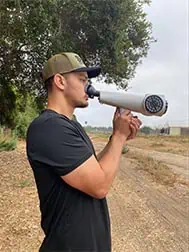
SCS Engineers’ professionals are experts at implementing mitigation strategies to reduce odors. We have found through experience that the perceived primary source of an odor is not necessarily the source that requires the greatest reduction in emissions. SCS often employs strategies to address a host of minor sources that combine to generate the offensive odor. Our mitigation strategies sometimes use masking agents, but these generally do not stand alone as a solution. Instead, we employ chemical and physical controls, along with operational changes, to achieve stable, reliable odor abatement.
As cannabis legalization expands, the importance of responsible odor control becomes increasingly critical. By integrating scientific measurement techniques, such as olfactometry, investing in proven mitigation technologies, and engaging with local communities, cannabis operators can create a more sustainable and complaint-free industry. Implementing a robust odor control plan is not merely a regulatory requirement—it’s a strategic advantage that ensures long-term success in the evolving cannabis marketplace.
Tracer Studies
SCS provides a thorough study of the transport and fate of airborne chemical vapors, particularly those with odors. At times, it is necessary to fully understand the effects of these chemicals on human health and the environment. In circumstances where chemical species of interest cannot be directly measured (such as when the source no longer exists or has been substantially modified) or must be simulated (before constructing an industrial facility, for example), chemical surrogates known as tracers are employed to simulate emissions. Tracers are also used to verify that a specific source causes a particular impact and to determine the impact of a single existing emission source when multiple sources may exist. SCS can also use tracer studies to validate and/or calibrate air dispersion models.
Specialty Services
In addition to the odor and tracer services noted above, SCS also had experience and expertise in the following:
Some agricultural operations create odors and can become a community nuisance. Paul Shafer provides a brief interview on preventing and mitigating these odors.