A recent SWANA Applied Research Foundation report explains how landfill systems and strategies can reduce odors, control surface emissions, and support methane reduction when properly designed and integrated into the broader gas collection strategy.
Capture Gas Earlier
Updated guidance on horizontal landfill gas collection systems explains how these systems can help landfill operators capture gas earlier in the active filling phase, before final grades are reached and before vertical wells can be installed. Horizontal collectors are installed laterally within the waste mass, usually in shallow trenches with perforated or slotted piping, permeable backfill, and connections to the landfill’s active vacuum system. Because they can be placed during filling, they provide a practical way to control odors, reduce surface emissions, and support methane reduction in areas where conventional vertical wells are not yet feasible.
Landfill GCCS
The report emphasizes that horizontal collectors are not a substitute for a full landfill gas collection system. They can be an important complement when coordinated with fill sequencing, interim grades, drainage conditions, and the future vertical well network. Common types include slope collectors, toe collectors, and floor collectors, each suited to different site conditions.
Leachate Management
A central theme is the importance of liquid management. Condensate and leachate can accumulate in pipes or trenches, reducing gas flow and system performance. For this reason, collectors must be designed with proper grades, accessible removal points, sumps, stone columns, or connections to the leachate drainage layer where appropriate. The report also highlights the importance of pipe selection, trench and backfill design, wellhead placement, settlement considerations, and ongoing monitoring.
Overall, the guidance presents horizontal collectors as a flexible, cost-effective tool for improving landfill gas control during active landfill development when they are carefully planned, site-specific, and integrated into the broader gas collection strategy.
Additional Landfill Gas Collection Resources:
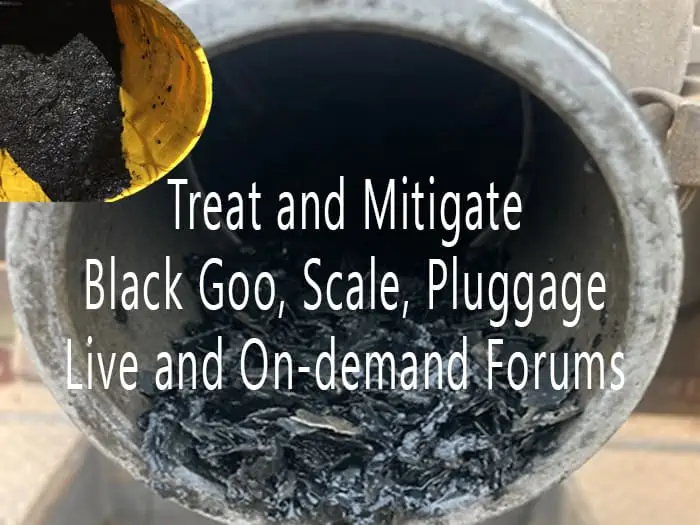
Landfills across the country are experiencing a trend ─ black goo, pluggage, and scaling in their leachate and gas collection systems. These organic and inorganic deposits are difficult to treat once they’ve seeped into liquid and GCCS systems, the pluggage slows equipment and pipes, impacting the extraction of liquids and landfill gas.
Our team of engineers, scientists, and landfill-landfill gas operations experts will provide a comprehensive discussion in May of what we are seeing and piloting in the field.
Live on Thursday, May 19, 2022
2:00 pm Eastern Time for 1 hour
Register to receive on-demand access following the live forum.
Prevent chemical deposits and pluggage before your pipes slow landfill gas and leachate collection.
This educational, non-commercial webinar with a Q&A forum throughout is free and open to all who want to learn more about landfill pluggage concerns and preventative treatments to consider. We recommend this month’s discussion for landfill owners/operators, landfill gas technicians, environmental engineers, and environmental agency staff. A Certificate of Attendance is available on request following the live session.

Our panelists this month discuss best practices for identifying, treating, and possibly even preventing chemical deposits (black goo, scaling, foaming) before and after they occur within your infrastructure. We’ll also include what landfill field operations can do to identify and treat conditions that appear symptomatic of possible future issues.
No one has all the answers ─ each site’s conditions are unique. Our team of engineers, scientists, and landfill-landfill gas operations experts will provide a comprehensive discussion in May of what we are seeing and piloting in the field.
Live on Thursday, May 19, 2022
2:00 pm Eastern Time for 1 hour
Prevent chemical deposits (black goo, scaling, foaming) bofore your pipes plug or slow landfill gas and leachate collection. RSVP to receive a copy of the recording for on-demand access.
Corporate Headquarters