Taking a Critical Step Towards Net Zero Emissions Using Carbon Sequestration
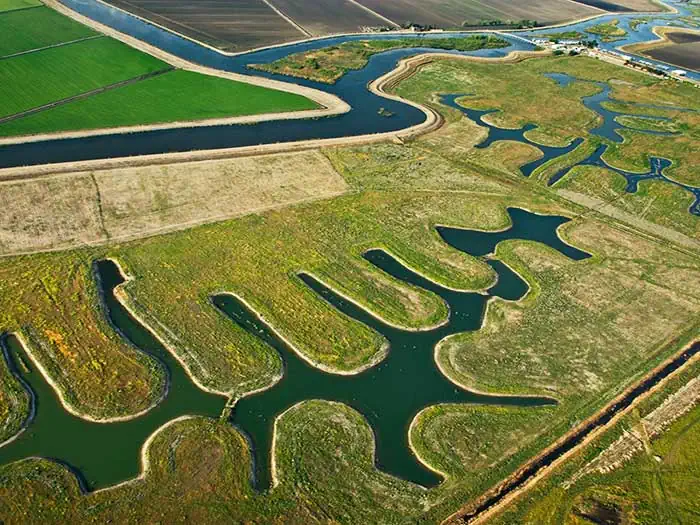
The picturesque California Delta, often referred to as the Sacramento-San Joaquin Delta, is emerging as a geological sweet spot in California’s ambitious journey toward reaching net zero carbon emissions. Its unique geology presents a compelling case for carbon sequestration, an essential strategy in the battle against climate change. Recent developments, including a collaborative effort between SCS and Lawrence Livermore National Laboratory (LLNL) on a Class VI permit application for Pelican Renewables – a company formed by Delta landowners and residents to pursue geologic storage – are indicative of the region’s growing importance in California’s carbon mitigation strategy.
Geological Foundations of Carbon Sequestration in the California Delta
The California Delta, often referred to as the Sacramento-San Joaquin Delta, is a vast inland delta formed by the confluence of the Sacramento and San Joaquin rivers and their tributaries as they meet the waters of the San Francisco Bay. Its unique geology makes it an ideal candidate for carbon sequestration:
California’s Net Zero Carbon Goal and Carbon Sequestration in the Delta
California has set an ambitious goal to achieve net zero carbon emissions by 2045, a milestone in the fight against climate change. Achieving this objective necessitates reducing emissions and actively removing and storing carbon from the atmosphere. Carbon sequestration in the California Delta can play a pivotal role in this endeavor. The Delta’s geological potential aligns seamlessly with the state’s commitment to sustainable practices and environmental responsibility.
Collaborative Efforts: SCS and LLNL’s Support for Pelican Renewables’ Class VI Permit Application
The collaboration between SCS Engineers and Lawrence Livermore National Laboratory (LLNL) that supported geologic characterization, modeling, and CO2 injection simulation for Pelican Renewables’ injection well application underscores the importance of pursuing carbon sequestration in the California Delta. The Class VI permit application underlines Pelican’s commitment to conducting carbon capture and storage (CCS) activities with the highest safety and environmental standards. This initiative is a testament to the growing synergy between scientific research and private enterprise in addressing climate challenges.
References and Further Reading
For a deeper dive into California’s carbon removal options for reaching net zero, “Getting to Neutral” by LLNL is a valuable resource. This publication outlines the various strategies and technologies under research to achieve California’s ambitious carbon reduction goals, including carbon sequestration in regions like the California Delta. The most recent “Scoping Plan” by the California Air Resources Board – the state’s policy blueprint for achieving its climate goals – underscores the need to capture and store CO2 from large sources and the atmosphere.
Our Conclusions
The California Delta’s geological attributes make it an attractive destination for carbon sequestration, a critical component in California’s mission to achieve net zero carbon emissions. Collaborative endeavors like SCS’s ongoing partnership with LLNL and Pelican Renewables highlight the commitment to responsible carbon capture and storage practices. As we continue to innovate and harness the potential of our natural surroundings, the California Delta’s role in addressing climate change becomes increasingly evident and essential.
Carbon Sequestration Considerations & Resources
 About the Author: Gary Vancil is an SCS project director and geologist supporting the environmental firm’s safe carbon sequestration and deep well injection practice. He earned his MS and BS in Geosciences with an emphasis in resource geology at Southern Illinois University of Carbondale. Mr. Vancil’s expertise also covers resource development, extraction, and mining sub-surface investigations for the nation’s largest privately held mining company. If you’d like to learn more or have questions, reach Gary at or LinkedIn.

Millions in FY24 Brownfields Grants Available – Deadline for Submissions is November 13, 2023
EPA anticipates awarding an estimated 60 Community-wide Assessment Grants for an estimated total of $30 million, subject to the quality of applications received, availability of funds, and other applicable considerations.
A Community-wide Assessment Grant is appropriate for communities beginning to address their brownfield challenges and for communities with ongoing efforts to bring sites into productive reuse. The project period for Community-wide Assessment Grants is up to four years.
FY 2024 Technical Assistance to Tribal Nations and Entities Addressing Brownfields Grant $4 million, with a $4 m ceiling, one grant expected
FY 2024 Multipurpose Grants $20 million, with a $1 m ceiling, 20 grants expected
FY 2024 Community-wide Assessment Grants $30 million, with a $.5 m ceiling, 60 grants expected
FY 2024 Assessment Coalition Grants $40 million, with a $1.5 m ceiling, 26 grants expected
FY 2024 Community-wide Assessment Grants for States and Tribes $50 million, with a $2 m ceiling, 25 grants expected
FY 2024 Cleanup Grants $95 million, with a $5 m ceiling, 65 grants expected
The closing date and time for receipt of applications is November 13, 2023, 11:59 p.m. Eastern Time (ET). You must submit applications through https://www.grants.gov/. Please take a look at the Due Date and Submission Instructions in Section IV.B. and Appendix 1 for more instructions.
Please contact your EPA regional support staff or SCS Engineers at for help. We’re happy to help answer questions.
SCS Engineers is a Bronze Sponsor at the upcoming Southern California Association of Non-Profit Housing (SCANPH) Conference in Pasadena. Join our Environmental Professionals at our display table #28 at the Pasadena Convention Center on November 1st. This annual event represents 35 years of building together: Building our industry’s capacity and building impact in our communities.
Join our Environmental Professionals at Display Table #28. Talk with Ashley Hutchens and Tyler Watkins, about your environmental challenges!
Commercial Carbon Capture and Sequestration in the US
The US is home to the largest number of commercial carbon capture and sequestration (CCS) projects worldwide, with approximately 50 new projects announced in 2021, according to the Global CCS Institute. SCS contributes expertise to several ongoing and groundbreaking carbon dioxide geologic sequestration projects. These projects have highly advanced permitting and monitoring requirements.
Research published in a report by the Congressional Research Service defines three main types of sites ideal for underground CO2 injection and sequestration: depleted oil and gas reservoirs, deep saline reservoirs, and un-mineable coal seams. In each case, CO2 in a supercritical state is injected into a porous rock formation below ground that holds, or previously held, fluids. When injected at depths greater than half a mile, the pressure keeps the injected CO2 entrained within the formation fluids, where the CO2 will subsequently dissolve.
Selecting a Site
The target geological injection interval must have an overlying impermeable caprock, such as shale, so the injected CO2 doesn’t migrate into overlying formations, most specifically, the underground source of drinking water. Fortunately for geoscientists and engineers, most of the technology used to assess the subsurface was initially developed by the petroleum industry, including a variety of geophysical techniques, including seismic reflection.
Using Seismic Reflection Technology
At SCS, our team uses the same seismic reflection technology and methodology developed by the oil and gas industry to evaluate the subsurface. Seismic reflection is a powerful tool when used properly and allows us to interpret the depositional background of the system and identify permeable and impermeable units. Seismic reflection involves generating seismic waves (the source) and measuring the two-way travel time taken for the waves to travel from the source, reflect off an interface, and be detected by an array of receivers at the surface. The reflected signal is based on the density-velocity contrast at the interface. Depending upon the type of source and receivers, seismic reflection, once recorded and processed, provides 2 or 3-D imagery of stratigraphic boundaries and geologic structure –all at depths ranging from hundreds of meters to several kilometers.
In-house experts enable SCS to utilize this amazing tool, which enables teams across the organization to see where the best areas for injection are by interpreting seismic stratigraphy. We can determine the continuity of a layer and the presence (or absence) of faults and fractures. The data can also help us determine the type of fault and whether it is a sealing or a transmissive fault. For example, a fault-bound anticline (when the rocks push up from stress changes) may provide a stratigraphic trap for hydrocarbon and can potentially store CO2.
We use seismic reflection in the initial phases of a project to determine the depths and lateral extent of known lithology. We employ previously mapped lithologic units to correlate the “images” created in seismic profiles to existing formations and, in doing so, perform a “check” on the seismic interpretation.
Long Term Benefits
Seismic reflection provides significant input when choosing a reservoir or siting a well; however, its use doesn’t end with an initial site assessment. The technology provides robust methods for monitoring the CO2 plume and interpreting changes to the subsurface during and post-injection. SCS has two Class VI injection projects where seismic reflection data was employed to identify the target injection zones and seals. The next step will be using the data to look at the subsurface relative to the injection well using downhole sensors, a process known as vertical seismic profiling.
The requirements surrounding the Class VI permitting process are complicated, but SCS has in-house experts with the skills to employ seismic reflection. Teams continue to hone their skills in this area as clients value and trust partners who can demonstrate a thorough understanding of permitting carbon sequestration projects.
The Class VI permit application typically takes 18 to 24 months to receive approval. The process is laborious and expensive. Demonstrating expertise here is critical as SCS Engineers continues to play an integral role in advancing supercritical CO2 projects throughout North America.
Additional Resources and Educational Materials:
Florida SWANA will host its 2024 Winter Conference, “Together Towards Tomorrow”, February 19-21 at the new Drury Plaza Hotel Orlando in Lake Buena Vista, Florida.
Conference host is developing an interesting and educational agenda of sessions and speakers who will discuss the latest developments in the solid waste industry. This will be an excellent time to share with and learn from your peers. For industry suppliers and service providers, this is a great opportunity to showcase your company’s products and services.
This multi-day conference will include general sessions on best practices in the solid waste management profession, networking events and more.
The conference is targeted towards local, state and municipal government solid waste directors, managers, regulators, operators and coordinators; in addition to private sector consulting engineers and suppliers of materials and equipment used in the management of solid waste.
Topics may include:
Click for more conference details and registration information. Plenty of SCS Engineers professionals will be there – we hope you will too!
The SMRI Fall conference features technical presentations and classes, field trips, workshops, and networking opportunities. The conference will also be live-streamed on October 2 & 3.
 Carrie Ridley is a licensed professional geologist with over 20 years of regulatory experience in environmental and engineering geology. A former regulator, she oversaw the Kansas Class I, III, and V underground injection control program (UIC), underground hydrocarbon storage program, and the water well program. She also has experience as an RCRA project manager and permit writer. Early in her career, Ms. Ridley on geotechnical drilling programs and transportation-related construction QA/QC. More recently, she was the Primary Investigator and Project Manager of a Department of Energy CCUS project and worked on projects related to Carbon Sequestration, Critical Minerals, and Hydrogen Storage. Connect with Carrie on LinkedIn.
 Ryan Francis, PG, has nearly two decades of experience, including senior management of a nationwide portfolio of petroleum storage tank closures; technical and project management of petroleum soil and groundwater site investigations and remediation; third-party technical review; property administrative controls; and geologist on record for multiple environmental projects in Arkansas, Louisiana, and Texas. Connect with Ryan on LinkedIn.
The U.S. Environmental Protection Agency (EPA) announces the availability of up to $4.6 billion of competitive grants. The grants are broken into two funding opportunities. The Climate Pollution Reduction Grants (CPRG) competition is designed to incentivize eligible applicants to apply for funding together as a coalition to implement GHG reduction measures regionally, across multiple municipalities, state boundaries, or even state and tribal boundaries. It includes funding for enhancing carbon removal, too.
Deadlines to Apply for Grants to Implement GHG Reduction
Under Funding Opportunity Number EPA-R-OAR-CPRGT-23-07, EPA announces approximately $4.3 billion for a general competition open to states, municipalities, air pollution control agencies, tribes, and territories for CPRG implementation grants. Tribes and territories interested in the general competition should seek the CPRG implementation grant “general competition” NOFO for more information. Applications for this implementation grants competition for tribes and territories are due on May 1, 2024.
Another $300 million for the CPRG implementation grants competition is exclusively for tribes and territories. Lead organizations for tribes and territories must submit their Priority Climate Action Plans to EPA by the deadline of April 1, 2024, in order for lead organizations and other eligible applicants under this announcement to submit grant applications to fund measures contained in those plans. EPA anticipates awarding approximately 25 to 100 grants ranging between $1 million and $25 million under this tribes and territories competition. Further detail on award tiers can be found in Table 1 of Section II.B.
Climate Change Disruptions
As the US faces the increasingly harmful impacts of climate change, communities are experiencing more deadly wildfires and storm surges, more extreme drought and water scarcity, and dangerous levels of flooding, among other impacts. The Fourth National Climate Assessment found that intense extreme weather, climate-related events, and changes in average climate conditions are expected to continue damaging infrastructure, ecosystems, and social systems that provide essential benefits to communities. If left unchecked, future climate change is expected to disrupt many areas of life further and exacerbate existing challenges to prosperity posed by aging and deteriorating infrastructure, stressed ecosystems, and long-standing inequalities.
Grants to Support Your Communities
Our country’s daunting challenge comes with an opportunity to invest in a cleaner economy that will spur innovation and economic growth while building more equitable, resilient communities. Accordingly, the Climate Pollution Reduction Grants program is designed to achieve the following goals:
1. Implement ambitious measures that will achieve significant cumulative GHG reductions by 2030 and beyond;
2. Pursue measures that will achieve substantial community benefits (such as reduction of criteria air pollutants (CAPs) and hazardous air pollutants (HAPs));
3. Complement other funding sources to maximize these GHG reductions and community benefits; and,
4. Pursue innovative policies and programs that are replicable and can be “scaled up” across multiple jurisdictions.
What Qualifies as a GHG Reduction Measure?
Treatments and solutions that reduce GHG emissions or enhance carbon removal can qualify. Measures that enhance carbon removal increase carbon dioxide removal from the atmosphere through, for example, the uptake of carbon and storage. Other measures may include EPA-approved technologies. Documentation must be provided to support the estimated GHG emission reductions for each proposed measure. Depending upon the proposed solution, you’ll need a well-conceived plan and data from a reliable environmental engineer or an environmental or sustainability consultant.
Who’s Eligible?
Eligible applicants for the CPRG implementation grants competitions are lead organizations for CPRG planning grants and other executive branch-level agencies, offices, and departments in states, D.C., Puerto Rico, municipalities, tribes, tribal consortia, territories, and groups of such entities applying for funding to implement measures contained in one or more applicable Priority Climate Action Plan developed with funding from a CPRG planning grant.
Additional Resources
Webinars:
EPA will host overview webinars for each implementation grant competition for eligible applicants and other interested parties over the coming weeks. All sessions will be one hour long. EPA will post recordings of each webinar to the CPRG website. You can click the links below to register for one or more scheduled sessions.
| Date | Time (ET) | Event Topic | Register |
| Sept. 21 | 2:30 pm | General competition webinar | Register here |
| Sept. 27 | 2:00 pm | Tribe and territories only competition webinar | Register here |
| Oct. 3 | 3:00 pm | General competition webinar (repeat) | Register here |
| Oct. 5 | 1:00 pm | Tribe and territories only competition webinar (repeat) | Register here |
About CALRC
It’s time for the California Land Recycling Conference (CALRC) in Carson, California, September 26-28. The Center for Creative Land Recycling (CCLR) is hosting the conference, and this year’s event theme is “People, Partnerships, Progress.”
SCS Engineers is exceptionally proud of our relationship with CCLR and of our clients who are winning Phoenix, EBJ, and other awards for their valuable contributions to their communities across all 50 states.
Environmental Justice
Achieving environmental justice means taking a sustainable, holistic approach to site remediation and land recycling. One that meets each party’s social, environmental, and economic goals. These experts can help; they’ve been in the business of sustainability for decades and are always open to knowledge sharing about funding, permitting, and remediation processes that will keep your project on track.
Headline Presentations
 Should it Stay or Should it Go? In-situ vs. Ex-situ Solutions with Michael McLaughlin of SCS Engineers, Senior Vice President of Environmental Services and National Specialist on Brownfields & Landfill Redevelopment
Tuesday, September 26th at 3:15 PM in the Community Hall Section A
With numerous approaches and examples of pilot studies, innovative technologies, and work done to execute alternatives to excavation, this session will help you overcome the practical challenges of sustainable remediation. With an overview of conducting pilot tests and examples of innovative technologies, this session will help project managers and site owners take the next steps in bringing sustainable solutions to clean up contaminated sites and answer the question, can in-situ technologies be used to avoid costly excavation and disposal?
 Getting to the Finish Line: Navigating Projects Through the Water Board Process with Jim Ritchie, Vice President, SCS Engineers.
Wednesday, September 27th at 10:30 am in the Community Hall Section A
We aim to get your remediation or brownfields project done sustainably, meeting economic and environmental goals such as the mission of the Water Boards to preserve the quality of California’s water resources and drinking water to protect the environment, public health, and beneficial uses. Join Jim and company to learn the best practices.
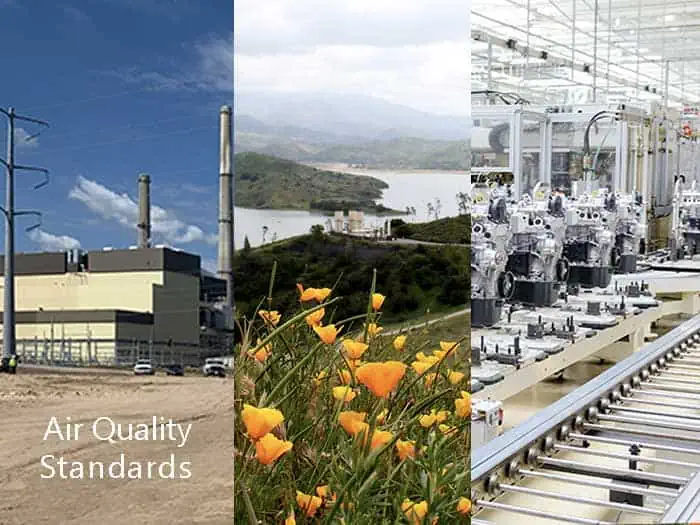
The other night, I woke up in a bit of a panic and thought that I must have missed an announcement by the USEPA regarding the PM2.5 NAAQS reconsideration! Did I?
The answer, thankfully, is no! However, that is not any reason to relax and take no action.
By way of background, the Clean Air Act requires that the USEPA set National Ambient Air Quality Standards (NAAQS) for each of the criteria air pollutants, including particulate matter (PM). These NAAQS are based on the best available science and aim to protect human health and welfare. In June of 2021, the USEPA announced that they would reconsider the 2020 PM NAAQS final action under the prior administration that did not lower any standards. Then, in January 2023, the USEPA published the proposed rule to revise the PM2.5 primary annual standard down from 12 micrograms per cubic meter (µg/m3) to within a range of 9-10 µg/m3. In that proposal, the agency retained the 24-hour standard of 35 µg/m3.
The comment period for this proposed rule has since closed, and the agency is now working through over 5,000 submitted comments. It is unclear when the USEPA will issue the final rule (it could be any day now) and if the new annual standard will be set at 9 or 10 or something in between.
What does this mean for me as a regulated source? What should you do? SCS Engineers recommends the following actions:
Additional Resources:
About the Author: Rafe Christopherson, PE, is a project director and SCS’s industrial Clean Air Act leader. He is an air quality professional with a wide variety of experience over his 25-year career. His expertise includes consulting, working at an air quality regulatory agency and with industry. His expertise includes semiconductors, biofuels, pulp and paper, hardwoods, power generation, refineries, and general manufacturing. If you are interested in more information on this PM2.5 NAAQS reconsideration process and what it might mean for your business, you may reach Rafe at or via LinkedIn.
Meet SCS Engineers Environmental Professionals at the largest and most prestigious gathering in California of Leaders in Environmental, Land Use, and Natural Resources Law. The 32nd Annual Environmental Law Conference at Yosemite will be held October 19-22, at Tenaya Lodge in Fish Camp/Yosemite, California.
As a Saturday Night Dinner Sponsor, SCS will have a display table and conduct a raffle!
We hope you will join us and many of our nation’s top environmental officials, lawyers, and other professionals for four days of legal education and collegiality in Yosemite for the 32nd Annual Environmental Law Conference at Yosemite®.
Corporate Headquarters