Have you considered a landfill for your next utility-scale solar power development project? Increasing renewable energy standards, along with decreasing land availability, are making closed landfills an attractive option for utility companies that want to develop clean energy projects. But how do you know if a landfill is suitable for solar development?
Consider these factors when evaluating a landfill’s potential to support utility-scale solar power projects:
Waste Stability
A ground surface that settles differentially is not suitable for a solar project, and typical municipal solid waste (MSW) landfills can see significant settlement as waste degrades, especially right after closure. Older landfills typically have less settlement, making them a better choice for a solar installation. Industrial waste or coal combustion residuals (CCR) landfills may not be as prone to settlement issues as MSW landfills and can be more suitable for solar installation immediately after closure.
Landfill Cap
Landfill caps are designed to keep the waste in and liquids out, and typical caps are not designed to account for the solar panels, electrical conduits, and foundations associated with a solar power project. But with a few modifications to the solar design, the typical landfill cap can accommodate the infrastructure of a solar power project. You can replace a traditional post-driven foundation with an at-grade ballast foundation and run electrical conduits underground within the soil zone above the landfill’s geomembrane liner, or at-grade.
Slopes
Landfills are typically closed with around 4:1 (25%) final slopes. However, some landfill owners are designing their final cap grades with alternative end uses in mind, with flatter slopes that will facilitate future development. These proactive landfill owners can help you maximize the number of panels and subsequently the revenue stream from your solar power project.
Interconnection
Like all power generation projects, you need a suitable interconnection point to connect the generated power to the electrical grid. CCR landfills are often positioned near existing power plants, and therefore near the infrastructure necessary for a suitable interconnection point. MSW or industrial landfills may be located in rural areas where interconnection is more challenging.
Regulatory Requirements
State and local regulators may still be catching up to the idea of putting solar power projects on landfills. The projects bring together a unique mix of solid waste, zoning, electrical, and other regulatory requirements and approvals. Be aware of the regulatory requirements in your jurisdiction and, if in doubt, reach out to your local regulator.
More and more landfills are being developed with solar power projects in mind, and you may be increasingly looking at alternative spaces for your next project. Will your next solar development be on a landfill? Contact SCS Engineers to evaluate a landfill’s solar feasibility today. Find a professional near you, or send us an email at .
In 2016 the 2.3 MW Rock River solar project near Beloit became the largest solar farm in Wisconsin. Do you need help evaluating a landfill for your next utility-scale solar power project? Contact Eric Nelson, SCS’s Utility National Expert.
The environmental reporting season is just around the corner. Every year Ann O’Brien publishes a table to help you determine your reporting obligations. The table summarizes the most common types of environmental reports due to environmental regulatory agencies in Illinois, Indiana, and Wisconsin, along with respective due dates.
Table: environmental regulatory agencies in Illinois, Indiana, and Wisconsin
The professional engineers and consultants at SCS Engineers can help you navigate the local, state, and federal reporting obligations and permitting for your business, in your region, and in your industry. Contact us at or find a professional like Ann, nearest you.
 Ann O’Brien is a Project Manager with SCS Engineers with more than 30 years of experience in the printing industry. Ann’s experience includes air and water quality permitting, environmental recordkeeping, reporting and monitoring programs, hazardous waste management, employee EHS training, environmental compliance audits, and environmental site assessments and due diligence associated with real estate transactions and corporate acquisitions.
Thanks, Ann!
Recently, Waste360 published “Organics Diversion Drives Changes in Landfill Operators’ Roles,” an article examining the evolving role of landfill operators in organics waste diversion. Five industry leaders provide insight into how landfill operators and the solid waste industry are adapting to accommodate the evolution and the cost of organics management.
Waste360 interviewed:
The article provides best practices, strategies, technology, and systems that could support or supplement landfill operators’ response plans to the changing policies and contract requirements in more economically sustainable ways. Waste360 rounds up answers to the most common challenges operators and public works departments face including how to reduce permitting time, cost, and environmental impact.
Like many Young Professionals, Steve is more than a Professional Engineer. To his clients, he’s a manager often exceeding their expectations; to others a mentor and to his community a man involved.
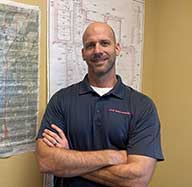
As a Senior Project Manager at SCS, Steve is responsible for overseeing solid waste and environmental services projects from SCS’s Oklahoma City and Wichita offices. He has a broad range of expertise, including solid and hazardous waste regulations, landfill design, and regulatory compliance. Steve supports his clients providing landfill and solid waste solutions that include compliance audits, stormwater modeling and design, remedial action plans, remedial systems designs, site investigations, health and safety assessments, waterway crossing assessments, and construction.
Living and working in the Heartland, his efforts take him to sites including solid waste facilities, active and closed landfill sites, oil well fields, fuel storage facilities, vehicle maintenance facilities, truck stops, industrial sites, and agricultural sites. Chemical contamination encountered in both soil and groundwater media is of growing concern across the nation. Steve mitigates and helps prevent contamination from petroleum, dioxin, herbicides, pesticides, heavy metals, and solvents. Some of these sites have complex management systems that protect the air, water, and soil from harm. Operating these systems in harmony is expensive, requiring experience and understanding of each of the components plus regional knowledge.

Sangeeta Bhattacharjee, E.I.T., an SCS Engineers Associate Professional, submitted Steve’s name as a Waste360 candidate, unknown to him. So being among the honorees came as quite a surprise. Sangeeta told us, “I wanted to let everyone know about his work and take inspiration from him.” She went on to say:
If anyone is looking for a professional who has experience, knowledge, expertise in landfills but who is still so humble, honest, and always there to learn more, it is Steve in my eyes. Anyone who meets Steve will be assured that he will get the work done. That much confidence and expertise with so much coolness is a rare combination. I, and most of my colleagues, depend on his personal qualities every day; I am sure others will be happy to know him.
Steve, a graduate of Kansas State University, is licensed in Kansas, Missouri, Nebraska, and Oklahoma. He is a member of the National Society of Professional Engineers, the Kansas and Oklahoma Societies of Professional Engineers, where he served in several chair positions as well as Chapter President; and the Solid Waste Association of North America where he recently served in the Sunflower Chapter as a Director.
Thanks to Sangeeta, Steve and all the Waste360 40-Under-40 Award Winners for their commitment to solving solid waste industry challenges and facing these challenges positively − you make a difference.
The staff at SCS Engineers (SCS) has talked at length about how changing the parameters of a coal ash remediation project impacts the eventual outcome of that project. That involves not only the factors present at a particular site but also the regulatory environment in which that site operates, certainly as rules evolve regarding the disposal of coal combustion residuals (CCRs).
Two primary means of coal ash remediation are closure-in-place, or cap-in-place, of an existing coal ash storage site, and closure-by-removal. Closure-in-place involves dewatering the storage site, or impoundment, in effect converting from wet storage to dry storage of ash. A cover system is then used to prevent more water from entering the site.
Closure-by-removal involves dewatering of the coal ash, and then excavating it, and transporting it to a lined landfill or a recycling center.
“There are lots of technical reasons and site-specific factors that can influence a project’s outcome,” said Eric Nelson, vice president of SCS and an experienced engineer and hydrogeologist. “These might include the type and volume of CCR, the geologic setting [e.g., groundwater separation], presence and proximity of receptors [e.g., drinking water supply], and physical setting [e.g., constraints such as access, available space onsite for re-disposal, proximity/availability of offsite re-disposal airspace, etc.].”
Sherren Clark, an SCS team member with experience in civil engineering and environmental science, said “risk evaluation is a key component of remedy selection. A CCR unit undergoing an assessment of corrective measures [ACM] could be a 100-acre ash impoundment containing 30 feet of fly ash, but it also could be a 2-acre bottom ash pond. It could have numerous groundwater constituents exceeding drinking water standards by a significant margin, or it could have a single parameter slightly above the limit at a single well. And there could be water supply wells nearby in the same aquifer, or none for miles around. All of these factors play into the selection of a remedy that addresses the existing risks, without creating other negative impacts such as site disturbance, dust, or truck traffic.”
Tom Karwoski, a hydrogeologist and project manager for SCS who has designed and managed investigations and remediations at landfills as well as industrial, Superfund, and other waste storage sites, noted the challenges inherent to individual sites and stressed careful planning is needed to achieve the desired result. At some sites, “given the size and the nature of the impoundments, transport of CCR off-site may not be the best option.” When moving from the ACM to the remedy [selection], it’s extremely important to have multiple meetings with the client to set the schedule. Based on the way the [CCR] rule is written, things have to progress logically. There’s time available for careful planning. The last thing we want to do is start making assumptions without input from the client and other interested parties. Regulatory compliance and concern for the surrounding community and the environment are important to us and our clients.
“If the nature of the site in its current condition allows it, capping of the site will reduce surface water moving through the waste and significantly cut down on the risk of groundwater contamination,” Karwoski said. “At sites where you have CCRs that may be distributed across a site, to consolidate that onsite and then the cap will address CCRs impacting groundwater.”
Jennifer Robb, vice president and project director with SCS’s Solid Waste Services Division, and the company’s Groundwater Technical Advisor for the Mid-Atlantic region said her group has “done corrective measures for cobalt, arsenic, and thallium,” all contaminants found in coal ash. “There are some in situ bio-remediation that can be done, where basically you’re trying to alter the chemistry to immobilize the metal.” Jennifer noted that there are also more physical remedies where contaminated groundwater is extracted from the subsurface by pumping or the groundwater plume is contained or treated in-situ with the construction of “cut off trenches.”
Karwoski said, “we have no preconceived notions about what is best for all sites, but if you consolidate [waste] onsite and then cap, it will certainly take care of a lot of situations where you have CCRs impacting downgradient groundwater.” This approach may not be appropriate in every situation, but, if arrived at after thoughtfully navigating the remedy selection process defined in the current Federal CCR rules (40 CFR 257 Subpart D—Standards for the Disposal of Coal Combustion Residuals in Landfills and Surface Impoundments), should result in an approach that is effective based on the site-specific factors present.
Read last month’s blog “Many Factors Influence Remedies for CCR Control and Disposal.”
 EBJ announced on January 23 that it is honoring SCS Engineers with multiple awards for environmental business achievements, advanced technology, and another for ASP composting project merit. The official awards ceremony takes place during EBJ’s Environmental Industry Summit XVIII in San Diego, California, in March.
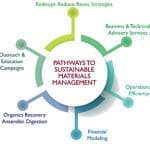
SCS is receiving the Gold Business Achievement Award for a Large Environmental Firm, for outstanding business performance in 2019. We largely attribute our organic growth to our clients interested in Sustainable Materials Management (SMM) and renewable natural gas (RNG) services. Our SMM programs increase our clients’ solid waste management efficiencies, reduce waste, and support sustainable recycling, and our design and design/build facilities convert landfill gas, dairy digester gas, and wastewater treatment plant digester gas to RNG. In addition, SCS’s Geographic & Practice Area Expansion initiative in 2019 enables us to expand our professional engineering and consulting services for liquids management, wastewater treatment, and emerging contaminants from new offices in the South, Central, and Midwest regions of the United States.
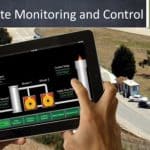 The Information Technology Award for SCS Remote Monitoring and Control® (SCS RMC®) software is especially gratifying. SCS RMC technology helps lower landfill operating costs and maximize gas capture by integrating next-generation supervisory control and data acquisition (SCADA) opportunities such as 3D imaging from drones and virtual reality (VR). Beyond typical SCADA features, our system uses aerial data to compose topographic mapping, 2D images, and 3D renderings. SCS RMC can also incorporate geographic information systems (GIS), thermal, near-infrared, and methane leak detection data. The 3D model in use by San Bernardino County and other clients incorporates a Microsoft HoloLens VR headset that allows executives, facility management, and operators to “walk the site” from their offices, as well as view and control equipment remotely from almost any internet-connected mobile device. The technology integrates with our SCSeTools® platform, in use on over 600 landfills that help facilities continually gauge operational health and spot trends that help determine when and how to invest in infrastructure.
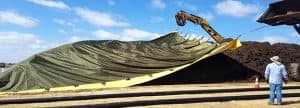
The Environmental Services Division of the city of San Diego, in collaboration with SCS Engineers, is receiving the Composting Project Merit Award in recognition for the composting operation at the Miramar Landfill in San Diego. In collaboration with the City, SCS designed an innovative covered Aerated Static Pile (ASP) composting system that will divert 100,000 tons per year of organic waste from the landfill. The ASP became operational in August 2019 and will compost 40,000 tons per year into useful by-products (and has capacity for an additional 20,000 tons). It provides an enhanced stormwater control system, and will eventually run on renewable energy generated from the landfill. According to the StopWaste.com calculator, the upgrade reduces greenhouse gas emissions by the equivalent of removing 19,015 cars from the road.
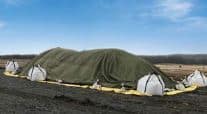
In addition, the recent announcement of SCS’s ASP Composting Pilot Program is making headlines. SCS owns a covered ASP compost system that is mobile and can be set-up on sites within an area of 50 feet by 100 feet, or less. In the covered ASP compost system, process and odor control is pro-active with a shorter composting period. Pilot tests allow waste managers to assess composting and to see if it is the right fit for their situation. The ASP system processes material batches in two months. Additional batches or “recipes” can test in 2-month intervals.
“Managing air, water, and soil pollution prevention are driving state and local regulations,” said Bob Gardner, a Senior Vice President of SCS Engineers. “Offsetting as much of the cost by improving operations, lowering energy consumption, and switching to renewable energy resources is critical to our clients.”
About SCS Engineers
 SCS, an employee-owned environmental consulting and construction firm, is celebrating our 50th year in business. We are producing technologies and programs that lower industrial operating costs and reduce greenhouse gases for private and public clients who are establishing goals to reduce their environmental impact.
Our technologies and programs are finding footholds in the agricultural, industrial, and manufacturing sectors as municipalities and companies aim to reach climate change goals without passing all of the expense to consumers. SCS clients entrust us with the management of more than 35 million metric tons of anthropogenic CO2e greenhouse gases every year. We collect and beneficially use or destroy enough to offset greenhouse gas emissions from 7.4 million passenger cars annually.
California leads the way in the United States with a GHG MRP and C&T program that continues to grow and link with other jurisdictions. The California Air Resources Board (CARB) Market Readiness Proposal initially started with basic facility reporting and has grown and adopted to include multiple non-facility specific sectors of the economy, as dictated by the growing initiatives and programs that CARB joins or creates. However, as the program applicability may change, the basics tenants of MRP stay the same with reporting and verification at the center of the program.
By having CARB’s C&T Program as a separate program, entities have to navigate if they have a compliance obligation and how they will meet that obligation in addition to complying with reporting requirements. Entities can reduce their emissions by switching to biomass-derived fuels or meeting their compliance obligation by using CARB-provided allowances or purchasing allowances and/or compliance offset credits.
As CARB’s programs grow, it will likely trigger similar growth in the western North American GHG programs and regional agreements. As discussed, Québec’s C&T system, which is linked with CARB’s program, has been growing and is being used to meet the Canadian federal GHG rules that are being put in place. Ontario’s program was annulled but shows that the discussion on how best to reduce GHG emission is a topic that continues to thrive, and we may see new programs developing even though some may hit some setbacks. The PCC shows that even if a Market Readiness Proposal and C&T Program is not the particular method chosen by a region to reduce emissions, many regions still see reducing GHG emissions as the future to create jobs, develop the economy, develop new infrastructure and maintain growth while protecting the environment.
About the Authors:
 Cassandra Drotman Farrant is experienced in environmental consulting, specializing in environmental assessment and greenhouse gas (GHG) verification. She has participated in GHG verification projects throughout the U.S.

Raymond H. Huff is SCS Engineers’ National Expert on Greenhouse Gas. He specializes in landfill regulatory compliance; air quality/compliance issues, including GHG emissions quantification; and site assessment, remediation, and post-closure care.
 Haley DeLong is experienced in greenhouse gas (GHG) emissions, sustainable energy, and climate dynamics. She specializes in air quality consulting and has been involved in numerous projects related to air permitting and compliance with solid waste regulations, including preparing Title V and Non-Title V permit-to-construct/operate permit applications.
When a release of PFAS occurs at a metal finishing facility, it is often due to the integrity of the wastewater system. Due to the persistence of PFAS and very low concentrations considered to be toxic, even water containing a small amount of PFAS can result in a large impact on the environment. If water can migrate into the subsurface, so can PFAS. Once in the soil, any water introduced into the soil can transport the PFAS into the groundwater.
The Californian chrome plating facilities are being required to test for PFAS even if there is no evidence of historical contamination at the property from any chemicals. Current testing is requiring the analysis of 25 different kinds of PFAS, including PFOS and 6:2 FTS.
Because such low concentrations of PFAS are considered to be toxic and their prevalence in common consumer products and tools, false-positive detections are common during the investigations for PFAS. False positives detections can lead to unnecessary expense and additional investigations. Therefore, selecting a knowledgeable, skilled, and experienced environmental consulting firm, is paramount to keeping the investigation as low cost as possible.
The author is Lynleigh Love a Senior Professional Geologist at SCS Engineers specializing in emerging contaminants.
To purchase, read, or cite this article: https://doi.org/10.1080/00202967.2020.1696597
(2020) Upcoming mandatory testing requirements for chromium plating facilities, Transactions of the IMF, 98:1, 6-7, DOI: 10.1080/00202967.2020.1696597.
Do Tracer Environmental professionals ever slow down? The SCS Tracer professionals at SCS Engineers were busy publishing new articles last month in addition to Operator Training. We’ve compiled several of them along with the most popular in our SCS library for your convenience. Select a title and start reading. Enjoy!
How to Properly Complete an IIAR 6 System Safety Inspection Checklist Form? When filling out the ANSI/IIAR 6-2019 Ammonia Refrigeration Safety Inspection Checklists, located in appendix B, some of the information required may not always be readily accessible. This comprehensive article takes readers step-by-step through the process.
Epic Fails, Part Deux Failures that come together, form a picture. The author discusses how we can begin to learn from these Epic Fails and start to take steps to prevent them in our plants.
Ammonia Pipe and Equipment Labeling – Part I Recognized and Generally Accepted Good Engineering Practices (RAGEGEP), an overview of many of the standards and guidelines that are relevant to the ammonia refrigeration system labeling, and guidance on how to apply them.
Ammonia Pipe and Equipment Labeling – Part II Options facilities have when choosing their RAGAGEP for pipe and equipment labeling.
It’s All in Your Past, RETA Breeze Investing in the knowledge and development of your personnel is the first step towards making your management system world-class in the safe operation and maintenance of your ammonia refrigeration system.
Employee Training Under PSM/RMP FAQs about designing a training program that is part of your facility’s PSM and RMP programs and provides a defensible position during inspections while ensuring that your facility operators and maintainers perform their jobs safely.
Mechanical Integrity, Documentation Discrepancies Checks, and verification prevent big problems.
Managing Organizational Change: How it Impacts Your Ammonia Refrigeration System During periods of organizational change, we must keep in mind the potential impacts on our facility’s PSM/RMP or ARM programs, and on the operation of the ammonia refrigeration system itself.
PSM/RMP Compliance Audits: Who Should Perform Them? What to look for in an auditor for hire? For starters, more than a consultant familiar with PSM/RMP regulations.
Management of Change: Have We Captured All of the Impacts of a Change? It is vital to ask as many questions as possible regarding equipment changes under consideration. With more information, you may find that the proposed changes could impact safety.
SCS Engineers Summer Internships
Openings and applications here
SCS provides valuable technical and engineering business experience as you work alongside our professional staff on a diverse range of solid waste and environmental projects. Opportunities can jump-start your career path as SCS interns become part of the solutions we deliver to our clients.
Opportunities in 2020 are available nationwide.
Interns typically work 40 hours per week. Paid internships start in May or June, and end in August or September; your exact start and end dates are arranged to accommodate your school schedule.
Learn more about the SCS Engineers program here.
Corporate Headquarters