EPA has opened applications for Federal recycling and composting grants. These grant programs are SWANA-supported and may assist in funding education and infrastructure. The EPA program is divided into two areas providing states, municipalities, and other entities the opportunity to apply for millions of dollars in funds. The Solid Waste Infrastructure for Recycling (SWIFR) and Education and Outreach Grant Programs were established by the Save Our Seas 2.0 Act and the Bipartisan Infrastructure Law.
EPA will be accepting applications for both programs through January 16, 2023.
The SWIFR Grant Program provides $275 million over five years for states, municipalities, and tribes to:
Improve post-consumer materials management and infrastructure;
Support improvements to local post-consumer materials management and recycling programs; and
Assist local waste management authorities in making improvements to local waste management systems.
The Recycling Education and Outreach Grant Program provides $75 million over five years to states, municipalities, tribes, non-profit organizations, and public-private partnerships to:
Inform the public about residential or community waste prevention or recycling programs;
Provide information about the recycled materials that are accepted; and
Increase collection rates and decrease contamination across the nation.
Nena Shaw, EPA Acting Director for the Resource Conservation and Sustainability Division, will speak about the grant programs and related EPA waste-related initiatives during her keynote presentation at WASTECON 2022 on Thursday, December 8, in San Diego, California.
Note that $100 million of this funding is available to help build and transform solid waste infrastructure, manage materials to achieve a circular economy, reduce greenhouse gas emissions, and create cleaner, resilient, and healthier communities through composting and organics management programs.
Please contact your SCS program manager or one of our national experts to learn more or get support with your application. We’re always here to help.
L to R – Ron Wiesman of Hillsborough County Solid Waste, Kollan Spradlin and Trent Arney of SCS Engineers.
Biosolids Composting – Award Winning Facility in Hillsborough County – Environmental Category
The Planning Commission celebrated its 40th Annual Planning & Design Awards at a ceremony in late October. The event is in conjunction with a nationwide celebration of the American Planning Association’s National Community Planning Month.
The County Planning Commission recognized a joint effort between the County Board of County Commissioners, the Solid Waste Management Department, the County Water Resources Department, and SCS Engineers with its 2022 Excellence Award.
Hillsborough County combines tons of mulched yard cuttings and biosolids (treated wastewater residue) to create an in-demand soil amendment. Mixing, curing, and selling the product preserves disposal space at the Southeast Hillsborough County Landfill, saving taxpayers about $1.5 million in hauling, disposal, and other costs over five years. Selling the resulting soil supplement, meanwhile, adds new revenue.
Yard waste was traditionally burned to produce electricity or mixed with cover at the landfill. Treated wastewater by-products, known as biosolids, were trucked to the landfill for disposal, thus filling the landfill faster and, when combined with other organic matter creating greenhouse gases.
The plan to produce and sell compost results from a partnership between the County operations and SCS Engineers committed to finding a more efficient and environmentally friendly solution to reuse the two types of waste. The product meets stringent federal guidelines and regulations, providing a nutrient-rich material that safeguards consumers, crop production, and the environment.
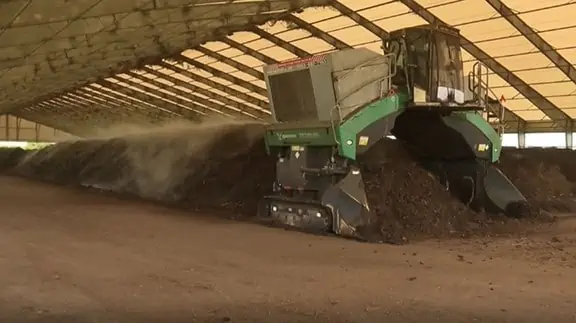
The windrow compost turner in action mixing oxygen and moisture into the compost, and cooling it to promote the best conditions for microorganisms to do their work creating high-quality compost.
Thanks to everyone who joined the celebration showcasing excellence in planning and design that contributes to the quality of life in Hillsborough County. If you’d like to learn more about this biosolids composting facility, please contact Kollan Spradlin or .
Communities across our nation are going greener, we suggest these educational resources:
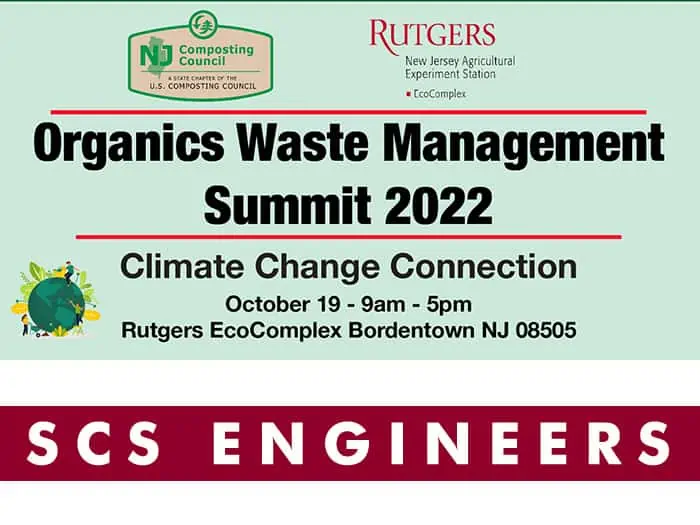
Organics processors, composters, haulers, regulators, academics, organics waste management professionals, sustainable community organizations, and nonprofits will join the conversation about New Jersey’s organics management practices. The Summit will feature experienced industry professionals, academics and regulators on topics of:
State and city food waste initiatives and climate change programs
The role and how to work with compostable packaging
Compost facility management (economics, PFAS, new techniques)
Funding and operating climate friendly organics business
SCS Project Director Greg McCarron is speaking at the Funding and Operating Climate Friendly Organics Businesses Panel 4 (4:00 – 5:00 pm). Be sure to visit the exhibitors and learn about some great organics recycling businesses in New Jersey!
The world’s largest composting event, USCC Compost 2023, Jan 24-27 in Ontario, California, is the premiere professional meeting for composting, organics recycling, and related topics. SCS Engineers is sponsoring the State Chapter track, including the Networking Soiree on January 26.
Featured this year during Concurrent Session D1 California Track Regulatory Trends and Experience, on Wednesday, January 25 at 8:15 – 9:45 am is
Lessons Learned –1383 Compliancewith Srividhya Viswanathan. Vidhya and Michelle Leonard will illustrate SCS Engineers’ comprehensive planning process and tool, including a timeline, to achieve SB 1383 compliance. SB 1383 requires California to massively increase organic waste collection and recycling infrastructure in under ten years. The regulation requires a collective effort from entities, including jurisdictions, haulers, recyclers, and businesses, who will need to fund significant capital investments.
Find Additional Resources Below:
Compare and Contract Composting Systems VIDEO: Greg McCarron and Vidhya discuss managing tons of food scraps and other organic materials using different compost approaches. This forum is a resource for landfills, Solid Waste Departments, municipalities, and agencies working toward achieving waste diversion goals and lowering carbon footprints.
Composting Pilot Program: evaluate your organic waste streams and whether composting is a viable solution for your waste management program. The SCS pilot program includes everything you need to test before you invest.
Making Composting Work in High-Population Spaces: Managing hefty organic waste streams and associated costs while reaching lofty sustainability goals are among urban jurisdictions’ toughest pursuits. Some municipal solid waste operators set up local compost sites to help achieve these ambitions. They are finding other benefits along the way—from new, valuable products with a strong, local market to a way to …
California’s first fully solar-powered compost facility shines brightly: Republic Services’ Otay Compost Facility at the Chula Vista, California, Otay Landfill is open for business. The compost facility helps communities in San Diego County meet the requirements of California’s SB1383 law mandating the diversion of organic waste from landfills. The composting facility designed by SCS Engineers in collaboration with Sustainable Generation operates 100% on solar power …
Meet SCS Engineers and SCS Field Services professionals at BOOTH 1704 at WasteExpo 2023, May 1-4, in New Orleans.
WasteExpo is the place to be! The conference program is your professional development opportunity of the year! The education and training that you’ll receive is guaranteed to sharpen your skills to help you do your job better. WasteExpo’s conference program is unparalleled. 2023 Conference Tracks include:
Operations, Fleet & Safety
Recycling & Landfill
Business Insights & Policy
Technology & Innovation
and more!
A Bird’s-Eye View: Using Satellites and Drones to Detect and Monitor Emissions, Bob Dick, Sr. VP (Moderator) and Chris Carver, GIS Developer and FAA licensed drone pilot.
Monday, May 1
8:00 AM – 9:15 AM
Room: 275, Session Number: MTECH1
Why is Multifamily Recycling So Hard? with Michelle Leonard, Sr. VP and National Expert on SMM
Monday, May 01, 2023
8:30 AM – 9:45 AM
Room: 279, Session Number: MRECYC1
PFAS: Price to Fix Adulterants will Soar with Nathan Hamm, VP and National Expert on Liquids Management
Monday, May 01, 2023
10:15 AM – 11:30 AM
Room: 279, Session Number: MRECYC2
Minimum Recycled Content: Challenges and Opportunities with Vita Quinn, National Expert on Solid Waste Finance and Rate Studies
Tuesday, May 02, 2023
8:00 AM – 9:15 AM, Room: 289, Sustainability Track
Seizing an Opportunity: The Rise of MRF Investments with Bob Gardner, Sr. VP Solid Waste
Tuesday, May 02, 2023
12:00 PM – 1:15 PM
Room: 279, Session Number: TRECYC3
There’s an App for That! with Chris Carver, GIS Developer and FAA licensed drone pilot.
Wednesday, May 03, 2023
10:45 AM – 12:00 PM
Room: 275, Session Number: WTECH2
California’s first 100% solar-powered composting facility is on the Otay Landfill serving the San Diego region.
2022 Organics Management Facility of the Year.
The National Waste & Recycling Association recently named Republic Services’ Otay Compost Facility the 2022 Organics Management Facility of the Year. The Otay facility in Chula Vista, Calif., is the first fully solar-powered compost facility in the state, recycling food and yard waste from throughout the San Diego region.
The solar-powered facility opened for business last October, helping communities in San Diego County meet the requirements of California’s SB1383 law mandating the diversion of organic waste from landfills. This unique facility, designed by SCS Engineers in collaboration with Sustainable Generation, operates completely off the grid. It can process 200 tons of food and yard waste daily from Chula Vista, Carlsbad, and customers throughout the San Diego region.
The design uses renewable energy to run 100 percent of the composting operations at the site. The facility design includes technologies to speed the maturation rates and reduce excessive odors. Blowers to aerate the organic material, oxygen and temperature sensors, and advanced compost cover technology produce a high-quality product.
“Republic Services took the goals of SB 1383 further to reduce emissions of short-lived climate pollutants. They’re running a sustainable facility that enables residents, businesses, and government to easily reuse and recycle more organic materials within a smaller carbon footprint than ever expected,” says Vidhya Viswanathan, engineer and project director.
Congratulations! Otay, the NWRA’s Organics Management Facility of the Year!
Get assistance with USDA grant applications for composting | food waste reduction.
Cutting food loss and waste is widely recognized as one of the most powerful levers we have to address climate change and preserve our natural resources. In the United States alone, surplus food accounts for 4% of our greenhouse gas emissions, 14% of all freshwater use, and 18% of all cropland use. We’re wasting precious resources to produce and ship food only to have it end up in a landfill or rot in a field. [ReFED]
These are key action areas where the food system can focus its efforts over the next decade to prevent, rescue, and recycle food at risk of becoming waste. Strengthening food rescue and recycling anything remaining into compost or anaerobic digestion facilities creates beneficial by-products.
The USDA offers grants of up to $300,000 to composting and food waste reduction pilot projects benefiting community food waste and production programs.
Eligible projects can be in rural, urban, and suburban communities. The application deadline is fast approaching on September 1, 2022. USDA anticipates making selections by October 30, 2022, and executing the grant awards by February 8, 2023.
Visit SCS Engineers to learn more about this grant opportunity, check program qualifications, and sign up for free consulting supporting communities interested in this unique USDA grant program.
Suzanne Sturgeon is the Health and Safety (H&S) Program Manager for SCS Engineers staff working in the field. Suzanne is responsible for developing and implementing safety programs, policies, procedures, and regulations. She also manages H&S training for field staff, developing and conducting cultural-based training within SCS to promote understanding and participation while encouraging a behavior-based philosophy essential to eliminating unsafe practices and conditions.
Suzanne doesn’t stop there; she continually evolves her programs and participates in association speaking opportunities to share successful strategies throughout North America at Solid Waste Association of North America (SWANA) events and others. Her focus has been proactively identifying hazardous landfill and landfill gas situations and presenting unique and successful solutions she has developed for SCS. But, as the number of MRFs and Transfer Stations is expected to increase, those areas have become safety focus areas.
The industry is seeing a reduction in workplace fatalities based on the most recent U.S. Department of Labor’s Bureau of Labor Statistics, but there is more work to do. “Solid waste is a dangerous industry, and we collectively work to bring awareness to those most vulnerable to injury or worse,” said Sturgeon. “As an industry, we have the tools and more on-demand training to help reach more workers before problems occur to continue making our industry safer.”
As the SWANA National Safety Committee Chair, Suzanne is working hard and smart in the field, keeping up with new systems, equipment, and facilities that need her particular skills and insight to keep worker fatalities and injuries on the downward trend. Her innovative training and ability to communicate with so many saves lives.
Greg McCarron, PE, is a Vice President of SCS Engineers and the firm’s expert on Organics Management. Greg supports businesses and municipalities across the U.S. taking steps to address climate change, which many consider the most important challenge facing our planet. One popular option is reducing greenhouse gas and their environmental impacts by diverting organics from landfills, thus reducing methane production. The tactic also diverts much-needed food to food banks in some programs, but all programs produce a product good for the earth.
Greg’s 35 years of experience include operations, project management, design, permitting, regulatory support, construction oversight, system start-up, economic analysis, and technology assessment to find the right system and the proper mix for sustainable composting operations.
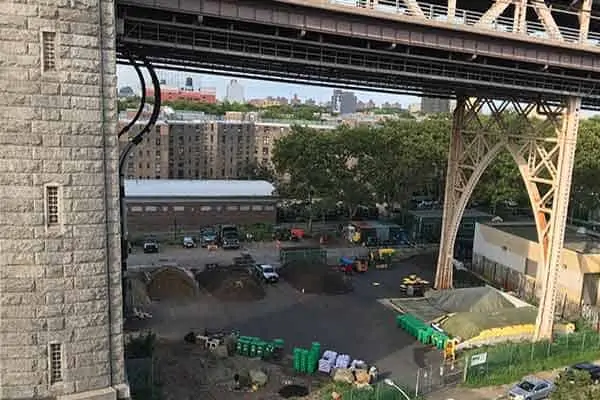
Among his successful innovative projects, there are award winners for demonstrating composting operations can be in urban areas, conveniently coexisting with buildings and people, even tucked under a bridge in New York City.
He created an Aerated Static Pile (ASP) composting pilot program so that municipalities and businesses could evaluate their organic waste streams to determine whether composting is a viable solution before making a capital investment.
And he is leading the design of hybrid composting approaches that combine an ASP system with other technologies, such as open windrows. These hybrid systems can achieve necessary process control while maintaining cost efficiencies. The designs depend on the priority challenges unique to each project — processing increasing tons of food scraps, for example, but change as priorities differ within programs. Sustainability means the systems are flexible enough to adapt to waste trends and the end market, which demands various high-quality mixes to sell.
Greg says, “the advancements mentioned above help support sustainable composting and organics management because they account for changes that may occur over the life of the systems, such as waste characteristics and their relation to the end-product demand.”
Wasted food is not food waste! Rather it describes food that was not used for its intended purpose and is safely managed. Edible wasted food is useful as donations to feed people, and for food banks. Other wasted food can create animal feed, composting, or used in anaerobic digestion. All these organic materials are not going to landfills and greatly reduce your carbon footprint, while serving up many benefits.
The Food DROP and RecycleSmart case studies in this EM article illustrate the successful collaboration between local governments and stakeholders in food recovery. In both cases, local government staff invested time to understand the barriers and benefits of different aspects of recovery. The resulting recovery programs provide local benefits by supporting the community and the collective benefit of reducing the amount of food waste sent to landfills in California.
As environmental professionals, we believe that positions us as key collaborators for these recovery programs across the country, whether helping businesses overcome the barriers and participate in food donation programs or to support the capacity expansion of recovery organizations and services. We encourage you to learn more about the food recovery organizations and services in your community and start a conversation about how to best support their work.
Managing hefty organic waste streams and associated costs while reaching lofty sustainability goals are among urban jurisdictions’ toughest pursuits. Some municipal solid waste operators set up local compost sites to help achieve these ambitions. They are finding other benefits along the way—from new, valuable products with a strong, local market to a way to cut out multiple complex steps involved in sending compost out of town. They are regenerating depleted soils, and some are bringing their shuttered landfills back to life with another purpose: home to these new facilities.
But how do you make compost projects work with residential neighborhoods and businesses close by, limited space that’s at a premium, and other challenges of high-density urban and suburban communities?
An urban compost success story.
The answer varies depending on each jurisdiction’s special needs and characteristics. New York City is one example of a compelling metropolitan success story, with over 200 drop-off sites and seven community-scale compost programs or facilities across its five boroughs.
SCS Engineers’ Vice President Greg McCarron helped design two of that flourishing city’s facilities, including a layout and design overhaul of one of them, located near Manhattan. The project goal was multifold: keep pace with the growing demand for finished compost and food scraps management and do it within a compact facility footprint –one-third of an acre.
Known as the Queensbridge project, it operates under the Queensboro bridge, next to six-story residential towers, a hotel, and other commercial development. So, maintaining tight odor control is a paramount priority. It’s a job that takes technical skills mastery and a robust design; the facility can process up to 1,000 tons of rapidly decomposing food scraps a year, which are mixed with leaves and woodchips.
GORE cover for odor control and process control.
“The proximity to a dense residential neighborhood allows little tolerance for issues such as odors, pests, and dust, and we designed the site with this in mind.
One of our most important strategies was to install a second SG/GORE cover [there was already one in operation]. It’s an in-vessel system with a semipermeable membrane, so it traps odors and other emissions such as dust and volatile organic compounds (VOCs) and prevents pest issues by encapsulating all fresh food scraps,” McCarron says.
The technology also sheds rainwater as clean water and provides process control, enabling a higher throughput on a smaller footprint.
Designing an efficient stormwater management system is a critical part of the plan, entailing site grading and installing drainage pipes. The team ensures the collection of contact water that touches the initial compost piles via an in-ground trenching system, which also delivers air to the composting process. Contact water is recycled back into the composting process.
Stormwater control features prevent run-on to the facility site. And clean stormwater is routed away from the in-process compost material.
Another situation called for special attention: existing utilities nearby, including high-voltage electric lines and high-pressure natural gas lines.
“It required due diligence to ensure the facility’s infrastructure would not disrupt the utilities’ operations. We looked at site surveys, prepared design drawings, and dug construction test pits to make sure we would not run into these large lines during installation of the below-grade components of the aerated static pile system,” McCarron says.
Between these build and design strategies and other tweaks, Queensbridge has continued to grow its operations while melding with the active, surrounding community. The outcome? Doubled processing capacity and improvements to access and overall workflow while managing contact water and stormwater in a better manner.
SCS Senior Project Professional Ryan Duckett finds municipalities like the control they gain when they opt to run their own facilities rather than transfer their organic waste long distances. Some haul these heavy, wet loads more than an hour away, and common organic waste hauling methods can be inefficient on a pound-for-pound basis. Besides having tighter reins on monetary and time investments, their local governing authority can allow easier rezoning of parcels or other changes to permit new activity.
Aerated static piles for faster throughput.
For composters in more densely populated areas such as urban municipalities, Duckett typically suggests bunker aerated static piles (ASP), which involve mechanically pushing or pulling air through organic waste.
“Aerated static piles have faster throughput than some other methods because you run blowers, so you constantly inject air, which speeds decomposition. In urban areas with limited real estate, accelerating production in a controlled manner is important. It’s how you scale and produce a quality product with what land resources you have,” he says.
Though having small, narrowly spaced parcels can actually facilitate economies of scale when it comes to residential collections. With hundreds to thousands of households in close proximity, the process tends to be quicker per customer and more efficient.
Still, collections are typically the most expensive part of the compost equation, so Duckett does feasibility studies to model the costs and benefits of different approaches to recover organic waste.
“If you include food scraps, you have to consider whether you want curbside or front door collections or if you prefer drop-off sites, keeping in mind that a third bin at each home will add expense. Some municipalities add a fee,” he says.
Space can be an issue; not all urban and suburban communities feel that they have enough room for another bin. Sometimes the answer is to collect food scraps from porches in buckets, though it can be more time-consuming and labor-intensive than curbside.
Operational considerations span more than identifying the best collection approaches.
“For example, sometimes in our evaluations, we find efficiencies through methods to accomplish more than one function in one stroke, perhaps co-shredding leaves and branches at the same time. Or using compostable bags instead of plastic ones that require a separate debagging operation.
Or we may make suggestions around the deployment of equipment, sometimes replacing a truck or tractor tow-behind compost turner method with a self-propelled windrow turner. It’s a one-time investment that could save time and money in the long run,” Duckett says.
Early planning is a consistent theme.
Preliminary work should include market research to identify the quality and quantity of available feedstocks. And it should involve stakeholder engagement with potential feedstock suppliers, haulers, city departments, and citizens.
“You must make sure everyone is on board because there are a lot of considerations, such as estimating the participation rate to design the size and type of processing facility. Mitigating contamination also takes forethought. It’s a big issue in the compost world.
Among Duckett’s recommendations to deter contamination from the start is implementing a ban on plastics mixed with yard waste. And setting up to provide paper in lieu of plastic bags for collecting materials, as plastics are a big problem for composters.
Duckett does site visits before going into design mode in keeping with the mantra of planning ahead. He’s looking from a technical lens for details to address to circumvent barriers later.
“One issue we give special thought to is that there are a lot of rules around buffers. Buffers could be from schools, playgrounds, adjacent residents, or water bodies, among community resources. We have to keep in mind that these are not potentially usable areas when planning the layout and design. So, we look at available space after accounting for them,” he says.
There are also rules around the proximity of compost pads to water tables, so the team is heedful of groundwater fluctuations. As important are soil characteristic studies to determine if pad construction will require outside soil or a different pad type. And key to the design process is evaluating stormwater management systems, as McCarron exemplifies with the Queensbridge project.
The considerations are vast, with no single right answer, but quite a few options exist to make composting work well in highly populated spaces. Regardless of the circumstances, local composting can provide burgeoning communities a viable, sometimes profitable, way to manage what typically is at least 30 to 40% of their waste stream. And keeping the processing site at home, close to the generator, comes with multiple benefits beyond.
Mr. McCarron, PE, is a Vice President of SCS Engineers and our National Expert on Organics Management. He has nearly 35 years of progressively responsible experience in solid waste management, including waste composition studies, solid waste planning, composting, recycling, transfer stations, waste-to-energy systems, landfill design, and landfill gas systems. His expertise is in the design, permit, construction, and operation of compost systems and facilities for public and private clients.
Ryan Duckett, PE, is a Senior Project Professional experienced in solid waste research and consulting. He serves as a project engineer for a variety of design projects, financial analyses, feasibility studies, and overall planning efforts in support of solid waste assets such as collection, transfer stations, recycling facilities, and landfills. He is a Professional Engineer licensed in Virginia and North Carolina and has a BS in Environmental Engineering and an MBA.
You are about to leave the SCS Engineers’ website and be directed to an external third-party site, ICIMS. SCS is not responsible for the collection and use of information on the ICIMS site, which is governed by its own privacy practices, not this Notice. We encourage you to review their privacy notices for additional information. Do you want to continue?
To provide the best experiences, we use technologies like cookies to store and/or access device information. Consenting to these technologies will allow us to process data such as browsing behavior or unique IDs on this site. Not consenting or withdrawing consent, may adversely affect certain features and functions.
✕
We use cookies and similar technologies for the following purposes:
Cookie usage
We use cookies to ensure the basic functionalities of the website and to enhance your online experience.
You can choose for each category to opt-in/out whenever you want.
Functional
Always active
The technical storage or access is strictly necessary for the legitimate purpose of enabling the use of a specific service explicitly requested by the subscriber or user, or for the sole purpose of carrying out the transmission of a communication over an electronic communications network.
Statistics
The technical storage or access that is used for statistical and/or tracking purposes.The technical storage or access that is used exclusively for anonymous statistical purposes. Without a subpoena, voluntary compliance on the part of your Internet Service Provider, or additional records from a third party, information stored or retrieved for this purpose alone cannot usually be used to identify you.
Marketing
The technical storage or access is required to create user profiles to send advertising, or to track the user on a website or across several websites for similar marketing purposes.

 EPA has opened applications for Federal recycling and composting grants. These grant programs are SWANA-supported and may assist in funding education and infrastructure. The EPA program is divided into two areas providing states, municipalities, and other entities the opportunity to apply for millions of dollars in funds. The Solid Waste Infrastructure for Recycling (SWIFR) and Education and Outreach Grant Programs were established by the Save Our Seas 2.0 Act and the Bipartisan Infrastructure Law.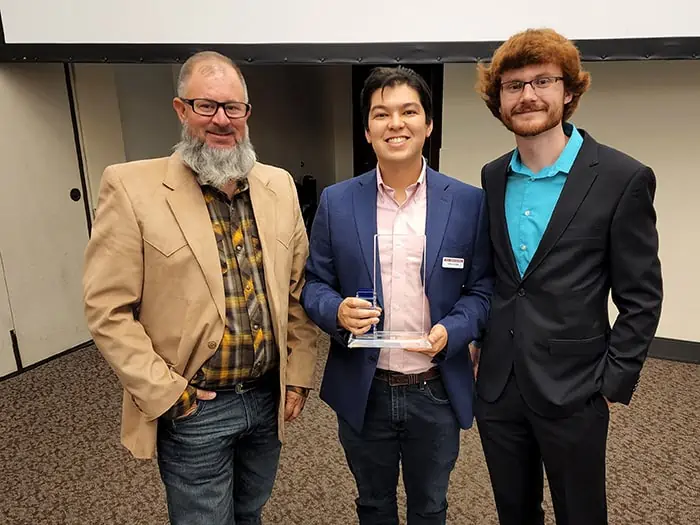

 A Bird’s-Eye View: Using Satellites and Drones to Detect and Monitor Emissions, Bob Dick, Sr. VP (Moderator) and Chris Carver, GIS Developer and FAA licensed drone pilot.
 Why is Multifamily Recycling So Hard? with Michelle Leonard, Sr. VP and National Expert on SMM
 PFAS: Price to Fix Adulterants will Soar with Nathan Hamm, VP and National Expert on Liquids Management
 Minimum Recycled Content: Challenges and Opportunities with Vita Quinn, National Expert on Solid Waste Finance and Rate Studies
 There’s an App for That! with Chris Carver, GIS Developer and FAA licensed drone pilot.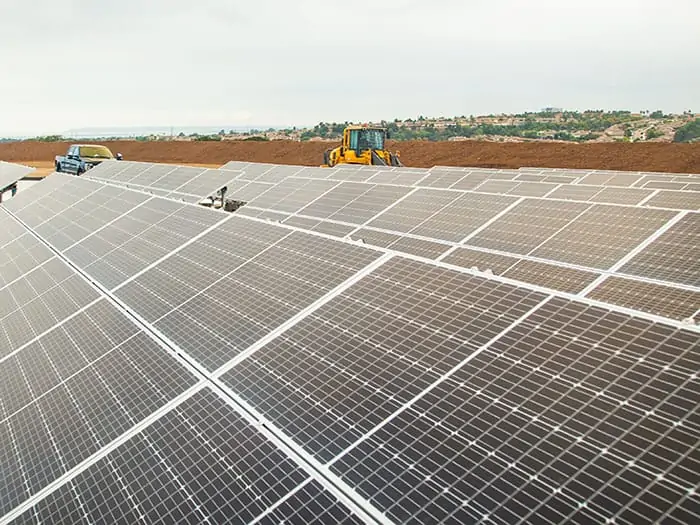

 Suzanne Sturgeon