The Fabricated Geomembrane Institute – FGI, discusses allowable leakage rates for industry. We strive for zero leakage and it is possible – this mix of regulators and practitioners including Neil Nowak of SCS Engineers discuss how to achieve it.
Click here to start the video.
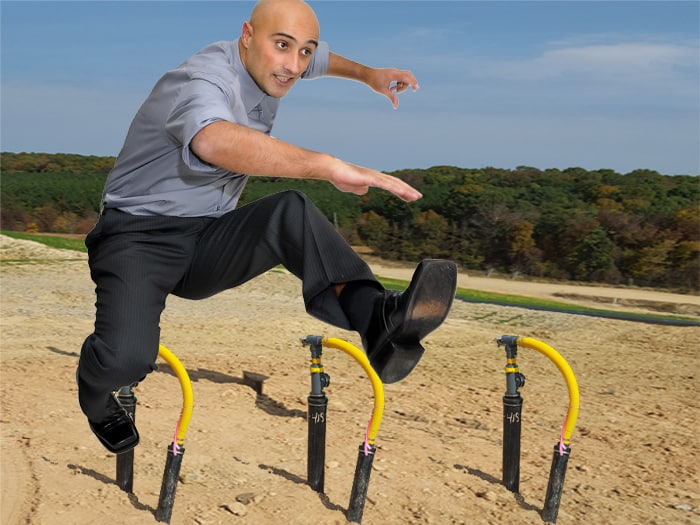
The promulgation of 40 CFR 62 Subpart OOO (EG plan), effective since June 21, 2021, impacted all MSW landfills operated under NSPS subpart WWW. One of the major changes of this rule is the requirement to monitor all cover penetrations during quarterly methane surface emission monitoring (SEM). All components that are part of the landfill gas collection system and any other object that completely passes through the landfill cover are considered cover penetrations.
As landfill and landfill gas practitioners, we suggest that advanced planning can save you time and effort. As landfills face short 10-day correction periods, coupled with supply chain and labor shortages, planning can make operations and compliance more efficient. We present a few scenarios and suggestions here.
You’ll need to record any reading greater than 500 ppm above background as an exceedance location during monitoring. These require taking corrective actions such as cover maintenance or landfill gas wellfield adjustments, along with monitoring the exceedant locations again within 10-days of your initial monitoring. If 10-day monitoring still shows methane concentrations greater than 500 ppm, you’ll need additional corrective actions and to monitor the location once more within 10-days of the second exceedance.
Once the location(s) shows methane concentrations less than 500 ppm, it is mandatory to monitor these locations again one month from the very first reading showing the exceedance. If a location shows methane concentration greater than 500 ppm for three occasions in one quarter, the addition of a collection device, other improvements to the collection system, or a request for an alternative remedy and timeline is required. Therefore, implementing appropriate corrective action within the specified timeframe is critical to avoid expensive GCCS expansions or NOVs.
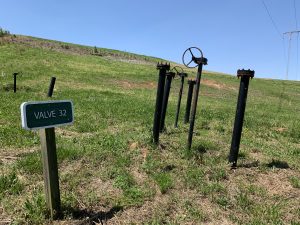
Gas well, well boots, leachate risers, below and above-grade pipe transition, condensate sumps, and valve vaults are some of the common exceedant penetration locations. Implementing corrective action at these penetrations within the given timeframe is a challenging ordeal for landfill operators. Corrective action can vary depending upon several factors: the methane concentration observed during initial monitoring, the location of the penetration, cover type (geomembrane capped vs. soil capped), material availability, and resources available to perform the work.
Corrective actions have varying material and effort requirements; one solution cannot fit all challenges. The most common corrective actions include applying expanding foam, soil mounding, excavation, clean dirt fill or bentonite fill, well boot repairs, installing a prefabricated well boot seal, and installing a vacuum line for emission control. We recommend before starting your monitoring operators consider the following factors:
Develop an educated estimate for the number of expected exceedant penetrations from the landfill sections that historically show cover exceedances or are in areas with problematic operating conditions. Using the readings and data collected over time makes identifying these areas much easier.
Decide the type of corrective action to implement based on your cover type in those expected exceedance locations.
Procure corrective action materials such as bentonite, geomembrane for boot fabrication matching permitted cap material, or prefabricated seals before you need them.
Check the availability of contractors for liner or well boot repairs, and their response time, before you need them.
Surface emissions vary based on the operating conditions; therefore, it is common to see a variable number of exceedances from one quarterly monitoring event to the next. At one of our sites that had no surface exceedances observed during the previous quarterly SEM event, multiple penetrations observed methane concentration greater than 500 ppm during the following quarterly event. One section of the landfill with a soil cap observed methane concentrations up to 16,000 ppm. The geomembrane capped section observed penetration concentrations of up to 8,000 ppm methane. We implemented various corrective actions to bring these exceedant locations to compliance.
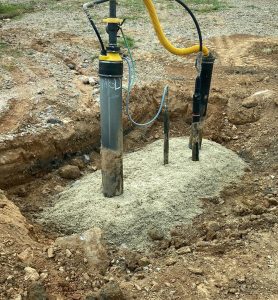
In the soil-capped section, we implemented bentonite plugs, prefabricated seals, and site fabricated geomembrane seals depending upon the observed methane concentration, exceedant location, and material availability. Pre-planning and procuring material ahead of time proved to be very helpful.
For each of these corrective actions, we opened an area about 2-ft deep and 10-ft x 10-ft. For bentonite corrective action, about a 9-inch thick bentonite slurry was filled, extending about 5-ft on each side of penetration and then filled with clean dirt.
Prefabricated seals that come in standard sizes as a slip-on for penetrations and site-fabricated geomembrane seals also covered at least a 5-ft x 5-ft area around each penetration. The sleeves at each penetration were left at least 6-inch over the ground surface after filling the excavated section with clean dirt.
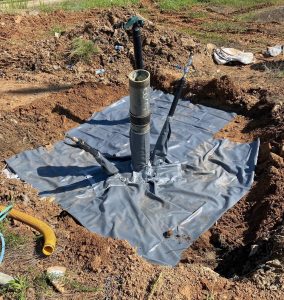
In the geomembrane-capped section, we choose to use well boot repairs using geomembrane. Our task was to identify the type of geomembrane used in the cap, procure the geomembrane, identify and schedule the contractor, and install well boots in each exceeding penetration location within the 10-day timeframe. After the well boot fabrication and installation, we needed to carefully reconnect the existing drainage layer.
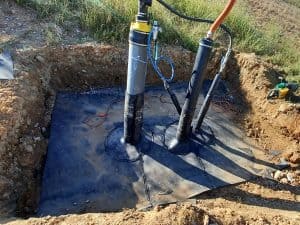
Implementing these corrective actions can get expensive; prefabricated seals can cost up to $300 per penetration, excluding installation. Material and contractor’s availabilities are also a significant challenge. While implementing these corrective actions, additional unforeseen challenges can arise as well. Planning ahead and having the material on site is very important for landfill operators to keep the landfill under compliance.
About the Authors:
Shrawan Singh, Ph.D., PE, is a Senior Project Professional. Stephen Descher is a Senior Project Professional. You can reach both at SCS Engineers.

If you thrive in a friendly, collaborative, and client-focused company, SCS Engineers is the place for you. We’re looking for field technicians to work collaboratively on our Field Services teams nationwide. Use our job search to find your desired location. Specific information is posted for each open position.
Under general supervision, our technicians operate, monitor, and maintain gas migration control and recovery systems, including gas well monitoring and adjustment, troubleshooting, and system repairs. Be part of a team working for the good of our clients, communities, and the environment.
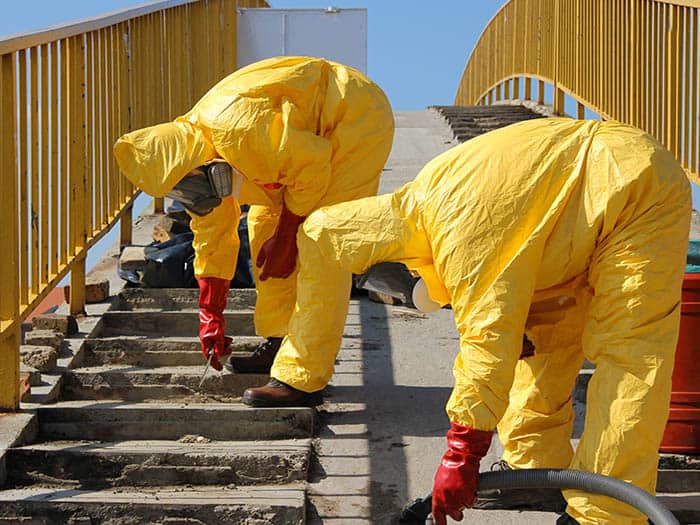
Commercial, industrial, and multi-family buildings about to undergo major renovations commonly contain hazardous materials, whether asbestos, lead, mercury-containing devices, Freon, PCBs, or others. They’re present in various building materials, painted surface coatings, mechanical equipment, or other items utilized for property operation.
Examples include, but are not limited to, old dial thermostats, fireproofing, floor coverings, adhesives, paints/varnishes, smoke detectors, and fluorescent lights. If left intact during renovations, they can create inhalation, ingestion, and dermal hazards that pose a significant risk to human health and the environment. These materials must be identified and managed properly to mitigate accidental human exposure and environmental risk; stay in good graces with regulators, and prevent project delays.
The safest and most effective approach is designing and executing a good abatement plan where highly skilled, licensed workers come in and properly remove potential offenders before the renovation begins.
Abatement is an involved process commanding adherence to tightly regulated protocol around securing materials, ensuring contaminants do not become airborne, properly containerizing and disposing of them in landfills permitted to accept these regulated wastes. It takes orchestration, with multiple trade contractors working in tandem, and ideally a third-party professional to oversee and streamline the entire process.
Full abatement is practical.
SCS Engineers’ project managers who oversee environmental remediation jobs, recommends that property owners survey their buildings for the presence of hazardous materials before renovation begins and remove them, rather than remove some materials and entomb others—particularly for major overhauls.
“While a full, thorough abatement costs more upfront, it saves over the project span in both money and headaches. You will pay more to monitor and provide upkeep if you leave live building systems like plumbing and electricity entombed with asbestos or other hazardous materials. Leaving them in place can delay or complicate the renovation, or even impede ordinarily quick maintenance projects in the future,” one manager says.
He illustrates using a scenario where asbestos-containing fireproofing left in exterior soffits holding the building’s roof drains caused expensive repairs later. A full asbestos containment must be set up when the drains leak to make a relatively simple plumbing repair. “To avoid situations like this, property owners should plan and budget to abate and remove all hazardous materials from their buildings fully.”
Suppose you have limited cleanup dollars, your resources for renovation shrink when involving abatement. Property owners without the upfront capital might limit the scope of their renovation at first. An initial survey helps determine where conducting abatement projects is necessary and where it is practical to leave materials in place while raising money to plan for a full abatement later.
Assessment and cleanup grant dollars may be available through U.S. Environmental Protection Agency (EPA) grants issued to local municipalities through Brownfield programs.
Planning for the future is key.
Prepare abatement design with thought to existing structural, mechanical, electrical, and plumbing designs that will either be retrofitted or use new building systems.
The design considers where those new systems will run, removing hazardous materials before installing new systems, preventing potential worker exposure and project delays. Contractors can safely and quickly access structural members, run new plumbing lines, or update interior finishes.
It’s on the property owner to identify potential hazardous building materials and equipment and inform renovation contractors of the presence and location of these materials preceding a renovation.
“The way we ensure and prove proper identification is by collecting bulk samples of suspect building materials and submitting them for lab analysis as part of the pre-renovation survey. The survey typically includes sampling building materials for asbestos, testing surface coatings for lead, and inventorying universal/hazardous waste items.
If the analysis does not detect the presence of harmful contaminants, you can safely proceed with your renovation project. However, if the survey identifies such contaminants, an abatement plan is necessary,” continues the project manager.
A coordinated effort.
The first step is figuring out the abatement goal and the general contractor’s plans. And you must ask, what is the redesign of the building, its purpose, and the underlying material hazards?
Understanding the goals, what hazardous materials exist, and which materials will be impacted by a renovation allows for better awareness by all parties. It lowers the risk of accidental disturbance before and during removal, and it helps workers avoid disturbing hazardous materials until properly remediated.
The consultant that prepares the abatement design, the architect, engineers, and every party involved in the remodeling or renovation must be on the same page around such details as the scope of work, budget, and schedule. Transparency gives the abatement contractor and design consultant an understanding of what to clean before other trade contractors begin their work.
Preventing accidental exposure while work is in progress and upon project completion.
Worker safety is a common thread from start to finish. SCS performs daily air sampling throughout the removal process as third-party consultants to ensure the engineering controls are functioning as designed.
Enclosures are monitored during the renovation to confirm and document that no exposure is occurring outside of regulated work areas.
Once completing an area, SCS’s team goes back in and visually inspects the work area, searching for remaining dust or debris. If the work area passes the visual inspection, they perform more air sampling to ensure safe reoccupation without respiratory protection.
In the case of a lead abatement project, the team conducts both air sampling and dust wipe clearance sampling. Dust wipe sampling is necessary since lead is a heavy elemental metal and quickly settles out of the ambient air and onto horizontal surfaces.
Once completing abatement, a close-out report confirms hazardous waste disposal to the appropriate regulatory enforcement agency. The report contains all air sampling and clearance data, with findings and conclusions supporting the data. “This report shows that you have executed and completed an effective abatement plan in compliance with federal, state, and local requirements.”
What if the building wasn’t, or couldn’t be, fully abated?
If hazardous materials remain, develop an operation and maintenance plan. It entails monitoring for future deterioration and meticulous recordkeeping documenting details such as type, location, and condition of remaining materials and removing or adding any materials. It’s a living document that is continually updated to determine when abatement is necessary and ensure that all details are readily available to move forward promptly.
“Identifying, removing, and properly disposing of hazardous materials found in your buildings before the renovation is an involved process with many steps. But every step counts to avoid occupant and worker exposures, accidental material disturbances, and to help complete your project on time.”
Additional Resources
Brownfields and Voluntary Remediation

Charles Hostetler, Ph.D., and Kacey Garber join the award-winning SCS Engineers practice serving the region.
As more businesses and municipalities move toward sustainable practices to help protect natural resources, the environmental consulting and contracting firm SCS Engineers is experiencing exponential growth. Most recently, SCS welcomes two professional staff in Peoria, Illinois, with impressive groundwater and wetlands protection backgrounds.
Landfills are required to monitor the underlying groundwater for contamination during their active life and post-closure care period. They operate using modern engineering methods, liquids management systems, and technologies that meet or exceed state and federal compliance. Landfill development may impact existing wetlands or navigable waters of the United States; developing new water resources mitigates or offsets those impacts.
Dr. Charles Hostetler has over two decades of experience as a hydrogeologist planning and overseeing groundwater and wetlands protection programs. His field experience helps solid waste facilities site and run operations safely while proactively monitoring and protecting groundwater and wetland resources. His diverse experience includes developing conceptual designs for the treatment of PFAS in liquid waste streams and sequestration in landfills.
Ms. Kacey Garber comes to SCS as an experienced hydrogeologist specializing in solid waste management permitting and groundwater monitoring well design and construction projects. Her areas of expertise include groundwater and wetlands monitoring, environmental sampling, hydrogeological site characterizations, groundwater monitoring well design, monitoring well installation oversight, and designing special groundwater studies.
SCS Engineers Business Unit Director Eric Nelson says,
Charles Hostetler, Ph.D., and Kacey Garber bring their landfill permitting and groundwater management expertise to our environmental practice in Illinois. Charles and Kacey share their expertise on the emerging PFAS regulations applied to landfills with our industry at SWANA and NWRA conferences. Garber brings hard-rock geology and groundwater expertise. Her project leadership has been instrumental in removing a Part 807 facility from Post-Closure Care requirements. Hostetler has the distinction of having removed the only Part 811 facility from a Post-Closure Case.
…and your new colleagues say WELCOME TO SCS!

“The Infrastructure Investment and Jobs Act, signed into law last month, will dedicate more than $1.5 billion to the U.S. EPA Brownfields program. The Act includes hundreds of millions of dollars allocated to Multipurpose Grants, Assessment Grants, Cleanup Grants, Revolving Loan Fund Grants, and technical assistance intended to improve equity, create jobs, and mitigate environmental degradation.”
CCLR has provided the expected breakdown and timelines from EPA. The EPA has hundreds of millions of dollars allocated for FY22 that will be applied for in July and awarded in November 2022. This timeline is different and with much larger individual grants possible, up to $10mil per grant.
SCS Engineers has a stellar win rate for brownfields grant writing and implementing brownfields programs. Please let our brownfields and remediation experts know if you have any questions or if we can provide assistance in grant support.
Click here to learn more and obtain support and funding for your community’s brownfields project.

These days you see companies bending over backward to attract new hires. Puffy job descriptions, promises of success, big salaries, and benefits are everywhere. My advice is to learn about a company’s leaders — not yet retiring and not a young professional. What they talk about during interviews is often a good indication of what they are like and what they value. It has always helped guide me to work somewhere rewarding under the tutelage of remarkable people.
Mike McLaughlin is the Senior Vice President of Environmental Services for SCS Engineers and was once an SCS young professional. He graduated from law school in 1979 and continues to influence people and businesses every day, including many at SCS Engineers.
He is an environmental engineer with a law degree, and you’d be hard-pressed to find a more knowledgeable person in the field. You’d also be lucky to know him. He is as entertaining as thoughtful about finding practical solutions to environmental challenges and the things that matter.
Just reading the article A Special Place to Study Law makes me happy knowing I get to work with people like Mike, and you could too.
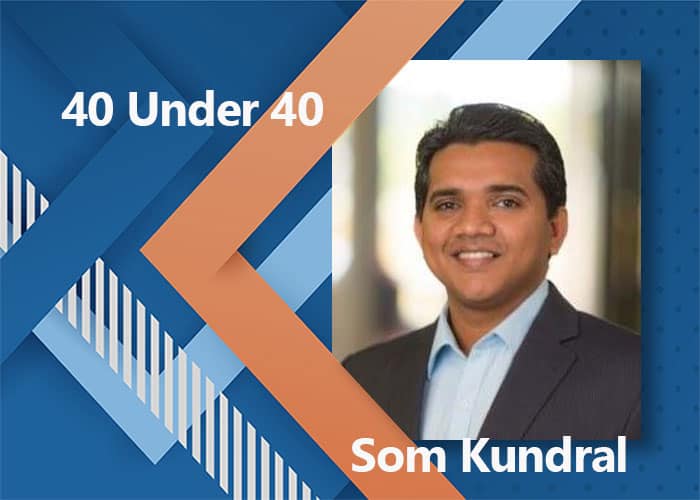
With great pleasure, we announce the American Academy of Environmental Engineers Certification Board granted Som Kundral certification in the specialty of Hazardous Waste Management and Site Remediation this month. Board Certified Environmental Engineers (BCEE) such as Kundral make up the top four percent of environmental engineering experts.
Kundral and his work are well established and recognized across the nation. As a rising star and SCS Engineers’ Young Professional, Kundral’s teamwork is not only recognized by his clients but by the American Council of Engineering Companies and the Environmental Business Journal with a Business Achievement Award for Groundwater and Stormwater Remediation Solution. Kundral is also a Waste360 40 Under 40 award recipient.
Well done, Som! We’re so proud of you and all of our SCS Young Professionals helping our clients build a better world.
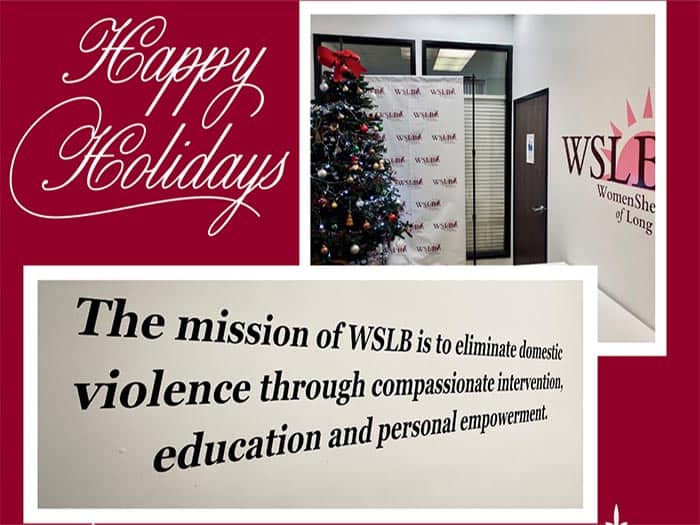
Since 1977, WomenShelter of Long Beach has helped thousands of families overcome the trauma caused by domestic abuse. WSLB assists victims and their children by providing safe housing and supportive services, including an emergency shelter, 24-hour crisis hotline, counseling, social services support, legal and health advocacy, and much more.
SCS Engineers adopted four families in our 5th year of sponsorship. We provide gift cards for each family and hope we can go back to shopping and wrapping gifts for them next year. We wish our families and all a happy holiday season!
More community support in 2021 here.
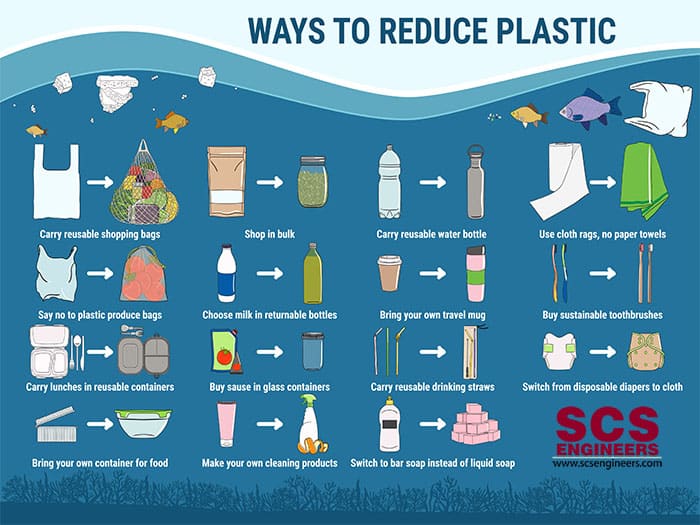
As noted in Waste360, SWANA’s recent report, “Reducing Contamination in Curbside Recycling Programs,” shows stubborn resistance to recycling even after an intense education and enforcement campaign in two towns. A bit more than one-quarter of the households simply didn’t seem to care. While the solid waste industry finds that hard to comprehend, we’re always looking for solutions, and we don’t give up.
Here’s a simple set of recommendations from Consumer Reports published in September for using less plastic. After all, if you don’t recycle, at least try to use less plastic! Most of the recommendations will save you a lot of money and are easy to do, some of which you’re probably already doing.
Thanks to Consumer Reports for its outstanding article that we share with you here.
Corporate Headquarters