Landfills are complex systems with many pipes for liquids and landfill gas running in many different directions. Some of these pipes are at the bottom of the landfill, such as leachate collections pipes, leachate toe drain pipes, pressure release pipes, etc. Other pipes are near the final cover system, either below or above, and closely interact with the final cover geosynthetics. Many of these are for control of landfill gas or leachate seeps at the landfill surface. Pipes may include vertical gas wells, horizontal gas wells, condensate sumps, condensate force main, compressed air lines to gas well pumps and condensate sumps, seep control sumps, electric conduits to condensate sumps and seep control sumps, leachate recirculation force main, stormwater downchutes, etc.
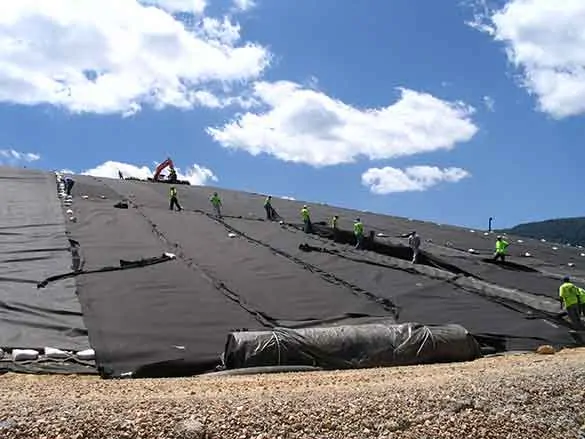
When pipe locations are near the final cover geosynthetics, below or above, or penetrating the final cover, design plans should show details of how the pipes or associated components interact with the final cover components. Lack of sufficient information may cause difficulties years later when scheduling the construction of the final cover. Most often, it becomes evident that many of the pipes constructed years earlier are too short for extending through the final cover.
Another aspect of piping and their interaction with the final cover is conflicts among different pipes, more specifically conflicts among gas pipes and liquid carrying pipes, in and near the final cover system. Liquid carrying pipes may include stormwater downchutes, rainwater toe drain pipes, and leachate toe drain pipes. Stormwater downchutes are usually large diameter pipes extending from the top of the landfill to the perimeter stormwater system. Rainwater toe drain pipes – pipes that receive water from the final cover geocomposite drainage layer, and leachate toe drain pipes – to collect leachate seeps below the final cover geomembrane, are co-located at terraces on slopes and the toe of the slope near the perimeter berm.
A few design considerations can be useful as guidelines during the preparation of design sets to address the relative position of these pipes and the final cover geosynthetics or to avoid conflict among pipes.
Include the final cover layers in the gas design details where gas wells installations exist near the landfill’s final surface.
If flow control valves locations are below the final cover near the perimeter of the landfill, design a vertical casing around the valve tall enough that booting the future final cover to the vertical casing is possible.
Condensate sumps and associated stub outs (such as condensate force main, compressed air lines, or electric conduits) installations should be tall enough to accommodate construction of the final cover system around the condensate sump with sufficient space to boot the final cover geomembrane to the exterior walls of the condensate sump.
Leave pipes exiting the liner boundary at the perimeter of the landfill at least 1 foot above the anchor trench shoulder. This allows the installation of a geomembrane boot on the pipe at the point of penetration through the final cover geomembrane.
Flow control valves located near the landfill perimeter and within the lined area should be in consideration with the future location of a rainwater toe drain system at the toe of the slope.
Gas pipes located above the final cover geomembrane and crossing terraces or access roads may create conflict with the rainwater toe drain at the terrace or adjacent to the road.
Large gas headers located across the slope above the final cover geomembrane may cause conflict with stormwater downchutes.
Large gas pipes on top of the final cover geomembrane crossing a tack-on swale may cause conflict with the flow line of the tack-on swale.
The complexity of landfills varies from site to site, and issues related to conflicts among gas and liquids pipes, and pipes and final cover geosynthetics vary depending on the geometry and other landfill features involved at each location. The best way to resolve conflicts before construction is to have a coordinated effort among parties involved in the design to discuss and find solutions to every conflict at the design stage.
About the Author: Ali Khatami, Ph.D., PE, LEP, CGC, is a Project Director and a Vice President of SCS Engineers. He is also our National Expert for Landfill Design and Construction Quality Assurance. He has nearly 40 years of research and professional experience in mechanical, structural, and civil engineering.
Leachate seeps from relatively wet landfills are a fact of life for some operators. Leachate seeps increase in intensity and frequency after a storm, and you’re wondering, how many seeps today; are they reaching the stormwater ditches, detention ponds, or wetlands?
We all deal with daily job challenges, but why not prepare better for this particular problem, given the consequences? Sitting back and waiting for a seep to appear and then scrambling to come up with a solution is obsolete and can be costly.
The timing of handling leachate seeps is as vital as submitting compliance data to regulatory agencies on time. Rapid mitigation of leachate seeps is essential before it turns into a compliance issue and exposing yourself to scrutiny by regulators. We all know that no compliance officer at the corporate office wants to hear from a facility the news of another compliance issue. To get a handle on managing leachate seeps, today’s operator has an arsenal of controls suited for different stages of a landfill’s operation. These controls may vary from the dry season to the wet season, as well.
As the landfill operator, you review the facility operation plan prepared by your engineer from the back to the front to make sure the document addresses all operations. The same document can also include descriptions of seep management controls. You simply request written solutions from your engineer, incorporating controls and guidelines into your operations plan. Your staff now has immediate means to combat the problem following the site operator’s direction using these pre-established guidelines.
With the controls in your facility operations plan, regulatory agencies won’t need to ask for the information. The operations plan has put forward a set of guidelines for the management of leachate seeps in your operations plan, and they became aware of these guidelines during the review of your document submitted to their office as part of intermittent or a renewal submittal. Inspectors are aware that your staff follows the guidelines when necessary; otherwise, non-compliance issues arise. Having an inspector observe a seep closing in on a stormwater ditch isn’t going to do much for your landfill’s standing. The regulators are well-informed and understand leachate seep prevention. They will work with you during the implementation of remediation measures based on the guidelines in the facility operations plan.
A reliable engineer will suggest, even emphasize, these measures to clients. You, as the operator, are not only prepared, but your site engineer and staff are too. Significant unexpected expenses associated with managing leachate seeps are a thing of the past, and inspectors can be confident that your management of leachate control is appropriate.
About the Author: Ali Khatami, Ph.D., PE, LEP, CGC, is a Project Director and a Vice President of SCS Engineers. He is also our National Expert for Landfill Design and Construction Quality Assurance. He has nearly 40 years of research and professional experience in mechanical, structural, and civil engineering.
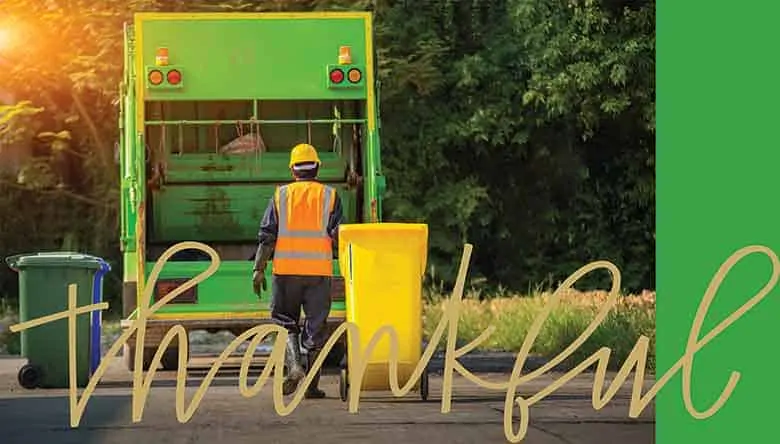
The men and women of the solid waste industry have been continuing their jobs throughout the COVID-19 pandemic. In recognition of their hard work and sacrifice, SWANA is collaborating with Glad to support sanitation workers across the United States and Canada personally affected by COVID-19 through the Sanitation Workers Support Fund (Fund). The Fund is providing financial assistance to eligible front-line solid waste and recycling collection workers in the United States and Canada adversely impacted by COVID-19.
Thank you!
“The solid waste industry is considered essential, and its workers have been on the front line, without failure, making sure waste is collected and disposed of since the onset of COVID-19. This fund is an important recognition of their contribution to our communities, and is a way of providing support when they are personally impacted by the pandemic,” stated Suzanne Sturgeon, Health & Safety Program Manager for SCS Field Services and SWANA Safety Committee Chair.
It’s important to make sure we recycle right, not just recycle often! It’s exciting to see all the new products made from the bags and the technology used to sort them – but how individuals’ recycle does matter.
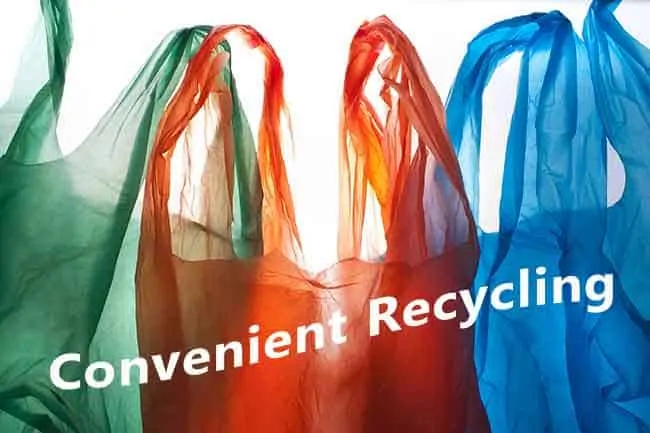
It doesn’t take many plastic bags to get wrapped up in the recycling equipment, causing the equipment to work inefficiently and forcing it to shut down multiple times every day. The facility staff must enter or climb on the screening equipment to cut away bags as in this video.
If you use a plastic bag to collect your recyclables, empty the recyclables into your recycle bin and reuse the bag or recycle it at your grocery or retail store. Don’t mix plastic bottles with plastic bags – that’s what causes safety and efficiency problems in the first place.
Most grocery stores and retail stores such as Walmart, Target, and Lowes have recycling bins for this type of plastic. If you are not reusing the bags, take them to a drop off location, which is probably the same store where you got them.
Find the stores nearest you by visiting this site – a list of all the store drop-off locations in your zip code.
More than just your plastic retail bags can often be recycled, but it’s good to check with your drop-off to see what’s accepted. Examples of what often can be recycled include:
Produce, newspaper sleeves, bread, and dry cleaning bags (free of receipts and clothes hangers)
Zip-top food storage bags (clean and dry)
Plastic shipping envelopes (remove labels), bubble wrap and air pillows (deflate)
Product wrap on cases of water/soda bottles, paper towels, napkins, disposable cups, bathroom tissue, diapers
Furniture and electronic wrap
Plastic cereal box liners (but if it tears like paper, do not include)
Now, if you are on the other end of the consumer chain and looking to provide a program for your school, community, or solid waste planning area, there is no need to start from scratch! Many other such entities have already developed successful recycling programs and are more than happy to share what they have done. Additionally, end-users in need of this material are also ready and willing to assist with setting up programs, such as the one found here. Plastics wraps, bags, and film may not be going away any time soon, but as long as they are here, there is great reuse for them!
About the Author: Christine Collier is an SCS Senior Project Professional in Des Moines, Iowa. She has over 18 years of experience in the Iowa solid waste industry. She has spent most of her career as both a client and project manager working directly with clients to ensure their projects were being completed on schedule and within budget. Her focus has been on working as a member of the client’s team as an advocate for their best interest. Through her career, she has become an expert in Iowa’s solid waste regulations and compliance requirements. She has BS and MS degrees from Iowa State University in Civil Engineering with an environmental emphasis and is a licensed Iowa Professional Engineer.
There are many methods and actions businesses, industries, and consumers are taking to mitigate the generation of carbon emissions, such as recycling, composting, and moving to hydrogen-power vehicles, to name a few. There is no one-size-fits-all solution, the answer to cleaner air, water, and soil vary widely and work differently, but all aim to achieve the same goal. We, as environmental engineers, have the benefit of helping our communities and industries move forward using a variety of new technologies that support the lowering of carbon emissions and are sustainable.
SCS Engineers works behind the scene with many clients and thought we’d share some of their new technologies and processes that are expected to help lower greenhouse gases in the future. We kick off this series with Charm Industrial’s new method that captures atmospheric CO₂ in biomass, then converts it to a liquid and injects it into rock formations that have stored crude oil for hundreds of millions of years. While recycling and low emission vehicles lower the generation of CO₂, this one is engineered to extract existing gases and remove them.
You can learn more on the Charm Industrial website or visit SCS’s Liquids Management page for more environmental solutions.
Matt Brokaw, P.E. joins the SCS Engineers new office at 3801 Lake Boone Trail, Suite 430, Raleigh, NC 27607, Tel: +1-919-662-3015
Senior Project Professional, Matt Brokaw
SCS Engineers, a top-tier ENR environmental consulting and construction firm, opened a larger office in Raleigh, North Carolina, in late May. The move centralizes the team closer to their clients’ sites to provide full-services. The new office accommodates new team members, including Matt Brokaw. Matt joins the SCS professionals who provide environmental services for solid waste management for the benefit of municipal and private landfills, public works, and recycling.
As a Senior Project Professional, Matt is responsible for the engineering and design of environmental solutions, with a primary focus in solid waste, stormwater management and planning, and erosion and sediment control critical to permitting compliant facilities and ultimately protecting natural resources. Extending the life of a landfill and adding airspace is often critical for the communities SCS clients serve.
The new SCS Raleigh location supports the growing demand for full-service environmental solutions supported by a mix of professionals. As specialized teams, they can help reduce greenhouse gas emissions, capture landfill gases, create renewable energy from by-products, and optimize utilities and businesses using environmental practices that are economically feasible. The firm specializes in permitting for and meeting comprehensive clean air, water, and soil goals. It provides a range of services such as PFAS treatment, solid waste master planning, landfill technology, risk management, groundwater monitoring, pre-closure and landfill closures, and Brownfields remediation.
About SCS Engineers
SCS Engineers’ environmental solutions and technology are a direct result of our experience and dedication to solid waste management and other industries responsible for safeguarding the environment. For more information about SCS, please visit our website at www.scsengineers.com/, contact , follow us on your preferred social media, or watch our 50th Anniversary video.
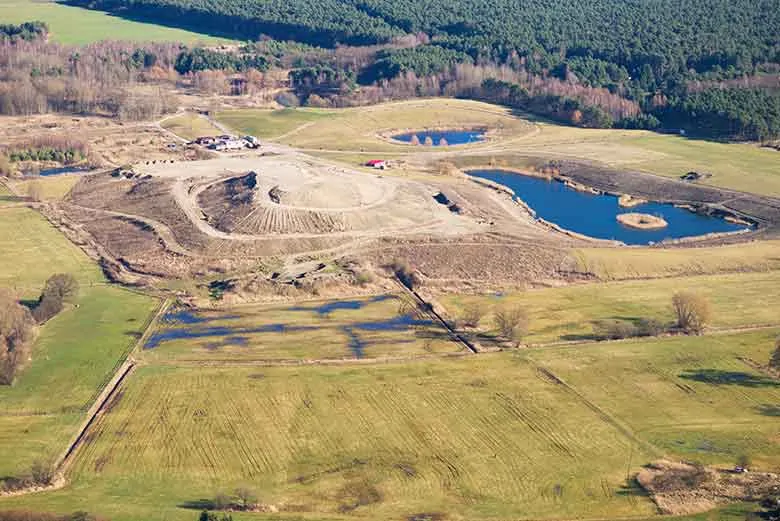
Landfills, especially large regional landfills, are huge enterprises with many different operations ongoing daily. A landfill’s tangible assets are equipment, buildings, machinery, construction materials in the ground, or stockpiled to support various operations. Of all these, the most significant asset is the permitted airspace. It’s undoubtedly a non-tangible asset when permitted, but gradually this asset gets consumed as it turns into revenue.
Creating landfill airspace during a design/permitting process involves the operator hiring a landfill engineer to develop the concept of the airspace, prepare an appropriate design with engineering methods, and obtain a permit for it through regulatory agencies. In a sense, a portion of your future revenue is in the hands of your landfill engineer. You depend on this engineer to create the maximum amount of airspace, generating the maximum amount of revenue for your operation over time. Your engineer is supposed to be your trusted partner, and you are investing an enormous amount of capital for the design, permit, and construction based on the work performed by the engineer.
In some instances, the operator leaves most of the technical decision making to the engineer. On other occasions, the operator is in the loop during the engineer’s design, but the operator is not heavily involved in the nuances of the disposal cell’s layout in consideration of the existing terrain. In either case, the engineer is significantly responsible for achieving the maximum amount of airspace. The multi-million dollar question is whether you could have had another 3 million or 5 million cubic yards of additional airspace in your permit. How do you check if your landfill engineer maximized airspace in the design?
Assuming proper training, most landfill engineers can design adequate landfills. Still, very few landfill engineers have the unique talent and experience that can maximize airspace within specific design parameters. You, as the operator want engineers with a proven track record of maximizing airspace in their landfill designs, and do not let relationships or political nuances affect your judgment during selection because tens of millions of dollars of additional revenue are at stake.
A trained landfill engineer may miss details that a highly qualified engineer would not. Incidentals here and there, if recognized and accounted for, can add significant airspace to the design. These details vary from site to site, and it’s up to the engineer to recognize the benefits of geometric and regulatory opportunities to add to the covered airspace. These details could be in the form of:
Special geometries for the landfill slopes,
The lateral extent of waste limits,
The landfill footprint placement within the terrain,
The extent of excavation for establishing bottom grades for disposal cells,
The relative position of base grades with respect to the groundwater elevations,
Combining leachate collection sumps among two or more disposal cells,
Steeper slopes to increase airspace while staying within the bounds of regulatory requirements,
Positioning peripheral systems in a different way to benefit from additional land to add to the landfill footprint,
Considering future expansion down the road and planning appropriately, and
Other nuances that an expert considers.
The operator chooses the project manager or the primary engineer for the design of a greenfield landfill or an expansion to an existing landfill, knowing that the work performed by the selected engineer could potentially add to or take away hundreds of millions of dollars from the bottom line of your enterprise. So, pick your engineer based on the engineer’s prior design track record and make sure the engineer is an expert in maximizing landfill airspace.
SCS is an expert, highly experienced landfill designer – relied on by many landfill operators as a trusted partner. Our culture is to serve our clients as if their project is our own, and we do not consider ourselves successful unless our clients are satisfied. These close relationships help us serve the majority of our clients on a long-term basis, with decades of continuous service and value.
SCS will gladly evaluate scenarios for your landfill expansions that you are planning to design and permit, and provide you with a preliminary estimate of airspace gain and revenue that an SCS design could bring, potentially increasing your primary asset by another tens of millions of dollars. Now that’s a value statement!
About the Author: Ali Khatami, Ph.D., PE, LEP, CGC, is a Project Director and a Vice President of SCS Engineers. He is also our National Expert for Landfill Design and Construction Quality Assurance. He has nearly 40 years of research and professional experience in mechanical, structural, and civil engineering.
The industry is designing and building more substantive drainage features and larger collection systems from the bottom up, that maintain their integrity and increase performance over time, thus avoiding more costly problems in the future.
Waste360 spoke with three environmental engineers about what landfill operators should know about liquids’ behavior and what emerging design concepts help facilitate flow and circumvent problems such as elevated temperature landfills, seeps, and keep gas flowing.
The engineers cover adopting best practices and emerging design concepts to facilitate flow. They cover topics such as directing flow vertically to facilitate movement to the bottom of the landfill, drainage material, slope to the sump percentages, vertical stone columns, installing these systems at the bottom before cells are constructed, and increasing cell height to prevent the formation of perched zones.
Ali Khatami, one of the engineers interviewed, has developed standards for building tiered vertical gas wells that extend from the bottom all the way up. He frequently blogs about landfill design strategies that his clients are using with success. His blog is called SCS Advice from the Field. Dr. Khatami developed the concept of leachate toe drain systems to address problems tied to seeps below the final cover geomembrane. These seeps ultimately occur in one of two scenarios, each depending on how the cover is secured.
Landfill Gas Header: Location and BenefitsBy continuing to design gas header construction on landfill slopes, all of the components end up on the landfill slope as well. You can imagine what type of complications the landfill operator will face since all of these components are in areas vulnerable to erosion, settlement, future filling, or future construction. Additionally, any maintenance requiring digging and re-piping necessitates placing equipment on the landfill slope and disturbing the landfill slope surface for an extended period.
AIRSPACE, the Landfill Operators’ Golden EggAirspace is a golden egg, the equivalent to cash that a waste operating company will have overtime in its account. With each ton or cubic yard of waste received at the landfill, the non-monetary asset of airspace converts positively to the bottom line of the …
Gas Removal from Leachate Collection Pipe and Leachate SumpKeeping gas pressure low in and around the leachate collection pipe promotes the free flow of leachate through the geocomposite or granular medium drainage layer to the leachate collection pipe and improves leachate removal from the disposal cell. Using gas removal piping at leachate sumps is highly recommended for warm or elevated temperature landfills where efficient leachate removal from the leachate collection system is another means for controlling landfill temperatures.
Leachate Force Main Casing Pipe and Monitoring for LeaksLandfill operators may add a casing pipe to their leachate force main for additional environmental protection. Consequently, the leachate force main is entirely located inside a casing pipe where the leachate force main is below ground. In the event of a leak from the leachate force main, liquids stay inside the casing pipe preventing leakage …
Pressure Release System Near Bottom of LandfillsPressure Release System Near Bottom of Landfills – Essential Component for Proper Functioning of the Landfill Drainage Layer. Landfill designers are generally diligent in performing extensive leachate head analysis for the design of the geocomposite drainage layer above the bottom geomembrane barrier layer. They perform HELP model analyses considering numerous scenarios to satisfy all requirements …
Landfill Leachate Removal Pumps – Submersible vs. Self-Priming PumpsSelf-priming pumps can provide excellent performance in the design of a landfill leachate removal system. Landfill owners and operators prefer them to help control construction and maintenance costs too. A typical system for removing leachate from landfill disposal cells is to have a collection point (sump) inside …
In this Waste Today article, Sam Cooke discusses the factors, treatment options, analytical methods, and identifying PFAS sources to most effectively reduce the concentrations of ammonia and PFAS in landfill leachate.
Reducing these concentrations help meet discharge permit requirements for direct discharge of treated leachate to surface waters and to meet publicly owned treatment works (POTW) discharge permit standards.
Sam points out that accomplishing ammonia and PFAS reduction with established wastewater treatment technologies works, but the right treatment depends on each site’s specific parameters. He suggests conducting bench-scale and pilot-scale testing for any feasible nitrogen removal or treatment system. Testing the wastewater helps to identify any changes in the concentration of nitrogen compounds. Thus, necessary changes to the treatment processes, such as additional aeration or chemical additions are easier to identify and less costly to implement.
About the Author: Mr. Cooke, PE, CEM, MBA, is a Vice President and our expert on Industrial Waste Pretreatment. He has nearly three decades of professional and project management experience in engineering with a concentration in environmental and energy engineering. Mr. Cooke works within SCS’s Liquids Management initiative to provide services to our clients nationwide.
Scientists and experts agree that climate change is a present-day threat to communities across the U.S., manifesting in both predictable and unpredictable ways. As detailed in the National Climate Assessment Vol. 4 (NCA4), coastal storms are increasing in strength and frequency, forest fires are becoming much larger and more destructive, annual precipitation is changing and increasing in variability, and widespread flooding is becoming more common both in the interior of the nation and along the coasts.
These changes present complex challenges to the waste management industry that must be addressed and planned for. For example, one challenge is an increasing frequency of large-scale weather events and natural disasters, which are creating more debris that must be managed and which affects the characteristics of landfilled waste. Landfill design needs to incorporate precipitation changes and increased threats due to weather variability, flooding, and sea-level rise. Precipitation changes affect gas generation rates and require a diligent reaction to maintain effective gas collection. Because of weather pattern changes, risks of cover material erosion and swales have increased for landfills in both wet and dry climates, which may require stronger natural caps or the use of emerging technologies for alternate cover. Additionally, landfills are affected by an increase in the variability of precipitation and rapid changes between weather extremes.
It is clear that waste management facilities must adapt to these changes in addition to scenario building for pandemics to maintain effective operations. Adaptations available include making changes to landfill design and planning, such as incorporating precipitation changes into the modeling of leachate and gas generation or increasing the distance between the bottom liner and groundwater.
Systems should be regularly evaluated and areas needing repairs should be corrected quickly and diligently. Gas generation models should be updated regularly and collection systems need to be expanded or adjusted to account for precipitation increases or decreases.
More frequent and intense storms are creating challenges for cover material management, liquids management, and maintaining slope stability. Facilities should implement innovative uses of both existing technology and new or emerging technologies.
Communities with waste management facilities should include waste management infrastructure in emergency management plans, including maintaining landfills and collections operations and using landfills as both temporary debris storage and as an option for final disposal.
Since climate change effects vary by region and locale, many facilities are developing a specific plan for adaptation and management. To reduce the inevitable costs of adaptation and maintain responsiveness to weather changes, a reactive approach is being abandoned in favor of a proactive approach.
About the Author: Jacob Shepherd is a Senior Project Professional specializing in air compliance and reporting within EPA Region III. He is experienced in environmental engineering, air compliance, renewable energy, landfill and landfill gas engineering, and environmental services throughout the mid-Atlantic region, and is a licensed P.E. in Virginia.
Resources and Recovery
Get started with these resources and recovery success studies; click to read, download, or share each:
Expansion of An Active Landfill – Vertical expansion increases the landfill volume within the existing footprint of the permitted Landfill. A landfill can run out of its storage capacity prematurely for many reasons including a response to a huge amount of debris waste from a natural disaster like a tropical storm or hurricane. Covered by ISWA.
Contact for assistance starting or refining your plan ahead of natural disasters and pandemics. We offer these services:
Planning for Natural Disaster Debris – help for communities to develop or revise a disaster debris management plan. Many aspects of disaster debris planning can be relevant to communities demolishing abandoned residential buildings and remediating properties.
Guidance about Planning for Natural Disaster Debris – much of the construction or demolition waste can be recovered and recycled. SCS Engineers designs and builds these facilities so we can help locate the nearest C&D debris recyclers as part of your plan.
Planning Financial Response and Recovery – the SCS Management Services™ team offers services to support financial planning and to quickly access budget and operational financial impacts. Eliminate concerns about the upcoming fiscal year expectations and anticipated medium-term impacts of pandemics and natural hazards on local government operations and revenue streams. Address issues such as:
Micro-analysis – For near-term (1-2 year) budget/operational impacts. Results produced in one day.
Avoiding municipal or utility service interruptions
Continuing to provide services to customers who can’t afford to pay
Predicting impact on property, earnings or sales tax revenues
Estimating change in water usage or waste generation
Longer-term financial impacts of staffing changes, prolonged vehicle/equipment replacements, and postponing or increased borrowing for capital projects.
You are about to leave the SCS Engineers’ website and be directed to an external third-party site, ICIMS. SCS is not responsible for the collection and use of information on the ICIMS site, which is governed by its own privacy practices, not this Notice. We encourage you to review their privacy notices for additional information. Do you want to continue?
To provide the best experiences, we use technologies like cookies to store and/or access device information. Consenting to these technologies will allow us to process data such as browsing behavior or unique IDs on this site. Not consenting or withdrawing consent, may adversely affect certain features and functions.
✕
We use cookies and similar technologies for the following purposes:
Cookie usage
We use cookies to ensure the basic functionalities of the website and to enhance your online experience.
You can choose for each category to opt-in/out whenever you want.
Functional
Always active
The technical storage or access is strictly necessary for the legitimate purpose of enabling the use of a specific service explicitly requested by the subscriber or user, or for the sole purpose of carrying out the transmission of a communication over an electronic communications network.
Statistics
The technical storage or access that is used for statistical and/or tracking purposes.The technical storage or access that is used exclusively for anonymous statistical purposes. Without a subpoena, voluntary compliance on the part of your Internet Service Provider, or additional records from a third party, information stored or retrieved for this purpose alone cannot usually be used to identify you.
Marketing
The technical storage or access is required to create user profiles to send advertising, or to track the user on a website or across several websites for similar marketing purposes.



 About the Author: Ali Khatami, Ph.D., PE, LEP, CGC, is a Project Director and a Vice President of SCS Engineers. He is also our National Expert for Landfill Design and Construction Quality Assurance. He has nearly 40 years of research and professional experience in mechanical, structural, and civil engineering.
 About the Author: Jacob Shepherd is a Senior Project Professional specializing in air compliance and reporting within EPA Region III. He is experienced in environmental engineering, air compliance, renewable energy, landfill and landfill gas engineering, and environmental services throughout the mid-Atlantic region, and is a licensed P.E. in Virginia.