Join SCS Engineers at the University of Wisconsin-Platteville 2025 Fall Career & Internship/Co-op Fair September 24, 2025. Session 1: 9 a.m.–noon | Session 2: 3–6 p.m. Register now!
The Clean Water Act (CWA) specifies various technology-based Effluent Limitations Guidelines (ELGs) for direct and indirect dischargers. These ELGs include:
EPA evaluated available technologies to treat or remove meat and poultry (MPP) pollutants individually and in treatment trains, as shown below in subsections, based on the type of pollutant removal, including conventional pollutants, phosphorus, nitrogen, pathogens, and chlorides.
Conventional Pollutant Removal
MPP process wastewater contains oil & grease, TSS, and BOD, all conventional pollutants removed with primary treatment, which removes floating and settle-able solids. Typical treatment technologies include screening and DAF.
Facilities may add polymers, flocculants, and phosphorus-precipitating chemicals to or before the DAF. The chemical addition increases the removal of pollutants from the wastewater. Adding chemicals to remove phosphorus can help facilities meet phosphorus effluent limits. Chemical addition may not be possible for facilities that recycle materials from the DAF to the facility, as this would contaminate the raw material.
Biological/Organic Pollutant Removal an Attractive Option
Biological, physical, and chemical processes remove BOD, nitrogen, and phosphorus. Biological processes are useful to achieve low levels of BOD and nitrogen and are common at MPP facilities. Microorganisms in biological wastewater treatment require phosphorus for cell synthesis and energy transport, typically removing 10 to 30 percent of influent phosphorus. Through biological treatment, organic compounds break down with bacteria into water, CO2, N2, and CH4 products.
Biological treatment systems are often used in series to achieve high nitrogen removal rates. Wastewater flows from one system to the next, with recycle streams and returned activated sludge returning to various system locations. Some examples include:
iii. Modified Bardenpho: This is a five-stage process: anaerobic, anoxic, aerobic, anoxic, aerobic, followed by a secondary clarifier. As in the Bardenpho process, mixed liquor with high nitrate levels is recycled from the first aerobic stage to the first anoxic stage, and activated sludge from the clarifier is recycled back to the influent. The anaerobic stage at the beginning of the system results in biological phosphorus removal. Phosphate-accumulating organisms (PAOs) are recycled from the aerobic stage in the mixed liquor to the anaerobic stage. In the following aerobic stages, PAOs uptake large amounts of phosphorus.
Phosphorus Removal
As mentioned in the biological/organic pollutant removal section, some phosphorus is removed in biological treatment processes. Chemical addition and/or tertiary filters achieve low phosphorus levels.
Pathogen Removal
Disinfection destroys remaining pathogenic microorganisms and is generally required for all MPP wastewater discharged to surface waters. Chlorination/dechlorination, Ultra-Violet (UV), and some filters can meet effluent limits for pathogens and inactivate pathogenic microorganisms before discharge to surface waters.
Chloride Removal
Some MPP processes, including hides processing, meat and poultry koshering, and further processing techniques, such as curing, brining, and pickling, commonly produce wastewater streams with high levels of chlorides. Some facilities use water softening, which can also produce high chloride wastestreams. Wastewater treatment technologies commonly found at POTWs and many MPP facilities do not remove chlorides. The optimal chloride treatment technologies for a facility depend on wastewater strength, climate, land availability, and cost. High chloride wastestreams may be able to be separated from other wastestreams, which can reduce costs and energy required for treatment.
Solids Handling
Some wastewater treatment technologies produce industrial sludge. In the MPP industry, DAF and clarifiers primarily generate sludge. The sludge contains oil & grease, organic materials, nitrogen, phosphorus, and chemicals/polymers added in the treatment system. The sludge may have a high water content, which can be reduced to reduce volume and save on hauling and landfilling costs. Common dewatering technologies include gravity thickening units and the belt filter press. The sludge may be incinerated, land applied, or landfilled, depending on state, local, and federal regulations and disposal method availability.
Additional Information About PFAS Removal – Foam fractionation is a separation process that leverages the affinity of certain molecules for the air-liquid interface to isolate and concentrate them. It works by bubbling gas through a liquid, causing the target molecules to adsorb onto the surface of the bubbles and rise to the top, forming a foam that is removed. This process is useful for removing and concentrating per- and polyfluoroalkyl substances (PFAS) from water and wastewater.
An energy company using coal (many still do as they transition to renewable energy sources) uses desulfurization for its flue gas, preventing air pollution and creating gypsum as a by-product. Fly ash, another by-product of creating energy, is sold to concrete companies for a profit. The wastewater used in these green processes has high chloride. It is pretreated to ensure the chemistry of the wastewater is safe before injecting it into an EPA and state regulatory agencies-approved Class I well below drinking water aquifers.
Pretreatment helps to ensure the energy company does not decrease the capacity of the well to accept wastewater. Chemical characterization of the wastewater in the permitting process and regular sampling during operations helps ensure the fluid is non-hazardous and unchanged.
Using green practices, this energy company prevents air and water pollution, protects drinking water resources, and qualifies as a zero-discharge facility. The bottom line is that they provide energy at a reasonable cost; the company is profitable from its green practices and protects health and human life.
That’s sustainability that empowers the safety of electric utilities as they provide for our energy needs.
You are welcome to make use of SCS Engineers’ extensive library of papers, blogs, and videos for the power sector. Here are a few suggestions:
 Professional Geologist Jake Dyson is responsible for permitting, drilling, regulatory compliance, and operating Class I, II, V, and VI UIC wells. Dyson manages permitting, testing, and workovers of UIC wells and serves his clients as a technical advisor on developing and executing well construction material, formation fluid, and well testing programs, including managing drilling and construction costs, interpreting geologic data for model inputs, and developing static geologic models. You can reach Jake at SCS Engineers or on LinkedIn.
The EPA proposes updated effluent limitation guidelines (ELGs) for meat and poultry product facilities, aiming to reduce wastewater pollution, particularly nitrogen and phosphorus discharged from meat and poultry processing facilities. These changes affect meat and poultry industry facilities, including those that would apply to additional direct and indirect dischargers.
There is growing concern as local and state ELGs are also beginning to appear. These new guidelines can impact the meat and poultry industry and the food and beverage industry. In summary, the federal guidelines are influencing state and local plans.
Meat:
Poultry Processing:
Overall, the proposed changes in effluent limitation guidelines by the EPA represent a significant shift in regulatory expectations for the meat and poultry industry. SCS Engineers provides webinars and resources that provide crucial insights and guidance for industry stakeholders to navigate these changes effectively.
SCS Engineers provides these free resources:
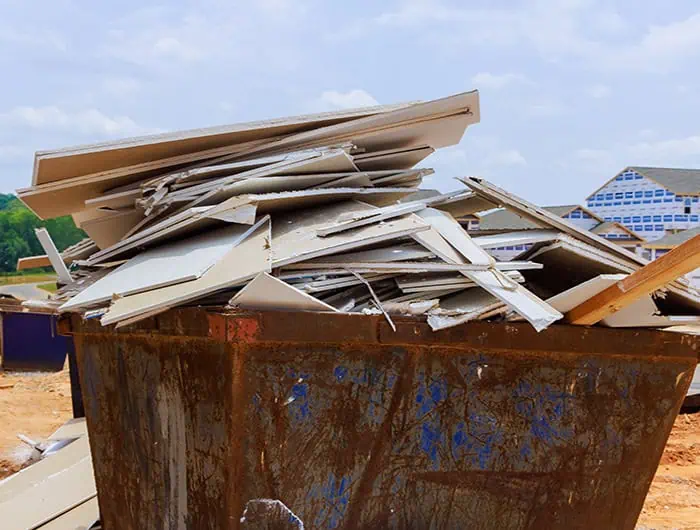
Hydrogen sulfide (H2S) is often identified as a potential culprit of odors and nuisance complaints near municipal solid waste (MSW) landfills. Some base their complaints on information found on the Internet as fact. As experts, let’s start by saying data from other landfills or pulled from an AI browser summary online will not provide accurate answers. H2S concentrations vary widely and are unique to individual landfills.
How is H2S generated in an MSW landfill, and why do concentrations vary?
Calcium sulfate (CaSO4•2H2O, aka gypsum), the primary ingredient in wallboard (aka drywall), can be biologically converted to H2S under select and somewhat rare conditions. Specifically, seven conditions are required for the biodegradation of gypsum to H2S. See (Gypsum Association, Industry Technical Paper: Treatment and Disposal of Gypsum Board Waste (Jan. 1991); Gypsum Association, Treatment and Disposal of Gypsum Board Waste, Part II, Technical Paper (Mar. 1992).
Condition 1 – Liquid Water. The biological conversion of sulfate to H2S occurs in the aqueous phase—i.e., sufficient free liquids must be present, and sulfates must dissolve into the free liquids. Modern landfills with leachate collection systems may experience intermittent perched and discrete zones of saturation within the waste mass, particularly following periods of extended precipitation. Low-permeability confining layers (e.g., clay or clay-like soil used for intermediate cover) may temporarily trap water/leachate in discrete pockets within the landfill.
Condition 2 – Source of Soluble Sulfate. Gypsum, having the chemical formula CaSO4•2H2O, is a source of soluble sulfate. Gypsum sources include wallboard (aka drywall), flue gas desulfurization (FGD) material from coal-fired power plants, and some industrial wastes. Sulfates and sulfur compounds can also be present in lower concentrations in other waste streams, depending on what the MSW landfill accepts.
Condition 3 – Sulfate-reducing Bacteria. Sulfate-Reducing Bacteria (“SRB”) use dissolved sulfate as an electron acceptor in the oxidation of carbon. Primary SRB include Desulfovibrio and Desulfotomaculum. These SRBs, as well as many other bacteria, are commonly present in MSW landfills. However, the presence of SRB within a landfill may not be ubiquitous, and may be limited to regions where the other required conditions favor their existence and survival.
Condition 4 – Organic Material. SRBs use organic material as a food source to multiply and degrade sulfate to H2S. Carbon serves as a source of energy for the bacteria. Typical MSW has a high organic content due to a wide variety of organic materials such as wood, paper, cardboard, food, vegetative waste, and fabrics. Many communities with recycling programs help divert these waste materials for reuse and recycling.
Condition 5 – Anoxic Environment. SRBs thrive under anoxic (without oxygen) conditions. The presence of oxygen can kill SRBs. While anoxic conditions are typically not present in areas where MSW was recently disposed, they are typical in portions of MSW landfills where organic wastes have been present for at least a few months and decompose to produce methane and carbon dioxide.
Condition 6 – Appropriate pH Range. SRB reduction of sulfate to H2S is reportedly optimum within a pH range of about 7 to 8, and does not occur outside a pH range of about 4 to 9. The pH range within a typical MSW landfill falls within this activity range.
Condition 7 – Appropriate Temperature Range. SRB reproduction and H2S generation are reportedly optimum within a range of about 30 °C to 38 °C (86 °F to 100 °F). Many MSW landfills are within or a little above this optimum range. Studies of SRB in geologic environmental settings found reduced activity above about 60 °C (140 °F), and no activity above about 80 °C (176 °F). Similarly, SRB activity ceases in freezing conditions.
In summary, although the necessary conditions for H2S generation are likely intermittently present within some discrete pockets within many MSW landfills, the conditions are not likely ubiquitous throughout the waste. MSW landfill conditions and waste composition are typically highly heterogeneous with respect to both location within the landfill and time. Thus, there are zones within landfills where many, but not all of the seven required conditions are present, and H2S generation does not occur. For example, there are undoubtedly many regions within landfills where free liquids (i.e., saturated conditions) are not present and, therefore, SRB conversion of sulfates to H2S does not occur, despite the presence of the other six conditions.
Similarly, a landfill may have pockets where bulk sulfate-containing waste has been disposed of but where the internal portion of the pocket is not exposed to moisture, organics, or SRB—each a necessary condition for converting sulfate to H2S.
Considering these seven conditions and heterogeneous landfill conditions, there are too many variables to provide a reliable and defendable quantitative model for H2S generation at all MSW landfills.
Monitoring and Treating Landfill H2S Conditions
We invite you to use our free resource library to learn more about how monitoring and data collection can protect your workers and the surrounding environment.
 About the Author: Jeff Marshall, PE, is a Vice President of SCS Engineers and our National Expert on Emerging Contaminants (e.g., PFAS) and Innovative Technologies. He has over four decades of experience emphasizing environmental chemistry (e.g., hydrogen sulfide generation at MSW landfills), environmental permitting and compliance (e.g., fumigation facilities), hazardous materials/waste management, site assessment/remediation, treatment technologies, and human health risk issues. Hydrogen sulfide experience includes dozens of facilities, including landfills, coal-fired power plants, and paper mills.
In 2024, the EPA published a proposed regulation to revise existing Effluent Limitation Guidelines (ELGs) and pretreatment standards for the meat and poultry products (MPP) industry. The MPP industry includes meat and/or poultry slaughter facilities, further processing, or rendering. The industry also produces pet food and animal feed. In August 2025, the EPA decided not to move forward with additional ELGs or pretreatment standards for this industry. Published before this decision, you may find value in managing local or state regulations during this educational video.
Localities and states are also looking at the proposed federal guidelines to determine effluent limitations. Even though the federal proposed guidelines are aimed at the meat and poultry industry, some of the categorical waste streams could impact the food and beverage industry at the local or state levels. If meat or poultry is an ingredient, you’ll want to ensure your operation’s waste stream is correctly categorized.
Webinar Focus
SCS Engineers provided a webinar to help the industry understand the implications of ELG guidelines and its impact on local regulations. Dr. Todd DeJournett covers new regulations and stricter limits on nitrogen and the proposed phosphorus limits, pretreatment for oil and grease, total suspended solids, and biochemical oxygen demand. He also covers how your category can impact operations in the meat and poultry industry and the food and beverage industry.
Webinar Benefits
Attendees will better understand the compliance requirements, which will help determine your next steps to determine potential technical solutions, capital requirements (new equipment, & training), and the impact on operational costs from new waste streams. Early strategies are a significant asset, as states and localities are also beginning to impose stricter wastewater limitations, which could slow down the permitting process for your operation.
Who Should View and Your Privacy
The SCS webinars allow facility management, environmental, and sustainability staff to prepare for stricter guidelines.
This educational, non-commercial webinar with Q&A is free and open to all who want to learn more about EPA’s proposed effluent limitation guidelines.
Dr. Todd DeJournett is a Professional Engineer specializing in industrial water and wastewater treatment process design and effluent guideline regulatory policy. He has over 20 years of experience helping clients in the manufacturing industry make sound water and wastewater treatment and reuse plans and decisions. Dr. DeJournett developed new chemical modeling approaches and tools for adsorption, precipitation, pH adjustment, and other processes to assist with treatment process design, optimization, and troubleshooting of existing systems. He also adapted exploratory statistics/data mining methods using process and instrumentation data to aid in wastewater treatment process optimization/ troubleshooting.
Additional ELG Resources:

Navigating Industrial Waste and Wastewater Permitting
Industrial waste and wastewater permitting involve obtaining necessary authorizations from federal, state, and local regulatory agencies before handling, treating, storing, or disposing of industrial waste. We all know that permitting ensures compliance with environmental regulations, protects public health, and minimizes potential harm from industrial activities. Nevertheless, federal mandates can change with new administrations, complicating the process and timing.
The timing for industrial waste and wastewater permitting can vary significantly depending on the specific type of permit and the regulatory authorities involved, and it is a significant cost factor. New permits may have a long approval cycle, so we provide advice to help expedite the permitting process in this article.
Stakeholder Involvement Early in the Permitting Process
Communicating the stakeholder goals upfront helps identify and address potential challenges before permitting submissions. Stakeholders include any agency involved in the permitting process, such as federal, state, and local agencies. Even the finest environmental consultant does not try to anticipate every potential issue – we work with facts.
Early communication and coordination prevent delays and provide valuable insights, perspectives, and, in our experience, innovation specific to an industry, facility, process, and locality. Aligning your permitting cycle with the needs and expectations of agency stakeholders builds trust and goodwill, smoothing the process and preventing unnecessary slowdowns to address questions.
Example: Working in Partnership with Miami-Dade County
For example, industrial facilities in Miami-Dade County must navigate a comprehensive permitting process to protect public health and the environment. For this article, we base our advice on permitting for a pet food manufacturer, an aircraft maintenance facility, and a water bottling facility – all very different but following a similar strategy. The Industrial Wastewater Facility (IW5) and the Industrial Waste Pretreatment (IW-P) Permits are among the most common and critical permits. While each serves a distinct regulatory purpose, both are essential for facilities that generate or manage industrial waste.
Facilities impacted include dry cleaners, automotive service providers, manufacturers, printers, and film processors. Understanding which permit applies and how to comply can significantly reduce project delays and keep operations on schedule.
Understanding the IW5 and IWP Permits
The IWP Permit regulates facilities that discharge significant volumes of industrial wastewater to the public sanitary sewer system. These discharges are subject to local and federal pretreatment regulations.
The IW5 Permit, the focus of this article, applies to facilities that store or use hazardous materials in smaller quantities and discharge relatively low volumes of wastewater. The permit outlines conditions that facilities must meet to minimize the volume and impact of their discharges on the County’s Publicly Owned Treatment Works (POTW).
Steps in the IW5 Permitting Process
The Miami-Dade Department of Regulatory and Economic Resources (RER), Division of Environmental Resources Management (DERM) administers the permitting process. Facilities submit required documentation through the County’s Electronic Permitting System (EPS). The process typically involves the following phases:
Before submitting an IW5 permit application, facilities must prepare and upload the following documents:
Once the CU and Occupational License are secured:
Finding the Right Environmental Consultant
The IW5 and IW-P permitting process can be complex, but partnering with an experienced environmental consultant can streamline your path to compliance. Look for a partner who supports industrial clients —from aircraft maintenance and cleanrooms to chemical R&D and clinical pharmacology—through every stage of the permitting process.
Seek a partner who will assist you with early documentation, regulatory coordination, and ongoing compliance to help ensure timely approvals and avoid costly delays. An environmental consultant with in-house experts, including legal and construction, will bring more value to your permitting project.
 About the Author: Kokil Bansal is a Professional Engineer and SCS Project Manager responsible for providing environmental services, site redevelopment, and sustainability planning for public and private clients. She is particularly adept at coordinating and managing new facilities and the redevelopment of contaminated sites. Contact her at SCS Engineers or on LinkedIn.

The Role of Environmental Engineering
As we celebrate Earth Day and honor the natural systems that sustain life—our forests, oceans, and atmosphere—it’s also an opportunity to reflect on how professionals across the environmental sector contribute to protecting our planet. Some efforts are highly visible, such as preserving endangered habitats or advancing renewable energy. Others, however, operate quietly in the background, confronting the more complex legacy of industrial development, which provides the products and services we use.
At SCS Engineers, some of our work resides in this less visible space. This work includes landfill engineering, site remediation, infrastructure development, and regulatory compliance. These aren’t the areas typically highlighted on Earth Day, but they are vital in maintaining environmental and public health—and in many ways, they represent a different kind of stewardship.
The Invisible Side of Environmental Work
To some, environmental engineering tied to waste management or development may seem counterintuitive to environmental protection. Some view landfills, brownfields, and infrastructure projects as necessary evils—problems to be managed rather than contributions to sustainability.
But that perspective overlooks our work’s critical role in restoring damaged environments, protecting communities from exposure, and shaping how to implement future development responsibly.
Our work doesn’t always look like conservation—but it is. It’s conservation through control, balance, and careful planning – sustainability.
Redemption Through Engineering
Earth Day is a time to recognize that not all environmental progress begins in pristine ecosystems. Much of it starts in places where damage has already been done—on contaminated sites, aging landfills, or underserved communities with high environmental risk.
At SCS Engineers, we work with public and private sector clients to:
It isn’t just reactive work—it’s strategic, science-driven, and essential to reducing long-term environmental risk.
A Balanced Approach to Environmental Protection
We recognize that those professionals working in the environmental sector may not always get the spotlight. It’s easy to look at a landfill and see only the waste—or at development and see only the disruption. But behind the scenes are engineers, scientists, and planners working to harmoniously ensure that our built environment coexists with our natural one.
The challenges we face today—climate change, pollution, population growth—require a wide range of solutions; some focus on protection, others on prevention, and many, like ours, on restoration and resilience.
Celebrating All Contributions the Week of Earth Day
Environmental progress is not linear. It often involves confronting the consequences of past decisions and building a path forward that prioritizes sustainability at every stage. Our work may be less visible, but it is no less critical. We are proud to be part of the team, ensuring that human advancement doesn’t come at the cost of our shared environment.
We invite you to recognize the full spectrum of environmental work this week of Earth Day. From protecting endangered species to restoring contaminated land, every contribution matters. And for those working to manage what others might overlook—we see this as our responsibility and our opportunity for impact.
If your organization is navigating complex environmental challenges or seeking ways to manage growth, waste, or remediation responsibly, we’re here to help. If you want a satisfying career where your work matters, join us!
 About the Author: Rafael Aberle is an environmental professional responsible for coordinating and performing site assessment activities including soil and groundwater sampling. Rafael works closely with SCS’s clients across the Southeastern U.S. Rafael has extensive experience overseeing construction projects including methane gas management and capture systems.
Over the past 55 years, SCS Engineers has established a leadership role in comprehensive solid waste management and environmental services, which would not have been possible without the support of our municipal clients and industry. There were fewer than a handful of engineering firms specializing in environmental consulting when SCS was founded in 1970.
Today, the firm supports a wide range of environmental solutions in different industries and business sectors. Fifty-five years ago, no one could have imagined using drones and satellites to collect information for landfill operations or utilizing carbon sequestration in an environmentally safe manner. CEO Doug Doerr says:
Our greatest reward is client satisfaction. Thanks to you, our clients, SCS Engineers has received numerous awards and industry recognition for its research achievements and technological innovations, which protect human health and the environment while enhancing operational efficiency. We take pride in operating and maintaining critical environmental infrastructure that the public and businesses depend on. Our employee-owners know how to solve problems and, drawing on our deep bench of engineers, scientists, and consultants, move forward as a team.
SCS’s business model features regional and satellite offices situated near client sites, with mobile offices co-located on project sites. “The model has always worked well for us,” President Curtis Jang recently stated. “Our professionals and technicians live nearby; our distributed network means we are nearby project sites instead of flying, or working online.”
“We’re proud of the care and contributions by our colleagues over the years, and now,” states Eddy Smith, COO. “That sense of responsibility and ownership, along with SCS’s camaraderie and high-quality results, brings our clients back.”
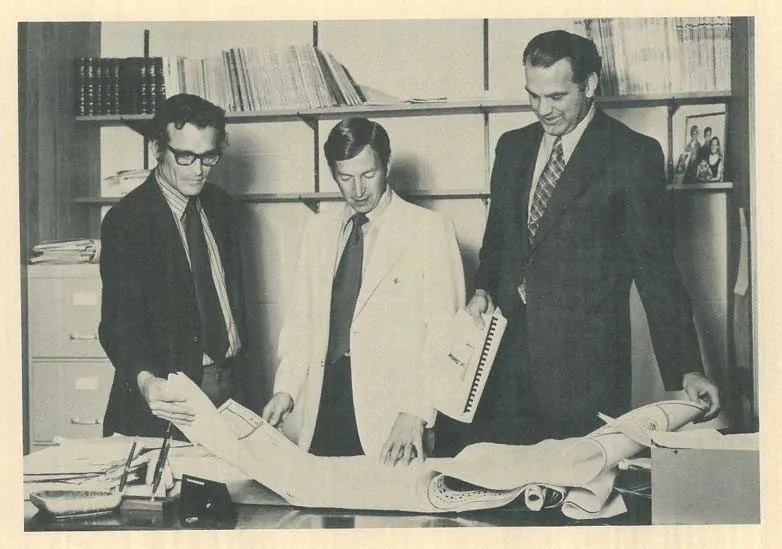
The environmental consulting firm started as a partnership between Bob Stearns, Tom Conrad, and Curt Schmidt on April 1, 1970, in Long Beach, California. The three engineers knew and respected each other’s strengths and capabilities: Stearns was an expert in solid waste, Schmidt was a water and wastewater engineer, and Conrad was a jack-of-all-trades with experience in civil engineering, solid waste, water and wastewater.
By the late 80’s, SCS Engineers had created new specialty practices, under the name SCS Field Services, to perform landfill and landfill gas system construction, operations, monitoring, and maintenance. The firm was proud to offer comprehensive services, but it knew from its experience that each landfill and solid waste operation is unique. SCS OM&M now operates 27,500 LFG extraction wells and supports over 650 landfills across the nation. SCS Field Services Construction is a Class A – General Engineering Contractor with Hazardous Materials Certification. SCS believes that by overlapping design, construction, and operational activities, it has led to the innovations listed as SCS Firsts on their website and saved their clients money.
In 1986, the firm also made a significant and strategic decision to create an employee stock ownership plan. Chairman Jim Walsh explains, “As an ESOP company, our employees own shares in SCS Engineers and all its practices. We felt that ownership inspires better performance and that our staff deserve control in the decision-making and direction of the company. It has proven to be a successful business model for the firm.”
Combining SCS’s expertise in solid waste management, landfills, and regulatory compliance, SCS Energy was created in 2001 to focus on the design and design-build of landfill gas-to-energy (LFGE) systems. SCS now has one of the longest and most successful biogas practices in the United States, primarily in Renewable Natural Gas. SCS designs, constructs, and operates more RNG, LDFE, and DGE facilities than any other environmental engineering firm in the nation.
Growing and expanding its environmental expertise to serve other industries and sectors, SCS draws on specialized practices to continue to support a growing number of public and private clients under the SCS Engineers umbrella.
SCS Field Services® Construction | SCS Field Services® OM&M
SCS Energy® | SCS Tracer Environmental® | SCS Technology Services®
SCS Management Services®
SCS continues to develop technologies and programs that help clients lower their operating costs and reduce their environmental impact. The technologies and applications used in landfills have found applications in agriculture, heavy industry, manufacturing, and municipal settings. These advances enable the development of more efficient infrastructure and processes, supporting companies in their transition to renewable energy resources while maintaining sustainable practices and minimizing additional expenses for consumers.

SCS clients entrust the firm with managing more than 40 million metric tons of anthropogenic CO2e greenhouse gases annually. The firm collects and beneficially uses or destroys enough methane to offset greenhouse gas (GHG) emissions from more than 8.7 million passenger cars annually. These figures do not include the significant emission reductions achieved through carbon sequestration, waste diversion, recycling, and repurposing waste into useful products, such as Renewable Natural Gas, compost, or supporting municipal programs that donate perfectly edible food to those in need.
“We attribute our success to our loyal clients who entrust us to address the complexities of environmental challenges,” says Nathan Hamm, CSO. “We are proud of our employee-owners who create the technologies, practices, and systems that make a sustainable, positive impact while being economically feasible.”
Over the years, SCS expanded and hired many talented people. They guide the firm, maintaining the founders’ focus on adopting their clients’ environmental challenges as their own and fostering a culture of success for employees by sharing equity ownership. The firm helps clients minimize waste and pollution while providing GHG-lowering carbon capture, monitoring, control, and accounting solutions, as well as sequestration solutions, with a proven ability to mitigate and remediate air, water, and soil pollution.
“SCS’s culture attracts professionals with diverse expertise, enabling the firm to grow organically. It is on track to reach nearly 1,400 employees this year and has achieved year-over-year record-breaking revenues,” says CPO Stacey Dolden. SCS’s core capabilities include solid and hazardous waste management, renewable energy, remediation, and environmental compliance and sustainability, aimed at reducing or preventing GHG emissions. Over the last two decades, the demand for SCS expertise has expanded into various areas, including remote monitoring and control technology, wastewater and water reuse, composting, sustainable materials management, industrial health and safety, and risk management planning. The firm maintains a deep technical bench, a wide range of industry experts, and extensive knowledge of federal, state, and local environmental regulatory systems, which enables clients to shorten project timelines, control costs, and meet evolving regulations.
Earth Day is also celebrating its 55th Anniversary this year – the first Earth Day took place just a few weeks after the start of SCS. We’ll be at Earth Day events around the country serving hundreds of communities, charities, and associations. We hope to see you there! SCS Engineers remains passionate about continuing to provide superior client service and solving the environmental challenges of the 21st Century.
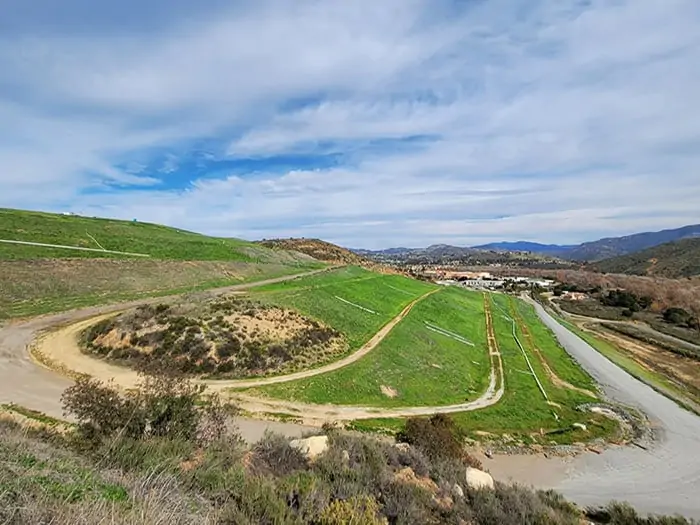
SWANA Western Regional Symposium will naturally feature SCSers talking landfills! We hope to see you at these sessions.
L’ is for Landfill Redevelopment – From Golf Courses to Graveyards, Adventures in Landfill Redevelopment with Vidhya Viswanathan and Ray Huff
Landfill redevelopment transforms sites into valuable community assets, such as parks, solar farms, or warehouses, addressing environmental concerns and supporting sustainable land use. This presentation explores the benefits of redevelopment, emphasizing environmental, community, and financial advantages. It also addresses technical, financial, and regulatory obstacles, with strategies for overcoming them through stakeholder collaboration, using case studies to highlight lessons learned.
Landfill Construction for Integrated Gas Systems with William Haley and Evan Guignon
With ever-increasing regulations pushing more and earlier methane capture, including during landfill filling, how can we design and construct our landfill cells to allow the integrated gas collection and gas collection infrastructure to be built alongside our landfill cells? This presentation will cover regulatory requirements for cell construction and gas capture and how landfills can be designed and constructed to allow the gas collection system to work in tandem with the landfill leachate collection system. We will cover several examples of integrated cell/gas collection systems and delivered performance since installation.
Explore the full list of sessions from SCSer’s at the SWANA Western Regional Symposium, we look forward to seeing you! Register today!
Corporate Headquarters