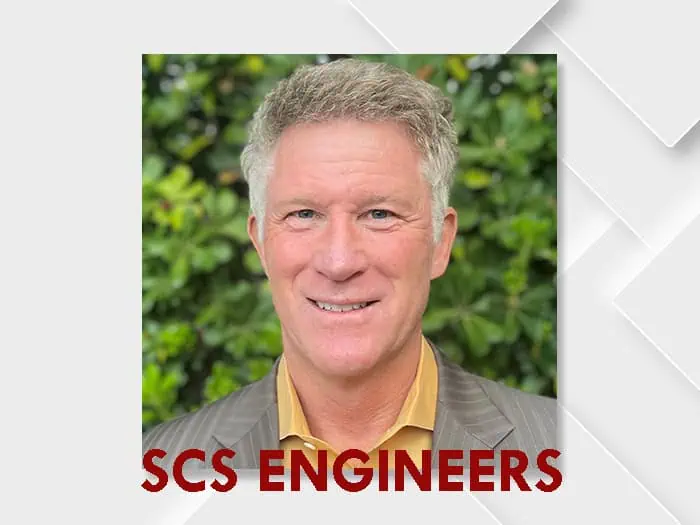
SCS Engineers is pleased to welcome Christopher (Chris) Monahan as our new Vice President and General Counsel. With a Professional Engineering background, a Juris Doctor, and an LL.M. in Business Law, Chris brings a rare combination of technical, legal, and business expertise to our leadership team. He is based at our Long Beach, CA headquarters.
“Chris Monahan’s broad and multidisciplinary legal background spans construction, engineering, claims and litigation, M&A, renewable energy, labor and employment law, environmental compliance, real estate, international law, intellectual property, and technology, making him an ideal fit with our vision to be the leading provider of environmental solutions – delivering lasting outcomes for our clients and employee-owners,” says SCS President Curtis Jang.
Chris joins SCS with deep leadership experience across the renewable energy and engineering sectors. He has led legal departments and overseen enterprise risk management, compliance, contracts, litigation, IRA tax strategy, and SEC filings for organizations involved in solar and clean‑energy development. His background also includes managing large, multi-disciplinary legal teams and supporting complex projects across multiple jurisdictions.
When asked about joining SCS Engineers, Chris says, “It’s an honor to join SCS Engineers. I’m excited to contribute to an organization that protects our planet with integrity and purpose. The company’s vision, its focus on environmental solutions, its reputation for technical excellence and innovation, and its employee-owned culture position the company to do remarkable things.”
In addition to his professional accomplishments, Chris enjoys surfing, triathlons, and spending time with his family. He shared that his family is very enthusiastic about this new chapter and looks forward to becoming part of the SCS Engineers family—both personally and professionally.
Chris holds an LL.M in Business Law from the University of Sydney, a Juris Doctor from Loyola Law School, an MS in Civil Engineering from UCLA, Bachelor’s degrees in Engineering (Cal State Long Beach) and Accounting (Pepperdine), and graduate certificates in Enterprise Risk Management and Construction Management from UCLA. He is licensed as a California attorney, a U.S. Patent Attorney, a Solicitor in Australia (inactive), and a Professional Civil Engineer in California.

EBJ launched its Business Achievement Award program in the previous century and continues the tradition in 2026 with the awards presented on the Environmental Business Journal website and live at the Environmental Industry Summit XXIV in April 2026.
SCS Engineers for Kern County Waste Diversion
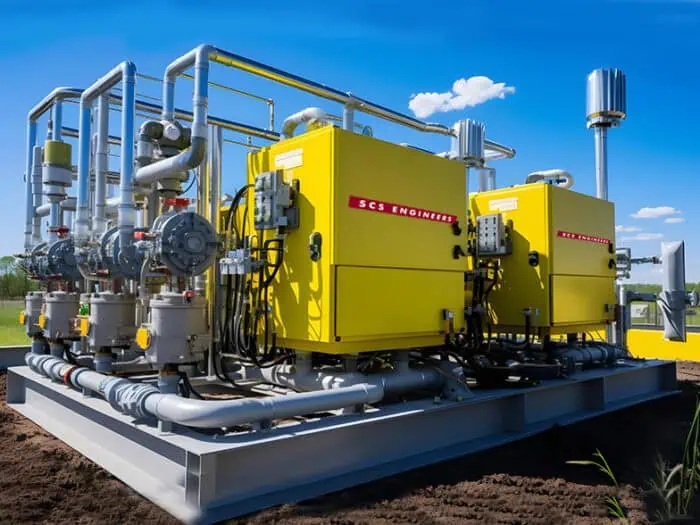
 A state-of-the-art covered aerated static pile (CASP) facility, designed by SCS Engineers and located next to Kern County’s Shafter-Wasco Landfill in California, can divert 100,000 tons of organic waste from landfills annually. The facility includes 32 CASP bunkers and can produce 40,000 tons of finished compost annually. CASP composting offers faster decomposition, better temperature and moisture control, and significantly reduced odors. The modern facility supports Kern County and its incorporated cities in meeting organic waste recovery and procurement plans, waste diversion from landfills, and greenhouse gas reduction goals. It supports California’s overarching Senate Bill 1383 mandates while strengthening Kern County’s leadership in sustainable materials management. By transforming organic materials, yard trimmings, food scraps, and other biodegradable materials into nutrient-rich compost, the end-product supports local properties and agriculture, enriches community landscapes, and reduces landfill use, improving regional air quality. This facility is far more than just another improvement to Kern County’s solid waste infrastructure—it is a cornerstone of its commitment to sustainability and response to landmark legislation driving the state’s organics diversion and zero-waste initiatives. Learn more about this project.
The Climate Change Business Journal solicits the CCBJ Achievement Awards in late 2025. A committee of CCBJ staff determines final awards, CCBJ editorial advisory board members, and regular contributors. You’ll find them on the CCBJ website.
SCS Engineers for Business Model Innovation: Computational Pressure Model for CCS Well Permitting
 SCS Engineers, in collaboration with the U.S. EPA, developed a time-based Computational Pressure (CP) Model to improve Class VI well permitting for carbon capture and sequestration (CCS). Unlike traditional methods that assume immediate hydrostatic equilibrium, this model calculates brine migration as a function of time and overpressure, providing a more realistic, site-specific approach to defining the Area of Review. The Time-Based CP Model offers these advantages:
SCS and EPA introduced a spatially distributed Endangerment Potential Map using thousands of data points to visualize migration risk across a site. The map shows that the risk from any single borehole is about one in 10 million, providing a significant margin of safety. Learn more about this innovation for Carbon Capture Sequestration.
SCS Engineers periodically prepares SCS Technical Bulletins – short, clear summaries of rules, plans, and standards. The Colorado Department of Public Health & Environment (CDPHE) Air Pollution Control Division adopted the Colorado Landfill Methane Rule – Regulation No. 31 in 2025, which sets methane emission reduction requirements for landfills in the state.
Colorado Regulation 31 requires more landfills to install gas collection systems, tighten monitoring and control requirements (such as phasing out open flares near communities), and mandates biofilters on closed sites to better align with the state’s net-zero goals.
As an environmental engineering, consulting, and contracting firm with a strong portfolio in landfill gas operations, monitoring, and collection and control systems (GCCS), SCS helps Colorado landfill owners and operators proactively budget, plan for, and implement compliance strategies for the new Colorado landfill methane rule (LMR).
The SCS Technical Bulletin for Colorado Regulation 31 addresses definitions and terminology, clarifies industry practice for the waste industry, and provides for updates and additions to thresholds, advanced monitoring, and remote monitoring for data collection, closed landfills, and flares.
SCS provides these additional resources and services for Colorado LMR compliance, as follows:
For more information, contact:
Thursday, February 12
Class VI UIC Session
8:30 AM – 10:00 AM
Injecting supercritical carbon dioxide increases pressure within the injection zone. If an improperly plugged borehole that penetrates the confining zone is near the injection site, an increase in pressure could induce formation fluid to flow upward through that borehole from the injection zone. Upward flow of fluid in the borehole could carry dissolved constituents, potentially endangering underground drinking water sources. The pressure at which this would occur is called the threshold pressure, a key factor in delineating the Area of Review for a Class VI Permit Application.
The EPA Class VI Guidance approach to calculate threshold pressure is conceptually flawed and has proven difficult to implement. The approach in the guidance does not consider typical project time scales and ignores important physical processes. EPA is currently reviewing the details of this approach and considering revisions to the guidance.
In this work, SCS can identify the geologic conditions under which the equilibrium approach grossly underestimates the critical pressure, as well as the operational details that affect pressure buildup in the injection zone over time. SCS can identify conditions under which the equilibrium approach is not appropriate for evaluating the critical pressure, and we establish a kinetic framework for its evaluation.
This kinetic approach, using time-based single-phase computational modeling, is less complicated than the multiphase flow modeling already required by the Class VI regulations and is equally capable of calibration, monitoring, testing, and reevaluation during the operational phase of a Class VI project.
Tara Gross, Project Advisor, SCS Engineers
 Ms. Gross is a Project Advisor on the Deep Well Initiative team. She is a geologist with over 20 years of experience in oil and gas (O&G), land-use permitting, subsurface mapping, and compliance. Project experience includes support developing Class I, II, and VI Underground Injection Control (UIC) applications, oil production plans, midstream O&G pipeline permitting, surface and groundwater compliance, subsidence evaluation, critical minerals, carbon capture, utilization, and storage (CCUS), produced water, seismicity, lithium extraction, environmental studies, Department of Energy grant programs such as CarbonSAFE and CarbonBASE, and CEQA analysis.
Join Tara at the Class VI UIC Session
February 12, 2026
8:30 am – 10:00 am
Tara will present Advancing Class VI Permitting: A Lessons Learned Approach to Critical Pressure Modeling and Impact Analysis at 9:30 am.
SCS Engineers is proud to participate in the 2027 National Brownfields Training Conference, taking place May 25–28, 2027, in Salt Lake City, Utah. As the nation’s largest event focused on environmental revitalization and economic redevelopment, the conference brings together leaders and practitioners dedicated to transforming contaminated sites into community assets.
With decades of experience supporting brownfields assessment, cleanup, and redevelopment projects nationwide, SCS Engineers partners with public and private stakeholders to deliver practical, sustainable solutions. Our team brings deep expertise in environmental engineering, remediation, solid waste, redevelopment planning, and regulatory compliance—helping communities move projects from vision to reality.
Join us in Salt Lake City to connect with SCS Engineers’ professionals, learn from our project experience, and explore how strategic brownfields solutions can drive economic growth, environmental stewardship, and long-term community success. More info coming soon!
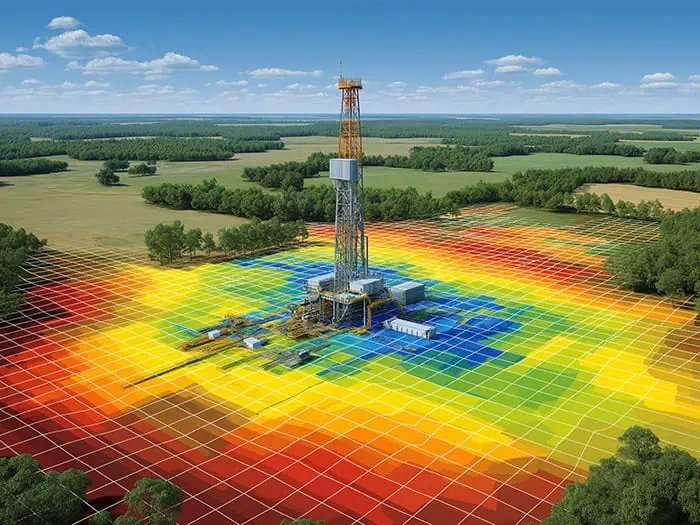
Class VI permitting requires robust computational models to demonstrate containment and integrity. A recent development of a Class VI permit application by SCS Engineers revealed restrictions on the ability of the EPA-recommended Method 2 for Critical Pressure (CP) calculations, underscoring the need for a practical, structured approach to Critical Pressure (CP) modeling.
CP modeling is important to the viability of proposed carbon sequestration projects because it determines the size of the Area of Review and the scope and cost of Corrective Action. This blog presents a lessons-learned framework that balances rigor with simplicity and introduces an innovative concept for analyzing the impacts of emerging risks.
The proposed methodology is built on five key elements:
Applying this framework has shown measurable benefits: improved clarity in model documentation, reduced regulatory review time, and greater confidence in outputs. By emphasizing simplicity, defensibility, and sensitivity, the approach mitigates common pitfalls in current review processes and fosters stronger communication between operators and regulators. Ultimately, this methodology provides a template for consistent, efficient Class VI permitting and lays the foundation for future advancements in risk assessment and regulatory alignment.
To learn more, please reach out to our co-authors at SCS Engineers.
Meet the Co-Authors:
 Kacey Garber has professional experience as a geologist and hydrogeologist. Her expertise includes Class VI Underground Injection Control (UIC) permitting for CO2 storage projects, Class I UIC permitting for liquid waste disposal, and environmental permitting and groundwater studies for landfills and coal combustion residual disposal sites.
Tara Gross is a project advisor providing strategic insight and technical oversight for key initiatives, including critical minerals, oil and gas, carbon capture, utilization, storage, underground injection control Class I, II, and VI well permitting, lithium extraction, and Department of Energy grant programs.
 Dr. Charles Hostetler is an experienced project manager and subject matter expert in geochemistry, hydrogeology, risk assessment, environmental regulations and permitting, and natural resources assessment. He serves clients in the coal combustion residue, solid waste, real estate, manufacturing, mining, nuclear waste, and governmental sectors.
Additional Resources for Critical Pressure Modeling and a New Standard for Class VI Permits:

Navigating environmental permitting for new construction or expansion projects can be daunting. The process is filled with regulatory hurdles, stakeholder concerns, and the ever-present risk of costly delays. Drawing from the expertise of Sara Rains a senior project manager at SCS Engineers, here’s a practical guide to help you avoid common pitfalls and achieve smooth compliance.
Start with Strategic Planning
The foundation of successful permitting is built early in the process, through thorough planning. Before breaking ground, conduct comprehensive environmental assessments—think Phase I & II Environmental Site Assessments, hazardous material surveys, and Operations & Maintenance plans. These steps help identify potential issues before they become roadblocks.
Pro Tip:
Use a management of change process to document every modification—whether it is new construction, a physical upgrade, or a chemical change. This ensures you are not blindsided by regulatory requirements later.
Know Your Permit Types
For example, in Missouri, projects typically require several permits. These permit requirements commonly apply to other states as well.
Identifying the right permits early is critical; missing one can halt your project in its tracks.
Engage Early and Communicate Often
One of the most overlooked strategies is early engagement with regulatory agencies and stakeholders. Reach out to agencies such as the Missouri Department of Natural Resources (Missouri DNR), the Environmental Protection Agency (EPA), the Occupational Safety and Health Administration (OSHA), and local city or county authorities as soon as possible. Open, transparent communication builds trust and helps resolve issues before they escalate.
Stakeholder Map:
Manage Timelines and Expectations
Permitting timelines can vary widely depending on project complexity and agency workload. Set realistic schedules and clearly communicate expectations to all parties. This prevents unpleasant surprises and keeps your project moving forward.
Avoid Common Pitfalls
Many projects stumble over the same hurdles:
Compliance Is a Continuous Journey
After you secure your permits, the real work begins. Continuous compliance monitoring, accurate reporting, and diligent recordkeeping are non-negotiable. Neglecting these can lead to fines, delays, or even shutdowns.
Best Practices for Success
Final Thoughts
Environmental permitting doesn’t have to be a headache. With careful planning, early engagement, and a commitment to compliance, you can avoid common pitfalls and keep your project on track. For more guidance, reach out to experts like Sara Rains on LinkedIn.
Have questions or want to share your own permitting experiences? Drop them in the comments or contact us at SCS Engineers.
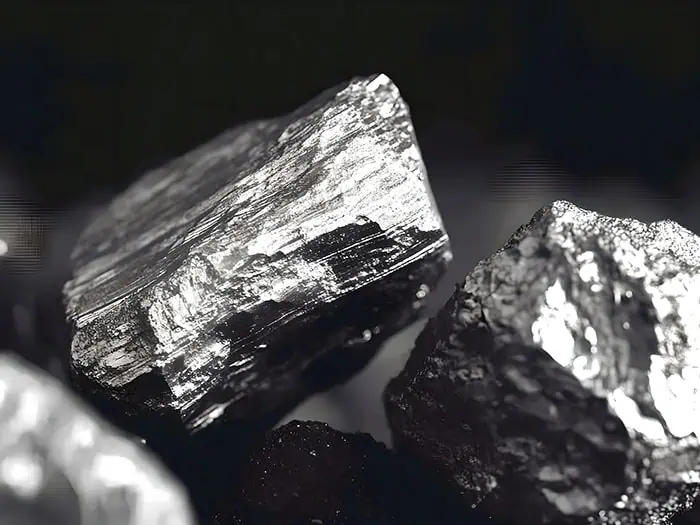
The U.S. Department of Energy (DOE) is awarding millions to boost U.S. power reliability and capacity, and is emphasizing coal power modernization and mineral recovery from waste streams. This funding repositions coal within the energy mix to counter the high cost of new natural gas plants and current storage limitations of renewables. The value of existing coal assets and capacity is surging as funding announcements revive ready-to-use coal plants and support new technologies and processes that will keep America’s lights shining as energy demand escalates.
Jon Yang, a senior geochemist at SCS Engineers, has been eagerly following the dollar trail and client opportunities. “Power providers and coal plants are in a great spot to develop new value streams while mitigating risks of coal-centric operations. This is a mega-win for everyone,” says Jon.
As utilities and coal plants pursue funding and explore new markets, Jon offers guidance to maximize progress, derisk their market entry, and avoid setbacks.
Quickly Identify the Economic Opportunity of Mineral Recovery
The DOE dedicated $355 million to expand domestic recovery and production of Critical Minerals (CM) and Rare Earth Elements (REE) from waste streams. This investment will help commercialize recovery technologies, meaning the 4.4 billion tons of coal waste (including 2 billion tons of coal ash) dispersed across the country could be worth $8.4 billion. Simultaneously, this opportunity for CM and REE recovery can also mitigate risks of coal waste handling and storage, which are currently significant liabilities for power providers and coal plants. But, how do you know whether ash equals cash?
“Rare earth elements are often misunderstood and misinterpreted—they can be difficult to quantify and interpret accurately,” Jon says. “Moreover, technologies for the extraction of REEs from these types of materials are still in their infancy and require careful vetting. SCS has the expertise to bridge these gaps in the form of expert analysis, quick-turn feasibility studies, and strategic relationships.”
To assess the economic opportunity of coal waste, SCS collects small-scale samples and works with specialized laboratories to analyze the composition, concentration, and extractability of valuable elements. With this data, utilities and coal plants can pinpoint their opportunity, attract investors, and green-light projects with limited early investment. Building on the feasibility study, SCS can conduct a full resource assessment for a comprehensive market analysis that considers extraction technology, production costs, and market potential.
“Our client experience in coal waste mineral and metal valuation is proven,” Jon says. “We excel as owner-advisors because we are experts in CM and REE geochemistry, techno-economic evaluations to determine feasibility, and business case development.”
Invest in Fundamental Coal Plant Processes to Better Support Innovation
The DOE earmarked $100 million to restore coal plants—including water and wastewater management, and environmental monitoring and controls—to enable them to run longer and enhance byproduct and mineral recovery. As utilities and coal plants pursue new value streams, they should also bolster critical foundational systems.
“Coal waste stream recovery requires precise systems and approaches to manage water use, wastewater management, and environmental standards. You won’t get far without them,” Jon says.
Extraction technologies, such as high-pressure acid leaching, require large amounts of water and produce difficult-to-treat wastewater containing dissolved metals and acids. By strengthening the critical systems that support the beneficial reuse of coal waste streams, utilities and coal plants maximize waste-stream value, increase extraction efficiency, reduce environmental liabilities, and meet environmental standards.
Start with a Strong Grant Application
Applicants seeking DOE funding must submit grant applications and, in some cases, work proposals. When dealing with technical requirements, applicants who partner with a specialized company are better able to address the complexities inherent to engineering and scientific grants. As a technical partner, SCS can manage the entire application process, allowing utility and coal plant teams to remain focused on operational priorities.
With millions of grant dollars up for grabs, now is the time to lock in a strong partner. Jon says there are three essential priorities to look for:
“We frequently succeed in securing federal grants because our technical specialization translates to specific, measurable, achievable projects that are aligned to government missions and priorities,” explains Jon. “With the right partner, utilities and coal plants will win grants and lead coal down new, sustainable paths.”
Related Mineral Recovery Resources:

As an employee-owned environmental consulting and construction firm, SCS Engineers supports the communities we live and work in year-round. But we all want to be doing something extra during the holidays.
In 2024, SCS donated to 43 local registered IRS 501(c)(3) charities during the holidays, positively impacting over 90,000 people! Our Corporate program has proven to be successful, so we plan to grow it this year.
In addition to supporting this year’s annual SCS Young Professional Group’s holiday fundraising, we plan to send significant donations to the four charities below that align with the environmental nature of our business and do so much for others. We will continue funding the Robert Stearns SWANA and the Environmental Research & Education Fund Scholarships.
These charities rely on consistent donations from patrons like SCS and you. We thank them all for their continuing humanitarian work. As always, we will continue to donate year round to the Red Cross and World Central Kitchen in support of people impacted by natural disasters worldwide.
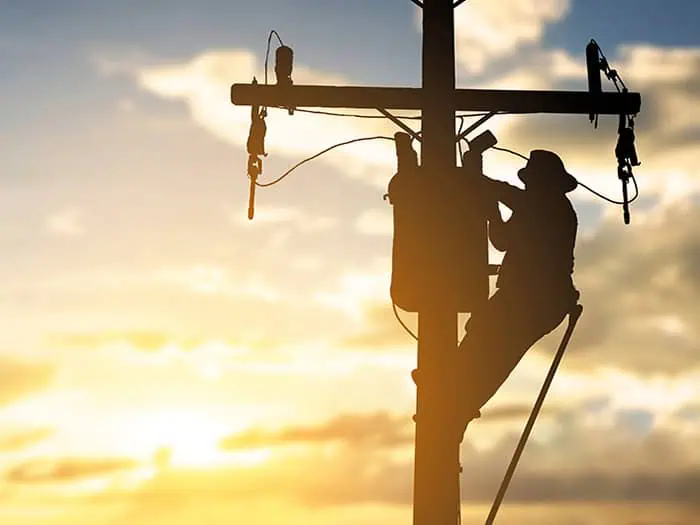
Inclement weather, such as high winds, heavy rain, flooding, and extreme temperatures, impacts power companies through physical infrastructure damage, increased demand, and environmental vulnerabilities. Strong winds can topple poles and trees, flooding can damage substations, heat can cause equipment to overheat, and power lines can snap.
Power companies across the U.S. use environmental engineers for many functions, such as ensuring compliance with regulations, managing waste, designing systems to minimize environmental impact, and conducting environmental assessments to mitigate impacts from storms and natural disasters.
Omaha Public Power District (OPPD) has proactive measures to protect its infrastructure and the environment from inclement weather. The protections include strengthening generation sources, regular maintenance, vegetation management, and partnering with SCS Engineers for environmental assessments and remediation.
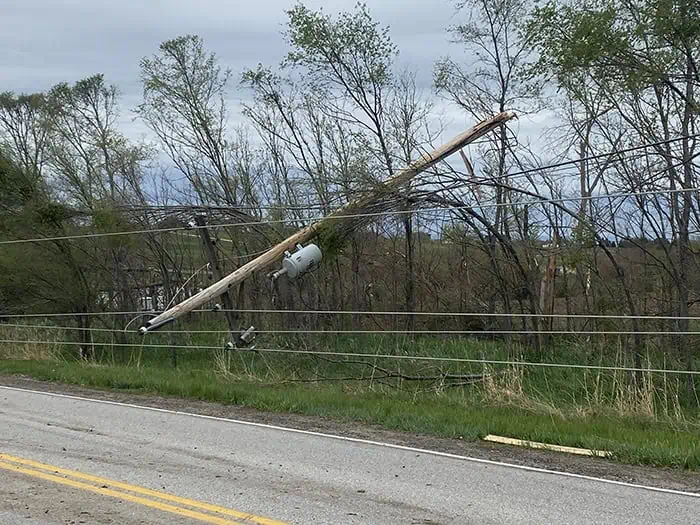
Mineral oil is an electrical insulator and cooling agent inside power transformers. It serves as an excellent electrical insulator and a highly effective cooling agent. It prevents electrical discharges and short circuits between components while absorbing and dissipating the heat generated during operation. While a good solution for extreme weather, careful handling is critical should a transformer be damaged, which is why OPPD relies on SCS to quickly and effectively assess and remediate storm damage in the surrounding environment.
Spills happen suddenly. When they do, the SCS team is on call to assess, contain, and remediate an affected area. The remediation process involves cleaning surfaces, removing contaminated soil, and restoring the spill site, all while working to minimize power disruptions for local families and businesses. Our decades-long partnership stems from our environmental expertise and rapid response to help OPPD maintain reliable service, upholding its customer commitment to quality service and the environment.
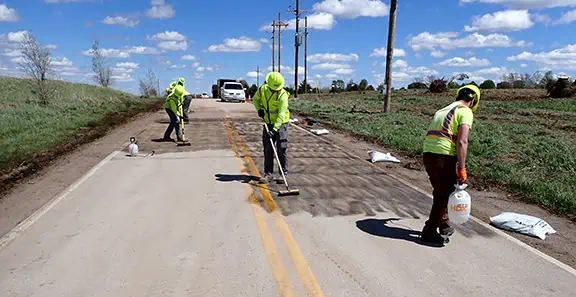
There’s no escaping Mother Nature – extreme weather events will continue to affect Omaha through increasing risks of flooding, severe thunderstorms, and extreme heat, driven by changing precipitation patterns and the urban heat island effect. These storms bring damaging winds, hail, and tornadoes, as seen in recent years, and can damage power company infrastructure. Knowing you have an environmental steward behind your power company demonstrates Omaha Public Power District’s social commitment to its community.
Additional Resources:
Corporate Headquarters