On July 11, 2016, multiple organizations representing the full value chain of cellulosic waste feedstock conversion to transportation fuel sent a letter to Gina McCarthy, Administrator of the U.S. Environmental Protection Agency (EPA). The letter supporting the Renewable Fuel Standard Program: Standards for 2017 and Biomass-Based Diesel Volume for 2018 (Proposed Rule) noted that additional information and factors need to be considered.
Read or share a copy of the letter here, contact SCS Engineers, or one of the organizations below:
Sensitive natural resources include but are not limited to the following: Threatened and Endangered (T&E) species and their habitats, wildlife refuges, wetlands, and tribal burial grounds. These are areas where federal or states have identified protected resources. SCS Engineers has the expertise and credentials to perform surveys for clients with projects requiring the identification of these sensitive resources, along with the regulatory permitting with specialization in threatened and endangered species, wetlands, and critical habitats.
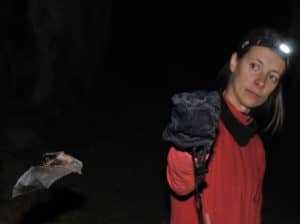
Development and construction often occur near or within areas identified as sensitive natural resources. Responsible developers identify sensitive resources near or within their proposed project area as part of their development plans because protecting our nation’s natural resources is important. The protection of sensitive natural resources is the basis of the Federal Endangered Species Act, Clean Water Act, and National Historical Preservation Act. Projects under consideration in sensitive areas require special permits; without which projects can be shut down causing costly contractor delays and schedule disruptions. Post-permitting and the associated fines can be severe, so even if you are not a conservationist, it makes good sense to complete the permitting process before breaking ground.

When considering a project in potentially sensitive ecological areas, SCS Engineers recommends a constraint analysis be performed. The analysis will determine if the proposed project location is within wetlands, critical habitat, threatened and endangered species range, and other potential constraints. If it is, SCS recommends that a site assessment is performed and initiate agency consultation to protect the sensitive resources.
Both the permitting process and the preliminary ecological assessments are not difficult but do require credentialed specialists. SCS has geologists, hydrologist, hydro-geologists, and environmental compliance professionals nationwide. SCS Engineers even has credentialed biologists for specialized threatened and endangered species monitoring and assessments for several species that include but not limited to the American Bury Beetle, Arkansas Shiner, Arkansas Darter, Topeka Shiner, Neosho Mucket Mussel, Rabbitfoot Mussel, Northern Longear Bat, and Indiana Bat in the Central U.S.
To determine if a project is within a sensitive natural resource area or to schedule an ecological consultation, contact .
About the Author: Vaughn Weaver
 Vaughn Weaver has over 20 years of environmental services experience with a strong background in water quality and bio-monitoring and is currently a senior field technician at SCS in our Wichita office. He provides project assistance to a diverse team of environmental professionals made up of geologists, hydrogeologists, engineers, chemists, and biologists. His responsibilities include surveying project sites, mitigation monitoring, well sampling and monitoring, and report writing for clients.
In addition, he has 15 years of water quality experience with National Pollution Discharge and Emissions Systems (NPDES) for point source and non-point source permits. Vaughn is also a Certified Wetland Delineator – USACOE.
Tracie Onstad Bills, Northern California Director, Sustainable Materials Management at SCS Engineers
Thank you for the responses and questions about my blog Minimizing Contamination in Recycling. It seems appropriate to provide answers to the most frequently asked questions and send more advice. Any program should be tailored to your current collection system; what works and what doesn’t work for your locality; the demographics of your community; and how your community views recycling.
In light of those considerations, here are some recommendations for ways to minimize contamination in recyclables:
Learn more about recycling programs by reading Success In Selective Routing – Resource Recycling or the SCS project and case studies below:
As always, feel free to send me your questions and comments. Contact Tracie here.
SCS Engineers’ Tracie Onstad Bills and Leslie Lukacs were both selected to receive the California Resource Recovery Association’s (CRRA) prestigious Service Award this year. According to CRRA Executive Director, John H. Dane, the award recognizes “exceptional individual service to the organization and a contribution of time or resources beyond expectations.” That sounds like an SCSer alright.
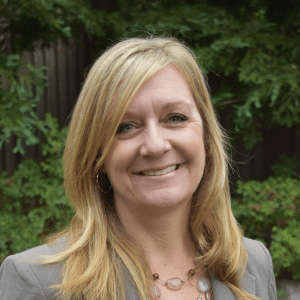
Tracie Bills is SCS’s Sustainable Materials Management Director and is based in our Pleasanton, CA, location. She has been on the CRRA board for 10 years and has served in several leadership positions within the organization, including as its President for three years. Her expertise revolves around commercial recycling technical assistance, environmental purchasing, large venue and event zero waste programs, research and sustainability planning, garbage hauler franchise compliance and review, construction and demolition program / ordinance analysis and writing, climate inventory compilation, research and feasibility studies to help clients with comprehensive waste prevention and zero waste programs.
Leslie Lukacs serves as a Sustainable Materials Management Specialist in our Santa Rosa, CA, office. She has been on the CRRA board for 12 years and also served in a variety of leadership positions. She also founded CRRA’s Green Initiatives for Venues and Events technical council and was an instructor for CRRA’s Resource Management Certification Program for 5 years. Leslie specializes in the design and implementation of sustainable materials management and zero waste programs and is a pioneer in the greening of venues and events throughout the nation. Her extensive expertise in the logistics of zero waste, recycling, and composting programs, such as outreach management, business assistance, master planning, waste audits and characterization studies, extended producer responsibility ordinance preparation and implementation, compliance, grant writing, and administration are all key to successful long-term programs.
Both women were selected by the CRRA Board of Directors to be the 2016 recipients of the Service Award. The awards will be presented at the organization’s Annual Conference Awards Ceremony on August 9 in Sacramento.
CRRA is California’s statewide recycling association. It is the oldest and one of the largest non-profit recycling organizations in the U.S. CRRA is dedicated to achieving environmental sustainability in and beyond the state through Zero Waste strategies including product stewardship, waste prevention, reuse, recycling and composting. The organization provides its members with resources to advance local, regional and statewide waste reduction efforts which result in critical environmental and climate protection outcomes. Members represent all aspects of California’s reduce-reuse-recycle-compost economy and work for cities, counties, municipal districts, and businesses as well as hauling companies, material processors, non-profit organizations, state agencies, and allied professionals.
It’s not just that we like wine and happen to live and work in every wine producing region of the U.S.; SCS Engineers understands the need for clean water resources and how important they are to the wine industry and for agriculture in general. SCS helps wineries face an array of environmental and regulatory challenges including:
SCS is pleased to announce we are the newest member of WIN, the Wine Industry Network.
SCS Engineers offers sustainable environmental solutions to businesses with environmental challenges. SCS provides these services to private and public sector clients through a network of nationwide offices. For more information about SCS, please visit our website at www.scsengineers.com, or contact us at .
SCS Engineers has published two Technical Bulletins summarizing the O&G NSPS final rule and outlining the new LDAR requirements. The two Bulletins explain the modification of how oil and gas sources will be permitted under the Clean Air Act and the new requirements to reduce methane leaks from new oil and gas facilities consistent with the EPA’s New Source Performance Standards.
Reference the U.S. Environmental Protection Agency (EPA) new source performance standards for Crude Oil and Natural Gas Production, Transmission and Distribution (O&G NSPS), which includes amendments to 40 CFR Part 60, Subpart OOOO and a new Subpart OOOOa. Subpart OOOOa will apply to facilities constructed, modified or reconstructed after September 18, 2015.
Click to read or share the Technical Bulletins:
https://www.epa.gov/controlling-air-pollution-oil-and-natural-gas-industry
Pat Sullivan, REPA, CPP, BCES
(916) 361-1297
On June 1, 2016, the National Waste & Recycling Association (NWRA), the Solid Waste Association of North America (SWANA), and the Coalition for Renewable Natural Gas (RNG Coalition) provide comments on Pipeline Safety: Safety of Gas Transmission and Gathering Pipelines (FR20722) proposed rules to Mr. Mike Israni, Deputy Associate Administrator for Pipeline Safety – Field Operations at U.S. Department of Transportation. Comments by the three not-for-profits were made on behalf of the solid waste industry including companies, municipalities, and professionals.
The letter reflected the solid waste industry support for the efforts made by the Pipeline and Hazardous Materials Safety Administration (PHMSA) to ensure pipeline safety and included comments on the Advance Notice of Proposed Rulemaking, (ANPRM) as follows:
The revised definition for gathering line (onshore) as the basis for determining the beginning and endpoints of each gathering line requires further clarification. The definition remains too broad for applications that do not have the same level of risks since they are not accessible to the public.
PHMSA has elected not to propose rulemaking for landfill gas systems. However, it notes that pipelines that transport landfill gas away from the landfill to another facility are transporting gas and that PHMSA may consider this in the future.
The associations pointed out that the same rulemaking for landfill gas systems should apply to all forms of biogas that are collected and managed in a similar manner to landfill gas. Also noted was that low-pressure gas lines delivering biogas off-site to a dedicated end user need not be considered for further regulation as they do not present the same level of risk that natural gas or other high-pressure gas lines do. Landfill gas/biogas systems fall under federal, state and local regulators. Because landfill gas/biogas systems are regularly inspected for safety, generally use plastic piping, and do not present a substantial risk to the public the Associations feel that it is not necessary to consider additional regulation.
Contact NWRA, SWANA, RNG Coalition or SCS Engineers for more information.
Question: I have a small oxidation event at my landfill and am continually testing for carbon monoxide (CO) in the surrounding landfill gas (LFG) extraction wells. Using colorimetric tubes, I am monitoring the readings which range from 5-10 parts per million (ppm). Is there an accepted standard for background carbon monoxide in LFG? Moreover, how much inaccuracy is expected using the colorimetric tube testing?
Answer: Carbon monoxide (CO) can be found in small quantities even when there is no landfill fire. If your concern is landfill fire, most reputable resources state that a landfill fire generates readings of at least 100 ppm CO and more typically in the 500-1000 ppm range with 1000 ppm a reliable indicator that a landfill fire event may be present.
CO readings on colorimetric tubes are inherently less accurate and tend to run higher than laboratory results. Colorimetric tubes do provide value as a real-time indicator versus subsequent lab results, and can be used as an index reading, calibrated by lab results later. If you’ve had a landfill fire event before, with CO levels greater than 100 ppm, the lab confirmed 5-10 ppm CO could be residual left over from the earlier event.
Although some people believe that the presence of CO at almost any level is an indicator of landfill fire, recent laboratory tests show that CO can be generated at values up to and over 1000 ppm by elevating refuse temperatures without the presence of combustion (fire). Other tests have shown that high values of CO are found in some landfills with no current landfill fire and no indication of a past landfill fire. This information supports that it is possible that Elevated Temperature (ET) Landfills can have CO levels over 1000 ppm CO without the presence of combustion or landfill fire.
In the end, CO can be an indicator of landfill fire, but not always, as described here. Low methane, high carbon dioxide, and even landfill temperatures above 131 degrees F may or may not be indicators of past or current landfill fire. Physical indicators of a landfill fire may include rapid settlement in a localized area, cracks and fissures, smoke and flame, melted landfill gas system components, and char on the inside of LFG headers and blower/flare station components such as a flame arrester. However, most of these indicators can occur at ET landfills as well without the presence of fire or combustion.
A professional landfill gas engineer is needed to assess these conditions as a whole, and make a judgment on the underlying driver, condition, and resolution.
Have a question for our SCS Professional Engineers or Field Staff? Just ask here.
Landfill and Landfill Gas Services at SCS Engineers.
The Environmental Protection Agency (EPA) has recently proposed increases in renewable fuel volume requirements across all types of biofuels under the Renewable Fuel Standard (RFS) program. The proposed increases would boost renewable fuel production and provide for ambitious yet achievable growth.
The Clean Air Act requires EPA to set annual RFS volume requirements for four categories of biofuels: cellulosic biofuel, biomass-based diesel, advanced biofuel, and total renewable fuel. EPA implements the program in consultation with the U.S. Department of Agriculture and the U.S. Department of Energy.
EPA will hold a public hearing on this proposal on June 9, 2016, in Kansas City, Missouri. The period for public input and comment will be open through July 11, 2016.
For more information on the proposal, see www.epa.gov/renewable-fuel-standard-program/proposed-renewable-fuel-standards-2017-and-biomass-based-diesel.
For more information on the public hearing, see www.gpo.gov/fdsys/pkg/FR-2016-05-25/pdf/2016-12358.pdf.
This innovative sustainable materials management approach involves strategically picking up loads from businesses that generate similar types of discards. The linked article discusses the approach of following simple procedures governing selective routing in the commercial space.
Using a phased methodology, it is possible to turn a high-disposal garbage collection system into a high-diversion recycling system, without incurring additional costs or losing collection revenue. Dumpsters behind shopping plazas and other sites can become opportunities at the center of a thriving materials recovery program.
About the Authors:
Richard Gertman is the owner of For Sustainability Too in San Jose, CA.
Tracie Onstad Bills has been in the Environmental and Resource Material Management Field for over 20 years. Her expertise revolves around commercial recycling technical assistance, environmental purchasing, large venue and event zero waste programs, research and sustainability planning, garbage hauler franchise compliance and review, construction and demolition program / ordinance analysis and writing, climate inventory compilation, research and feasibility studies to help clients with comprehensive waste prevention and zero waste programs. Ms. Bills has a BA in Environmental Science from San Jose State University, is a CRRA Board member and belongs to the SWANA Gold Rush Chapter, National Recycling Coalition and the Northern California Recycling Association. Contact Tracie here.
Corporate Headquarters