We hope you can join SCS Engineers and Dr. Craig Benson, who studies the phenomenon, to our free, non-commercial webinar entitled “Identifying and Managing Elevated Temperature Landfills.”
At this session, you’ll get an update on the knowns and unknowns of ETLF conditions.
Our ETLF session is for landfill owners, operators, technicians, field personnel, engineers, and regulators interested in learning about the latest research and mitigation strategies from the foremost experts in the field.
We encourage audience engagement with our panelists. We provide the ability to ask questions anonymously. We respect and understand your time constraints; those unable to stay on the live session will automatically receive a link to a recording.
ETLF Field Tips:
SCS OM&M teams look for these signs in the field data collected:

By preparing site life calculations with knowledge of multiple approaches, we can proactively position solid waste systems to meet future needs. However, the simplest approach is often the most prudent when every variable is unknown.
The growing Florida population has greatly pressured all public infrastructure, including waste disposal services. Planning for these adjusted growth trends is paramount to a successful system that provides the community with essential services. By preparing site life calculations with knowledge of multiple approaches, we can proactively position solid waste systems to meet future needs. Don’t overlook having a thorough understanding of current disposal trends and airspace utilization as the starting point for planning the future success of a solid waste system.
In their Florida SWANA presentation, Kollan Spradlin and Fauve Herron focus on using three different landfill site life calculation methods that they have previously used to assess the remaining life of Florida landfills.
Two of the three calculation methods will use service area population projections to model future waste disposal. They will also discuss a third model that does not utilize population projections — The Remaining Capacity Method. Originally developed by SCS Engineers’ founder Bob Stearns, The Remaining Capacity Method relies on past tonnage and volume utilization data to forecast the future date at which available remaining volume will be depleted.
Their Site Life Calculations presentation will cover data requirements, the drawbacks and advantages of each method, the identification of errors, and model implications.
Presenters from the ENR-Ranked No.1 Firm for Solid Waste Management:
Kollan Spradlin, PE, CHMM and Fauve Herron, EIT
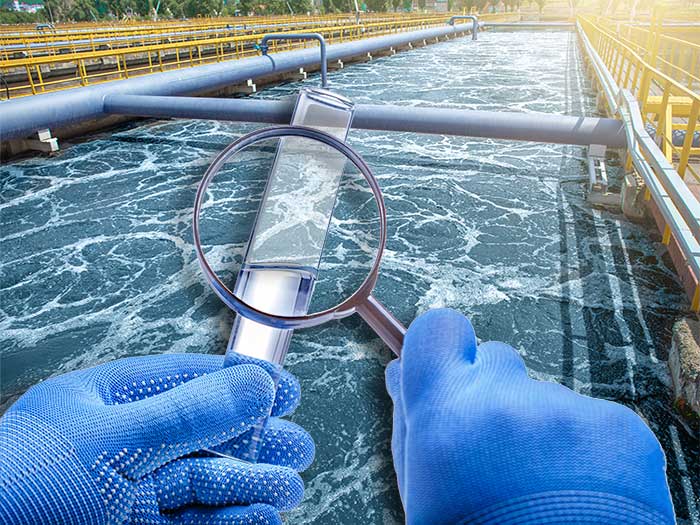
To a wastewater treatment engineer, at least during workdays, it seems like everyone is talking about forever chemicals, all of the time. There’s a good reason for that, because the huge group of man-made chemicals has climbed in priority to be at the top of most wastewater treatment regulatory considerations. Forever chemicals are also known as per and polyfluoroalkyl substances (PFAS) and have rapidly become the latest of the emerging contaminants in drinking water to be treated. So, while there is still a lot of toxicology research to do, PFAS destruction and even which PFAS actually needs to be addressed, there is very little doubt regarding the future need to treat PFAS in landfill leachate and other wastewaters. Everyone is in agreement, the environment needs to be protected from forever chemicals.
PFAS chemicals can withstand high heat without becoming unstable as well as repelling oil and water, making them ideal for inclusion in fire-fighting foam, lining non-stick pans, or water resistant clothing. But unfortunately, PFAS can persist in the environment – water, fish, humans, etc. – for a long time. So, having efficient and cost-effective methods of treating wastewater, drinking water, bio-solids, etc., to reduce/remove PFAS is becoming increasingly important. Luckily, some traditional and very available treatment methods are effective at treating PFAS as well as some newer, non-traditional treatment methods that appear to be promising.
One effective management technology is using deep injection wells to store the PFAS contaminated wastewater deep, far below drinking water sources and within high total dissolved solids groundwater. Deep injection wells are only allowed where the deep geology and subsurface conditions can allow for the PFAS wastewater to be contained where it is injected.
Additional management options are granular activated carbon (GAC) or ion exchange (IX), which are adsorption treatment methods that use a media, through which the PFAS contaminated wastewater can pass, and the charged PFAS molecules become bound up in the opposite charged GAC or IX media.
Reverse osmosis (RO) and foam fractionation (FF) treatment methods use separation, either through very small pores in a membrane (RO) or applying aeration to create a PFAS concentrated foam (FF), to allow the treated, cleaner water to discharge the treatment process and the concentrate (RO) or foamate (FF) is left and can be dealt with more efficiently, because after treatment the concentrate/foamate is a much smaller volume than the original wastewater flow.
These PFAS management methods simply move the PFAS chemicals out of the way and don’t actually destroy the PFAS. PFAS destruction generally requires more effort and cost because high pressure and/or high heat are required to break the carbon – fluorine (C-F) bonds. A regenerative thermal oxidizer (RTO) or supercritical water oxidation (SCWO) are PFAS destruction methods that can be employed. An RTO typically operates at high temperature (e.g., 1,800 F) and SCWO utilizes both high temperature (>705 F) and high pressure (>3,210 psi) within a process to, again, break the C-F bonds. Electrocoagulation, advanced oxidation processes and plasma are also treatment methods that could be employed to destroy PFAS.
These are just a few of the many PFAS management and destruction options. It can be hard to decide what’s right for your project. That’s where SCS can help. We’re technology agnostic – so you can trust our recommendations are appropriate for your project and goals. Contact us today to learn more about what’s possible.
About the Author: Sam Cooke, PE, CEM, MBA, is a Vice President and our expert on Industrial Wastewater Pretreatment. He has nearly three decades of professional and project management experience in engineering with a concentration in environmental and energy engineering. Mr. Cooke works within SCS’s Liquids Management initiative to provide services to our clients nationwide.
Additional PFAS Management and Treatment Resources:
Meet SCS Engineers professionals at the Partners for Environmental Progress’s 23rd Industrial Reverse Trade Show and Education Seminar, October 19, at Fort Whiting, Alabama.
What if you could reduce your company’s greenhouse gas (GHG) emissions by 1.5 to 2 million metric tons per year for the next 20 years?
Now you can, with carbon capture and storage technology. Watch the Illinois Basin Carbon Capture and Storage webinar to learn more. Carbon capture and storage is an EPA-approved technology companies are exploring to help reduce GHG emissions.
In Illinois and many other states, leading firms are submitting permit applications for Class VI underground injection control wells. It’s a great time to review the state of the practice and learn how this technology works and how it can help you meet your carbon reduction goals. In this video chapter, SCS answers these questions:
This technology is on track to transform how industry leaders like you manage greenhouse gas as a byproduct of modern life. Watch Charles Hostetler’s short video to learn more, or contact your local SCS Engineers’ office for a consultation.
 Dr. Charles Hostetler has nearly four decades of experience as an engineer and hydrogeologist. He has diverse experience in coal combustion residue (CCR) and solid waste management permitting, design, and construction projects. His areas of expertise focus on supporting electric utilities, property owners and developers, solid waste facility owners and operators to meet demands for addressing environmental changes and impacts on their operations.
Additional Resources:
SCS Engineers’ deep well injection expert, Monte Markley, is presenting at the 26th Annual EUEC conference, February 13-15, 2024, at the Irving Convention Center near Dallas, Texas.
The Energy Utility Environmental Conference (EUEC) attracts some 2000 attendees from around the globe and features over 300 speakers and 200 exhibitors. This is the first live in-person event since the pandemic, and we are happy to be together again!

Visit the EUEC 2024 website for abstract info, conference details, and registration information.
We hope to see you there!
Meet SCS Engineers coal ash and utility professionals in BOOTH 92 at The World of Coal Ash 2024 conference, May 13-16, 2024, in Grand Rapids, Michigan. SCS is also a Palladium level sponsor.
WOCA is an international conference organized by the American Coal Ash Association (ACAA) and the University of Kentucky Center for Applied Energy Research (CAER). The 2024 conference is the 10th joint biennial meeting with a focus on the science, applications, and sustainability of worldwide coal combustion products (CCPs) as well as gasification products.
The call for abstracts will be announced soon.
For more information and registration, click here
We hope to see you there!
Plenty of SCS industrial refrigeration experts will be on hand at BOOTH 509 at the 2023 RETA National Conference, November 14-17, at the Hyatt Regency Riverfront, in Jacksonville, Florida.
The conference will cover a wide ranges of topics for professional development of industrial refrigeration operators and technicians. It spans four days filled with hands-on training, workshops, technical presentations, networking events, and an expansive exhibit hall. No matter your level of experience or position within the Industrial Refrigeration Industry, this educational conference has an all-encompassing and comprehensive program designed to enhance your knowledge and success.
The conference is organized by the Refrigerating Engineers & Technicians Association (RETA) and is always a great event! We hope to see you there!

SOP, Version 50 10 7 for the Small Business Administration’s Standard Operating Procedures for Lender and Development Company Loan Programs effective on August 1, 2023.
On May 10, 2023, the United States Small Business Administration (US SBA) issued a long-anticipated informational notice regarding implementing their newest Standard Operating Procedures (SOP) under Lender and Development Company Loan Programs. According to this notice, the new SOP, Version 50 10 7, goes into effect on August 1, 2023. All lenders, certified development companies (CDCs), SBA employees, and applicants/borrowers of 504 and 7(a) loans will be subject to the changes therein at that time.
Today’s SCS blog provides critical guidance to entities needing environmental due diligence or other services under the auspices of US SBA programs.
The environmental policies of the SOP are contained within Chapter 5, Section E of the new SOP. One highlighted change from the previous version (10 5 6) is that these policies apply “only to real estate acquired, refinanced, or improved by the loan proceeds” and do not apply to collateral. For the commercial real estate subject to the program, the following summarizes the basic requirements:
The SBA SOP also has specific requirements for “Special Use Facilities,” which differ from other property types. The three categories of Special Use Facilities include child-occupied, dry cleaners, and gas stations. Of the three, the new version of the SOP contains a point of clarification pursuant to child-occupied facilities. It now explicitly specifies that all such facilities constructed before 1978 must undergo a Lead Risk Assessment (RA) and test all taps, water fountains, and spigots for lead in drinking water. The RA should be conducted within one calendar year of submission to SBA for approval and follow US Department of Housing and Urban Development (HUD) Guidelines.
As always, SCS aims to make the process of securing both conventional and SBA loans as painless as possible. Rest assured that we fully understand the program’s intricacies and are well-positioned to assist you with environmental requirements related to this program.
 Meet Author Rachel McShane
Additional Resources:
Brownfield Properties: The Ins and Outs of Due Diligence and Investment
Author Megan Hente discusses the importance of environmental due diligence for purchasing brownfield properties. Brownfields offer opportunities to redevelop…
Will EPA’s Proposed Designation of PFOA and PFOS Impact Real Estate?
Jeffrey D. Marshall, PE, and Michael J. Miller, CHMM, discuss environmental due diligence and how the proposed CERCLA rule could impact the number of recognized environmental conditions…
Environmental Due Diligence and All Appropriate Inquiries
Today’s commercial real estate transactions must consider environmental issues. Complex laws can impose significant environmental liabilities on…
Corporate Headquarters