Partial reprint of EPA’s Announcement dated January 11, 2024
WASHINGTON – The U.S. Environmental Protection Agency on Thursday announced a proposal to strengthen Clean Air Act standards for large facilities that burn municipal solid waste. If finalized, the updated standards would reduce emissions of nine pollutants, including smog- and soot-forming sulfur dioxide and nitrogen oxides, by approximately 14,000 tons per year, improving air quality for overburdened communities living near these facilities. These proposed standards reflect current technologies available to control pollution in a cost-effective fashion.
The proposed standards would apply to 57 facilities with 152 units that have the capacity to combust more than 250 tons per day of municipal solid waste. Nearly 4 million Americans live within 3 miles of these large facilities, which are disproportionately located in low-income communities and communities of color.
The proposed standards are based on emission levels achieved by the best controlled and lower-emitting sources, and limit emissions of nine pollutants: particulate matter, sulfur dioxide, hydrogen chloride, nitrogen oxides, carbon monoxide, lead, cadmium, mercury, and dioxins/furans.
The Clean Air Act requires EPA to evaluate these standards every five years in order to take into account developments in pollution control technologies and techniques. EPA last revised these standards in 2006.
After accounting for compliance costs of the rule, EPA estimated the net present value of health benefits from the proposed rule, due to reductions in particulate matter and ozone alone, to be up to $14 billion over 20 years. Reductions of mercury, lead, and other hazardous air pollutants required by the proposal are expected to result in additional unquantified economic and public health benefits.
EPA will accept comment on the proposal for 60 days after publication in the Federal Register. EPA will hold an informational webinar and will announce details on its website shortly.
Additional Resources:
A Brief Regulatory History in California
On June 22, 2023, the California Air Resources Board (CARB) approved amendments to the Greenhouse Gas Emission Standards for Crude Oil and Natural Gas Facilities (Oil and Gas Methane Regulation). On November 2, 2023, CARB proposed additional modifications for public review. The public comment period ends November 17, 2023.
The Oil and Gas Methane Regulation was originally adopted in 2017 to reduce emissions by requiring:
Then in 2018, this regulation was included in California’s State Implementation Plan (SIP) to address VOC control requirements from the US EPA’s 2016 Control Techniques Guidelines (CTG) for the Oil and Natural Gas Industry. In 2022, the US EPA reviewed the SIP submittal and developed a list of deficiencies. Therefore, the Oil and Gas Methane Regulation was amended to address deficiencies and avoid sanctions under the Clean Air Act.
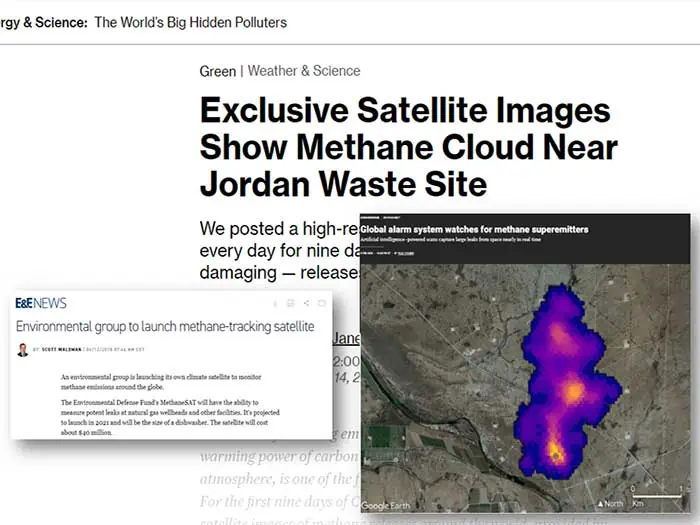
The Oil and Gas Methane Regulation was also amended so that CARB can use remote monitoring data from approved technologies to detect methane emission plumes and then mandate correction actions.
For example, it is anticipated that CARB will start receiving satellite data in late 2023. Once notified by CARB of a remotely detected methane plume, a facility will need to conduct inspections and repairs as well as submit reports as required by the amended regulation.
Finally, additional amendments were made to clarify the regulatory language based upon CARB’s experience with implementing the regulation over the past five years. Based on this summary in California, there is more movement in other states and not just for oil & gas facilities, but many more.
What to Expect in 2024 – Nationwide
The use of satellites and Carbon Mapper are game changers. Carbon Mapper is a nonprofit entity that started flying key mission sectors and not just landfills or waste management sites. They target energy production facilities, agriculture, particularly livestock coal, mining operations, and oil and gas facilities.
The purpose is to track strong methane emissions, obviously. But the kicker is that the data is free and open to the public in the form of a methane plume overlaid on a map. The imagery usually has estimated emissions rates. Many facility owners, managers, and businesses are not aware of these monitoring events, let alone the accessibility and transparency via the Internet to the public.
Our clients reach out to us knowing that SCS has a robust drone and monitoring program – we can fly the sites and locate leak sources in hours. By using drones, our clients could respond quickly and we could identify current limitations of satellite technology for them. The resolution at a satellites high altitude does not detect and localize leak sources, but remote monitoring and control does.
Many of our clients take a proactive approach now of reoccurring drone methane inspections. We can identify areas of concern before the site is flown by manned aircraft or capture by satellites, and mitigate any potential issues ahead of making headline news. The benefit for implementing long-term operational enhancements and efficiencies prevents odors, complaints, nuisance suits, and negative headlines.
There are complementary technologies that work together, satellites, planes, drones, robot-dogs, automated wellheads, and the traditional boots on the ground. The key is combining the ones that work together to provide a more holistic view of of what’s going on at your facility. That’s where the ROI is and provides a single source to combine all data elements – so no need to move back and forth between software systems.
Questions? Contact our professionals at for immediate assistance.
Additional GHG Emissions Resources
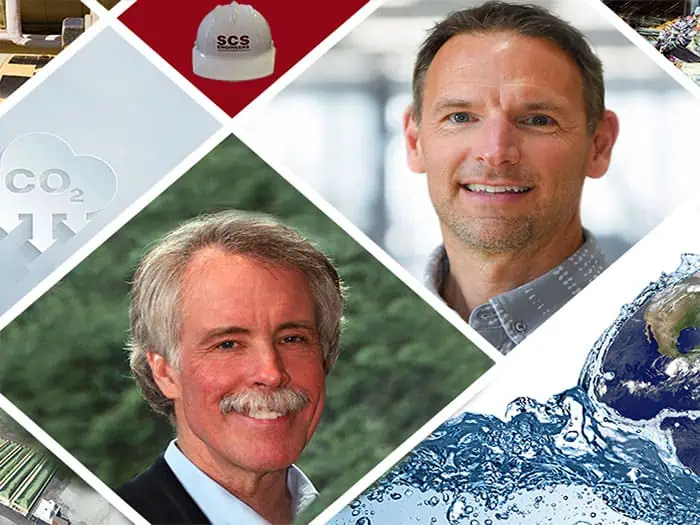
SCS Engineers announces that the firm’s Board of Directors elected Doug Doerr as President and Chief Executive Officer. James J. Walsh, the current President and CEO, will turn over his responsibilities to Doerr on January 1, 2024.

Doerr, a Senior Vice President, has over three decades of professional engineering experience spanning the firm’s solid waste and environmental services practices. He brings strategic direction and operations experience as SCS’s geographically largest Business Unit Director. Doerr also serves on SCS’s Board of Directors and was one of the founding principals of Aquaterra Environmental Solutions, Inc., which merged with SCS in 2013.
A Professional Engineer in six states, Doerr earned his Bachelor of Science in Civil Engineering at the University of Nebraska, Lincoln, and his Master of Business Administration at the University of Kansas. He serves clients in North America by providing technical expertise, primarily in the solid waste management and utility sectors.
As an engineer and consultant, Doerr prides himself on providing environmental solutions to address clients’ technical and regulatory challenges by understanding the business, economic, and social drivers that frame each challenge. Over his career, he has successfully implemented hundreds of environmental solutions that involve studies, permitting, compliance, and design across multiple market sectors for public and private clients.
“Our deep bench of engineers, scientists, consulting professionals, and environmental technicians are employee-owners who drive SCS as one company, keeping us sustainable for over 50 years. From our client’s perspective, our stability and holistic expertise bring a wealth of resources to achieve their goals,” says Doerr.
Walsh will continue to serve as Chair of the Board of Directors and assist Doerr as he transitions into the CEO role. Walsh also plans to spend more time on technical and client work as an expert witness, an authority on elevated temperature landfills, and an expert in the solid waste industry.
Under Walsh’s 22-year tenure, SCS Engineers and its specialty practices, SCS Field Services, SCS Energy, and SCS Tracer have grown tremendously. Walsh, senior executives, and the Board of Directors feel 2024 is an opportune time for the transition.
“We have a stellar reputation, we’re financially healthy, our Employee Stock Ownership Plan is strong, and we have the next generation of leadership ready to lead the company into the future,” states Walsh.
SCS Engineers’ environmental solutions and technology directly result from our experience and dedication to industries responsible for safeguarding the environment as they deliver essential services and products. SCS Engineers has captured or beneficially used more greenhouse gases than any other environmental engineering firm in the U.S. Please visit our website for a greeting from our CEO elect, or watch our video to see what we can do for your business and community.

By proactively complying with regulations and completing a progressive assessment process, remediation contractors can avoid project delays and minimize the risks of improper soil transfer. While soil remediation in situ is preferable, it is not always possible.
Assessing and managing regulated waste soil and “clean” or inert soil is an important element in construction and demolition. To succeed, it’s necessary to understand the regulatory and legal framework regarding proper soil transport and disposal in a development setting and to develop best practices to avoid the risk and liability of shipping contaminated soil to unauthorized destinations.
Naturally occurring metals such as arsenic can be elevated because of regional geologic sources that exceed regulatory screening levels and disposal standards. Are these hazardous wastes? That depends on the concentrations of the chemical constituents or metals in the soil. Properties with previous land use often show concentrations of these constituents in the soil below hazardous waste levels but high enough to designate certain soils as regulated nonhazardous waste. Contractors must dispose of or recycle this soil at a properly licensed facility or face heavy penalties.
If your project requires importing and exporting soil, follow Environmental Consultant Keith Etchells’ advice in this C&D Magazine article to keep compliant with regulatory agencies and costs low during soil disposal.
 About the Author: Keith Etchells is a professional geologist and hydrogeologist with 22 years of experience assisting clients in managing environmental risks associated with ownership, transfer, or operation of commercial, industrial, and waste disposal properties. His particular technical expertise involves aspects of groundwater science and engineering relevant to contaminated sites and landfills designing analytical, geotechnical, and hydrogeological data collection programs to complete subsurface assessment and land remediation. Reach out to Keith on LinkedIn or at .
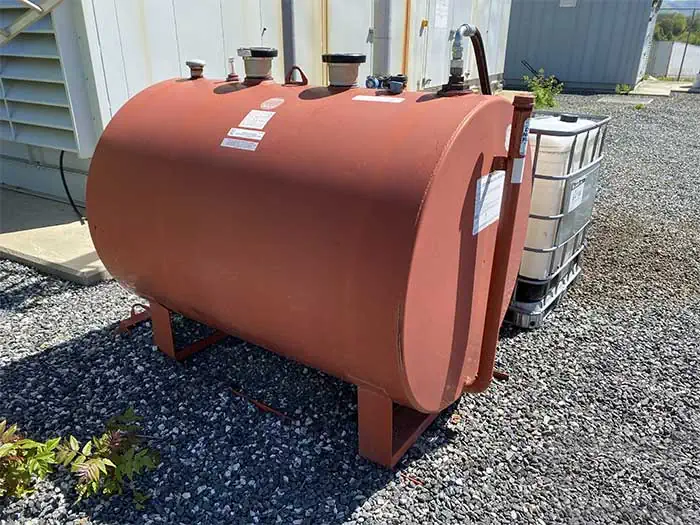
Unexpectedly replacing a tank can strain your budget and always seems to come at the most inopportune times. Based on my experience with tank inspections, one of the most common reasons for unexpected tank replacements is using an Underground Storage Tank (UST) as an Aboveground Storage Tank (AST).
Any STI/SPFA SP001 Certified Inspector can identify a misused UST during the required periodic inspections of ASTs, and these tanks are also commonly discovered during site visits related to drafting or updating Spill Prevention, Control, and Countermeasure (SPCC) Plans. Budget and complete a tank replacement before your next inspection. During my inspections, I use three indicators when looking at a tank to identify if a UST is misused as an AST:
No Emergency Vent! The most important reason not to use a UST aboveground.
If the unthinkable happens and you have a fire around your tank without proper emergency venting, that tank fire can go from bad to BOOM!
The design of ASTs is to minimize the danger of being engulfed in flames to release the vapors from the tank in a controlled manner. In contrast, a UST design will never be engulfed in flames, so the tank manufacturer does not install an emergency vent port.
Properly sizing an AST emergency vent to release the increased vapor pressure during a fire is important, too. The need to release the higher pressure makes emergency vents much larger than the normal vents for simple atmospheric changes. The larger emergency vents come in five varieties:
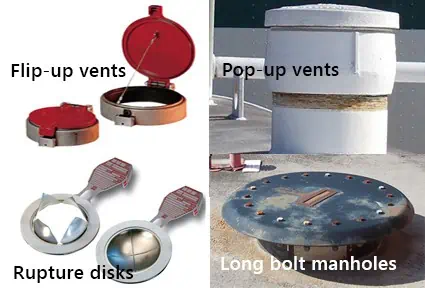
Flip-up vents are spring-loaded caps held closed by a latch designed to release at a set pressure or temperature. If the latch doesn’t work and the flip-up cap is open, duct tape or a well-placed brick is not the proper solution; you’ll need to replace the latch. Luckily, the latches are readily available, and the latch installation is usually simple.
Rupture disks are vent covers where the entire cover breaks open when a set pressure or temperature is exceeded, instead of just the latch like in the flip-up vents.
Pop-up vents are weighted caps that sit on the vent until the pressure in the tank reaches the designed level. During fire incidents, these vents periodically release the built-up vapors, preventing the tank from rupturing. If this vent is not staying seated correctly, repair or replace the vent.
Long bolt manholes function similarly to the pop-up vents to periodically release built-up vapors. This type of vent relies on the bolts securing the manhole cover to have the designed amount of slack between the manhole rim and the nuts. I’ve seen too many long bolt manholes with the nuts fully tightened to the rim, completely negating the vent’s purpose and safety. A simple fix for this issue is to replace the fully threaded bolts with properly sized partially threaded bolts.
New tanks are unlikely to have Weak Roof-to-Shell joints. Occasionally, I’ve seen them in older single-wall vertical tanks, where the roof construction has a particular area break when the tank pressure gets too high.

Unreviewed Damage: Most USTs as ASTs are old and damaged
Frequently pulling these tanks results in dents or scraps to the UST. Remove any damaged tanks from service until a qualified inspector or engineer can review the damage. Additionally, most states prohibit the reuse of USTs once they are removed from their original installation location.
It may be difficult to see in this image, but the tank is scratched, dented, and starting to rust.
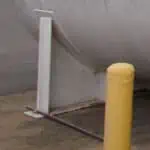 No Tank Saddles
Most of the repurposed USTs are horizontal, so these tanks require chocks or an earthen berm to keep them in place. Saddles act as the welded attachment areas for the tank legs and distribute the weight over the tank’s belly — part of the AST design. Sometimes, people with good intentions get too creative and attempt to turn a UST into a vertical AST. However, the presence of vent connections along the side of the tank and none on the tank top is a sure sign the tank is not in use appropriately.
Best practice — look for these warning signs before inspections and drafting or updating SPCC Plans.
 About the Author: Benjamin Reynolds is a Senior Project Professional in our Little Rock, Arkansas, office. His recent experience includes serving as a Technical Branch Manager for the Arkansas Department of Environmental Quality where he led a team of engineers, toxicologists, and site assessors to review and guide site assessments and remediation projects throughout the state. He is experienced in Phase I and Phase II Environmental Site Assessments, as well as Spill Prevention, Control, and Countermeasures (SPCC) Plans, and Storm Water Pollution Prevention Plans (SWPPPs). He is a Professional Engineer licensed in Arkansas, Oklahoma, and Tennessee. Reach out to Ben at or on LinkedIn.
The U.S. Environmental Protection Agency (EPA) announces the availability of up to $4.6 billion of competitive grants. The grants are broken into two funding opportunities. The Climate Pollution Reduction Grants (CPRG) competition is designed to incentivize eligible applicants to apply for funding together as a coalition to implement GHG reduction measures regionally, across multiple municipalities, state boundaries, or even state and tribal boundaries. It includes funding for enhancing carbon removal, too.
Deadlines to Apply for Grants to Implement GHG Reduction
Under Funding Opportunity Number EPA-R-OAR-CPRGT-23-07, EPA announces approximately $4.3 billion for a general competition open to states, municipalities, air pollution control agencies, tribes, and territories for CPRG implementation grants. Tribes and territories interested in the general competition should seek the CPRG implementation grant “general competition” NOFO for more information. Applications for this implementation grants competition for tribes and territories are due on May 1, 2024.
Another $300 million for the CPRG implementation grants competition is exclusively for tribes and territories. Lead organizations for tribes and territories must submit their Priority Climate Action Plans to EPA by the deadline of April 1, 2024, in order for lead organizations and other eligible applicants under this announcement to submit grant applications to fund measures contained in those plans. EPA anticipates awarding approximately 25 to 100 grants ranging between $1 million and $25 million under this tribes and territories competition. Further detail on award tiers can be found in Table 1 of Section II.B.
Climate Change Disruptions
As the US faces the increasingly harmful impacts of climate change, communities are experiencing more deadly wildfires and storm surges, more extreme drought and water scarcity, and dangerous levels of flooding, among other impacts. The Fourth National Climate Assessment found that intense extreme weather, climate-related events, and changes in average climate conditions are expected to continue damaging infrastructure, ecosystems, and social systems that provide essential benefits to communities. If left unchecked, future climate change is expected to disrupt many areas of life further and exacerbate existing challenges to prosperity posed by aging and deteriorating infrastructure, stressed ecosystems, and long-standing inequalities.
Grants to Support Your Communities
Our country’s daunting challenge comes with an opportunity to invest in a cleaner economy that will spur innovation and economic growth while building more equitable, resilient communities. Accordingly, the Climate Pollution Reduction Grants program is designed to achieve the following goals:
1. Implement ambitious measures that will achieve significant cumulative GHG reductions by 2030 and beyond;
2. Pursue measures that will achieve substantial community benefits (such as reduction of criteria air pollutants (CAPs) and hazardous air pollutants (HAPs));
3. Complement other funding sources to maximize these GHG reductions and community benefits; and,
4. Pursue innovative policies and programs that are replicable and can be “scaled up” across multiple jurisdictions.
What Qualifies as a GHG Reduction Measure?
Treatments and solutions that reduce GHG emissions or enhance carbon removal can qualify. Measures that enhance carbon removal increase carbon dioxide removal from the atmosphere through, for example, the uptake of carbon and storage. Other measures may include EPA-approved technologies. Documentation must be provided to support the estimated GHG emission reductions for each proposed measure. Depending upon the proposed solution, you’ll need a well-conceived plan and data from a reliable environmental engineer or an environmental or sustainability consultant.
Who’s Eligible?
Eligible applicants for the CPRG implementation grants competitions are lead organizations for CPRG planning grants and other executive branch-level agencies, offices, and departments in states, D.C., Puerto Rico, municipalities, tribes, tribal consortia, territories, and groups of such entities applying for funding to implement measures contained in one or more applicable Priority Climate Action Plan developed with funding from a CPRG planning grant.
Additional Resources
Webinars:
EPA will host overview webinars for each implementation grant competition for eligible applicants and other interested parties over the coming weeks. All sessions will be one hour long. EPA will post recordings of each webinar to the CPRG website. You can click the links below to register for one or more scheduled sessions.
| Date | Time (ET) | Event Topic | Register |
| Sept. 21 | 2:30 pm | General competition webinar | Register here |
| Sept. 27 | 2:00 pm | Tribe and territories only competition webinar | Register here |
| Oct. 3 | 3:00 pm | General competition webinar (repeat) | Register here |
| Oct. 5 | 1:00 pm | Tribe and territories only competition webinar (repeat) | Register here |
The other night, I woke up in a bit of a panic and thought that I must have missed an announcement by the USEPA regarding the PM2.5 NAAQS reconsideration! Did I?
The answer, thankfully, is no! However, that is not any reason to relax and take no action.
By way of background, the Clean Air Act requires that the USEPA set National Ambient Air Quality Standards (NAAQS) for each of the criteria air pollutants, including particulate matter (PM). These NAAQS are based on the best available science and aim to protect human health and welfare. In June of 2021, the USEPA announced that they would reconsider the 2020 PM NAAQS final action under the prior administration that did not lower any standards. Then, in January 2023, the USEPA published the proposed rule to revise the PM2.5 primary annual standard down from 12 micrograms per cubic meter (µg/m3) to within a range of 9-10 µg/m3. In that proposal, the agency retained the 24-hour standard of 35 µg/m3.
The comment period for this proposed rule has since closed, and the agency is now working through over 5,000 submitted comments. It is unclear when the USEPA will issue the final rule (it could be any day now) and if the new annual standard will be set at 9 or 10 or something in between.
What does this mean for me as a regulated source? What should you do? SCS Engineers recommends the following actions:
Additional Resources:
About the Author: Rafe Christopherson, PE, is a project director and SCS’s industrial Clean Air Act leader. He is an air quality professional with a wide variety of experience over his 25-year career. His expertise includes consulting, working at an air quality regulatory agency and with industry. His expertise includes semiconductors, biofuels, pulp and paper, hardwoods, power generation, refineries, and general manufacturing. If you are interested in more information on this PM2.5 NAAQS reconsideration process and what it might mean for your business, you may reach Rafe at or via LinkedIn.

On August 17, 2023, the United States Environmental Protection Agency (EPA) released the first of twelve datasets (representing approximately 7% of the total data that it plans to collect) on 29 polyfluoroalkyl substances (PFAS) and lithium (an alkali metal) in our nation’s drinking water. This sampling will continue through 2026, and is the latest action delivering on the EPA PFAS Strategic Roadmap, which dictates that PFAS (an emerging contaminant pending regulations under CERCLA) requires a multi-agency approach and specific actionable steps to assess risks to human and environmental health better, hold polluters accountable, and identify the extent of the problem.
Monitoring PFAS and lithium is currently under the fifth Unregulated Contaminant Monitoring Rule (UCMR 5). The Safe Drinking Water Act (SDWA) requires that the EPA issue a list of unregulated but potentially harmful contaminants every five years and devise a protocol for monitoring those contaminants in public water systems (PWSs).
The current UCMR 5 regulatory framework allows for collecting PFAS and lithium data throughout the United States. It aims to create science-based decision-making regarding how to address these chemicals best. Results, which will get quarterly updates, can be reviewed by the public on the EPA’s National Contaminant Occurrence Database.
While there is not currently a final drinking water standard in place for PFAS, EPA has already issued health advisories for four PFAS compounds, and two of them – perfluorooctanoic acid (PFOA) and perfluorooctanesulfonic acid (PFOS) – have also been proposed for entry as hazardous substances under CERCLA, as of March 2023. The timeline for the final rule on PFAS CERCLA designation is now February 2024. Landfills and other passive receivers are seeking relief from CERCLA contribution litigation prior to designating PFAS as hazardous substances, as they have no control over the use and disposal of hundreds of thousands of products containing PFOA and PFOS.
This first set of data does appear to raise some red flags, though it is not uniformly indicative of widespread contamination. In Missouri, for example, 1,923 distinct water samples were obtained from 22 different PWSs (from a mix of wells and treatment plants) in communities throughout the state. Of these samples, 23 are scattered between 11 facilities containing lithium at concentrations in excess of the laboratory Method Reporting Limit (MRL) of 9 micrograms per liter (µg/L), some by many orders of magnitude. Only two PFAS compounds (PFOS and PFHxS) are above their MRLs (0.004 µg/L and 0.003 µg/L, respectively), both from the North Rodeo Well of the Camdenton PWS.
This data will ultimately be immensely useful for public sector officials trying to make policy decisions regarding PFAS and lithium management, fine-tuning community engagement/education efforts, and for private sector industries seeking to get a handle on potential liabilities. SCS Engineers and other qualified environmental firms are poised to be essential partners to national leaders in identifying and remedying emerging contaminants such as PFAS. Many technologies proven to work on a large scale are available, with more promising technologies on the horizon.
Find additional regulatory information using the links below:
Impacts on Sectors and Treatments:
 About the Author: Rachel McShane, LEP, has over 15 years of experience in environmental due diligence projects (Phase I, II and III Environmental Site Assessments) as well as Brownfields redevelopment, risk-based corrective action, and remediation projects. She is familiar with National Environmental Policy Act (NEPA) environmental assessments, vapor investigations and mitigation, radon, asbestos, lead-based paint surveys, and leachate monitoring/solid waste management. Reach Ms. McShane at or via LinkedIn.
The proposed AERR rule would require nearly 130,000 facilities to report air toxics emissions directly to EPA. It would also give states the option to collect the air toxics data from industry (rather than states) and report it to EPA, provided the Agency approves their program. This proposed action would allow for EPA to annually collect (starting in 2027) hazardous air pollutant (HAP) emissions data for point sources in addition to continuing the criteria air pollutant and precursor (CAP) collection in place under the existing AERR.
Here are some key things to know about the proposed rule from the EPA website:
1. It would require air toxics (hazardous air pollutant) emissions reporting. While most states voluntarily report air toxics emissions data to EPA now, reporting is not consistent nationwide. The proposal would require many industrial facilities to report air toxics emissions data and offers states the option to report emissions on behalf of the industry sources in their states.
2. It would mean that more facilities must report emissions every year by using the same emissions thresholds every year to determine whether a facility’s detailed emissions information must be reported.
3. It would fill reporting gaps for some portions of Indian country and federal waters. The AERR proposal would require industry to report emissions for certain facilities that operate in those areas and that currently are not reported.
4. It includes provisions to limit the burden on small businesses. The proposal includes flexibilities such as allowing certain small businesses to report a facility’s total air toxics emissions instead of detailed data and exempting many collision repair shops from air toxics reporting requirements.
5. It would provide EPA information that would help the Agency improve its estimates of emissions from prescribed fires. EPA is committed to helping communities and our federal, state, local, and tribal partners manage the health impacts of smoke from wildland fires, including prescribed fires. Prescribed fire is a land management tool that can reduce the likelihood of catastrophic wildfires by reducing the buildup of unwanted fuels.
Additional Resources:

On July 1, 2023, the Illinois Environmental Protection Agency (IEPA) posted and updated General NPDES Permit No. ILR00 for Industrial Storm Water Discharges (2023 General Permit). The 2023 General Permit is effective July 1, 2023, through June 30, 2028.
Multiple industry sectors must now update their site-specific Storm Water Pollution Prevention Plan (SWPPP) to comply with the 2023 General Permit. Three key updates in the 2023 General Permit are:
1-Permittees are required to submit a Notice of Intent (NOI) for renewal no later than 150 days after the 2023 General Permit is issued (i.e., by November 28, 2023).
2-Permittees must place a sign of permit coverage (except in instances where other laws or local ordinances prohibit such signage) in a safe, publicly accessible location in close proximity to the facility and include the following:
3-Benchmark sampling requirement updates, varying based on the industry sector’s Standard Industrial Classification (SIC) Code classification:
List 1 – SIC Code Groups with Updated Benchmark Sampling Constituents
Subsector C1 & C2
Subsector E1 & E2
Subsector F1 & F2
Subsector H1
Subsector L1
Subsector M1
Subsector Q1
Subsector AA1
List 2 – SIC Code Groups with New Benchmark Sampling Requirements for Reporting Purposes Only
Subsector B2
Subsector C5
Subsector D2
Subsector E3
Subsector F5
Subsector I
Subsector J3
Subsector L2
Subsector N2
Subsector O1
Subsector P1
Subsector R1
Subsector T1
Subsector U3
Subsector V1
Subsector W1
Subsector X1
Subsector Y2
Subsector Z1
Subsector AB1
Subsector AC1
Our authors are available to answer questions about the Illinois stormwater regulations. You will find state professionals for updates or filing requirements local to your operation here.
Spencer LaBelle serves as a Senior Project Engineer for our Upper Midwest Team. Spencer has prepared SWPPPs for multiple, diverse industries and operations throughout Illinois and assisted clients with SWPPP inspections from the Illinois EPA. He has diverse experience in civil/environmental consulting for stormwater and erosion control management systems, site development, and regulatory compliance.
Betsy Powers serves as a Vice President/Senior Project Manager for our Upper Midwest Team. She has over 25 years of experience in civil/environmental consulting, including erosion control and stormwater management, site development, regulatory compliance, landfill design and permitting, landfill construction, material recovery facility design, and compost facility design and permitting.
Additional NPDES and Stormwater Resources:
Corporate Headquarters