Class VI Underground Injection Control Well Permitting is Part III of our video series on Carbon Capture and Storage. Cutting through red tape and regulatory barriers is key to keeping the permitting process on track for your Class VI UIC well. There are steps you can take to prevent delays and meet key regulatory requirements.
Watch the SCS’s Carbon Capture and Storage webinar to learn more about each phase of the permitting process and how to keep each running smoothly. Carbon capture and storage is an EPA-approved technology companies are exploring to help them reduce their greenhouse gas emissions, and understanding the permitting process is key as you plan your project. In this chapter you’ll get answers to these questions:
Your business does not have to be in Illinois to learn from these educational webinars. If you’re ready to explore the benefits of carbon capture and storage but concerned you’ll get delayed by the ins and outs of the Class VI UIC well permitting process, watch Patty Herman’s video to learn more, or contact your local SCS office for a consultation.
 Patty Herman graduated from Southern Illinois University Edwardsville with a Master of Science in Biological Sciences. Working in diverse and unique habitats enhances her awareness of the ecosystem’s fragility and the need to protect it, especially for agencies during the permitting process. During graduate school, she was selected by the Illinois Department of Natural Resources for the Natural Heritage Residency program. The residency provided exposure to resource management in both public and private sectors, interacting with many federal, state, and local agencies, as well as NGOs and landowners. She writes and executes management plans and permits using her intensive experience in land management techniques. She has the unique ability to find common ground with stakeholders, agencies, and the public in safe land management for industrial and manufacturing.
Additional Resources:

COMM22, a master-planned, mixed-use development project on a former brownfield, receives the 2023 Phoenix Award as an outstanding development on a revitalized property. The national premier awards program for brownfield redevelopment reflects the progression of brownfield redevelopment over decades and recognizes extraordinary practitioners and projects such as COMM22.
SCS Engineers will be at EPA’s Brownfields 2023 Conference to accept the award on behalf of the COMM22 team. The COMM22 development is the result of a collaboration between BRIDGE Housing and the Metropolitan Area Advisory Committee on Anti-Poverty (MAAC) in partnership with San Diego’s Unified School District as a public-private partnership.
“The COMM22 team is honored by the Phoenix Award. Many partners are part of transforming this once-underutilized school district site into transit-oriented affordable housing connecting people to jobs and services. I am pleased to thank them all. Our mission at BRIDGE Housing is to strengthen communities and improve the lives of our residents, beginning – but not ending with affordable housing. COMM22 is an excellent example of the collaboration and creativity required to address a housing crisis of the magnitude we are facing. On behalf of BRIDGE and the entire COMM22 team, it is my pleasure to extend our appreciation to the organizers of the Brownfields conference and the Phoenix Award.” said Jeff Williams, director of development for BRIDGE Housing.
The COMM22 team took an abandoned and contaminated property in a mixed residential and commercial neighborhood to create a thriving hub of residences reinvigorating the area and providing stable homes for hundreds of low-income individuals, elders, and families.
Brownfield revitalizations have grown substantially with public, private, and nonprofit practitioners nationwide who depend on brownfields as a strategic function of planning, economic development, environmental quality, and community development. The COMM22 project, for example, provides over 200 affordable housing units, 13,000 square feet of commercial space, a 4,200 square foot child care facility, and 11 affordable for-sale townhomes in San Diego, CA.
The affordable housing units are separated into 70 senior housing units and 130 family housing units. Paseo at COMM22 Family Housing in Logan Heights has 130 apartment units, 13 serving youth eligible for supportive services on a referral basis. The remaining units are available to low-income families and individuals.
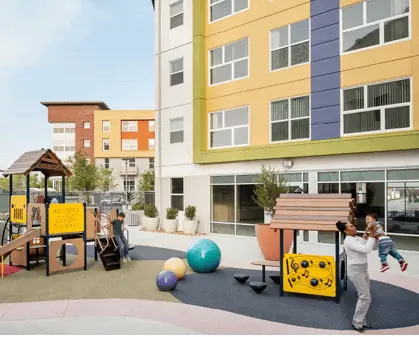
Victoria at COMM22 offers 70 affordable housing units for seniors 62 and older. Victoria has 40 studio, one- and two-bedroom apartments with affordable below-market-rate rents and 30-one-bedroom apartments with HUD subsidized rents.
SCS Engineers’ role in supporting the environmental conditions at the site spans over ten years, including environmental assessments, waste characterization, mass grading, and design and implementation of a successful remediation program; thus delivering housing that supports both the social and business goals of the development team and the community.
“The technical issues were challenging, but it’s amazing to see the transformation of vacant lots into vibrant housing that anchor the neighborhood,” says Dan Johnson, SCS Engineers vice president. “We are proud to be able to provide the highest level of environmental and regulatory support for the community.”
The completed COMM22 housing development is a transformational project that has brought tangible benefits to its residents and the entire community. What was once an abandoned, contaminated property is now a thriving cornerstone for the whole neighborhood and a model for transit-oriented infill development and affordable housing with a noticeable increase in the quality of life and a palpable pride of ownership.
Additional Resources
NOW ON-DEMAND
We hope you were able to join SCS Engineers for our follow-up presentation to Black Goo I. In this live session, we welcomed Dr. Craig Benson, who is studying black goo for the Environmental Research & Education Foundation. Joining Dr. Benson were landfill and leachate engineers and an expert who brings in-field expertise for a holistic presentation.
Landfills are experiencing a phenomenon called “black goo,” solids that make their way into leachate and gas collection systems, clogging equipment and impairing the management and extraction of leachate and gas. The viscosity differs between facilities, hardening like concrete or staying pliable. It attaches to pumps and check valves and settles in sumps, causing problems for leachate collection system cleanouts and landfill operations.
With funding from the Environmental Research & Education Foundation, Craig Benson provided information from his team’s studies, and our panelists discussed how goos move through waste into the infrastructure and how to remove it or keep your systems functioning. Ultimately, this and a growing base of information will help us to prevent the goo problem from happening in the first place.
Who Should Watch and What You’ll Learn?
Goo II is for those in wastewater operations, landfill owners, operators, technicians, field personnel, engineers, and regulators interested in learning more about goos. We covered these topics:
SCS forums are strictly educational.
Carbon capture and storage (CCS) enables industry and manufacturing to reduce greenhouse gas footprints by up to 2 million metric tons annually, for decades. It’s a great time to learn how this technology works, how it can help you, and what the overall lifecycle of a CCS project looks like. In this chapter, Kacey Garber and Candy Elliot step through best practices based on project experience, regulations (in this example Illinois), and the compilation and submittal of permit applications. You’ll learn about:
Your business does not have to be in Illinois to learn from these educational, non-commercial webinars. Transform how industry leaders like you manage greenhouse gas as a byproduct of modern life.
Helpful Basic Tips:
Early planning and mindful project scoping are critical for a CCS project to understand and communicate the project’s needs, objectives, goals, and conceptualized design. Use site characterization data and have a good handle on the operational parameters to develop a good first model and initial area of review delineation. The monitoring system design should then be tailored based on those data. Use the baseline and operational monitoring data to calibrate the model and refine your area of review delineation.
Early financial planning is also important and should include long-term operations and monitoring. Spend rates will be variable throughout these projects and highly dependent on the project’s phase.
The site geology is a key factor — we highly recommend conducting a feasibility study before beginning a project to assess the suitability of Class 6 injection at the proposed location. In addition, when the permit process begins, it’s important to front-load the site characterization efforts to minimize the uncertainty surrounding your site suitability.
Proactive stakeholder engagement surrounding your project is more likely to help lead your project to success. Developing outreach plans help open and facilitate lines of communication with stakeholders, regulatory officials, and public and environmental advocate groups.
Use an iterative project approach – permitting is not a cookie-cutter but a site-specific process. Your early and thorough planning steps help create a feedback loop that will go on throughout the project’s life. It enables flexibility in implementing your approach.
 Kacey Garber is an experienced groundwater project manager for active and closed industrial clients, including routine groundwater monitoring and statistical analyses; reports and permit applications; designing sampling and analysis plans; special groundwater studies; and conducting groundwater well construction planning and design. She has also been involved in PFAS work groups and publishes on the topics of UIC and geologic sequestration. Ms. Garber has a Masters degree in Geoscience.
Meet Catelyn Scholwinski, SMM Director, and Stephanie Watson, SMM Vice Director, during an hour-long webinar where we’ll chat about how they got to where they’re at today, their advice for young professionals, and their predictions for our industry. Come ready to ask questions and get to know who is leading the SWANA SMM Technical Division!
SWANA has Technical Divisions that focus on specific solutions for the waste industry. Sustainable Materials Management (SMM) is a very important one. The Division has an upcoming event that is a great opportunity for young professionals interested in more sustainable reuse, recycling, and resource management.

SCS’s own Kelli Farmer is SWANA’s SMM Young Professional Representative. If you want to speak with the men and women on SCS’s Sustainable Materials Management teams, please get in touch with us at .
SCS Engineers is leading the charge to sustainable materials management through innovative policies, programs, and infrastructure that increase diversion, reduce contamination, recycle more materials, and manage costs. SCS offers comprehensive services to assist in achieving your SMM goals and reducing your carbon footprint. We offer technical expertise and the financial, regulatory, and educational skills to develop cost-effective and sustainable programs.
Meet Catelyn Scholwinski, SMM Director, and Stephanie Watson, SMM Vice Director, during an hour-long webinar where we’ll chat about how they got to where they’re at today, their advice for YPs, and their predictions for our industry. Come ready to ask questions and get to know who is leading the SWANA SMM Technical Division!
SWANA has Technical Divisions that focus on specific solutions for the waste industry. Sustainable Materials Management (SMM) is a very important one. The Division has an upcoming event that is a great opportunity for young professionals interested in more sustainable reuse, recycling, and resource management.
SCS Engineers is leading the charge to sustainable materials management through innovative policies, programs, and infrastructure that increase diversion, reduce contamination, recycle more materials, and manage costs. SCS offers comprehensive services to assist in achieving your SMM goals and reducing your carbon footprint. We offer technical expertise and the financial, regulatory, and educational skills to develop cost-effective and sustainable programs. SCS’s own Kelli Farmer is SWANA’s SMM Young Professional Representative.
If you are interested in an environmental career that can impact climate change for the good – this is it! Many types of positions are open now.
Engaging With Your Stakeholders and Public Outreach is Part II of our four part video series.
Geologic sequestration can be seen as an incredible public good that reduces greenhouse gas and protects the health and wellness of generations to come, or a local risk. It’s likely you will receive questions and concerns from the public and other stakeholders during your project’s lifecycle. You can use an effective stakeholder engagement plan to help you anticipate and respond to those questions and concerns.
Watch the Geologic Sequestration webinar to learn how to engage your key stakeholders in a supportive, consistent way that demonstrates your commitment to the community and builds trust. Geologic sequestration is an EPA-approved technology companies are exploring to help them reduce their greenhouse gas emissions. In this chapter you’ll learn:
If you’re ready to explore the benefits of geologic sequestration and want to educate the public and stakeholders about the safety and sustainability of Class VI underground injection control wells, watch Richard Southorn’s video to learn more, or contact your local SCS office for a consultation.
 Richard Southorn, PE, PG, serves as Project Director in our Chicagoland office. He manages coal combustion residual (CCR) and municipal solid waste projects, ranging from construction plan development to full-scale design services. He is a licensed Professional Engineer in Illinois, New York, Pennsylvania, Maryland, Delaware, Alabama, South Carolina, Kansas, Michigan, Indiana, Hawaii, Oregon, and Georgia; and a licensed Professional Geologist in Illinois and Delaware.
Additional Resources:
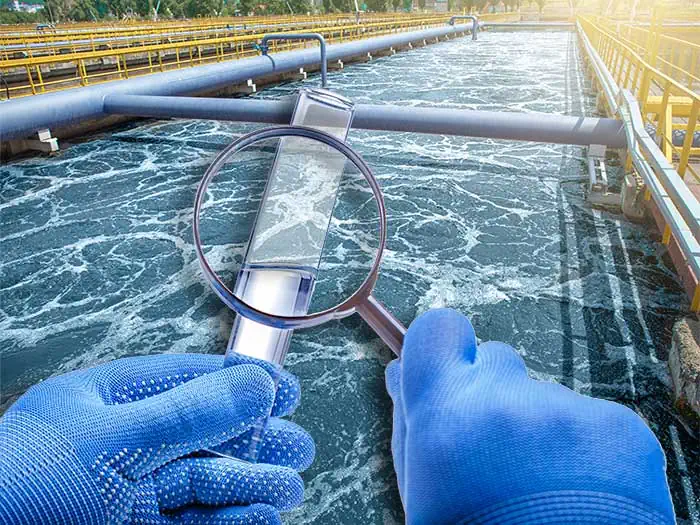
To a wastewater treatment engineer, at least during workdays, it seems like everyone is talking about forever chemicals, all of the time. There’s a good reason for that, because the huge group of man-made chemicals has climbed in priority to be at the top of most wastewater treatment regulatory considerations. Forever chemicals are also known as per and polyfluoroalkyl substances (PFAS) and have rapidly become the latest of the emerging contaminants in drinking water to be treated. So, while there is still a lot of toxicology research to do, PFAS destruction and even which PFAS actually needs to be addressed, there is very little doubt regarding the future need to treat PFAS in landfill leachate and other wastewaters. Everyone is in agreement, the environment needs to be protected from forever chemicals.
PFAS chemicals can withstand high heat without becoming unstable as well as repelling oil and water, making them ideal for inclusion in fire-fighting foam, lining non-stick pans, or water resistant clothing. But unfortunately, PFAS can persist in the environment – water, fish, humans, etc. – for a long time. So, having efficient and cost-effective methods of treating wastewater, drinking water, bio-solids, etc., to reduce/remove PFAS is becoming increasingly important. Luckily, some traditional and very available treatment methods are effective at treating PFAS as well as some newer, non-traditional treatment methods that appear to be promising.
One effective management technology is using deep injection wells to store the PFAS contaminated wastewater deep, far below drinking water sources and within high total dissolved solids groundwater. Deep injection wells are only allowed where the deep geology and subsurface conditions can allow for the PFAS wastewater to be contained where it is injected.
Additional management options are granular activated carbon (GAC) or ion exchange (IX), which are adsorption treatment methods that use a media, through which the PFAS contaminated wastewater can pass, and the charged PFAS molecules become bound up in the opposite charged GAC or IX media.
Reverse osmosis (RO) and foam fractionation (FF) treatment methods use separation, either through very small pores in a membrane (RO) or applying aeration to create a PFAS concentrated foam (FF), to allow the treated, cleaner water to discharge the treatment process and the concentrate (RO) or foamate (FF) is left and can be dealt with more efficiently, because after treatment the concentrate/foamate is a much smaller volume than the original wastewater flow.
These PFAS management methods simply move the PFAS chemicals out of the way and don’t actually destroy the PFAS. PFAS destruction generally requires more effort and cost because high pressure and/or high heat are required to break the carbon – fluorine (C-F) bonds. A regenerative thermal oxidizer (RTO) or supercritical water oxidation (SCWO) are PFAS destruction methods that can be employed. An RTO typically operates at high temperature (e.g., 1,800 F) and SCWO utilizes both high temperature (>705 F) and high pressure (>3,210 psi) within a process to, again, break the C-F bonds. Electrocoagulation, advanced oxidation processes and plasma are also treatment methods that could be employed to destroy PFAS.
These are just a few of the many PFAS management and destruction options. It can be hard to decide what’s right for your project. That’s where SCS can help. We’re technology agnostic – so you can trust our recommendations are appropriate for your project and goals. Contact us today to learn more about what’s possible.
About the Author: Sam Cooke, PE, CEM, MBA, is a Vice President and our expert on Industrial Wastewater Pretreatment. He has nearly three decades of professional and project management experience in engineering with a concentration in environmental and energy engineering. Mr. Cooke works within SCS’s Liquids Management initiative to provide services to our clients nationwide.
Additional PFAS Management and Treatment Resources:
What if you could reduce your company’s greenhouse gas (GHG) emissions by 1.5 to 2 million metric tons per year for the next 20 years?
Now you can, with carbon capture and storage technology. Watch the Illinois Basin Carbon Capture and Storage webinar to learn more. Carbon capture and storage is an EPA-approved technology companies are exploring to help reduce GHG emissions.
In Illinois and many other states, leading firms are submitting permit applications for Class VI underground injection control wells. It’s a great time to review the state of the practice and learn how this technology works and how it can help you meet your carbon reduction goals. In this video chapter, SCS answers these questions:
This technology is on track to transform how industry leaders like you manage greenhouse gas as a byproduct of modern life. Watch Charles Hostetler’s short video to learn more, or contact your local SCS Engineers’ office for a consultation.
 Dr. Charles Hostetler has nearly four decades of experience as an engineer and hydrogeologist. He has diverse experience in coal combustion residue (CCR) and solid waste management permitting, design, and construction projects. His areas of expertise focus on supporting electric utilities, property owners and developers, solid waste facility owners and operators to meet demands for addressing environmental changes and impacts on their operations.
Additional Resources:
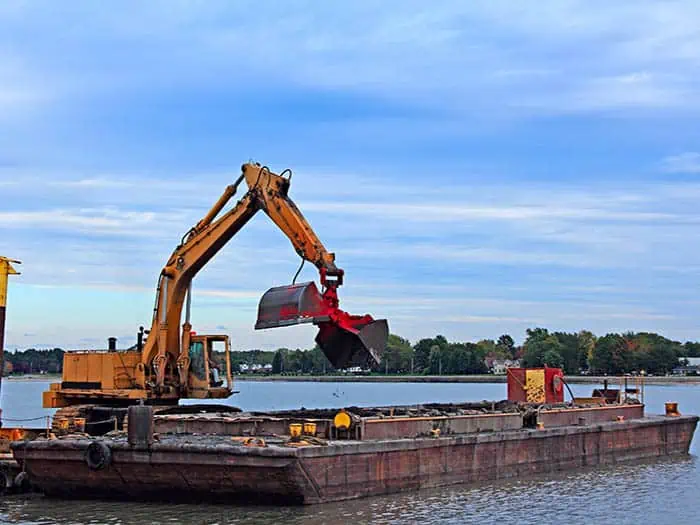
In degraded ecosystems, manipulating sediments can aid in recreating natural sediment processes, establishing suitable substrate conditions for aquatic life, and supporting the recovery of vegetation and wildlife. In the United States, sediment management revolves around the presence of contaminated sediment. Contaminated sediment sites pose intricate technical challenges that demand significant resources to address and mitigate the associated problems effectively.
Over the past three decades, significant progress has reduced the discharge of toxic and persistent chemicals into waterways throughout the United States. However, a persistent problem remains, characterized by elevated concentrations of contaminants in the sediment found at the bottom of rivers and harbors. The situation has raised considerable concerns about its potential risks to aquatic organisms, wildlife, and humans.
This paper delves into the technical challenges environmental engineers and consultants face in addressing and mitigating this issue, especially during waterfront remediation projects. Furthermore, he explores strategies to optimize resources to tackle the problem at hand effectively and efficiently.
Active monitoring and data collection is critical throughout the remediation process. These activities enable evaluating the chosen strategy’s effectiveness, identifying necessary adjustments, and ensuring compliance with environmental regulations. Adaptive management approaches allow modifying or refining the sediment remediation strategy based on monitoring results and stakeholder feedback.
The utmost importance lies in choosing the appropriate remediation techniques; base the decision on site conditions, the specific contaminants present, and the desired remediation goals. After reading the paper, you may get a better idea of the options available for achieving effective and sustainable sediment remediation outcomes.
Corporate Headquarters