Most of us are familiar with small-scale backyard composting and with large-scale yard waste composting on bigger sites, typically outside of urban areas, using open windrows. But did you know there’s a lot of room between those scenarios to compost small to medium amounts of organics on limited land and/or in a more urban environment?
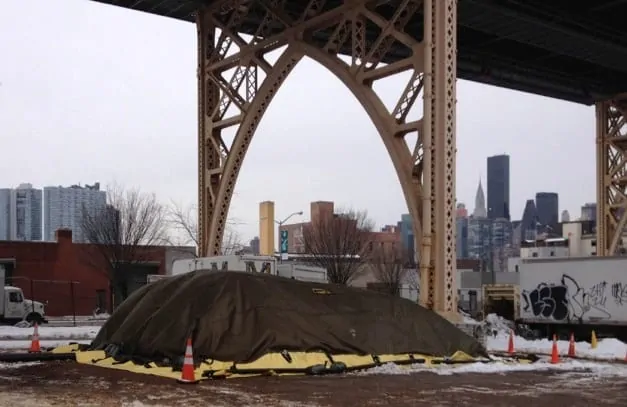
The NYC Compost Project Hosted by Big Reuse is one example. This urban food scrap compost facility, funded by the New York City Department of Sanitation, is tucked under the Queensboro Bridge. It uses a covered aerated static pile (ASP) system with the GORE® Cover System technology. The cover controls odors and vectors, and the aeration system and semipermeable membrane cover provide the needed air flow to support composting. The current system processes 400-500 tons of food waste annually, with plans to double that capacity on a new 1/3-acre site, designed by SCS (construction is scheduled for Summer 2017).
For a slightly larger site with a few acres available for compost facility layout, a hybrid approach may be the best bet to balance the needs for odor control, compost quality, and cost control. A hybrid approach may include an aerated static pile system as Phase 1 of the composting process, followed by open windrow processing as Phase 2. The aerated static pile provides a superior process and odor control during the critical initial weeks, while the windrows provide more cost-effective management through the completion of the composting process. A hybrid design proposed by SCS for a city in the Northeast can process about 4,000 tons of food waste plus 6,000 cubic yards of yard debris annually on a 2-acre site, with an estimated processing time of 4 to 5 months per batch.
In Wisconsin, compost facilities are regulated under NR 502; however, facilities processing less than 20,000 cubic yards of yard waste or less than 5,000 cubic yards of source-separated organics are exempt from many of the code requirements. Check out our compost reference Composting Exemption Reference List for details.
Suggested Contacts
Contact the author, Sherren Clark, PE, PG, for programs in the Upper-Midwest, or Greg McCarron, PE, about programs in the Northeast.
Contact to speak with a professional in your state about getting started.
Suggested Resources
U.S. Composting Council website
SCS Engineers Organics Management and Composting site
State agencies such as the Department of Natural Resources, Pollution Control, or Environmental Protection are usually excellent sources of information.
Article and Slideshow of Landfills using these Best Practices to prevent leachate. Click Hot off the Press to view.
Creosote is a toxic chemical that has been commonly used as a wood preservative for over 50 years. It acts as a pesticide, herbicide, and fungicide and has been used widely in both land and marine applications.
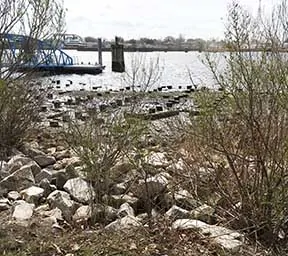
Studies have indicated that pilings and other artificial structures provide possible environmental benefits, such as habitat for invertebrates, roosts for birds, and a spawning location for certain fish species (e.g., herring). However, far more studies have indicated potential harm from treated structures. It is documented that pilings will leach the most during the first two years after installation after which leaching declines significantly.
The Norfolk Riverfront area has been developed since at least 1887, and the use of treated pilings can be presumed. The majorities of the pilings are presumed to
have been installed over two years ago and are therefore beyond the 2-year timeframe for significant leaching. Pilings that are shown to be in good condition and with a viable use as part of the development effort can remain in place with little effect on the surrounding environment.
This paper discusses the City of Norfolk’s waterfront brownfield redevelopment and the importance of understanding and developing an approach for the managed disposal of creosote pilings. The guidance is based on strategies approved by the U.S. Environmental Protection Agency and other noted expert sources such as waterfront municipalities, published white papers, and peer-reviewed publications.
Take me to the paper and information about the authors.
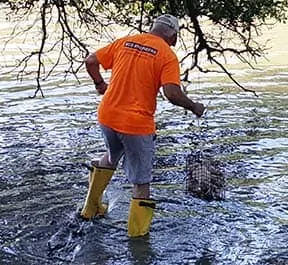
Other environmental groups are hard at work in the region. Lynnhaven River NOW, is one organization working with residents, businesses, and community leaders who are restoring and protecting Virginia Beach waterways.
Learn more here: http://www.lynnhavenrivernow.org/
Landfill operators are seeking new means to dispose of leachate generated at their facilities more economically. Rising costs of leachate treatment at publicly owned treatment works (POTWs) obliges landfill operators to look for alternative disposal means at a lower price. These situations encourage landfill operators and consultants to do more with less when designing preventative solutions to reduce leachate generation in the first place.
Upstream measures to reduce leachate generation range from standard operating procedures to innovative ideas with significantly high benefit to cost ratios. SCS compiled a list of our Top 10 measures to consider, including:
1. Grading – Creating landfill plateaus to maximize rainwater runoff toward perimeter storm water ditches, using low permeable soil to seal landfill slopes that will not receive waste for an extended time.
2. Caps & Covers – Using temporary geomembrane caps over areas that will not receive waste for a long time. Constructing final cover over landfill final slopes to eliminate rainwater percolation into landfill.
3. Swales – Constructing temporary and strategic swales on landfill outside slopes to capture rainwater runoff before causing soil erosion on the slope and to convey runoff water to perimeter ditches.
4. Berms & Downchutes – Constructing temporary berms and swales on landfill slopes that drain toward new disposal cells to capture water before reaching waste in the new cell and directing water to perimeter ditches. Also, constructing a berm at the crest of slopes to minimize the flow of rainwater runoff over slopes that are causing soil erosion. Constructing engineered temporary and sturdy downchutes for rainwater runoff from top areas of the landfill to the perimeter ditches.
5. Tarps – Installing rain tarp over a portion of a new cell that will not be in service for some time.
6. Exposure – Minimizing exposure of the active face while the remaining areas are properly graded to shed rainwater runoff to perimeter ditches.
7. Shedding – Grading the top area of each lift to shed rainwater runoff to outside slopes and the perimeter ditches.
8. Plantings – Installing sod or seeding on exterior slopes and those interior slopes that will not receive waste for an extended time to reduce soil erosion.
9. Roads – Constructing ditches adjacent to access roads to safely convey runoff water to the bottom of the slope – pitching access roads toward the ditch adjacent to the road, and building a proper road surface to minimize erosion during severe storms while lasting long under traffic loading.
10. Maintenance – Establishing routine maintenance protocol for the aforementioned measures because regular maintenance sustains long life and performance.
For facilities outside the landfill area, special measures, such as using floating covers on leachate ponds or canopies over operations that could potentially generate leachate without the canopy, also help reduce leachate generation.
Upstream measures are not necessarily limited to our Top 10 list but depend on the type and extent of operations at a facility. The will of the landfill operator and the expertise of the solid waste engineer can go a long way to reducing leachate generation at landfill facilities, and we all strive for that.
More about Liquids Management including case studies.
This article provides the SCS methodology used to make projections for the financial performance of solid waste collection and disposal during a five-year planning period for the City of Pensacola, Florida. The projections were then used to model different possible rate structures for approval by the City Council.
After discussion and two public readings of the ordinance amending the sanitation rate, the Pensacola City Council adopted a new monthly sanitation rate and established a sanitation equipment surcharge. These additional revenues enable the full funding of departmental services to continue and will provide for ongoing replacement of sanitation equipment.
Read the article published in Waste Advantage Magazine.
Cutting Solid Waste Collection Costs
A six-month pilot program was initiated to identify possible program savings and how the program would be rolled out to its residents. An SCS Engineers rate study conducted at that time suggested possible operational savings, which could enable the City to defer a solid waste rate increase. The good results shown during the pilot program encouraged the City decision-makers to move ahead with once a week collection. The latest statistical data from the City of Clearwater, Florida shows a 21% decrease in solid waste generation and an annual savings of $107,000 in tipping fees. Operational savings for the City achieved the projected $400,000 savings as forecasted in the SCS rate study.
Assessing the Financial Performance of Operating and Proposed Solid Waste Programs
Financial analysis is an increasingly important issue in solid waste decision making. In an era where the mantra of doing more with less” is on the lips of most political decision-makers, it is critical to assess the financial performance of operating and proposed solid waste programs. The three issues discussed in this article provide some guidelines on how these kinds of assessments can be conducted.
Visit SCS Engineers at WasteCon and ISWA, in Baltimore MD.
Many landfill operators and owners are now spending more than 10 or 20 cents per gallon for leachate management, which can become quite costly. One of the primary reasons that leachate management has become an expensive challenge in the United States is more stringent regulatory policies regarding the discharge of liquids into public waters. The regulations affect publicly owned treatment works (POTW), which has led some POTWs to require that leachate entering their plants have adequate pre-treatment to remove contaminants. Under these circumstances, some landfills are forced to collect and haul their leachate to a different POTW or to consider installation of pre-treatment equipment themselves.
Each landfill needs a solution to its leachate management issues that depends on applicable regulatory restrictions, the capability of the local POTW, and the leachate composition. Due to chemical reactions and biological activity inside the landfill, the leachate’s temperature is frequently warmer than area groundwater. Also, leachate is odorous, and generally brown in color, with colloidal suspended solids. The composition of leachates depends on the composition of a landfill’s waste, the landfill’s decomposition stage, and weather conditions. Many factors are evaluated to arrive at an efficient and economical treatment method for disposal of landfill leachate.
There are some treatment alternatives available to reduce the high organic and nitrogen loads in leachate. For some leachate applications, the treatment methods are sufficient to allow the POTW to process the leachate safely. If treatment is not possible, or cost prohibitive another alternative is to pre-treat the leachate, lowering the contaminant load to prevent subsurface precipitation, and then dispose of it using deep well injection. Some states require little or no pre-treatment before discharging leachate to deep injection wells.
The following technologies are available for the pre-treatment of landfill leachate: biological processes for wastewater treatment such as membrane bioreactors, sequencing batch reactors, activated sludge processes plus reverse osmosis. Wet oxidation processes, activated carbon adsorption, as well as precipitation, coagulation, and flocculation techniques are also used, depending on the contaminants and their concentrations. These two counties are using a combination of treatment technologies for their leachate management strategies.
Hillsborough County’s 60,000 Gallon Per Day Leachate Treatment Facility at Southeast County Landfill
New Hanover County’s Landfill Leachate Treatment Plant Using Reverse Osmosis
Effective leachate management applies unique combinations of technologies which most adequately address the previously mentioned factors. To provide a truly sustainable solution to leachate management, SCS suggests another approach, which is to consider the landfill design and operations as part of the solution. By using the existing landfill design and operations, SCS develops an integrated approach to leachate management that is preventative. The benefits of using an integrated approach are that they are often a more cost-effective solution in the long-term, sustainable, working with the existing landfill’s infrastructure.
Waste Management is using an integrated approach at Monarch Hill Landfill in Pompano Beach, Florida. Monarch Hill Landfill is a 385-acre landfill with a waste flow of 5,000 tons per day. SCS helped decrease leachate formation as part of overall landfill design and operation. Waste Management reduced leachate formation using the following methods:
Temporary caps – SCS designed and provided monitoring services during installation of a 10-acre temporary geomembrane cap over a portion of the top intermediate plateau of the landfill. It reduced leachate generation, decreased odors, increased gas collection efficiencies, and addressed leachate seeps on the slope, as well as making surface water runoff over the top of the landfill easier and more efficient.
Final covers – SCS designed, permitted, and provided monitoring services during construction of six partial closure projects. The final covers were equipped with leachate toe drain systems below the final cover geomembrane, enabling leachate seeps to be collected and disposed of efficiently. The design also allowed collection of gas from the lower portion of the slope after completion.
Rainwater Toe Drain Systems – SCS designed a toe drain system above the final cover geomembrane that enabled water to be collected and diverted to the landfill perimeter ditches, preventing pore pressure build up and keeping the system stable.
Tack-on Swales – SCS designed tack-on swales that were implemented to catch runoff and convey water to downchute pipes. The swales could be easily adjusted based on the size of each partial closure and the overall management of stormwater.
Our approach is to develop a robust, tailored liquids management program comprised of the most appropriate technologies and engineering design to tackle the unique set of challenges facing each landfill client. In an era of doing more with less, clients find our programs are more cost-effective because they are more efficient and well designed.
Learn more at SCS Liquids Management
Contact one of our National Experts or :
Darrin Dillah: Landfill Leachate – Upstream
Ron Wilks: Landfill Leachate – Downstream and Evaporators
Monte Markley: Deep Well Injection
Bob Speed: Dewatering
Ali Khatami: Landfill Engineering and Construction Impacts on Liquids Managment
Sam Cooke: Industrial Wastewater Treatment
Marc J. Rogoff, Ph.D. and Laurel C. Ureña, M.S., explain the major cost categories and how they impact a specific cost analysis for a recycling program. The format uses examples to put the financial information into context for a Public Works Director or Project Manager to understand how cost analysis can help in determining the feasibility of a new or enhanced program.
The economic concept of the time value of money is an important one to understand because it allows the recycling coordinator or analyst to compare the feasibility of different solid waste program alternatives. Driven by interest and inflation, it boils down to one simple rule: a dollar invested tomorrow is worth less than a dollar received today.
Read the full article as published in the Florida APWA Reporter, June 2017 edition.
Read the Doing More with Less series of blogs, articles, and case studies of real solutions in an era of reduced budgets.
 Everyone knows about recycling, especially if you work at SCS. Many times, there are different ways that you can reuse those items for something else before, or instead of, getting rid of them. Today, we are sharing easy zero waste tips to repurpose items you have around your house, rather than just tossing them in the recycle bin:
Author: Jennifer Mancini
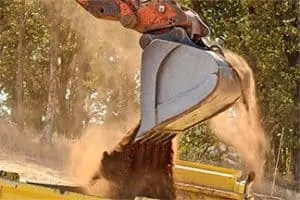
Circumstances sometimes dictate that a licensed landfill is your only option, but Wisconsin’s solid waste laws allow you to dispose of some types of contaminated soil at other locations if the soil qualifies as low risk. Alternative options are available through an exemption process outlined in Wisconsin Administrative Code Chapter NR 718.
Who Can Apply for an NR 718 Exemption?
Except for required actions when contamination is first discovered, the Wisconsin Department of Natural Resources (WDNR) must pre-approve exemptions.
Know the Rules Before You Apply
Additional information and answers to your compliance questions are available by contacting an SCS professional. In Wisconsin, contact Ray Tierney or Betty Socha. Are you ready to take control of your environmental compliance costs? Contact me or Betty Socha to learn more about how you can save money on soil disposal at your next project.
To learn more about compliance options for contaminated dirt disposal, remediation, and construction options in other states contact or visit the SCS website services page.
Related Services and Compliance:
Brownfields and Voluntary Remediation
Environmental Due Diligence and All Appropriate Inquiries
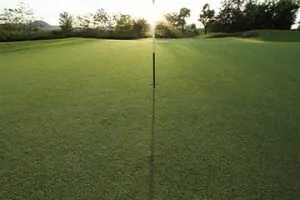 Groundwater can be a replacement or a backup for the municipal water supply, as well as a budget saver and an insurance policy when water is scarce. Chuck Houser describes the environmentally friendly circumstances and conditions necessary to use groundwater as a way to reduce the strain on water resources; particularly in California and other water-scarce areas in the region.
By using groundwater, you are able to maintain your business the way you’d like, and you shrink your water consumption footprint in the overall water resources of the state. You are conserving by using water that is available only to you — the groundwater beneath your property.
Using groundwater is a privilege that may allow you to reduce water supply costs and better meet water conservation goals while reducing strain on an already stressed resource. With privilege comes responsibility — to use the resource appropriately and carefully.
Chuck Houser works in the earth science industry. He is a registered geologist, certified engineering geologist, and certified hydrogeologist. His expertise includes environmental site assessments, groundwater monitoring, fault and landslide investigations, groundwater resource studies, geological mapping, and geotechnical investigations. Chucks scientific knowledge of geology and experience in the earth science industry for SCS Engineers enable him to prepare useful hydrogeological research, accurate environmental assessments, and environmentally appropriate remediation approaches.
This article may be of interest to managers of large tracts of land such as golf courses, parks, and recreation centers under a mandatory water conservation order and are unsure whether a facility can meet the cutback requirements and still maintain the property.
Corporate Headquarters