Join SCS Engineers at the University of Wisconsin-Platteville Engineering Career Fair on September 25, 2024. We’re excited to connect with students majoring in Chemistry, Civil Engineering, Construction Management, Environmental Engineering, Environmental Science and Conservation, and Mathematics. Visit our booth to explore exciting career opportunities and learn how you can contribute to impactful projects in the engineering and environmental sectors. Whether you’re looking for internships or full-time positions, our team is eager to discuss how your skills can align with SCS Engineers’ mission to provide sustainable solutions for our clients and communities.
Join SCS Engineers at the FAMU STEM Career Fair on September 24, 2024 at the FAMU-FSU College of Engineering in Tallahassee, FL.! This exciting event features top-tier engineering students from the FAMU-FSU College of Engineering, alongside talented individuals from other science and technical majors at Florida State University, including IT, Computer Science, and more. It’s the perfect opportunity for organizations like SCS Engineers to connect with emerging talent in these dynamic fields. Don’t miss out on the chance to engage with the next generation of innovators and problem-solvers!
A revision to AP-42 regarding Municipal Solid Waste (MSW) Landfills was finalized on August 15, 2024. AP-42 is the Compilation of Air Pollutant Emission Factors guidance developed by the U.S. Environmental Protection Agency (EPA) to evaluate air pollution emissions from various sources. EPA drafted new emission factors for the MSW Landfill portion of AP-42 on January 12, 2024 and offered a 60-day public comment period that ended March 12, 2024.
Highlights of this final action include:
SCS Engineers helps landfill owners and operators navigate NSPS, NESHAP, and AP-42 emission-factor requirements through our Clean Air Act compliance services.
For additional information, please contact SCS Engineers, or visit the EPA Air Emissions Factors and Quantification website.
Join SCS Engineers at SWANA Young Professionals Green Drinks, August 23rd 6-8 pm at San Pedro Square Market, where you can explore an exciting and impactful career path in sustainability and learn more about the circular economy. This is your chance to network with industry experts, enjoy drinks and appetizers, and discover unique career opportunities that make a difference in our communities by reducing waste and combating climate change. Whether you’re just starting out, considering a career transition, or simply looking to connect with others in the field, this event offers valuable insights and connections to help you engage with the circular economy. Hear from speakers representing the Solid Waste Association of North America (SWANA), Northern California Recycling Association (NCRA), Enthalpy Analytical, SCS Engineers, Mainspring Energy, and more. Bring a friend and get ready to explore the diverse career paths this industry has to offer! Register today!
Join SCS Engineers at the 2024 Illinois Manufacturers’ Association Environment & Energy Conference. The event will be held October 22 at the Tinley Park Convention Center in Tinley Park, IL. This event is great for Illinois manufacturers to gain critical insights from state environmental and energy experts. Designed for CEOs, plant managers, safety officers, legal teams, and environmental professionals, this one-day program will delve into compliance, regulations, permitting, sustainability, and future legislative developments. Attendees will hear directly from state officials, regulators, and industry leaders on the most pressing environmental and energy-related issues.
As a proud Lunch Sponsor, SCS Engineers invites you to visit our booth to discuss your environmental compliance challenges and explore solutions tailored to your upcoming needs. Don’t miss this opportunity to connect with our experts on site! Register today.

Anecdotes on stormwater design, management, and regulation by a non-engineer
The purpose of this series is to present case studies and general thoughts on stormwater. When possible, I want to share interesting examples that may offer opportunities to challenge existing paradigms and spark discussion. As an ecologist/toxicologist, I have very much enjoyed this now 20+ year foray into what is often an engineer’s wheelhouse. My hope is that I can offer a different angle on stormwater, as we seem to be increasingly affected by high storm intensities and more stringent regulations across the country.
A Little Historical Context…
Stormwater has, and continues to be, largely the purview of engineers. Engineered designs for managing stormwater have existed for thousands of years and can be seen in both the “ancient” old (Mesopotamia) and new (Mayan and Aztec) world. Designs were empirical and began out of necessity for safety and to protect land uses, such as residences and agriculture. In modern times, empirical observations have been converted into modeling tools to simplify the process greatly.
These days, stormwater issues are getting more complex. Heavy, widespread water pollution generally began in the mid-1800s with the Industrial Revolution but became a more obvious problem following World War II. The first major U.S. water quality law was enacted in 1948 and became much more prominent in 1972 as the Clean Water Act (CWA) we know today. The CWA addresses stormwater because it clearly has the potential to carry pollutants, particularly when it originates from large industrial sites.
More recently, we have become much more aware of the key role of long-term planning when it comes to stormwater. Trying to engineer your way out of a stormwater problem will likely be much more expensive than simply planning well and maintaining a properly designed system.
Although stormwater engineering was once simply about preventing stormwater from being destructive, it has now become at least as much about maintaining water quality. As pollutants become more prevalent in more confined and constrained systems, effects on human health and the environment are likely to be more pronounced, especially when existing ecosystem services are inadequate to mitigate impacts. Moreover, ecosystems expected to treat stormwater, such as wetlands and streams, are now likely protected themselves, and opportunities for “dilution being the solution to pollution,” while still a valid concept, are becoming rarer. Our ecosystems simply do not have the capacity to handle everything we are throwing at them.
That’s the context for this series: How we control and treat stormwater in the context of interesting observations and experiences. The intent is to share stories and thoughts to create conversation and reflection on stormwater played against the regulatory background.
Authors Note

I am an ecologist with a postdoctoral background in environmental toxicology and have been professionally engaged as a consultant in water quality issues since 1989. Recently I have become engaged in a number of legal discussions and disputes regarding water quality; in particular, industrial stormwater, and I continue to be interested by issues that come up during the course of a general stormwater practice.
I am a pragmatist: I have practiced long enough that I have left idealism behind. Idealistic approaches are valid as a theoretical baseline, but anything beyond that must have scientific or well-documented empirical support. Otherwise, idealism is just sort of adorable, if not misguided, and can lead to real problems.
As an ecologist, I respect our ecosystems as much as anyone. Our goal is to protect human health and the environment. Some parts of this series may appear to some that I’m “siding” with industry or other client concerns, but my intent is always to balance idealism against practical and scientific reality.
In summary: “The road to hell is often paved with good intentions.”
Let’s walk the road together and see what we can figure out.
Join SCS Engineers at MINExpo International, the industry’s premier global mining event, taking place September 24-26 at the Las Vegas Convention Center in Las Vegas, Nevada. This event, owned and produced by the National Mining Association, brings together professionals, experts, and decision-makers from the global mining industry to collaborate, learn, and engage. Explore the show floor, featuring cutting-edge mining products for safety, drilling, engineering, materials handling, training, HR, and more.
You go to great depths to provide the materials that power the modern world. At MINExpo, you’ll uncover new products and transformative technologies designed to boost productivity and safety. Experience massive machinery, innovative solutions, and essential resources covering every aspect of the mining process—from exploration and planning to safety, sustainability, and reclamation.
Several members of the SCS Engineers team will be attending, and we invite you to visit our exhibitor booth #10442 to learn more about how we can support your mining operations with sustainable and innovative solutions. Don’t miss out on this opportunity to connect and discover the future of mining. Register today!
Surface and Groundwater Cleanup – Aluminum Aquatic Toxicity
Florida has established default surface water cleanup target levels (SWCTLs), which apply to surface water and groundwater impacting a nearby surface water body. The default SWCTLs for many chemicals are lower than the groundwater cleanup target levels (GCTLs) and, in some cases, even lower than background conditions. Meeting these cleanup endpoints can be technically challenging, time-consuming, and sometimes cost-prohibitive. Today’s technical blog highlights achieving aquatic protection more sustainably and economically.
Such is the case for aluminum. The default freshwater SWCTL for aluminum is 13 µg/L, lower than the GCTL (200 µg/L) and typical background levels (31-2790 ug/L, Miami-Dade County 2022). This SWCTL, which aims to protect aquatic life from chronic toxicity, was calculated by the University of Florida in the early 2000’s (Technical Report, FDEP 2005). Fortunately, the United States Environmental Protection Agency (US EPA) has since enhanced how we evaluate aluminum toxicity to aquatic life, reflecting the latest scientific knowledge and resulting in a more practical cleanup standard.
US Environmental Protection Agency Water Quality Criteria for Aluminum Aquatic Toxicity
In December 2018, USEPA released the Final Aquatic Life Ambient Water Quality Criteria for Aluminum 2018 (USEPA, 2018). This document outlines an approach to calculate site-specific acute and chronic freshwater aluminum thresholds. Similar to the default SWCTL, the USEPA approach considers the most sensitive relevant species and the median lethal concentration (LC50) of aluminum for that species. However, the USEPA approach also accounts for variations in site-specific water chemistry, including pH, dissolved organic carbon (DOC), and total hardness, which are known to influence aluminum bioavailability, as follows:
Multiple linear regression (MLR) models were developed to characterize the bioavailability of aluminum in aquatic systems based on the effects of pH, DOC, and total hardness on aluminum toxicity. In addition, the agency created a user-friendly Aluminum Criteria Calculator (Aluminum Criteria Calculator V.2.0.xlsm) that allows users to enter site-specific values for pH, DOC, and total hardness to calculate the appropriate recommended freshwater acute and chronic criteria for site-specific parameters. In summary, the calculator uses the LC50, but normalizes it using the site-specific pH, DOC, and total hardness. In addition, the USEPA 2018 document includes tables with the recommended criteria for various water chemistry conditions.
Note that the USEPA 2018 document also outlines the MLR models and the calculator’s pH, DOC, and total hardness bounds as follows:
Case Study – Aluminum Aquatic Toxicity and a Residential Development Site
SCS Engineers is currently assessing a site under development for residential use. The site has an existing on-site lake, which historically has received unknown fill. Surface water sampling results confirmed aluminum concentrations (31.2 µg/L – 219 µg/L) in excess of the default SWCTL (13 µg/L). The regulatory agency has requested additional assessment and monitoring based on the sampling results and site conditions. Given the time and cost of this approach and the uncertainty in a defined path to closure, SCS instead opted to derive an alternative SWCTL (ASWCTL) using the USEPA approach.
Using the Aluminum Criteria Calculator V.2.0 (US EPA 2018) and site-specific water chemistry data from the site, SCS calculated acute (criterion maximum concentration, CMC) and chronic (criterion continuous concentration, CCC) criteria. The acute criterion protects 95% of the species in a representative aquatic community from the acute effects of aluminum. The chronic criterion represents the maximum concentration of aluminum, protecting most aquatic organisms from unacceptable short or long-term effects.
We calculated site-specific CMC and CCC values using site-specific pH, DOC, and total hardness. Site-specific pH (6.83 – 8.39) and total hardness (151 mg/L – 204 mg/L) fell within the MLR model and the calculator bounds. DOC (3.4 mg/L – 28.2 mg/L), however, did not. Although two site DOC concentrations (14 mg/L and 28 mg/L) exceeded the MLR models and calculator upper bound, we used the maximum allowable DOC concentration of 12.0 mg/L in the calculator. This approach is conservative since lower DOC concentrations result in higher bioavailability and, in turn, increased toxicity.
After evaluating the calculated CMC and CCC for each scenario, we selected the chronic criterion of 550 µg/L to serve as the ASWCTL. Using this ASWCTL, SCS recommended no further assessment or monitoring for the on-site lake. This more sustainable solution will help our client meet construction schedules, reduce costs, and expedite site closure while meeting surface mandates.
About our Authors: Meet Anabel Rodriguez Garcia and Lisa Smith
References and Resources:
Aluminum Criteria Calculator V.2.0 (USEPA 2018) https://www.epa.gov/wqc/2018-final-aquatic-life-criteria-aluminum-freshwater
Technical Report, FDEP 2005: Development of Cleanup Target Levels (CTLs) for Chapter 62-777, Florida Administrative Code. February 2005, prepared by the Center for Environmental & Human Toxicology, University of Florida.
Miami-Dade County 2022. Background Concentrations of Metals in Groundwater – Miami-Dade County. August 11, 2022. https://www.miamidade.gov/environment/library/reports/2022-08-11-background-concentrations-of-metals-in-groundwater.pdf
USEPA 2018. Final Aquatic Life Ambient Water Quality Criteria for Aluminum 2018. EPA/822/R-18/001. December 2018 https://www.epa.gov/sites/default/files/2018-12/documents/aluminum-final-national-recommended-awqc.pdf
Brownfields, Remediation, and Land Recycling
Ask an Expert – find an expert in your state
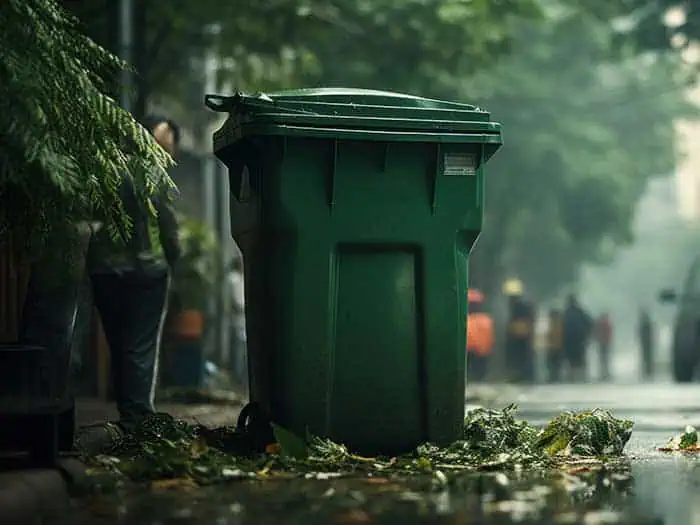
The Composting Consortium, an industry collaboration managed by Closed Loop Partners’ Center for the Circular Economy, released new resources that Greg McCarron of SCS Engineers recommends to municipalities looking to start or enhance a composting program. A blueprint, “How Organics Diversion Can Help Achieve Zero Waste Goals,” offers a clear and actionable framework, including:
Policy and Program Expansion for Diverting Food Waste: This section dives deeply into effective strategies for policy development. It explores methods to incentivize resident and business participation while outlining pathways to maximize food waste diversion from landfills.
Setting Up Programs and Infrastructure: This section provides a clear roadmap for establishing new organics programs. It details best practices for collection methods, explores various processing options (composting facilities, anaerobic digestion), and offers guidance on navigating the critical process of contracting with composters.
Communication with Program Participants: This section provides a comprehensive communications toolkit. It outlines strategies for educating participants on proper sorting techniques, maximizing program participation, and fostering long-term program success.
The site also includes platforms and programs that you may find useful and help connect you with other city officials and leaders nationwide to share and discuss best practices in starting and expanding organics programs & composting infrastructure.
These free, non-commercial resources will help you appreciate and understand applying the science and practice of composting and what is critical to a successful site, design, permit, and manage municipal composting programs that support circularity and operational efficiencies – creating value for all stakeholders. Many municipalities are interested in growing their programs to help the environment and provide a useful byproduct by reducing the amount of waste being hauled away and ultimately placed in landfills.
More Composting Educational Resources:
Corporate Headquarters