New Chicago office location at 40 Shuman Boulevard, Suite 216, Naperville, IL 60563
SCS Engineers continues expanding its environmental team in its Chicago, Illinois office to meet environmental engineering and consulting needs focusing on waste management and the needs of the electric utilities. Driving demands are industries and municipalities seeking to reduce their environmental footprint while providing essential services and products.
 Leading the Chicagoland team, Professional Engineer and Professional Geologist Scott Knoepke. Knoepke serves clients needing remediation and site redevelopment. This includes commercial dry cleaners, retail petroleum sites, and heavy industries such as steel, rail, coal, mining, manufacturing, metal cutting, and plating.
Meet the Crew!
 Richard Southorn, PE, PG, with 20 years of experience, joins Knoepke supporting solid waste and electric utility sectors. Southorn began his career in the field performing CQA oversight, environmental monitoring, and soil core/rock core logging at landfill sites. He moved into landfill design and modeling, primarily to support landfill expansion projects. Richard has extensive experience with site layouts, geotechnical stability, stormwater management, and leachate generation analyses.
Brett Miller is a Senior Designer with over 20 years of experience and proficiency in AutoCAD Civil 3D and Maya. Brett is capable of any production drafting and is highly skilled in understanding 3D space. This helps him support designs that fit into site-specific, real-world environments. Brett also creates 3D models and animations that illustrate the benefits of a design to our clients.
Niko Villanueva, PE, joins SCS with eight years of experience. Niko provides engineering and drafting support and is experienced in designing various landfill systems such as stormwater management, leachate and gas control, and foundation analysis. He has also prepared cost estimates and construction bid quantities for various projects and construction quality assurance services at multiple facilities.
 Meet Spencer LaBelle, with six years of experience. Spencer provides solutions for stormwater-related projects, including stormwater management system design, permitting, and compliance. He provides a diverse portfolio of clients and industries with stormwater-related services and environmental compliance.
 Zack Christ, PE, comes to SCS with 15 years of experience in solid waste and CCR landfill sectors. Zack has experience performing CQA oversight and CQA management of landfill final cover, base liner, and GCCS; environmental monitoring; and logging soil borings. He also has extensive landfill design and CAD experience in developing landfill siting and permitting application projects. Zack’s areas of expertise include geotechnical analyses, stormwater management, leachate management design, GCCS design, and cost estimating.
Most everyone is familiar with IIAR2, the American National Standard for Safe Design of Closed-Circuit Ammonia Refrigeration Systems. They will refer to it as the Recognized and Generally Accepted Good Engineering Practice (RAGAGEP) for our industry.
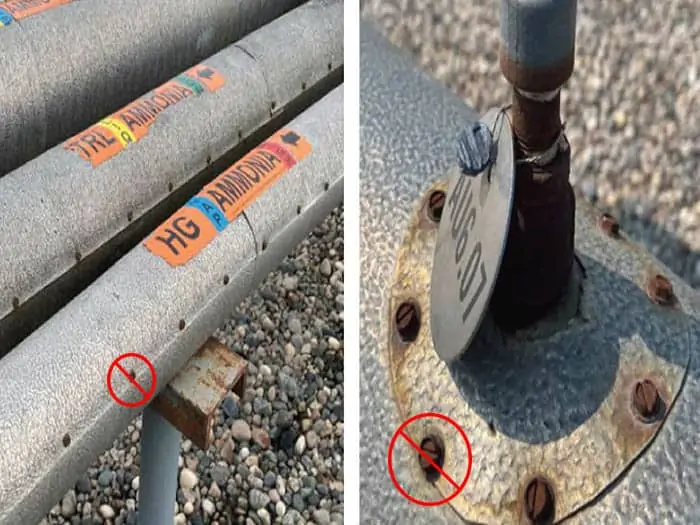
People often forget that IIAR2 is merely the RAGAGEP for the design of ammonia refrigeration systems, but not the installation. IIAR4-2020 is the current RAGAGEP for the installation of ammonia refrigeration systems. If we look through IIAR4, we find that it does, in fact, prohibit the practice of using sheet metal screws when installing insulation.
Section 8.1.11 states, “Screws, rivets, or any other jacket securement device that could pierce the underlying vapor retarder shall not be used. Only bands and seals shall be used to secure the jacketing.”
Approved
The EPA issued a newly approved alternative test method (ALT-143) for compliance with the enhanced monitoring provisions in the National Emission Standards for Hazardous Air Pollutants (NESHAPs) for MSW Landfills (40 CFR 63 Subpart AAAA updated March 26, 2020). The approved alternative method instead of Method 10 allows for direct monitoring of CO at a landfill gas well using a portable gas analyzer. The NESHAP requires weekly monitoring of CO at the landfill gas well if the gas temperature is over 145F and the regulatory agency has approved no higher operating value under the NSPS/EG rules or NESHAPs. The Solid Waste Working Group (SWWG) coordinated with landfill gas meter manufacturers (QED, Elkins Earthworks) to prepare this method.
EIL approved sharing a flow chart and Excel file that can be used for monitoring/documentation purposes when using this approved alternative “field instrument method.” Don’t hesitate to get in touch with your SCS air emissions/compliance expert or contact us at for details.
EPA will post the alternative test method to the Broadly Applicable Approved Alternative Test Methods | US EPA website page. Take note that the hyperlink in EPA’s letter is out of date.
Pending Approval
The Solid Waste Working Group (SWWG) also submitted two alternative methods in lieu of Method 10 to EPA for approval using grab sample (canister, foil bag) and laboratory analysis, one with GC/FID and the other GC/TCD instrumentation. The SWWG coordinated with several national laboratories on the methods. EPA is completing its review of the two proposed methods, anticipating EPA approval before September 27, 2021, the effective date of the enhanced monitoring provisions.
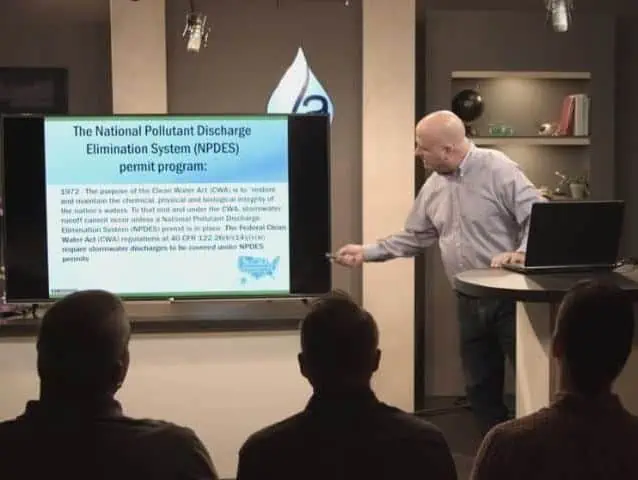

Jonathan Meronek specializes in comprehensive stormwater management programs. He has conducted BMP and Pollutant Source Assessments (PSAs), written Stormwater Pollution Prevention Plans (SWPPPs), performed Training and Education classes and implemented Monitoring Implementation Plans (MIPs) for hundreds of facilities in the United States. His accreditations include IGP-TOR, QISP, ENV-SP, CPESC, QSP/D, with over eighteen years of supporting clients at SCS Engineers. As a State of California Industrial General Permit (IGP) Qualified Industrial Storm Water Practitioner (QISP) and QISP Trainer-of-Record (ToR), he finds stormwater solutions for a multitude of industrial clients.
When Endeavor Media (Stormwater Magazine, Wastewater Mag, and Water World) decided to launch their new education platform called “Stormwater University,” they reached out to Jonathan. He now has the good fortune of being one of twelve people to sit on Endeavor’s National Technical Advisory Board.
Jonathan is excited and looks forward to supporting his colleagues in stormwater management. He has promised not to add another post-nominal after his name.
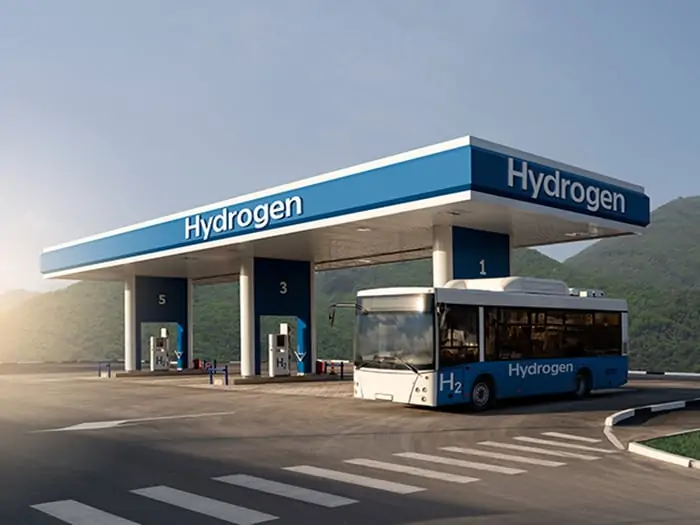
Progressive energy companies are rushing to corner the growing hydrogen market, excited as they see this renewable fuel’s cost steadily drop and as they prioritize decarbonization.
As they work to stay ahead of the pack, they need to put time and thought into building out and implementing these projects. There are complex technical and regulatory considerations; safety is also priority one at every step when managing this flammable, compressed gas.
As the market takes off, there is a need for scaled development along the whole supply chain, and some developers are rising to the occasion for more control and more opportunity. Rather than only build fueling stations, they buy into vertically integrated hydrogen networks to produce, transport and distribute hydrogen. But these multifaceted projects present even more complexity— calling for a team with highly specialized, comprehensive skill sets.
SCS Engineers supports energy companies and contractors looking to diversify their hydrogen services portfolio to include building production plants, including moving the gas via pipeline or truck to offload at fueling stations, ultimately selling to consumers.
“We enter these strategic partnerships to give our clients what they are looking for: a full spectrum of competencies and services; and a proven history of working on hydrogen to deliver turnkey projects. The idea is to take the environmental burden off clients as they pursue these major undertakings,” says Nathan Eady, an SCS vice president, and project manager.
SCS makes site selection; performs environmental due diligence and remediation; feasibility analysis; design and construction of environmental controls; land use, air, and water quality permitting.
The contractors’ specializations are detailed design, engineering, and construction management–from civil to structural to mechanical and fire protection.
This team meets all environmental and regulatory design requirements and develops process safety management and risk management plans with their combined expertise. They also take on the role of community educator, explaining the unique attributes of hydrogen and easing any concerns.
“We take science and engineering and translate that for neighbors and city councils. It’s important to show communities, as well as regulators, that these facilities are designed and operated with the utmost safety,” Eady says.
Requirements vary from jurisdiction to jurisdiction. But with a national reach, SCS sails through processes and regulations by region.
“That matters to our clients; they want to get through the detailed permitting steps and launch as soon as they can to maintain their competitive edge. And when they plan to expand into other regions, they like to know they already have a vetted team in place who knows the territory and can do the work there,” he says.
Permitting and technical considerations vary by location and production method, whether via steam methane reforming (SMR) or electrolysis.
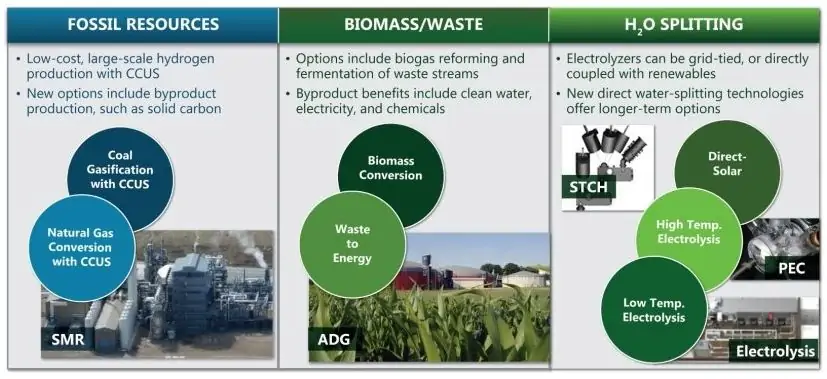
Some operators are taken off-guard by the air quality permitting requirements associated with SMR facilities − or the stringent wildlife and water quality regulations encountered with the larger footprint photovoltaic systems requiring open space to support electrolysis. SCS has the expertise to address the issues, whether state-specific cap and trade regulations for carbon emissions or air basin specific criteria pollutants. SCS also has the unique talent of finding brownfield sites or closed landfill properties, making excellent receiver sites for electrolysis and solar facilities near existing infrastructure.
Building hydrogen projects on these idle properties can save developers significant time and money in the overall project outcome.
“We do a lot of brownfield work helping to clean and redevelop these properties. These sites have special permitting considerations, especially since they typically have a history of industrial use,” Eady says.
SCS performs Phase I Assessments to research records on previous use, and if the team finds a potential problem, they move to Phase II, which entails groundwater and soil testing.
“If we find evidence of existing contamination, we reconcile it so our clients can move forward with the development of their new facilities,” Eady says.
SCS is seeing a growing interest in building hydrogen projects on closed landfills. As brownfields, they have value for their open space and often have some existing infrastructure, offsetting the cost of building new.
“We have done permitting and design work on several closed landfills, sometimes adding solar systems. Hydrogen projects leveraging electrolysis require a tremendous amount of electricity, and when we can bypass the grid enabling clients to make their own electricity, it’s a major plus,” Eady says.
Lately, large energy companies are pivoting from conventional oil and gas to hydrogen, and some smaller, young companies are also joining the clean renewables movement.
SCS has gotten interest from startups looking to obtain government grants and subsidies. Some of these firms need more process engineering support to ensure their new technology can operate at a cost and environmental efficacy equivalent to larger operations.
“We use our knowledge gained working with major conventional energy companies to support these new hydrogen firms in executing successful launches. All in all, a positive trend.”
Together, SCS and its partners play an integral role in helping to see hydrogen continue to climb the energy sector ranks, maintaining an excellent record of accomplishment supporting the planning-design-build of clean-energy plants.
Additional Resources
Landfill operators forever work to stay on top of a diverse and complex mix of leachate contaminants—heavy metals, ammonia, and biochemical oxygen demand, among them. But lately, they have more to think about, for one: how to keep concentrations of these contaminants within the wastewater treatment plant’s tightening discharge limits. Add to this concern the possibility of more compliance pressure as the list of constituents on regulators’ radar grows. Some operators are preparing for what may be down the pike, from microplastics to PFAS and PFOA—with the latter sometimes called the “elephant in the room.”
Among the strategies, some are exploring on-site leachate treatment options, and there are several. Finding the most fitting, sustainable, and cost-effective one takes vetting. Here is the study of a Florida landfill’s informed decision-making process.
A landfill serving an exploding residential and commercial population recently found itself in a predicament when the overburdened municipal wastewater treatment plant stopped accepting leachate from all county waste operations. Pressed to find a credentialed treatment facility quickly, this SCS Engineers client contracted with a private plant, but the arrangement came with a steep price tag. Overnight, the site’s leachate hauling and disposal costs rocketed from just over three cents a gallon to almost 16 cents a gallon. So, the operator turned to SCS Engineers for help vetting a robust and financially sustainable solution. Ultimately, the client wants to eliminate dependence on a third party and better control its destiny to avoid landing in the same predicament.
In answer, SCS is looking into the feasibility of a system that would clean leachate to drinking water standards to be discharged directly to groundwater. The team is wrapping up a comprehensive study of the site’s current operations, system, and leachate composition as it prepares the client to go out to bid.
“Our goal is to position the landfill to be as independent as possible while providing a cost-effective solution to their leachate treatment,” says SCS Engineers Project Lead Kollan Spradlin. He and the SCS liquid management experts backing him have kicked into high gear because time is money. Right now, the landfill generates about 70,000 gallons a day of leachate through much of the year. In the wet season, that figure spikes to about 150,000 gallons a day. At roughly 16 cents, the landfill can shell out over $24,000 a day for leachate disposal during the wet season.
SCS Engineers’ preliminary work begins with compiling crucial information around current leachate generation and future projections and around site-specific characteristics of the liquids. Next, the team vets multiple leachate treatment systems, sizing up each one against the client’s individual needs to ultimately make a recommendation. And, as important, the team makes sure the operator is very clear on how much upfront capital they need to build an effective, reliable system to do the job.
Spradlin and SCS’s liquid management experts are working on an interim solution while developing a long-term plan. The interim remedy is an evaporator fueled by landfill gas, heats and evaporates water molecules.
“With the evaporator, our client’s private disposal volume is reduced by 50,000 gallons a day, significantly cutting disposal costs. But that’s not enough. We want to reduce that expense further and to manage all or the vast majority of the leachate on-site,” Spradlin says.
The ultimate plan is to design a plant that can treat almost 120,000 gallons a day to a quality that can discharge across a spray field at the facility to groundwater. The landfill saves on disposal costs and owns the system rather than paying for an outside operator’s treatment technology.
This Florida landfill relies on SCS’s site knowledge and its past liquids management experience. SCS’ understanding of the systems and daily operations helped the team develop operational measures already reducing leachate generation to make on-site treatment an option.
“We have completed plan design and construction of their collection, storage, treatment, and disposal systems. And that helped to provide insight into reliable, long-term leachate disposal recommendations,” says Bob Gardner, a 41-year veteran of SCS and part of the team supporting this particular project.
“We had knowledge of site fill sequencing, site conditions, and constraints. And this sped up the process of coming up with a modification that works within their operations and infrastructure,” he says.
All of this foundational background is key to identifying client-centered solutions and presenting a comprehensive data package to vendors. “We give bidders the details they need so they can size their equipment appropriately and provide a more accurate budget estimate. We are trying to eliminate bidder change orders resulting from inadequate background information,” Spradlin says.
The team is thinking ahead, evaluating treatment processes that address a wide range of leachate properties and consider constituents that may be regulated in the future.
“We may put in a reverse osmosis system, a membrane bioreactor, or ultrafiltration to reduce constituent concentrations and take out particulates. We design for flexibility to add more treatment technology on the front end or back end to save the client infrastructure costs in years to come,” Spradlin says.
What differentiates SCS from some other environmental engineering firms is its full-service model and deep bench.
“We touch everything at this landfill. And we have a multidisciplinary team, including national liquid management experts whose knowledge we can tap into at any time. So, we can be one-stop, saving the client from having to go to multiple vendors,” Spradlin says.
Sam Cooke is the lead liquid management expert for this Florida landfill. Like his colleague, Gardner, he knows the wastewater treatment problems landfill operators face; he knows the vendors and their technology. And he understands the importance of relationships—with the client, the state agencies, and every party who is key to the client’s success and the community they serve.
“We fully realize that the wastewater-leachate treatment system we design needs to do its job close to 24/7/365. Moreover, it must do it effectively, sometimes under difficult conditions. So, as we design treatment systems and work with equipment suppliers, facility owners, environmental managers, and treatment system operators, we strive to provide added value and support,” Cooke says.
“In this case, we’re using our knowledge to help our client develop a bid package that addresses specific technical requirements but also meets and helps protect their business and financial goals.”
The team has already met with the regulatory agencies to develop a clear permitting path to accelerate plant deployment and ensure the landfill is fully compliant before making the large transition to direct discharge.
By working with vendors and regulatory representatives well before releasing bid documents, SCS has paved a path to leachate treatment independence.
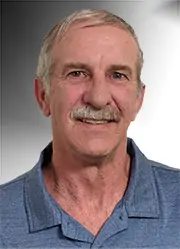
Meet RETA Authorized Instructor (RAI) Daryl Davis. Davis joins the SCS Tracer Environmental training team providing ammonia refrigeration safety, Risk Management Plans, and Process Safety Management certified training.
This SCS team offers comprehensive programs including Ammonia Refrigeration Operator Classes, RETA Certification Review Classes, PSM/RMP & General Duty Clause Safety & Compliance Classes for Ammonia Refrigeration Facilities, Continuing Education, & Custom Training Classes.
SCS’s RAI’s have over 56 combined years of industrial refrigeration expertise. Our trainers use an online delivery system with a live instructor, or on-site, in-person classes, to ensure you continue training for Process Safety Management & Risk Management Program compliance. Hands-on site training can now take place under even noisy plant conditions using high-tech headsets.
RAI – RETA Authorized Instructors have certifications in their mastery teaching advanced refrigeration system concepts and operations at a level that qualifies them to assist CARO, CIRO, CRST, and CRES candidates with their preparations and activities required to earn RETA credentials.
Get the latest in RETA certified training news and classes. The Refrigerating Engineers and Technicians Association (RETA) is the most recognized organization in the U.S. dedicated to the professional development of industrial refrigeration operators and technicians.

Popular Mechanics recently published an article entitled The Pungent History of America’s Garbage Mountains. The article starts with a little-known ferryman on Lake Michigan when a storm beached his craft on an offshore sandbar in July 1886. Thus started Chicago’s open dump on today’s Lake Shore Drive, home to landmarks such as the Museum of Contemporary Art, the Wrigley Building, the Chicago Tribune Tower, Northwestern University, and the Magnificent Mile – all on turn-of-the-century garbage.
Transportation centers, stadiums, and even entire neighborhoods are now built on landfills. This is a fascinating, well-written article on the history and possibilities of building on remediated properties and brownfields.
“Landfill redevelopment projects tend to be real estate projects, and you know what matters in real estate: location, location, location,” says Mike McLaughlin of SCS Engineers, who specializes in brownfields and landfill redevelopment. “A landfill in an urban area might be the only piece of open land in that area. People go to extraordinary lengths to redevelop because the property is so valuable.”
The recent MWEA Conference covered a wealth of other important topics on water management and safety, including this presentation with SCS Engineer’s Remote Monitoring Control specialist, Brett Heist. Brett and Jarod Stuyvesant co-presented “More Than a Pretty Map – GIS Covers Your Assets,” including demonstrations of how the City of Zeeland is using GIS to enhance the efficiency of maintenance and inspection activities and improve the reliability of physical infrastructure throughout its community, leading to increased public safety and financial savings.
Click here to view these demos!
DEMOS: There are some unique methods to plan for capital improvements and streamline data storage and access being implemented in the City of Zeeland. The City has an integrated GIS map for its storm, sanitary, water, and streets, including information about each asset within the system: material, size, inverts, condition, business risk, and even televised inspection videos for some of the storm and sanitary lines.
The GIS maps’s information is used daily by public works and to create a comprehensive capital improvement map that the City uses to plan for 5-year improvements, significantly improving planning and budgeting efficiency while ultimately providing the public with safer infrastructure.
Features include televised inspection videos attached to a respective asset after uploading and accessible with the click of a mouse. Access entire buildings in the same manner as horizontal assets using a 3D online viewer.
The Zeeland Clean Water Plant RAS Building: Using AutoCAD data, the City created a 3D GIS viewer of this building and its assets. Asset information, such as blower and pump sizes and operation and maintenance tasks, are accessible without having to sort through shop drawings and as-builts.
Another example of implementing 3D GIS data like this is for MobileGR who uses a 3D GIS model to store asset data and maintenance tasks for every one of their nine parking ramps in downtown Grand Rapids.
SCS periodically prepares Technical Bulletins to highlight items of interest to our clients and friends. We publish these on our website.
Our most recent Bulletin summarizes and updates the TCEQ’S New Rules Implementing Compliance and Registration Requirements for Coal Combustion Residuals (CCR) Management. In addition, this Bulletin covers TCEQ’s development of a program for implementing the Federal rules governing CCR facilities in Texas. While TCEQ’s CCR program needs to be as protective as the federal CCR rules, there are important distinctions in Chapter 352.
SCS’ Texas-based professionals are experts on TCEQ’s new program for registering coal combustion residue (CCR) sites. We are currently working to support multiple sites needing to meet the application deadline. Our engineers and geologists know how to use site-specific design and related technical documents to complete TCEQ’s detailed application for a registration consistent with TCEQ’s new regulatory program.
For additional information on the updated regulations, deadlines, and compliance requirements, contact:
Corporate Headquarters