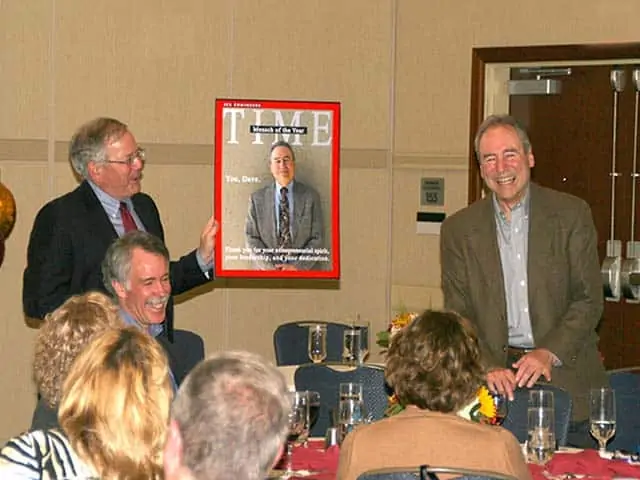
Michael W. (Mike) McLaughlin has been elected to the Virginia State Bar Environmental Law Section Board of Governors. His four-year term began on July 1. Mike began his career with SCS as a summer intern as a rising sophomore at Virginia Tech. After receiving his civil (environmental) engineering degree, he received his J.D. from Washington & Lee University School of law. He has been with SCS ever since, applying his combination of law, science, and engineering expertise to environmental matters. His knowledge helps businesses and communities protect air, water, and land resources while serving the needs of their clients or constituents.
McLaughlin recalls his early career choices: “It was exciting to work on some of the earliest research projects sponsored by the then-new Environmental Protection Agency. I chose W&L Law because it had Professor Andrew (Uncas) McThenia on its faculty. Uncas was a Virginia State Water Control Board member and taught one of the few environmental law classes in the country. When I told him he was the reason I came to W&L, Uncas apologized and said he would not teach environmental law anymore—the field had too much politics involved. That was an early and important lesson for me.
“Not to worry,” says Mike. “Turner Smith of the Hunton & Williams law firm taught the environmental law class; he was one of the country’s most well-known Clean Air Act attorneys. His knowledge of the subject matter and teaching ability inspired several of us to seek careers in the field.”
Mike is SCS Engineers’ Senior Vice President of Environmental Services. He advises developers, contractors, lenders, and land development professionals on the technical and regulatory requirements for construction on brownfield sites nationwide. Landfill redevelopment is an area of special interest. His combined engineering and legal background provides an unusual perspective on land development where hazardous wastes or other environmental challenges are present.
In addition to his extensive brownfield redevelopment experience in North America, Mike has worked at more than three dozen Superfund National Priorities List sites in 17 states and on scores of regulatory compliance, voluntary cleanup, and remediation projects for commercial, industrial, municipal, and military clients. His work for electric utilities began in 1980 with research on upgrading solid waste management and has evolved to support greenhouse gas mitigation measures and support the transition to renewable energy.
Mike’s new role with the VSB builds on his decades of experience with the American Bar Association Section of Environment, Energy, and Resources, where he is completing a two-year term as Budget Officer and a member of the Executive Committee.
In her first job at SCS Engineers, Joy Stephens worked in a small trailer, consolidating and analyzing data from landfill field techs’ notes, recorded in logbooks they lugged around while navigating the challenging site terrain, then brought to her covered in leachate and mud.
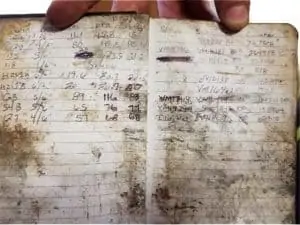
She cross-referenced their detailed, handwritten records with a master list posted on a wall, organized, and methodically examined them. Then she turned them into actionable intel for SCS’s engineers and scientists.
“That was definitely easier said than done. It was a lot of work – a lot of hours to make sure that we were ready for the next day. It struck me that there’s got to be a better way. That we could make collecting and using this valuable information easier for the field staff and OM&M (Operations, Monitoring & Maintenance),” she says.
GIS Supports Wellfield Operations
From that inspiration came a lot of brainstorming, developing, and tweaking what today is a powerful yet user-friendly GIS system that stores and organizes volumes of geographical information in one place and gives users what they need fast to troubleshoot landfill conditions. The customizable application is now used at hundreds of landfills across the country, mainly to support wellfield operations, though it has other landfill system applications.
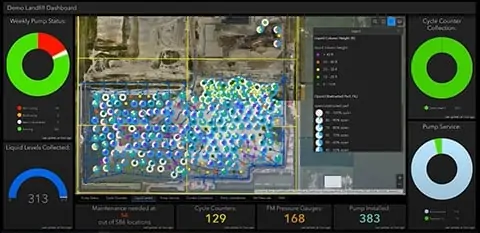
Field techs enter information onto digital forms using a mobile app and submit the data, uploading it to the cloud. OM&M teams have it in a streamlined format in a couple of minutes and can visualize what they are looking for on maps from a dashboard.
The technology that Stephens was an integral player in launching continues to evolve, and there’s a story behind that evolution.
“In the beginning, I reached out to this brilliant young lady, Brooke Aumann, from the Tampa office, who does a lot of GIS work. I had some GIS experience myself, but more landfill knowledge. I picked her brain so we could set up a digital replacement for the logbooks that zeroed in on exactly what the field techs and project managers needed to support our clients,” says Stephens, an environmental scientist.
Together, the two women created experimental web maps to plot and visualize basic information such as the location of each monitoring point, points requiring the collection of liquid levels, and the status of maintenance tasks at each well. Then they developed digital survey forms with more detailed information and connected those forms to the maps; this enabled end-users to overlay even more data for a holistic snapshot of what goes on at wellfields.
“We tried different configurations of web maps and symbology to depict best what we wanted to convey. We talked about what we needed to symbolize and how we needed to symbolize it. And we discussed possibilities for future developments. We knew much more was possible in terms of what we could collect, how all of these data are connected, and how we could exploit the software to better tackle more complex tasks,” Stephens says.
From maps to interfacing data forms to the next level X-ray vision
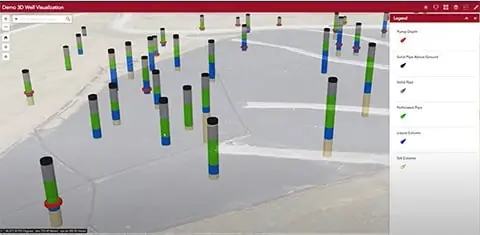
“Now we’ve gone a step further. We’re doing 3D well visualizations, which give a kind of Superman X-ray vision subsurface. You are literally looking beneath to the well to get good intel,” Stephens says.
Traversing the World
With undergraduate degrees in Mandarin Chinese and geology and graduate degrees in teaching science and environmental management, Stephens has long loved learning, the environment, and nature.
“When I was young, my parents were missionaries, and I grew up in the most beautiful, pristine, remote areas, like the Solomon Islands and Vanuatu – so unspoiled and lovely.”
It was a sharp contrast to what she would see later when she moved with her young son to China, where she taught math and science. The air quality was poor, and the streets and landscape were inundated with litter.
That experience was the final push that landed the young professional at the foot of a career path she’d considered for some time; environmental sciences. She’d taught it before, but a voice inside her was telling her to pivot and actually start doing the work.
Stephens found her way into a program at a university in Scotland after researching graduate environmental management programs worldwide. At this prestigious learning institution, she first worked with remote sensors and GIS, identifying and addressing “waste crimes,” namely illegal dumping.
Seizing the opportunity to apply her expertise
After graduation, the teacher-turned-scientist took her education and experience back to the United States and SCS Engineers. The company was not foreign to her. By the time she applied, she had made as much a project of vetting employers as she had of scoping out universities. Two draws drew her attention:
“There is the ethos; SCS is genuinely committed to the environment. And the other part that was important to me is SCS is very invested in professional growth and training to foster that growth. I believed that I would have opportunities to move up,” Stephens reflects, recalling when she said yes to the first job working with those logbooks that would be the catalyst to what was to come.
When she came on board, she had to gain practical experience in the solid waste industry and learn the ropes in the field, in addition to her prior experience in renewable energy. In time she had learned her way around landfill gas collection wells, then kept building on that knowledge.
“I asked a ton of questions. Why are we monitoring for this? What constitutes good gas quality? Why is it important to know liquid levels? What is the difference between vacuum and flow? I think asking all these questions, collecting field data myself, and watching what the guys in the field had to do, gave me a good base understanding to help inform how we would capture the right information using GIS. It was a collaborative effort. Brooke worked on many landfill projects and my colleague, Chris Carver, had 16 years of field and project management work. It all came together.”
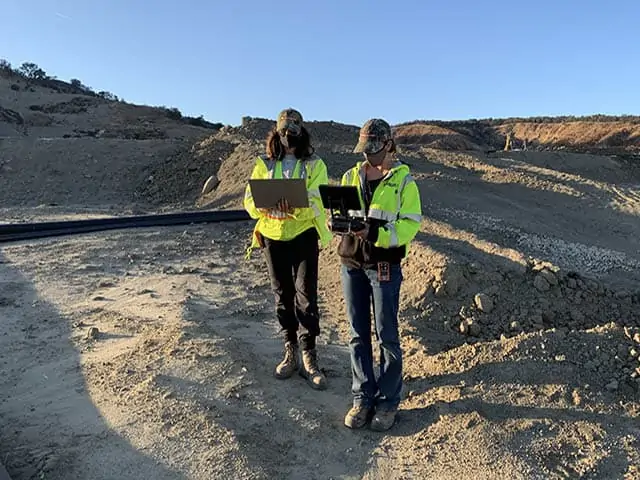
She later joined the RMC team (Remote Monitoring and Controls), where she received further training in GIS and mastered other skill sets. Today she is a project professional specializing in GIS and drone services.
At home with waste management
The hybrid techie-artist in Stephens comes out when she makes an analogy that tells a little of how her wheels turn.
She grew up playing Legos and now, at almost 40 years old, still builds with them at home with her son.
She approaches the job the same way as when she assembles those sets.
“You know the pieces fit to make something, but it takes creativity to figure out just how to build it and make it as visually pleasing and functional as you can, or to get it to function in different ways. I try to configure and piece together for the best possible design,” she says.
Stephens has married that approach with a desire to be a part of both restoring and protecting the environment. She thinks she’s in the right place to act on that intention.
“I feel like work with waste management and SCS is a way to achieve what I think is so important. We are trying to protect, remediate, and leave conditions better than we found them. That is what being a good steward is all about.”

See Joy Stephens at work in her recent educational presentation for landfill owners and operators. Joy demonstrates technologies to reduce the time to collect, process, and show data.
The EPA’s published clarifications, technical revisions, and new rule versions for the National Emission Standards for Hazardous Air Pollutants (NESHAP) and New Source Performance Standards (NSPS) for MSW landfills may feel like alphabet soup right now.
SCS Engineers’ upcoming webinar and open Q/A forum on July 15, 2021, at 1:30 Eastern Time is free and could help keep you informed and on track for compliance by September 27, 2021.
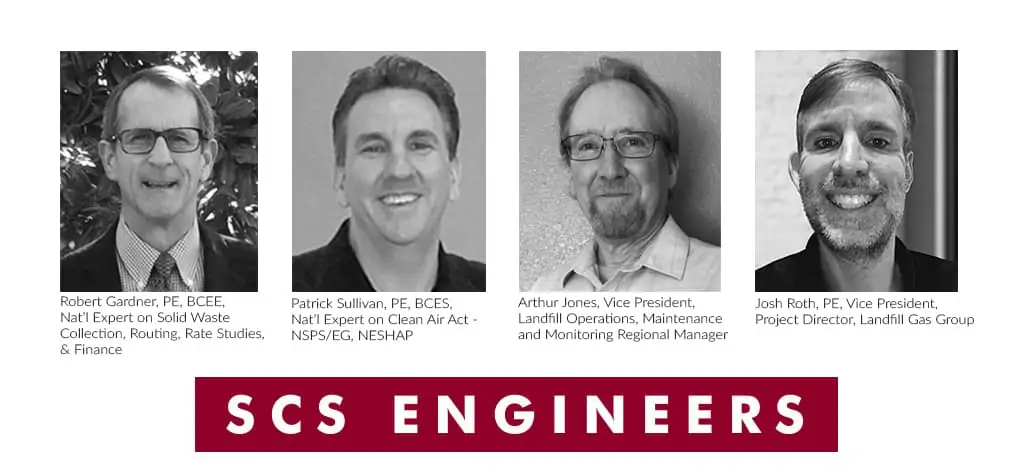
Our panelists will advise on the essential key information, deadlines, and changes to field operations to address during the transition from the old to the new NESHAP and NSPS rules.
• Surface emissions monitoring;
• Wellhead monitoring and corrective action requirements;
• Delegation of authority to the state, local, or tribal agencies for emission standards;
• Applicability of the General Provisions under 40 CFR 63, Subpart A to affected landfills;
• Monitoring data for control devices during startup, shutdown, and malfunctions (SSM);
• Gas collection and control system installation;
• Compliance timing and reporting;
• Open question and answer throughout the webinar.
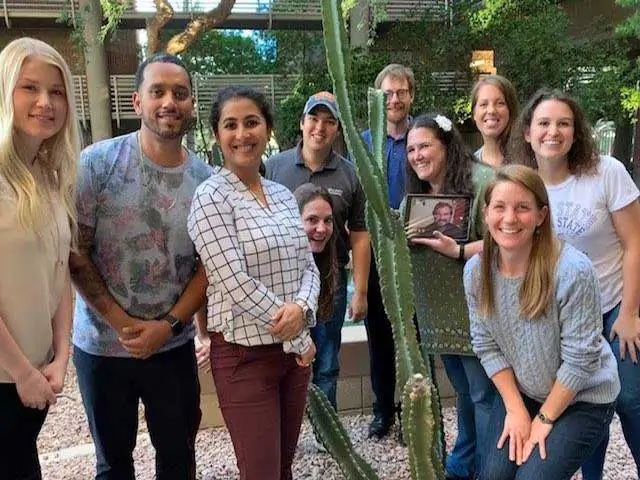
Recently published in Zweig is an article by two SCS Engineers professionals discussing career growth. Montgomery Spillane, PG, a project professional, and Dillon Reio, GIT, a senior project professional at the firm, provide their perspectives in this short and inspiring article entitled Accelerating Development.
The co-authors make valuable points, including that career growth is not a linear path, then provide advice for career accelerating growth and responsibilities.
SCS’s CEO, Jim Walsh records Town Halls every two weeks for employees – our executives like to stay in touch. He just happened to finish a segment on SCS’s Mentorship Program for his Town Hall. Both mentor and mentee reflect the same advice in the Zweig article; they point out a few more benefits for both managers and young professionals during the discussion, such as discovering new pathways, networks and staying on goal.
It is gratifying to observe SCS YPs not only embracing our 51+ year culture of client focus, but they’re also growing our pay-it-forward attitude to build even more value into SCS Engineers every day. It’s truly wonderful to work with so many gifted people.
Our SCS Co-Authors:
Montgomery Spillane, PG, a project professional
 Dillon Reio, GIT, a senior project professional
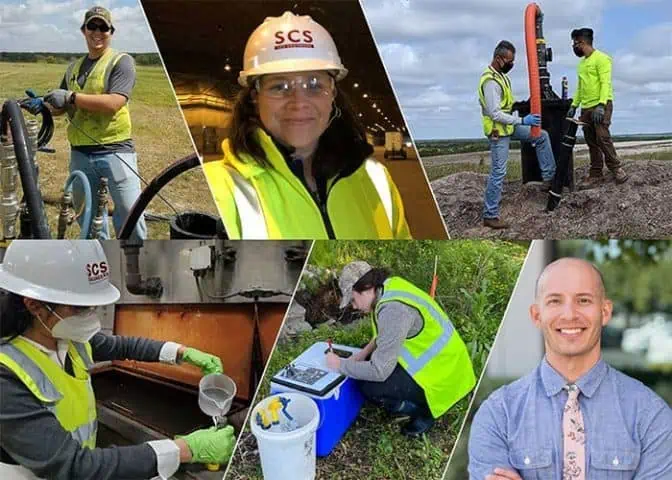
If you thrive in a friendly, collaborative, and client-focused company, SCS Engineers is the place for you. We’re looking for field technicians to work collaboratively on our Field Services teams nationwide. Use our job search to find your desired location. Specific information is posted for each open position.
Under general supervision, our technicians operate, monitor, and maintain gas migration control and recovery systems, including gas well monitoring and adjustment, troubleshooting, and system repairs. Be part of a team working for the good of our clients, communities, and the environment.
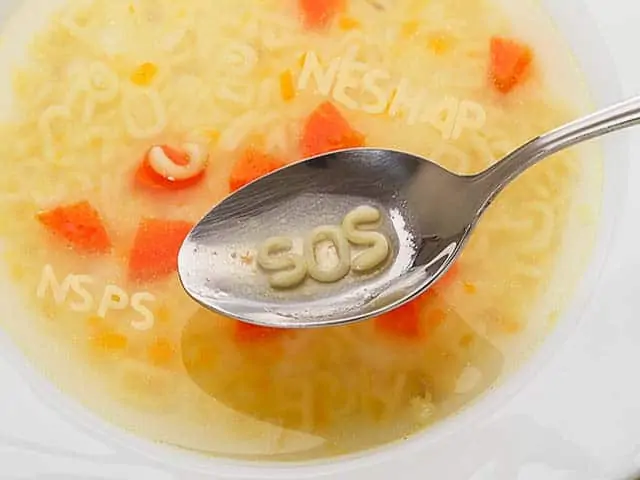
The EPA’s published clarifications, technical revisions, and new rule versions for the National Emission Standards for Hazardous Air Pollutants (NESHAP) and New Source Performance Standards (NSPS) for MSW landfills may feel like alphabet soup right now.
SCS Engineers’ upcoming webinar and open Q/A forum on July 15, 2021, at 1:30 Eastern is free and could help keep you informed and on track for compliance by September 27, 2021.
Our panelists will advise on the essential key information, deadlines, and changes to field operations to address during the transition from the old to the new NESHAP and NSPS rules.
• Surface emissions monitoring;
• Wellhead monitoring and corrective action requirements;
• Delegation of authority to the state, local, or tribal agencies for emission standards;
• Applicability of the General Provisions under 40 CFR 63, Subpart A to affected landfills;
• Monitoring data for control devices during startup, shutdown, and malfunctions (SSM);
• Gas collection and control system installation;
• Compliance timing and reporting;
• Open question and answer throughout the webinar.
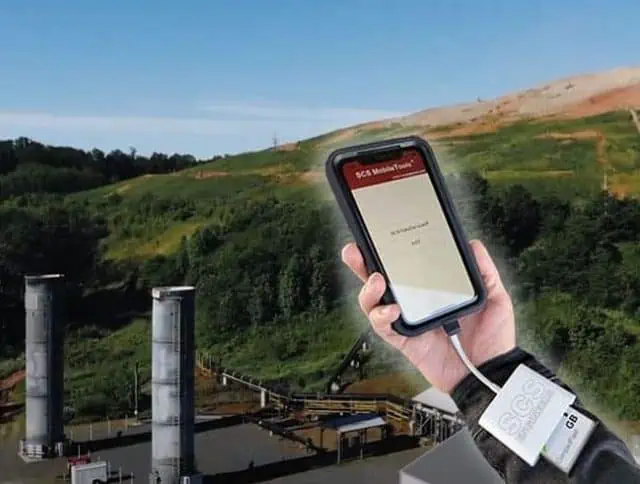
The most recent update expands SCS WDT™ to enable Yokogawa data uploaded to SCSeTools using wireless data transfer to the document gallery. The data is filed in the Flow Data WDT folder for each site and is easily available as raw data for air monitoring reports and other uses.
Technicians onsite insert the flare’s data card into a dongle attached to a mobile phone. The application automatically downloads the data to SCS DataServices, a secure web-based LFG management application. The phone’s GPS locates the flare and places the data into the appropriate landfill site. The data is available immediately, literally in seconds, for review and analysis. This app saves on average 5 labor hours per site per flare by removing extra steps in the process. Several landfills report even higher labor time savings.
Landfill technicians can choose to download data from a range of dates or all of the data. Managers can see exactly where the readings originate when taken and immediately see exceedances. This MobileTools app’s interface gives clients access to information that drives critical operating decisions and provides historic data for corporate directives and landfill gas OM&M programs. Quick access to raw data is valuable for air monitoring and modeling commonly conducted for EPA’s criteria pollutants and NMOCs.
Download the app and learn more at SCS MobileTools®.
The findings of the studies reviewed in this report are encouraging concerning the ability of today’s U.S. WTE facilities to effectively treat solid waste that contains PFAS and not emit detectable levels of PFOA in the process. For the formation of PICs, the pilot-scale investigation conducted at the Karlsruhe Institute of Technology is encouraging in its findings that the combustion of PTFE did not create any of the 31 types of PFAS suspected of being potential PICs produced during the combustion process.
In conclusion, based on this research, SWANA is cautiously optimistic regarding the role of WTE facilities in the destruction of PFAS in MSW. The thermal destruction of PFAS in high-temperature combustion systems such as WTE facilities may represent one of the few commercially proven options available to society to destroy these problematic, forever chemicals.
The full report, PFAS Fate and Transport in Waste-to-Energy Facilities, is currently only available to SWANA ARF subscribers. SWANA members receive free access to ARF industry reports one year after publication; the abstract is available online and worth reading.
SCS periodically prepares Technical Bulletins to highlight items of interest to our clients and friends. We publish these on our website.
Our most recent Bulletin summarizes and updates the TCEQ’S New Rules Implementing Compliance and Registration Requirements for Coal Combustion Residuals (CCR) Management. In addition, this Bulletin covers TCEQ’s development of a program for implementing the Federal rules governing CCR facilities in Texas. While TCEQ’s CCR program needs to be at least as protective as the federal CCR rules, there are important distinctions in Chapter 352.
SCS’ Texas-based professionals are experts on TCEQ’s new program for registering coal combustion residue (CCR) sites. We are currently working to support multiple sites needing to meet the December application deadline. Our engineers and geologists know how to use site-specific design and related technical documents to complete TCEQ’s detailed application for a registration consistent with TCEQ’s new regulatory program.
For additional information on the updated regulations, deadlines, and compliance requirements, contact:
If you thrive in a friendly, collaborative, and client-focused company, SCS Engineers is the place for you. We’re looking for field technicians to work collaboratively on our Field Services teams nationwide. Specific information is posted for each open position. Use our job search to find your desired location.
Under general supervision, our technicians operate, monitor, and maintain gas migration control and recovery systems, including gas well monitoring and adjustment, troubleshooting, and system repairs.
Become one of the engineers, consultants, scientists, and technicians that help private and public entities run cleaner and more efficiently. A very rewarding place to have a career!
Corporate Headquarters