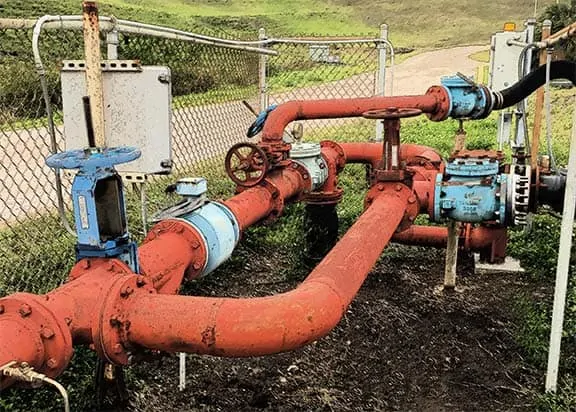
Lately, landfill operators are putting stock in onsite landfill leachate treatment systems as a strategy to stay on top of increasing requirements in their already demanding regulatory world. Leachate treatment systems help meet tightening restrictions on liquids that landfills send to municipal wastewater treatment plants or discharge directly. And onsite leachate treatment gives operators a leg up should they one day have to deal with any emerging contaminants found on an expanding list.
With their eyes on compliance, landfill owners and operators are looking to leachate treatment systems that can ease the impact of soaring leachate disposal costs. Of course, the more contamination, the harder the hit since higher contaminants can mean higher municipal treatment plant surcharges or the landfill having to haul its leachate longer distances to a treatment plant that will accept it. Both examples usually result in higher treatment, disposal, and hauling costs.
A spike in its ammonia concentrations was enough impetus for one Oregon landfill operator to turn to SCS Engineers a few months ago. At its highest levels, the ammonia climbed to 50-fold what many small wastewater treatment plants, like the one in the Northwest, will take over the long-term.
Project Director Shane Latimer and Technical Lead Sam Cooke got on the stick to figure out how their client could keep hauling and disposing of leachate at the local wastewater treatment plant it has routinely relied on for years.
Coming up with a plan is a complex, multi-step process that requires looking through many lenses. To design a cost-effective, efficient treatment facility, Latimer and Cooke use an in-house multidisciplinary team of co-workers from Project Management, Chemical Engineering, Civil Engineering, and Geotechnical Engineering. The team performs in-depth analyses to identify the most economical and feasible technology. A design that in this case not only addresses ammonia but prepares the operator for emerging contaminants, such as the possible need for per and polyfluoroalkyl substances (PFAS) reduction, which Cooke describes as a train that has not yet arrived in Oregon but has left the station and is heading down the track.
Starting with the most immediate concern, Cooke says, “Our client had seen ammonia concentrations between 500 and 1,500 mg per liter, which is high. Acceptable ammonia levels can vary depending on the type of facility and how much leachate they expect to get compared to their total flow. But small treatment plants like the one our client depends on will set ammonia limits of about 25 or 30 mg per liter,” he says.
SCS begins with a leachate pretreatment options analysis to dive into details beyond ammonia levels – spikes in ammonia call for close attention. Still, there’s more to consider in masterminding a robust and fitting plan to manage the complex process.
“These are biological treatment systems, and there is no one-size-fits-all answer. You need to know how these systems will react to whatever is in your leachate, so you have to account for more than ammonia, or whatever your constituents of concern are,” Latimer says.
SCS’s leachate contaminant analyses use the landfill’s historical data along with what they learn from tests that SCS orders to understand alkalinity, pH, and carbon, among other leachate chemistry puzzle pieces.
“We look at concentrations of raw leachate, flow rate, pretreatment requirements, and other factors. We want to get a comprehensive picture of the problem and ultimately make the best treatment decision to get compound concentrations down to acceptable discharge levels,” Latimer explains.
What customized solution did the team design for the client in Oregon? The system of choice is a membrane bioreactor (MBR), which combines membrane separation technology with traditional activated sludge technology with optional reverse osmosis treatment. The design is a compact, efficient, biological wastewater treatment plant.
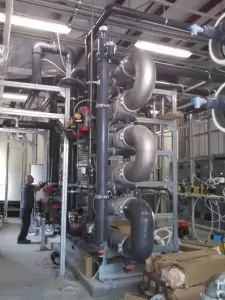
“An MBR is an elegant solution. We found it to be a good choice for this application for several reasons. It takes up relatively little space and fits well within the available plant footprint. It produces a relatively low-volume waste sludge stream. And it can cost-effectively treat multiple constituents of concern, so should new leachate chemistry issues arise, an MBR can address many of them,” Cooke says.
Being able to handle multiple concerns if and when they arise is key here. Cooke and Latimer wanted not only to get the immediate problem in check but see that the client has a dynamic and robust system to tackle whatever new challenges may be down the road.
When SCS goes into design mode, they plan ahead by engineering modular systems to add additional treatment methods if and when they’re necessary.
“For instance, MBR treats the leachate to reduce ammonia, other nutrients, organics, and suspended solids. By leveraging this treatment method first, you eliminate a lot of the bulkier constituents. But we left room for a modular addition such as reverse osmosis for “polishing,” treating MBR discharge for other minor constituents including PFAS,” Cooke says.
The client who came to SCS for a relatively inexpensive remedy for an ammonia problem now has a feasible, economical asset for leachate management.
“These investments are good security for landfill operators,” says Latimer. “If a municipal wastewater treatment plant is struggling to meet its standards, eliminating one contributing source of wastewater, like a landfill, could potentially solve several issues, such as ammonia, biochemical oxygen demand, and total suspended solids.”
But these treatment systems provide added security for more than the landfill.
“When disposal sites invest in sound leachate treatment systems, it’s also good for municipal wastewater treatment plants. It assures them that landfill operators will help them with the overall regulatory burden. We are helping them both to prepare for present and future challenges,” says Latimer.
Additional Resources:
Information, case studies, upcoming events
Landfill Leachate for Heavy Industry
SCS’s leachate management team is available to answer your questions on this blog or our other treatment designs at

SCS Engineers, a top-tier ENR environmental consulting and construction firm, welcomes Professional Engineer Mary Kennamer to its environmental services team in Raleigh, N.C. As a Senior Project Professional, Mary is responsible for designing and engineering solutions to help landfills, manufacturers, and businesses comply with federal and state environmental regulations.

As a chemical engineer, Mary’s background and degree are useful to help North Carolina landfill owners prepare to meet more stringent federal and local air regulations. She will advise on air compliance issues, air permitting, compliance reporting, and consulting for landfills and manufacturing.
“Mary’s previous consulting experience and work with the US EPA is a tremendous asset and value for our landfill and manufacturing clients,” states Kenton Yang, the Raleigh office’s project director. “We’re excited to add another bright star to the Raleigh office.”
In order to permit new or expanding plants and facilities, there are complex environmental policies to meet. As an environmental and chemical engineer, Mary researches, plans, and completes the technical work for air permitting and compliance, SPCC, and due diligence that keeps owners in compliance and projects moving forward.
About SCS Engineers
SCS Engineers’ environmental solutions and technology directly result from our experience and dedication to solid waste management and other industries responsible for safeguarding the environment. For more information about SCS, please visit our website at www.scsengineers.com/, contact , follow us on your preferred social media, or watch our 50th Anniversary video.
SCS Engineers – Raleigh specializes in permitting and meeting comprehensive clean air, water, and soil goals and provides a range of services such as PFAS treatment, solid waste master planning, landfill technology, risk management, groundwater monitoring, pre-closure and landfill closures, and Brownfields remediation.
When Doug Doerr got a call from a Colorado-based landfill operator with a hot gas probe at his site’s boundary, Doerr’s day kicked into high gear. Chasing down gas migration problems is nothing new in an SCS client manager’s life, but that reality makes the job no less complex. And in this scenario, he was dealing with a site that he occasionally got called to visit, so to understand the problem fast, he needed the site’s historical data and the current information to fully picture what was happening.
Doerr started with basic landfill gas information from the client: the monitoring probe’s location and a drawing of the gas collection system to determine where the probe was in relation to the gas system. But as you know, that is one small slice of a king-sized pie.
 “All the LFG data that I would typically wade through to identify the problem can be overwhelming, but I had a recourse enabling me to get up to speed quickly. It didn’t take long to assess the problem,” he says. That recourse is a combination of quick teamwork from his peers nationwide and sophisticated technology developed by SCS practitioners for landfill owners and operators.
“I queried our in-house landfill gas technical group (engineers, geotechnical experts, and field personnel). And got over 25 responses within several hours with suggestions, one of which came from Ken Brynda in SCS Field Services, who leveraged DataServices to help me identify and narrow down the potential cause of the problem,” recalls Doerr.
DataServices, a module of the SCS eTools® digital platform, collects, stores, manages and analyzes large volumes of continuously accumulating landfill gas data for individual sites or multiple landfills. The module provides a quick method to view landfill gas scenarios.
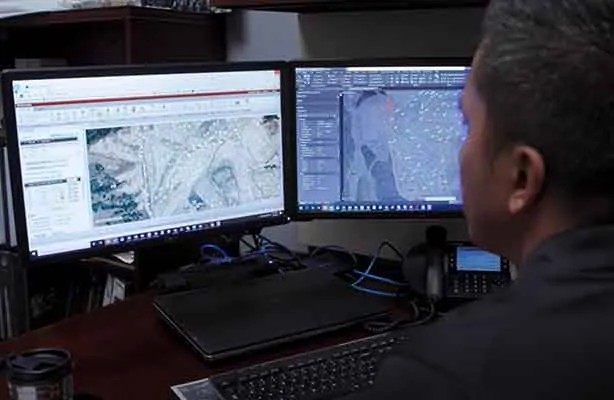
The beauty of it is that it generates maps and charts to visualize every well and every probe. These system components are viewed in relation to one another and in relation to the perimeter, where the methane on that Colorado site flowed. Further, SCS Field Services’ landfill gas gurus, such as Ken Brynda, plug-in specific parameters that keep a close watch on any well or a group of wells.
 “I logged into DataServices and pulled data from the five wells closest to the hot probe, which showed we had vacuum, flow, and gas quality, indicating the wells were pulling hard enough. I shared the results with our landfill gas technical group responders in a table and range map I’d created. And they started chiming in,” Brynda recalls.
As responders viewed initial results from their respective bases around the country, Brynda churned out more information in a few hours, running point charts to capture the balance gas, methane, flow, temperature, supply vacuum, and the vacuum applied to each well. He looked for trends that narrow down cause and point to solutions.
Eliminating the Possibilities – Rule Out Well System Malfunctions
“It can take days if we’d had to do it the old school way with spreadsheets laid out in a lot of rows. But we could identify the potential problem in a matter of hours, backed by a comprehensive evaluation for the landfill operator in eight hours,” Doerr says.
When Field Services staff work to solve a problem with a probe, they look for an outlier, something from a group of wells that’s not behaving like the other wells. In this case, Brynda determined that the wells near the hot probe were functioning properly. DataServices eliminated potential problems by slicing through and analyzing large chunks of data confirming the system was working efficiently.
Next, we observed that the wells are likely too far away to pull gas back from waste, adjacent to the probe in question, where there are no wells.
“DataServices helped rule out malfunctions, and that’s a big deal because if you can confirm the landfill system is working properly, you have narrowed your focus and can look toward other possibilities, ultimately leading to corrective options,” Doerr says. Brynda and Doerr suggested putting in temporary wells in that area to avoid odor migration and health and safety issues.
Doerr continues watching the situation and is prepared with a several-point action plan to mitigate exceedances and avoid falling out of compliance. “We continue watching the data to ensure the gas collection system continues to function well. Should there be issues again, we’re able to fully identify the gas migration pathways and anything in the system that looks out of the ordinary,” Doerr says.
If the client decides to add wells in time, data from the expanded infrastructure will be added to the app and monitored. “As the number of wells grows, DataServices grows with it, adding any, and as much, monitoring and collection data as the operator wants. DataServices will always be in the background to monitor, collect and analyze LFG data in real-time, whenever we need it,” he says. Being able to store, organize, dissect and analyze unlimited volumes of information from one location is powerful. And not just because it helps operators identify problems as they are happening, but because it and our teams can support them in looking for trends over time. Keeping an eye on the activities that keep the systems in balance is less costly.
For Doerr, who spends time in the field but longer hours with his clients, DataServices and the ability to interact quickly with experts like Brynda help SCS deliver more value to clients. “As much as I’d love to master DataServices, I need to focus all of my time on my clients’ business and goals; having support from Field Services and DataServices makes us all more efficient.”
Landfill Technologies and Comprehensive Expertise
SCS eTools® and SCS DataServices®, now with SCS MobileTools® for viewing data and charts anywhere; available to pull landfill data into DataServices for analyzing. You can customize and focus on exactly what you need fast. As Doug and Ken emphasize, it’s info that you likely already have, but may not be able to use quickly for troubleshooting.
SCS RMC®, remote monitoring and control of landfill equipment and systems.
Comprehensive Landfill Services
A two-part interview with Landfill & LFG Engineer Sol Sim, Product and SCS Field Services Manager Oliver Early, and Software Developer Brooks Ballentine.
As technology advances to optimize landfill operations and ensure compliance, so does the amount and type of data available to support operators in making informed decisions.
The industry is adding more and more data points to fill in the story of a landfill’s health, driving this demand for ‘big data,’ delivered in real-time. Sprouting alongside this big data trend is another one: employers rely less on laptops and more on mobile devices, and they expect those devices to have sophisticated functionality.
In response, SCS Engineers launched SCS MobileTools®. This powerful app is the latest addition to SCSeTools®, a platform created to standardize data acquisition, optimize data use, and ensure that data is secure.
Watching in Real-Time
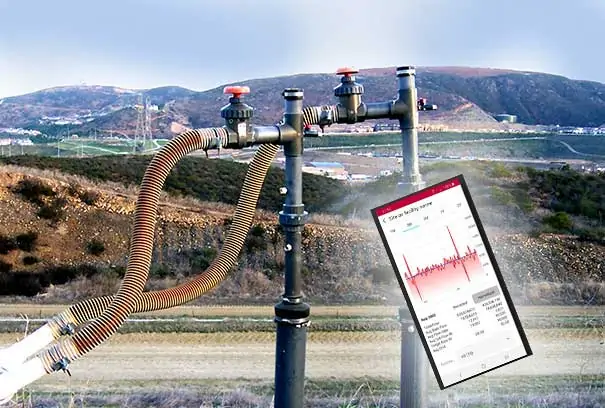
MobileTools enables field workers to pull up data on their iOS or Android mobile devices and observe real-time activity through a secure, wireless connection. It means they no longer have to connect instruments to their laptops and forward files to another source for upload to the eTools platform.
Instead, data goes from users’ smart devices to the cloud, enabling field workers, as well as operators and other decision-makers who work remotely, to access that information immediately.
“MobileTools builds on SCSeTools, which constantly takes in data and validates, analyzes, displays, and reports on that data. We realized that by incorporating technologies we’ve already built into this platform into the mobile devices, existing data acquisition workflows could be enhanced,” says Brooks Ballentine, SCS director of Software Development. “The result reduces effort and costs while increasing accuracy.”
“We’ve added wireless data transfer to MobileTools because the ability to access information within 24 hours is not good enough. We want to be within minutes to catch exceedances immediately,” says SCS engineer Sol Sim, who manages clients’ landfill gas operations.
“This is a real-time upload. So, if technicians are out in the field collecting data and a well has an exceedance, they can send a notice. If corrective action is required, the tech is already there to take that action,” he says.
Keeping Tabs on Flares
MobileTools is equally instrumental in keeping close tabs on flare activity, capturing information to identify overall flow trends, and ensuring the system meets stringent compliance requirements.
“Each flare has a data logger that records regulated parameters, such as gas flow and temperature. Data is stored minute-by-minute on the logger and typically requires an extensive manual process or expensive and complicated networked solutions to aggregate data in a centralized data repository. With MobileTools, this same data is transmitted in a simple process using existing mobile devices,” says Oliver Early, the product manager of SCSeTools-DataServices.
Early’s story around SCSeTools began in 2008. At the time, he was a client of SCS, paying to use the app to support a landfill gas-to-energy developer in ensuring regulatory compliance.
“I joined SCS in 2013 to come up with more features and push the app forward with new ideas and new ways of doing things, with wireless data transmission being the most recent advance,” he says.
Users of MobileTools can interact with site-specific data such as exceedance metrics for landfill gas, liquid levels, and surface emissions. And they access touch-enabled data charting to review daily gas loads recorded by flares.
MobileTools has the ability to attach photos to provide supporting visuals for more information and or to put data in context. This facilitates communication between field technicians, site managers, and corporate management, who can get a more tangible “picture” of what’s going on in the field.
As with every feature in the eTools suite, MobileTools is designed with data integrity and security in mind.
In the case of landfill operations monitoring data currently collected by hand, MobileTools will digitize the process, allowing for faster acquisition and near real-time analysis.
Integrating More and Different Data – Validation
“We are integrating data in MobileTools that is not currently collected on standardized instruments, such as liquid levels and pump cycle counts.
“So, with monitoring data that was recorded on paper, then entered into spreadsheets, techs now type it directly into the device. It is validated and then uploaded,” Ballentine says.
These and other features and functions are designed to be time and money savers. Field workers who now have a streamlined protocol can accomplish more in a day, freeing themselves for maintenance projects and other tasks. Operators can rely less on consultants to review data and identify potential issues or needed improvements.
Sim is part of the team involved in further developing and testing SCSeTools. That landfill practitioners developed the platform for landfill practitioners is key to its effectiveness, he surmises.
“We are not a software company dabbling in landfills; we are landfill operators. We know the industry, as well as the functionality needed in landfill software.
“Field engineers, staff, and technicians have been asking for a mobile app for some time. The ability to have data at our fingertips in the field is a tremendous tool for quickly troubleshooting issues,” Sim says.
Part I of the Interview Series
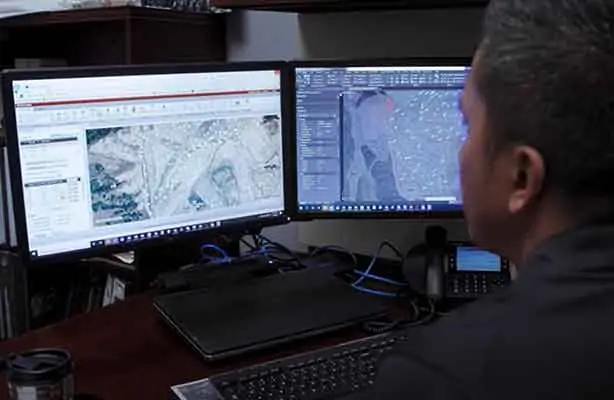
A two-part interview with Landfill & LFG Engineer Sol Sim, Product and SCS Field Services Manager Oliver Early, and Software Developer Brooks Ballentine.
Back in the day, environmental engineers and landfill operators had to create their own spreadsheets to track mountains of data, then try and figure out what all that data meant, a tedious process with limited functionality. But that’s changing, and SCSeTools® is at the forefront of the evolution. This powerful yet user-friendly digital platform automates data management; harnesses an ever-growing volume, type, and complexity of information; and expands on what solid waste professionals can do with that information.
Created by landfill practitioners, for landfill practitioners, SCSeTools collects, monitors, analyzes, and manages data on key landfill operations and assists in reporting. It’s leveraged by SCS staff and its clients nationwide to help facilitate sound operational and engineering decisions while saving time, labor, and money. Because operators get information in near-real time, they can act quickly and proactively should red flags spring up in their tightly regulated world.
The platform includes three modules: SCS DataServices®; SCS Groundwater™; and the newest feature—SCS MobileTools®. Collectively these customizable toolsets have the flexibility to capture the big picture of a site’s overall health or zero in on what’s happening at a single gas wellhead, leachate collection sump, or other location. The modules’ design supports the smallest and largest sites and serves operators managing one, 10, or even hundreds of facilities.
From the Big Picture to the Fine Details
SCS DataServices is the flagship product and the one that SCS engineer Sol Sim uses most. This module captures and utilizes landfill gas facility monitoring and management data. It’s also designed to serve as a compliance reporting tool.
Sim likes to tap into the app to look through different lenses, depending on what he needs to see and understand.
“You can use SCS DataServices to get a broad overview of what is happening, but you can also drill down to see where you need to focus to ensure you are spending time and resources efficiently,” he says.
Being able to dissect large volumes of data quickly, then key into the finer details as needed has made his job easier. And he can work smarter and faster.
“Without this tool, it’s a bit of a needle in a haystack. But now, we can easily visualize and pick out relevant, near real-time data to assess performance. And when there are deficiencies, we can make adjustments promptly—maybe upgrade a wellhead or upgrade laterals to optimize gas production,” he says.
Connecting the Dots in a Visual Format
The GIS mapping function, a component of DataServices, has been one of Sim’s go-to tools. It provides data points for individual locations within a landfill system and helps connect the dots in a visual format.
“You have point references and can spatially display a lot of data at once so, unlike with a spreadsheet format, you can see and process where a well is in relation to others,” he says.
Custom mapping captures any parameter, whether data points around gas flow, header vacuum or gas quality. Ranges are set to identify trends and, ultimately, provide information to make more informed decisions.
This ability to spot trends or patterns is integrated into features beyond mapping. A built-in algorithm helps determine if a client’s operations are trending in the right direction, and that determination can be made as patterns unfold, which helps field staff stay on top of the curve.
“If changes occur slowly, it typically takes time to notice, but if you look at six months or more of data at a time, you see that 1 percent change in temperature or flow, for example, that has crept up incrementally. You have one visual snapshot that captures a lot of data fast. So, if there are issues, you can get to the route quickly and make adjustments practically in real-time,” Sim says.
The DataServices module has served well as a troubleshooting tool. Sim illustrates with a real-life scenario: a client whose landfill gas-to-energy project was grossly underperforming.
“They had data but no way to review it efficiently to try and understand what was happening. They were ready to bring in a new operator. We were able to come in; upload their data into our system; identify the problem; and make easy, relatively inexpensive upgrades that increased their gas extraction by close to 15 percent.”
Besides helping to realize direct dollar benefits, the tool can compute and outline deficiencies from a regulatory standpoint.
“Our client had outstanding past exceedances that had not been remedied properly. We helped them get back into compliance and mitigate potential future issues that could have resulted in fines,” Sim says.
When SCSeTools was created, the primary goals were to standardize data acquisition and ensure that the data was secure. It was used internally at first, at a few landfills. Clients began asking for it, and now the toolsets are leveraged at over 650 locations across the country, both by SCS and clients who operate their sites.
Ensuring Data Integrity – Simplifying Processes
It continues to evolve, with one of the early advances being encryption of data collected in the field, which means that it can’t be modified when transmitted to the app.
Before, there could be errors if a file was interrupted or data mishandled as it moved along the chain of custody, explains Oliver Early, the product manager of SCSeTools.
“And now we have taken the capabilities even further,” says Brooks Ballentine, SCS director of Software Development.
“Today, we are enhancing MobileTools so field technicians can enter and transmit data directly from their mobile device to SCSeTools. This not only ensures data integrity but simplifies the process,” he says.
Data integrity and ease were the front and center focuses while designing each feature and function. Another example of this is that the software enables gas measuring instruments to be configured to align with well configurations.
“Every gas well has a unique configuration, and they are often reconfigured. Because we can synchronize the configurations from eTools to each technician’s instrument, we end up with more accurate, consistent readings, when, before, that was impossible,” Early says.
Staying On Top of Timelines
Operators must stay on their game to keep up with regulated monitoring timelines, whether involving activity at wells, monitoring probes, or flares. Some sites have hundreds or even thousands of data points with individual data timelines and, what’s more, those timelines can change. DataServices, in particular, works to simplify the detail-heavy process. It supports operators in better managing prescribed monitoring events in a couple of ways: by enabling them to view data for a specific monitoring period and by allowing them to set events to align with mandated periods.
So, if systems were out of compliance and now have to be monitored more often, the frequency can be set accordingly.
In addition to DataServices, with its robust capabilities around managing landfill gas systems data, the SCSeTools suite features one more module.
SCS Groundwater tracks constituents to help manage water quality and to mitigate or remediate issues. It was developed to enhance operational efficiencies while also providing a means to validate that reporting requirements are being met.
Users can set up and track monitoring plans consisting of sampling points and required analyses at each point. They can track the datasets of constituents, as well as constituents within each dataset that they are required to monitor. These constituents can be tracked over time to determine if seepages are controlled and follow progress if adjustments are required.
Once the data is uploaded into SCS Groundwater, the app checks it against the monitoring plan to verify that all work is complete. “This is a key feature because the number of possible methods, and associated analytes, is large, and ensuring that the required testing project has been completed correctly is critical,” Ballentine says.
“We are not done”: Expanding Capabilities
SCSeTools, with its three modules and mobile app, has advanced over time to keep pace with operators’ needs in an ever-changing, complex industry, and Sim says, “We are not done. We continue to leverage new technologies and to add features and functions so that we can make the best, most cost-effective decisions possible on behalf of our clients.”

SCS Engineers’ SCSeTools® platform and applications help facilities and companies operate more efficiently by continually gauging operational health and identify trends critical to operations and the environment.
SCS Technology Services®, the technology development practice within SCS Engineers, announces a new application for tracking and analyzing environmental data. The application expands the firm’s SCSeTools® platform, demonstrating its commitment to developing the most advanced data-driven technology in the environmental services industry.
Groundwater monitoring and compliance services are long-term and expensive responsibilities that generate enormous amounts of monitoring and laboratory data. SCS Groundwater™ is a tool to monitor and manage the data associated with operations and reporting requirements for various sites. Sites include active or closed landfills, plants, and impact sites such as former dry cleaners or industrial facilities.
The application also monitors and manages data effectively for clean groundwater applications such as groundwater basin management projects consistent with standard protocol under state and federal environmental compliance rules. SCS Groundwater™ collects and efficiently organizes groundwater monitoring and maintenance data providing those responsible for environmental compliance with a reliable, consistent, and cost-effective way to manage the large volume of information.
The application’s primary value is enabling users to set up a detailed monitoring plan for any number of events, including the sampling points to include and what analyses to perform at each point. Once the information upload is finished, the application checks incoming data against the plan to confirm all work is complete.
SCS Groundwater™ generates reporting components such as data tables, charts, graphs, and maps for compliance, reporting, and finding trends. For example, on a brownfield site, the compliance manager could upload historical monitoring data results, view the data trends over time, and then produce report tables and figures. Operators can also use the data in other applications for additional analysis or visualization.
SCS Engineers’ environmental solutions and technology directly result from our experience and dedication to industries responsible for safeguarding the environment as they deliver services and products. For information about SCS, visit the SCS eTools pages or enjoy our 50th Anniversary video to see the technology in action.
The SCSeTools® platform and applications help facilities operate more efficiently by continually gauging operational health and spot trends that help determine when and how to invest in infrastructure. Field staff, environmental compliance experts, brownfields, developers, and clients in the waste industry guide the technology designs. For additional information and demonstrations of these productivity-enhancing tools, please contact .

The events of 2020 have affected the economy, the way we conduct business, and even our social interactions. Now, more than ever, streamlining costs is key for public and private sector clients across the country. Enter groundwater monitoring projects.
Often overlooked as an opportunity to reduce costs, it’s an excellent place to start when examining the costly operational processes of a solid waste facility. Groundwater monitoring is often thought of as necessary for compliance requirements and overlooked when considering ways to reduce spending. However, the proactive review of all monitoring projects may offer monitoring reduction or even cessation opportunities.
SCS Engineers has successfully employed these strategies at several Florida landfills. For instance, in Marion County, the SCS team worked to get a cessation in landfill gas and groundwater monitoring at the Martel Closed Landfill. Hired to conduct routine post-closure monitoring, the team observed obvious trends in the data that were favorable to the County. If you consider that monitoring costs average $10,000 to $50,000 per year, the potential cost savings over ten years is $100,000 to 500,000.
Bottom line: you should take the initiative to ask a few simple questions to see if further examination is warranted. What if contaminants are naturally occurring? Is the data in the technical reports supporting conclusions that include reduction or cessation when appropriate? Are you simply meeting the minimum requirements of the permit without an eye on the future?
About the Author: SCS Project Director David Atteberry puts his 20+ years of environmental consulting and management experience to work for his clients. His technical experience includes geologic and hydrogeologic investigations involving hazardous waste, solid waste, environmental, and water supply. Dave’s technical areas of expertise include contamination assessments, remediation, site characterization, aquifer characterization, RCRA compliance, waste characterization, environmental due diligence, reserve budgeting, and field sampling techniques.
SCS Groundwater® collects and efficiently organizes groundwater monitoring and maintenance data providing those responsible for environmental compliance with a reliable, consistent, and cost-effective way to manage, view, and assess large volumes of information.
The application’s primary value is enabling users to set up a detailed monitoring plan for any number of events, including the sampling points to include and what analyses to perform at each point. Once the information upload is complete, the application checks incoming data against the plan to determine if all work is completed.
Efficient and consistent data collection means better quality control, fewer violations, and less costly operations. The application is a relational data management system specifically designed for groundwater management. Learn about more benefits here.

The Dallas City Council recently authorized a three-year service contract, with two one-year renewal options, for environmental monitoring and engineering consulting services supporting Dallas’s Department of Sanitation Services. SCS Engineers will use its integrated specialized practices to support the City’s McCommas Bluff Sanitary Landfill, Bachman Transfer Station, Fair Oaks Transfer Station, and Southwest Transfer Station.
Vice President Ryan Kuntz, P.E., the team’s principal consulting engineer, said, “SCS is privileged that the City of Dallas entrusts us to partner with the City’s staff to maintain the landfill and the transfer stations’ safe and efficient operations. The Department of Sanitation Services support the citizens and the environment; we’re honored to be of assistance.”
Landfills are extraordinarily complex systems integrating liquids and gas management systems, and the City’s McCommas Bluff Landfill is one of the largest landfills in the State of Texas. Transfer stations also require expertise in technical and regulatory issues for successful operation.
The City finds it cost-effective to employ an engineering firm, such as SCS, that specializes in solid waste engineering. SCS enhances environmental services with its specialized in-house practices, providing comprehensive capabilities and advanced technologies that improve efficiency and help control costs.
SCS Engineers will provide monitoring and engineering support staff from the firm’s Bedford, Texas office, along with the help of our minority/women-owned business partners. The SCS Bedford team’s professionals and field technicians are experienced and knowledgeable of regional and local geology, regulatory policies, and technical challenges.
SCS Engineers’ environmental solutions and technology are a direct result of our experience and dedication to solid waste management and other industries responsible for safeguarding the environment. For more information about SCS, please watch our 50th Anniversary video.
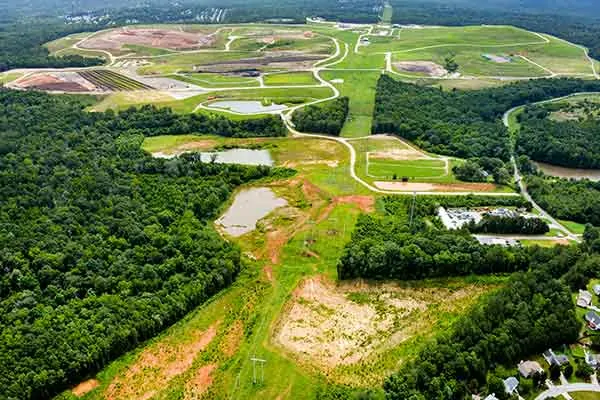
Being a landfill operator or owner is a demanding job. Your position requires knowledge of engineering, biology, chemistry, business, technology, and psychology. Most people don’t realize the complexity of landfill operations and the systems, personnel, and equipment that keep everything in balance. That’s okay; it’s part of the job too. The public generates trash, and it is picked up, reused, recycled, or landfilled as communities dictate.
Right now, landfill operations are more challenging than ever – so we’re providing a bit of help from our SCS website library. We hope it helps, but you can always reach out to your project manager for additional assistance.
Strategies for EPA Regulation Limbo
Landfill owners and operators remain in a state of regulatory limbo. Some sites are complying with the New Source Performance Standards (NSPS) under Subpart XXX and dealing with the duplicate requirements from Subpart WWW and other issues. Several states have approved Subpart Cf Emission Guidelines (EG) rules, so landfills in those states must begin to comply with those state rules. Several other states have proposed state plan approvals and could see approved EG rules issued soon, as in Virginia. When EPA issues the federal plan for the EG, all of the remaining landfills in states without approved state plans will have to start to comply. This will put all NSPS/EG-applicable landfills into the same boat with the existing Subpart XXX sites. In addition, landfills are figuring out how the new National Emission Standards for Hazardous Air Pollutants (NESHAPs) rule overlays on top of the NSPS/EG requirements.
During this period of limbo, where multiple overlapping regulations exist, certain public and private landfill owners within the solid waste industry have endeavored to take a unified and consistent stand on compliance strategies with guidance coming from the Solid Waste Association of North America (SWANA) and the National Waste and Recycling Association (NW&RA). Gabrielle Stephens, Cassandra B. Drotman, and Patrick Sullivan of SCS provide a regulatory update and compliance strategies in their paper Uncertainty EPA has Created with New NSPS XXX and Cf Rules
Staff Shortages and Funding Dilemmas
Many of our clients are in their annual budget period. Needless to say, nearly all municipalities have concerns about the upcoming fiscal year expectations and anticipated medium-term impacts of COVID-19 on local government operations and revenue streams. They have shared goals to:
In response, our team of economists is helping our clients prepare for Fiscal Year 2020/2021, with a Micro-analysis for the near-term (1-2 year) budget/operational impacts. It’s free, and you’ll get results in 2-3 days.
SCS is offering free webinars to discuss revenue diversification alternatives, realistic cost projections, and funding opportunities. We will announce the first webinar in the next week, but if you’d like to get started now contact the SCS Management Services® Lead here for a private session.
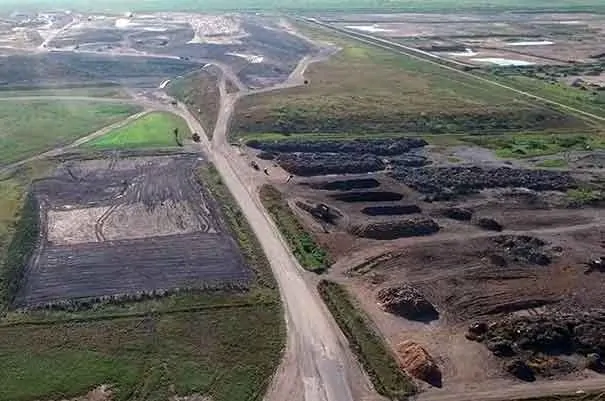
On July 7, 2020, the City of Brownsville Commission approved a recommendation by the Engineering and Public Works Department to continue an existing multi-year partnership with SCS Engineers. SCS is an environmental consulting and contracting firm that will serve the City for an additional five years. The environmental contracts support the Landfill Gas Collection and Control System (GCCS) expansion and provide landfill engineering, compliance, monitoring and operations assistance.
Project Director, J. Roy Murray, an SCS vice president, and the team’s principal consulting engineer will continue to serve the City’s citizens and staff. Mr. Murray has decades of experience in civil and environmental permitting, design, and construction at municipal solid waste landfills (MSW), including 20 years serving the Brownsville Landfill. Mr. Murray states:
The City staff and Commission continues to entrust SCS Engineers to help the landfill staff with the safe, efficient, and compliant operation of the landfill. We are honored by their trust. The City of Brownsville MSW Landfill Operations team serves the City well. The facility is the primary solid waste disposal site for surrounding communities, carefully engineered and maintained regularly even during severe weather and now a pandemic. The forethought of the Landfill Division, their leadership, and innovative practices provide the citizens with stellar services while protecting the environment.
The initial installation of the City Landfill’s Gas Collection and Control System (GCCS) completed in 2011, was part of an Energy Efficiency and Conservation Block Grant the City received from the American Recovery and Reinvestment Act of 2009. SCS Engineers assisted with the application process, and as a result of the collaboration, the City received a $1.7 million grant to install a landfill gas collection system at the landfill. With GCCS operation, the City has reduced its greenhouse gas emissions. The landfill infrastructure and emission reductions were voluntary at the time, but the Texas Commission on Environmental Quality (TCEQ) Air Quality rules and regulations, and EPA’s New Source Performance Standards, now require them.
The Gas Collection and Control System consists of 16 landfill gas extraction wells and currently provides coverage of 32 acres of the City Landfill’s disposal footprint. The City plans to expand the GCCS during 2021, to support landfill’s growth and stricter air permit regulations. The expansion includes 38 additional wells covering 120 acres of the landfill footprint. The new wells will integrate with the collection system and integrate with liquids management, leachate control, and stormwater systems, among others.
About SCS Engineers
SCS Engineers’ environmental solutions and technology are a direct result of our experience and dedication to solid waste management and other industries responsible for safeguarding the environment. For more information about SCS, please follow us on your preferred social media channel, or watch our 50th Anniversary video.
Corporate Headquarters