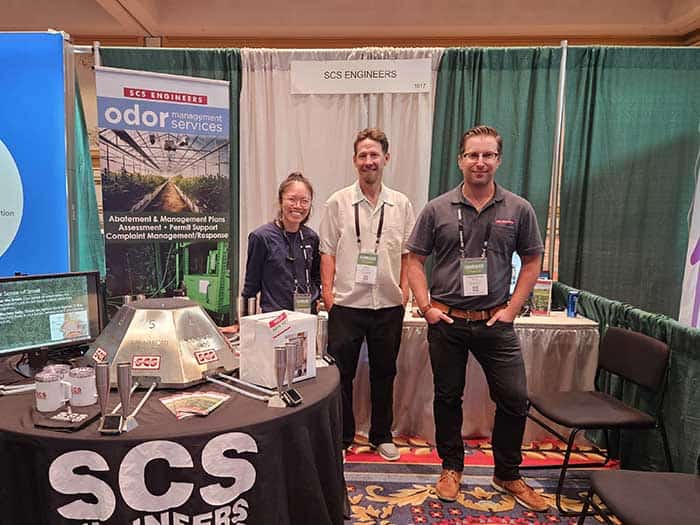
The cannabis industry gathered at the Paris Hotel in Las Vegas for the annual Cannabis Conference, an industry-leading event for professionals from plant-touching cannabis businesses. Hosted by Cannabis Business Times, the conference has grown over the years to become a global hub for networking, education, and innovation.
The Cannabis Conference attracts thousands of attendees from across the United States, Canada, and nearly 30 other countries. With a focus on education, the conference provides a platform for professionals to explore the latest trends, challenges, and solutions in the cannabis world. It’s where leaders in cultivation, business, and retail innovation gather to share their experiences and inspire others to thrive in this ever-evolving industry.
While the event covered a wide range of topics, we hope SCS Engineers (SCS) brought a breath of fresh air to the event by showcasing environmental solutions focusing on the environmental challenges specific to the cannabis industry. What set SCS apart at the conference is its unique focus on odor management, a critical issue often overlooked in the cannabis industry. And one that can cause costly nuisance complaints or, in some cases, prevent permitting an operation.
Odor Pollution Assessment and Mitigation
Odor pollution is a significant concern for cannabis businesses. Over 50% of air pollution complaints received by regulatory agencies involve an odor component. Having a mitigation strategy helps smooth and speed the permitting process. The environmental engineers and consultants offer a comprehensive range of odor assessment and mitigation services tailored specifically for industrial operations.
Application of Industry Technologies
Project Director Paul Schafer, Project Managers Eva Luu and Christopher Petro, and Marketing Coordinator Jodie Rukamp were on hand to greet curious attendees and answer questions about odor management. The exhibitor hall was a hot spot of attention for SCS, and for good reason. These industry experts brought their olfactometer and showcased case studies for the SCS-ent-i-PED cannabis odor surrogate instrument. The team and new technologies drew attention, stirred conversations about odor management, and spotlighted discoveries by SCS while solving odor problems for clients whose greenhouses and operations often coexist near neighborhoods and more urban areas.
Conference Keynotes and Case Studies
While attending the Cannabis Conference, the SCS team attended several keynote speaking events, including Surviving The Market Crash, where cannabis cultivators Stone Road, Veritas Fine Cannabis, and SCS’s Carpinteria, California client Autumn Brands spoke on the subject of the strategies for everything from saving on labor costs to how and when automation can be useful.
Presenters discussed evaluating operational structures and helping attendees evaluate many aspects of their business to survive a market downturn and thrive over the long term. Autumn Brands discussed internal resource management and relayed the significance of the cannabis market downturn during the last several years. SCS was instrumental in helping Autumn Brands reduce their capital expenses related to long-term odor management and develop meaningful empirical connections between sulfonated compound surrogates relative to nuisance cannabis odors.
Additional Resources:
 About the Author: Christopher Petro, MSCE, EIT, is a Project Manager for SCS, providing technical and managerial support for environmental compliance, regulatory, and odor management projects. He has 17 years of experience in planning, engineering, grant writing, and construction development. He currently manages projects in Central California. Reach out to Chris at or via LinkedIn.
The 2024 Water and Wastewater Equipment, Treatment and Transport (WWETT) Show takes place January 25 – 27 at the Indiana Convention Center in Indianapolis.
WWETT is the largest annual event dedicated to wastewater and environmental service professionals, with approximately 12,000 attendees and over 480 exhibiting companies in over 270,000 square feet of exhibit space. This is the largest, most immersive showcase of the latest innovations within the wastewater industry. The show brings together industry experts, cutting-edge technologies, and game-changing services all under one roof. Take your pick from over 90 expert-led courses, live show demonstrations, hundreds of interactive booths, engaging networking opportunities, and celebrate with thousands of your industry peers!
Click for a list of sessions, exhibitors, and registration information.
Speak with SCS professionals at BOOTH 618 at the 2024 Wisconsin Safety Council Conference, April 15-17, at the Kalahari Resort in the Wisconsin Dells.
The Wisconsin Safety Council’s Annual Conference is Wisconsin’s premier event highlighting health, safety and human resource best practices challenges and solutions. It features over 50 educational sessions, 200 exhibitors, and 5 pre-conference professional development courses.
The conference provides a unique opportunity for professionals to share resources and experiences with colleagues, and to discuss views and concerns with a wide range of stakeholders. You will hear from top-notch speakers and learn about the latest safety information.
The Wisconsin Safety Council is celebrating its 100th anniversary in 2023. On tap for the 2024 conference are:
April 15: Professional Development Courses (day prior to conference)
April 16-17: Conference Sessions & Expo
April 16: Networking Reception
We hope to see you there!
SCS Engineers is a Silver Sponsor of the 2024 Wisconsin Integrated Resource Management Conference at the Chula Vista Resort in Wisconsin Dells, February 28-March 1.
WIRMC is a great local opportunity for continuing education and networking opportunities. The conference offers a great mix of technical discussion, emerging technologies, practices, and networking with other industry professionals, such as SCS Engineers (visit us at Booth 41).
AROW-Associated Recyclers of Wisconsin, SWANA-Solid Waste Association of North America, and WCSWMA-Wisconsin Counties Solid Waste Management Association jointly host the statewide conference.
Look for this highlight session featuring SCS Project Manager Chris Jimieson:
This session covers environmental equity, recovery of more recyclables, composting education and outreach, waste reduction/zero waste in recycling, and recycling education. Active participation and engagement in waste reduction efforts increase recycling. Three projects highlight the role of engaging education strategies, workshops, and community events in empowering Latinx, school, and neighborhood communities. Learn how the tools and behavioral communications strategies can be replicated in your waste reduction efforts, spreading the ripple effect of impact.
There’s plenty more on the Wisconsin Integrated Resource Management Conference agenda! Check here for the latest.
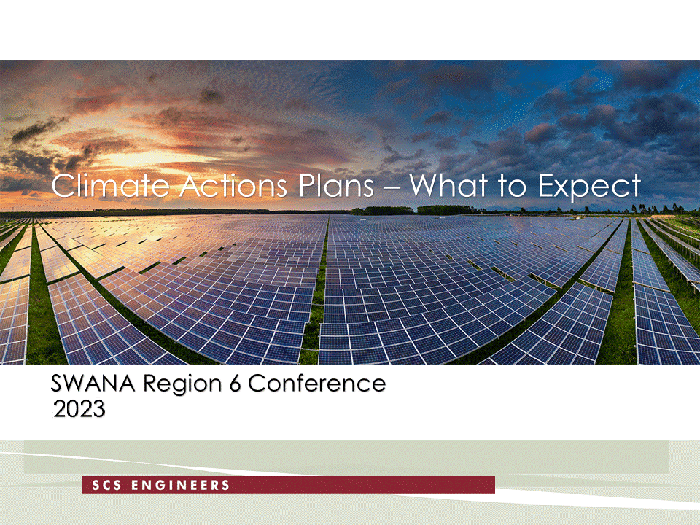
A big shout out to the President of the SWANA Region 6 Chapter, J. Morgan, for a week of informative sessions, valuable networking, and fun social activities at the SWANA Region 6 conference. Dancing and singing with DJ Pudding was a highlight, along with the river tour and Shoeless Joe Jackson search with Mr. Greene. Lucas Nachman and I presented on the topic of Climate Action Plans and what businesses and municipalities can expect.
With so much public attention on climate change, we presented five case studies to illustrate common measures and strategies currently in city, state, and municipal Climate Action Plans, including:
I was also lucky enough to moderate a panel on net zero waste by the city of Nashville. The speakers were very informative. Some of the findings showing the hurdles in the environmental arena are surprising. Three other SCS presenters, David Greene, David Walker, and Michael Stonecipher, spoke on the topics of RNG Permitting, Tier 2 Sampling, and RMC capabilities. For us, we were excited to share our expertise and knowledge that solve customer challenges.
While climate seems to be a growing concern for everyone, the waste industry is on the front lines of the environment and under tremendous regulation and public scrutiny. As an essential service, we’re always concerned about the cost of operations – since it passes to citizens. In my opinion, the waste industry is rightly focused on 1) budgets, 2) increasingly, more restrictive regulations regarding leachate, PFAS, etc. 3) manpower with experience, and 4) complaints such as odor and traffic. But, to be sustainable, we address the social and economic impacts into our technical solutions.
There are exciting new technologies, master planning-climate action plans, and economic support options available. While the challenges never stop, they spur us on to ever better solutions.
 About the Author: Mr. Doug Latulippe is responsible for developing and supporting SCS’s nationwide energy management and renewable energy practice. This includes work related to SCS’s air quality, greenhouse gas (GHG), and sustainability initiatives for public and private commercial businesses, industrial facility owners, real estate clients, utilities, and renewable energy project developers. Prior to joining SCS, Doug managed energy portfolios including capital and operating budget development, power generation, demand-side project and program development, bill management and reporting, and utility incentive program management. He also performed energy audits and GHG reporting for Fortune 500 companies. As part of his power generation experience, he patented a solid-fuel gasification system designed for environmental mitigation and pollution control. Doug was also recognized by the EPA for his extensive work with the ENERGY STAR program. Reach Doug Latulippe at or via LinkedIn.
Do you know that some carbon dioxide in the atmosphere is necessary? CO2 allows some solar radiation to stay in the Earth’s atmosphere – important for heating our planet’s atmosphere. In plain language, Spencer LaBelle, a civil and environmental consultant, covers how and when excessive CO2 became unbalanced by human-generated activities. Next, he covers how capturing and sequestering CO2 helps protect our Earth’s ecosystems. The process permanently stores carbon dioxide to prevent emitting into the atmosphere and is commonly referred to as a carbon sink.
Two types of carbon sinks collect and hold carbon: geologic, which Spencer covers, and biologic sequestration. Both are necessary and powerful for combating climate change and protecting ecosystems. Spend 10 minutes with SCS Engineers to learn more.
 Meet Spencer LaBelle a Project Professional in our Chicagoland office. He has diverse experience in civil and environmental consulting for municipal solid waste management, coal combustion residual (CCR) management for electric utilities, regulatory compliance, environmental site assessments (Phase I-II), stormwater and erosion control management systems, and site development. If you’d like to work with smart people like Spencer, visit SCS Engineers. Reach out to him at or on LinkedIn with comments and questions.
Yesterday, October 24, 2023, the United States Small Business Administration (US SBA) released an updated version of its newest Standard Operating Procedures (SOP) under Lender and Development Company Loan Programs. The new SOP, Version 50 10 7.1, will go into effect on November 15, 2023. All lenders, certified development companies (CDCs), SBA employees, and applicants/borrowers of 504 and 7(a) loans will be subject to the changes therein at that time.
The environmental policies of the SOP are contained within Chapter 5, Section E of the new SOP. The primary highlighted change from the previous version (50 10 7) is that in subsection d, paragraph vii, the word “groundwater” has been removed regarding contamination originating from another site. In other words, SBA henceforth will require a discussion of mitigating factors related to known contamination resulting from neighboring properties regardless of media type. That section now reads as follows:
SCS Engineers continues to monitor this and other SOPs/guidelines that dictate proper performance of due diligence for specific lending programs. Please contact Rachel McShane for more information.
The U.S. Environmental Protection Agency released two new reports quantifying methane emissions from landfilled food waste and updating recommendations for managing wasted food. In a press release, EPA Administrator Michael S. Regan said, “These reports provide decision-makers with important data on the climate impacts of food waste through landfill methane emissions and highlight the urgent need to keep food out of landfills.”
The reports’ findings emphasize the importance of reducing the amount of this type of waste and managing its disposal in more environmentally friendly ways. Based on these findings, EPA is releasing an update to its Food Recovery Hierarchy to help decision-makers, such as state and local governments, understand the best options for managing the waste regarding environmental impacts.
The release of the new ranking – the Wasted Food Scale – marks the first update since the 1990s, reflecting more recent technological advances and changes in operational practices. EPA’s research confirms that preventing food from being wasted in the first place, or source reduction, is still the most environmentally beneficial approach. Evidence in these reports suggests that efforts should focus on ensuring less food is wasted to divert it from landfills, which will reduce environmental impacts.
The research announced on Thursday, October 19, represents the first time EPA has quantified methane emissions from landfilling. This work published modeled estimates of annual methane emissions released into the atmosphere from landfilled food waste, giving a cost of landfilling the waste in terms of the impact on climate change.
EPA analyzed to estimate annual methane emissions from landfilled this type of waste from 1990 to 2020 and found that while total emissions from municipal solid waste (MSW) landfills are decreasing, methane emissions from landfilled food waste are increasing. These estimates indicate that diverting edible and non-edible food from landfills effectively reduces methane emissions, a powerful greenhouse gas, from MSW landfills.
“From Field to Bin: The Environmental Impacts of U.S. Food Waste Management Pathways,” which examines the environmental impacts of disposing of food waste. This report synthesizes the latest science on the environmental impacts of how food waste is commonly managed in the U.S. This report completes the analysis that began in the 2021 companion report, “From Farm to Kitchen: The Environmental Impacts of U.S. Food Waste,” which analyzed the environmental footprint of food waste in the farm to the consumer supply chain.
“Quantifying Methane Emissions from Landfilled Food Waste” represents the first time the EPA has published modeled estimates of annual methane emissions released into the atmosphere from landfilled food waste. More food reaches MSW landfills than any other material, but its contribution to landfill methane emissions has not been previously quantified.
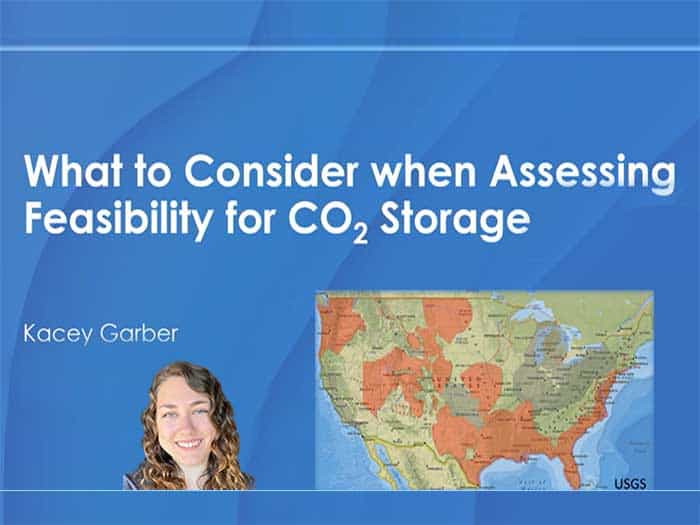
Capturing carbon dioxide and injecting it into a Class VI well for permanent geologic (carbon) sequestration, or CO2 storage, is a technology that industry leaders are using to decarbonize manufacturing processes. Utilizing CO2 storage allows manufacturers and industries to reduce greenhouse gas emissions and carbon footprints. The complexity of carbon sequestration projects can vary widely depending on your facility’s location.
In this 10-minute educational video, Geologist Kacey Garber describes the benefits and considerations of assessing the feasibility of carbon sequestration before entering the permitting process of a full-scale project. The resulting feasibility study helps develop your facility’s safest and most economical CO2 storage project.
The historical use of other injection well classes demonstrates the utility of injection wells for safe and permanent disposal or sequestration of fluids and GHG. As a result, large areas of the U.S. host viable CO2 storage resources. However, as Kacey explains, never assume that any given location is suitable for a Class VI injection well.
CO2 storage projects are a multi-decade commitment with significant technical, regulatory, and financial complexities. As such, industries must understand the financial impacts of a sequestration project, the regulatory framework, and the geologic suitability for Class VI injection in a given project location.
Additional Resources:
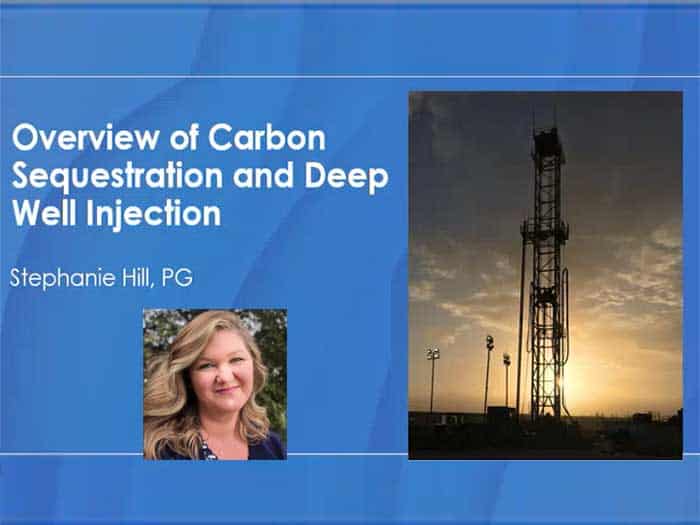
Injection well technologies have stored fluids and gases below protected drinking water aquifers for over half a century. When properly sited, designed, and operated, injection wells are a safe and responsible environmental management option for industries seeking permanent disposal of liquid and emission byproducts. Using two types of deep injection wells, some with environmental stewardship and federal tax credits available, SCS Engineers explains.
Hydrogeologist and licensed Professional Geologist Stephanie Hill provides a plain language overview of how EPA-approved injection wells work, a simplified graphic to show where injection wells are useful, and the associated costs and time to implement an operational system using Class I wells for deep injection of liquids and Class VI wells for sequestering carbon dioxide.
Byproducts include industrial wastewater or leachates, among others, and, importantly, sequestering carbon dioxide to reduce greenhouse gases. With the rise of transportation costs and water treatment plant restrictions, more industries seek certainty to support business and environmental longevity. Consequently, there is an increasing interest in using injection well systems to manage waste liquids and leachate. The operation of injection wells permanently sequesters industrial byproducts and is a federal and state-preferred technology to protect underground drinking water sources.
SCS Carbon Sequestration and Deep Well Injection team co-leader Stephanie Hill explains how operating an injection well system at your facility may help insulate your business from increasing disposal costs and serves as a responsible environmental management option.
Additional Resources:
Corporate Headquarters