Speak with SCS Engineers environmental and solid waste professionals at the 2023 SWANA FL Winter Conference, February 20-22, at the Hilton Orlando Lake Buena Vista. SCS Engineers is a sponsor of this event.
The conference will explore “Imagine More: The Brightest Ideas in Solid Waste” and will feature industry thought leaders and the brightest minds in the solid waste industry, all in the beautiful setting of the Disney Springs area. Continuing education hours will be available.
The program will provide an interesting and educational agenda of sessions and speakers discussing the latest developments in the solid waste industry and a great way for industry suppliers and service providers to showcase their products and services.
This multi-day conference will include general sessions on best practices in the solid waste management profession, networking events and more. The conference is attended by local, state and municipal government solid waste directors, managers, regulators, operators and coordinators, in addition to private sector consulting engineers and suppliers of materials and equipment used in the management of solid waste.
Click for Program and Registration Information
The U.S. Environmental Protection Agency (EPA) has issued a proposed rulemaking (Federal Register, Vol. 87, No. 198, Friday, October 14, 2022) that would address a 2008 Fugitive Emissions Rule that was subsequently granted reconsideration based upon a petition from the National Resources Defense Council (NRDC). The key issue is how fugitive emissions are considered under Section 111 of the Clean Air Act (CAA), as related to the definition of modification.
Modification means any physical change in, or change in the method of operation of, a stationary source which increases the amount of any air pollutant emitted by such source or which results in the emission of any air pollutant not previously emitted. 42 U.S. Code § 7411(a)(4).
In 2008, the Bush EPA published its Fugitive Emissions Rule that sought to “reconsider” the inclusion of fugitive emissions under this language. Fugitive emissions are defined as:
Those emissions which could not reasonably pass through a stack, chimney, vent, or other functionally-equivalent opening.
NRDC’s petition for reconsideration argued that the Bush EPA weakened the standard for determining major modifications by excluding fugitive emissions from major Prevention of Significant Deterioration (PSD) and non-attainment New Source Review (NSR) applicability.
The proposed rulemaking would result in a formal reversion to the pre-2008 language. EPA’s Director for its Office of Air Quality Planning & Standards (OAQPS) has indicated that the rule “would require fugitives to be counted in all new and modified major source determinations,” effectively ending the Bush-era limitations on counting of fugitive emissions.
The potential impact of EPA’s planned fugitive emissions rule may prove significant and is expected to affect a wide range of diverse industry sectors being impacted, such as power generation, oil & gas extraction, mining, paper mills, petroleum refining, chemical manufacturing, coatings operations, and solid waste facilities. In particular, both landfills and compost facilities can have significant fugitive emissions.
Based on our current understanding, the proposed rule will effectively eliminate the ability to exempt fugitive emissions under the current exemption in 40 Code of Federal Regulations (CFR) 52.21(i)(vii). This would mean that if a source is an existing major PSD or non-attainment NSR source for ANY pollutant, and modifies, then both non-fugitive AND fugitive emissions for ALL pollutants must be counted to see if the project is a major modification under PSD/NSR. Triggering a major modification would also mean that fugitive emissions are included in the various compliance elements of PSD or NSR (e.g., best available control technology [BACT], lowest achievable emission rate [LAER], modeling, offsets. etc.).
To add more context for landfills, as an example, if an existing landfill, which is already deemed major due to carbon monoxide (CO) or sulfur dioxide (SOx) emissions from flares (Potential to Emit [PTE] >250 tons per year [tpy]), conducts an expansion that will result in 15 tpy of new particulate matter less than 10 microns(PM10) [and/or 10 tpy of PM2.5] fugitive emissions from windblown dust, this would be a major modification under PSD, requiring BACT and modeling for fugitive PM. This could also include BACT and other requirements for fugitive methane as a regulated greenhouse gas (GHG) or volatile organic compounds (VOCs)/non-methane organic compounds (NMOCs) from the additional fugitive landfill gas (LFG) emitted from the expanded landfill. Compost facilities can also have significant VOC emissions, which could put them at risk from this rule change.
Public comment on the rulemaking ends on February 14, 2023, which is an extension of the previous deadline. The solid waste industry will provide comments through the Solid Waste Association of North America (SWANA) and the National Waste and Recycling Association (NW&RA). This will be the last chance to have any effect on the rulemaking. Otherwise, landfills and possibly compost facilities could face more stringent requirements under the PSD and NSR programs when it comes to fugitive emissions.
Landfill and compost facility owners and operators may direct their questions pertaining to specific facilities to their Project Managers or .
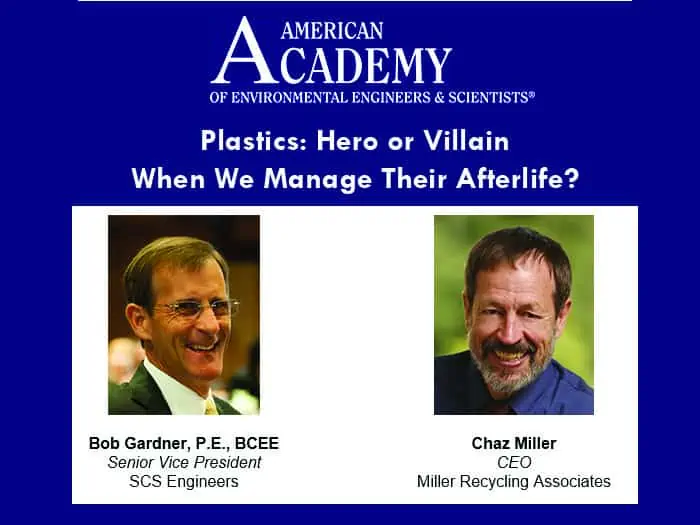
AAEES Webinar Plastics: Hero or Villain When We Manage Their Afterlife?
Wednesday, January 11, 2023
12:00 PM Eastern | 9:00 am Pacific
1 hour and 30 minutes (approximate)
$40 for non-members | FREE for all AAEES Members
American Academy of Environmental Engineers & Scientists (AAEES) presents an interactive session with “live chat” capability. The session is open to environmental engineering and science professionals across all sectors and career stages. Our objective is to offer special insights on leading-edge solutions for graduate and undergraduate students and early to mid-career environmental professionals considering specialty certification.
AAEES Board Certified Individuals: Attend this event and earn 1.5 PDHs towards your PDH requirements for maintaining your specialty certification.
Webinar Summary
Plastics have always had a rocky reputation. Fifty years ago, the Kinks sang “Plastic Man” as a paean to their superficiality. Now they are blamed for a wide array of problems ranging from marine debris, environmental injustice, negative health impacts, and fraudulent recycling. Yet their use has transformed the products we use in our daily life and what we do with those products when we are through with them. In 1960, plastics were less than half of a percent of America’s trash. Today, they are one-eighth of the garbage we generate. Their impact is significant.
This webinar will look at the rise of plastics in our waste. It will examine the collection, disposal (whether energy recovery or landfill), and recycling along with the extent to which plastics have led to less waste to manage. This webinar will teach you more about plastics’ pervasiveness in our society and how we can best manage their afterlife.
About the Presenters
Bob Gardner holds B.S. and M.E. degrees in civil engineering from the University of Virginia. He is a Senior Vice President of SCS Engineers and has been with the firm since 1980. He serves on the firm’s Board of Directors and oversees SCS’s nationwide solid waste management practice. His expertise is in solid waste management and environmental engineering. He provides consulting and engineering services to municipal and private clients throughout the United States and abroad. Bob is involved with the Environmental Research and Education Foundation Research Council. He is a past Director of the Solid Waste Association of North Americas Landfill Management.
Chaz Miller is a fifty-year veteran of the waste and recycling industry. He was part of EPA’s original Resource Recovery program, is a recipient of a Lifetime Achievement Award from the National Recycling Coalition, chaired the Aiming for Zero Waste Task Force in his home county in Maryland and writes an award-winning column for Waste360 magazine.
Meet SCS Engineers professionals at the A&WMA/ASME Waste Information Exchange, April 11-12, 2023, at the Doubletree Hilton Washington DC-Crystal City Hotel, in Arlington, Virginia.
This conference will cover the latest on a broad range of waste-related topics including regulations and research in an interactive, discussion-focused format. This is an excellent learning and networking opportunity to hear directly from experts at EPA, NGOs, industry, and academia who are working together to develop solutions to creating a cleaner and healthier environment. The technical program will cover policy updates and regulatory changes, as well as current and late-breaking research on hot topics such as:
• Solid Waste
• Biosolids
• Landfill Issues and Greenhouse Gas Emissions Monitoring
• Reuse/Recycling
• Resource Management
• Waste-to-Energy
• PFAS Emissions and Controls
• Environmental Justice
• RCRA Requirements for Open Burning
Managers, practitioners, policymakers, and researchers involved in waste management, public works, operations, maintenance, manufacturing, transportation, technology, compliance, collections, and other environmental roles will benefit from the technical content and networking available at this conference.
Sponsorship and display opportunities are available at this conference! Discover how your company can maximize exposure, generate leads, and support the industry.
Visit www.awma.org/waste for registration information and evolving conference details.
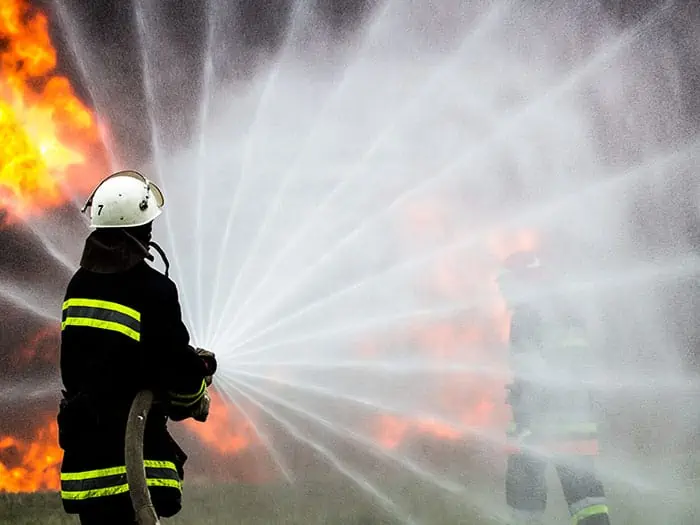
Fires are occurring with increasing frequency in the solid waste and recycling industry. While fires are a serious safety risk to facility personnel and emergency responders, they pose an administrative risk as facilities struggle to keep or renew insurance policies. Learn how developing a fire mitigation plan and training can help prevent fires and keep them from escalating by identifying gaps in knowledge, resources, and communication between facility managers and emergency responders.
Jeff Phillips‘ presentation at the Colorado SWANA 2022 Conference will provide an update on fires within the industry so we can learn from other events (the good and bad). His presentation will also cover the benefits of having a fire mitigation plan, developing the plan and its components, the unique safety risks solid waste facilities pose to emergency responders, strategies to engage emergency response managers, and suggestions on how to “train the plan.”
Thursday, October 13, 2022
Breakout Session 12: Landfill Operations, 1:15pm-2:45pm
Meet SCS Engineers and SCS Field Services professionals at BOOTH 1704 at WasteExpo 2023, May 1-4, in New Orleans.
WasteExpo is the place to be! The conference program is your professional development opportunity of the year! The education and training that you’ll receive is guaranteed to sharpen your skills to help you do your job better. WasteExpo’s conference program is unparalleled. 2023 Conference Tracks include:

 A Bird’s-Eye View: Using Satellites and Drones to Detect and Monitor Emissions, Bob Dick, Sr. VP (Moderator) and Chris Carver, GIS Developer and FAA licensed drone pilot.
Monday, May 1
8:00 AM – 9:15 AM
Room: 275, Session Number: MTECH1
 Why is Multifamily Recycling So Hard? with Michelle Leonard, Sr. VP and National Expert on SMM
Monday, May 01, 2023
8:30 AM – 9:45 AM
Room: 279, Session Number: MRECYC1
 PFAS: Price to Fix Adulterants will Soar with Nathan Hamm, VP and National Expert on Liquids Management
Monday, May 01, 2023
10:15 AM – 11:30 AM
Room: 279, Session Number: MRECYC2
 Minimum Recycled Content: Challenges and Opportunities with Vita Quinn, National Expert on Solid Waste Finance and Rate Studies
Tuesday, May 02, 2023
8:00 AM – 9:15 AM, Room: 289, Sustainability Track
Seizing an Opportunity: The Rise of MRF Investments with Bob Gardner, Sr. VP Solid Waste
Tuesday, May 02, 2023
12:00 PM – 1:15 PM
Room: 279, Session Number: TRECYC3
 There’s an App for That! with Chris Carver, GIS Developer and FAA licensed drone pilot.
Wednesday, May 03, 2023
10:45 AM – 12:00 PM
Room: 275, Session Number: WTECH2
Click for more conference details and registration information
In a letter to Congress, SWANA and NWRA associations request that regulation under the Comprehensive Environmental Response, Compensation, and Liability Act (CERCLA) for addressing per- and polyfluoroalkyl substances (PFAS) contamination assign environmental cleanup liability to the industries that created the pollution in the first place. Both associations note that MSW landfills and solid waste management, an essential public service do not manufacture nor use PFAS. The industry, and ultimately the general public should therefore not be burdened with CERCLA liability and costs associated with mitigating PFAS from water and wastewater.
May 10, 2022
Re: Relief for Municipal Solid Waste Landfills from CERCLA Liability for PFAS
Dear Chairman Carper, Ranking Member Capito, Chairman DeFazio, Ranking Member Graves, Chairman Pallone, and Ranking Member McMorris Rodgers:
The municipal solid waste (MSW) management sector strongly supports the goal of addressing per- and polyfluoroalkyl substances (PFAS) contamination and holding accountable manufacturers and heavy users of these compounds. We are concerned, however, that regulation under the Comprehensive Environmental Response, Compensation, and Liability Act (CERCLA) instead would assign environmental cleanup liability to essential public services and their customers. We therefore request that Congress provide MSW landfills and other passive receivers with a narrow exemption from liability if certain PFAS are designated as hazardous substances under CERCLA. Doing so would keep CERCLA liability on the industries that created the pollution in the first place.
Context
• Landfills neither manufacture nor use PFAS; instead, they receive discarded materials containing PFAS that are ubiquitous in residential and commercial waste streams. MSW landfills and the communities they serve should not be held financially liable under CERCLA for PFAS contamination, as landfills are part of the long-term solution to managing these compounds.
• Landfills are essential public services that are subject to extensive federal, state, and local environmental, health, and safety requirements. Further, MSW landfills are important to managing and limiting PFAS in the environment, as recognized by the Environmental Protection Agency (EPA) in its December 2020 draft Interim Guidance on the Destruction and Disposal of [PFAS] and Materials Containing [PFAS].
• Just as certain airports are required by law to use firefighting foam containing PFAS, permitting authorities often require landfills to accept waste streams containing PFAS.
• Most landfills rely on wastewater treatment facilities for leachate management. Wastewater and drinking water facilities increasingly rely on landfills for biosolids management and disposal of PFAS-laden filters. Efforts to address PFAS at MSW landfills and drinking water and wastewater facilities must avoid disrupting this interdependence among essential public services to communities.
• Landfill leachate typically represents a minor proportion of the total quantity of PFAS received at wastewater treatment facilities from all sources. PFAS manufacturers or users, by comparison, contribute PFAS at levels that can be orders of magnitude higher than landfills.
Significant Economic Impacts
• Removing PFAS from landfill leachate requires advanced treatment techniques which are prohibitively expensive. Estimated capital costs to implement leachate pretreatment at a moderate-sized landfill to the extent necessary to significantly reduce PFAS range from $2 million to $7 million, with nationwide costs totaling $966 million to $6.279 billion per year for the solid waste sector. Trace concentrations of PFAS nevertheless would remain in leachate following pretreatment, exposing landfills to CERCLA liability.
• Absent relief from CERCLA liability, manufacturers and heavy users of PFAS compounds will bring claims for contribution against landfills and other passive receivers, generating significant litigation costs. EPA’s exercise of enforcement discretion will not insulate landfills from this litigation.
• These costs will be passed along to communities, water and wastewater treatment facilities, and biosolids management, all of which rely on the services of MSW landfills.
Broad Unintended Consequences
• CERCLA regulation will impel landfills to restrict inbound wastes and/or increase disposal costs for media with elevated levels of PFAS, including filters, biosolids, and impacted soils at Department of Defense facilities. The mere prospect of regulation in this area is already disrupting the interdependence of the drinking water, wastewater, and solid waste sectors.
• Food waste compost may contain PFAS due to contact with PFAS-lined packaging materials. As a result, a CERCLA designation could result in communities diverting food waste from organics recycling programs, hindering federal, state, and local climate and waste reduction goals.
• Cost increases likely will have a significant disproportionate impact on low-income households that rely on the affordability of services that the solid waste sector provides.
Recommendation
Although our sector is simultaneously pursuing “no action assurance” from EPA, the agency historically has been very hesitant to provide this relief given its policy that assurances should be given only “in extremely unusual cases.” As such, and acknowledging that EPA may have limited authority to act on our request, we recommend providing the following narrow exemption from CERCLA liability that affords relief to landfills and other passive receivers of PFAS1:
(a) IN GENERAL.—No publicly owned or operated community water system (as defined at 42 U.S.C. 300f), publicly owned treatment works (as defined at 33 U.S.C. 1292), or municipal solid waste landfill (as defined at 40 C.F.R. 258.2) shall be liable under the Comprehensive Environmental Response, Compensation, and Liability Act of 1980 (42 U.S.C. 9601 et seq.) for the costs of responding to, or damages resulting from, a release to the environment of a perfluoroalkyl or polyfluoroalkyl substance designated as a hazardous substance under section 102(a) of such Act that resulted from the discharge of effluent, the disposal or management of biosolids, the disposal of filtration media resin, or the discharge of leachate where such actions are in compliance with Federal or State law and all applicable permits.
(b) EXCEPTION.—Subsection (a) shall not apply with respect to any discharge described in such subsection that results from any gross negligence, willful misconduct, or noncompliance with any Federal or State law or permit governing the discharge of effluent, disposal or management of biosolids, disposal of filtration media resin, or waste disposal.
Thank you for your consideration of our request, and we look forward to continuing to partner with the federal government to ensure the safe and effective management of waste streams containing PFAS.
Sincerely,
National Waste & Recycling Association
Solid Waste Association of North America
cc: Senate EPW Committee Members
House T&I and E&C Committee Members
_______________________________________
1 The exemption would not extend to underlying soil and groundwater contamination from a MSW landfill or to facilities other than MSW landfills that accept waste streams with elevated concentrations of PFAS.
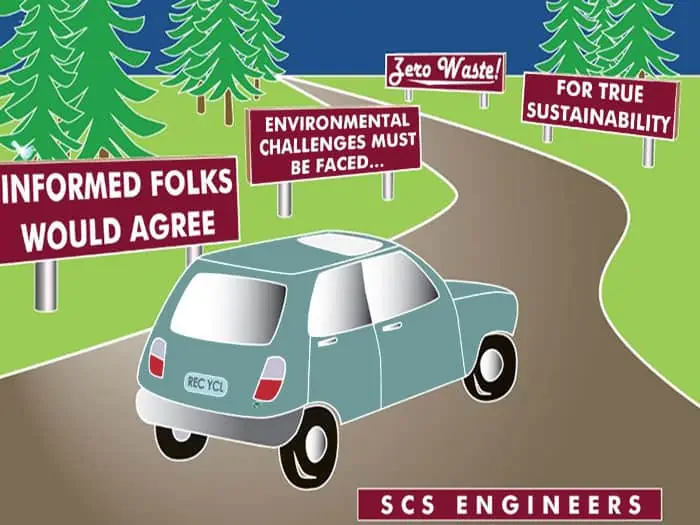
Recycling and reuse started in 1987 and continues today with cities embracing public-private partnerships with their recycling processors. They recognize the vital and interrelated role of both the public and private sectors in recovering recyclables. In the U.S., manufacturing and end-use markets are seeing more demand for recyclable materials. Companies are held accountable for misleading advertising instead of changing packaging or labeling how to recycle clearly.
Through leadership, innovation, and strategic planning, cities continue to help lead the way on recycling to achieve landfill diversion and provide for more environmentally and financially sustainable solid waste management systems for the next 30 years.
Read more from the authors of this up-lifting article, The Journey of Recycling, in the March edition of APWA.
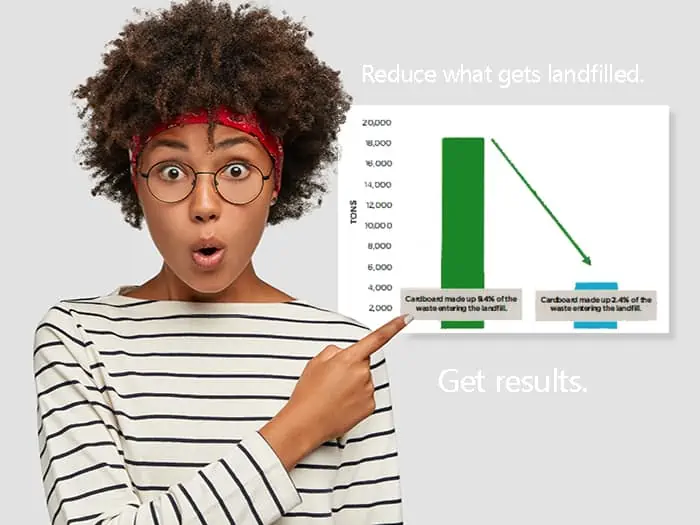
The City of Lincoln’s Transportation and Utilities (LTU) Department/Solid Waste Management Division manages all solid waste generated within its service area to protect the public’s health, safety, welfare, and environment. They do so cost-effectively and in compliance with its solid waste management plan, Solid Waste Plan 2040. The plan, updated in 2020 through a process facilitated by SCS Engineers, produces remarkably good results.
The City undertook a comprehensive residential and commercial recycling communication, education, engagement, and behavior change initiative.
Read more about Lincoln’s success and see results in this APWA article (March 2022 edition).
New Chicago office location at 40 Shuman Boulevard, Suite 216, Naperville, IL 60563
SCS Engineers continues expanding its environmental team in its Chicago, Illinois office to meet environmental engineering and consulting needs focusing on waste management and the needs of the electric utilities. Driving demands are industries and municipalities seeking to reduce their environmental footprint while providing essential services and products.
 Leading the Chicagoland team, Professional Engineer and Professional Geologist Scott Knoepke. Knoepke serves clients needing remediation and site redevelopment. This includes commercial dry cleaners, retail petroleum sites, and heavy industries such as steel, rail, coal, mining, manufacturing, metal cutting, and plating.
Meet the Crew!
 Richard Southorn, PE, PG, with 20 years of experience, joins Knoepke supporting solid waste and electric utility sectors. Southorn began his career in the field performing CQA oversight, environmental monitoring, and soil core/rock core logging at landfill sites. He moved into landfill design and modeling, primarily to support landfill expansion projects. Richard has extensive experience with site layouts, geotechnical stability, stormwater management, and leachate generation analyses.
Brett Miller is a Senior Designer with over 20 years of experience and proficiency in AutoCAD Civil 3D and Maya. Brett is capable of any production drafting and is highly skilled in understanding 3D space. This helps him support designs that fit into site-specific, real-world environments. Brett also creates 3D models and animations that illustrate the benefits of a design to our clients.
Niko Villanueva, PE, joins SCS with eight years of experience. Niko provides engineering and drafting support and is experienced in designing various landfill systems such as stormwater management, leachate and gas control, and foundation analysis. He has also prepared cost estimates and construction bid quantities for various projects and construction quality assurance services at multiple facilities.
 Meet Spencer LaBelle, with six years of experience. Spencer provides solutions for stormwater-related projects, including stormwater management system design, permitting, and compliance. He provides a diverse portfolio of clients and industries with stormwater-related services and environmental compliance.
 Zack Christ, PE, comes to SCS with 15 years of experience in solid waste and CCR landfill sectors. Zack has experience performing CQA oversight and CQA management of landfill final cover, base liner, and GCCS; environmental monitoring; and logging soil borings. He also has extensive landfill design and CAD experience in developing landfill siting and permitting application projects. Zack’s areas of expertise include geotechnical analyses, stormwater management, leachate management design, GCCS design, and cost estimating.
Corporate Headquarters