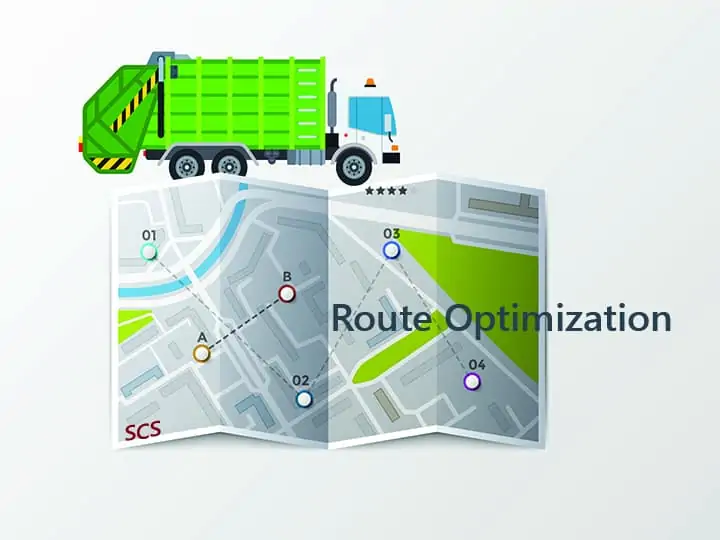
Route Optimization for Waste Collection Finds Surprising Benefits for Even Small Municipalities
Running optimized collection routes is critical for a waste company’s or municipality’s bottom line; it’s also a dauntingly complex job. This is where experts skilled in waste collections route optimization come in. There could be thousands or more ways to get from one service point to the next along a single route; now think about an intricate web of routes traversed by a whole fleet. Then throw in other possible variables, like different route densities, overlapping vs. non-overlapping routes, and holiday and inclement weather schedules. And if you are like one fast-growing Midwestern city, you have plenty more to take on as you work to stay on top of that growth and changes that come with it.
Geographical Information Systems (GIS) help achieve collection route optimization.
One way this Midwest municipality stood up to the challenges is with GIS, which stores, processes, analyzes, and maps spatial data. SCS Engineers’ Emily Smith helped the city leverage the technology to identify and make needed changes, better serve customers, and ultimately save money and time.
“When we came in to help, they had multiple small routes scattered across their service area, which was a problem that became more difficult as the city was growing. Haulers were putting in a lot of overtime to meet deliverables while complying with regulations restricting driving hours. They needed to take more breaks between driving time to stay within those limits, which stretched out their days further,” Smith says.
“Then there’s the wear and tear on tires and the trucks themselves and fuel cost, among issues.”
Working with route optimization consultant Kevin Callen, she used GIS to help restructure and better balance routes.
An ecologist, Smith started using the technology years ago to map out wetlands and for groundwater monitoring. That gave her the knowledge base to figure out how to develop maps to optimize collection routes; these powerful systems are flexible, with broad capabilities and applications.
“I like identifying where there is room for improvement and making visual representations of projects so clients can see the scenario as more than numbers on a page. It tells a story and makes it easier to grasp when they have a visual, color-coded representation,” Smith says.
GIS is useful to map out garbage carts and recycling carts down to an individual customer or street and the number of houses in a neighborhood. It can identify one-way streets or low bridges that larger trucks may need to bypass, among relevant information to plan the most efficient paths. We layer these details and other customizable data to get a comprehensive picture to help design the plan.
Smith began by teasing out information that the city already had. Using surveys created with targeted questions, she could obtain information about specific route challenges (tight alleyways, street parking, confusing setout locations, etc.). The information helped inform potential route modifications.
The outcomes for the Midwest municipality:
Existing waste routes can be modeled in GIS and revised that show impact before and after revisions under consideration. This capability extends beyond fine-tuning residential collection routes. For instance, GIS can do geoprocessing of data to calculate where to put a recycle drop-off center or transfer station that will service a given number of customers.
Additional supports weaved into GIS.
Besides saving labor, travel time, and fuel and vehicle maintenance expenses, routing has more qualitative aspects of gaining efficiencies.
“By talking to collectors with boots on the ground, we find ways to enhance driver safety by identifying problem areas like locations prone to flooding and those with low-hanging tree branches or power lines. Leveraging GIS can also help reduce truck impacts to roads and neighborhoods and reduce emissions. And it can help address customer service issues — for instance, by mapping and taking notes on special backdoor service customers with limited mobility, collectors know to pick up their bins closer to their homes,” says Ryan Duckett, an SCS engineer who leverages GIS to support clients on the East Coast.
For one Texas city, it was a way to systematically and quickly clean up volumes of existing data that had inaccuracies. This was key to later being able to perform an analysis providing intel for route load balancing.
“There were approximately 200 points that needed to be updated to reflect their actual locations. We provided a method to verify and change the information via an online interactive GIS mapping application. They can edit each field, inputting appropriate route information,” says SCS’s Brooke Aumann, who has 14 years working with GIS. The municipality used this same system to review the new routes and provide comments, allowing its staff to be an active collaborative partner in optimizing each route, Aumann says.
Curbside waste collection is hard work. It involves a lot of physical labor, operating heavy equipment, adhering to tight schedules, and sometimes pivoting fast.
“Having this powerful tool that enables us to streamline the process and make collections easier and more efficient is a big plus, especially as we continue to expand and improve other waste and recycling services that depend on, or impact, collections. GIS is a unique opportunity to apply computer technology to come up with practical approaches to real-life problems and realize substantial savings in time and money,” Duckett says.
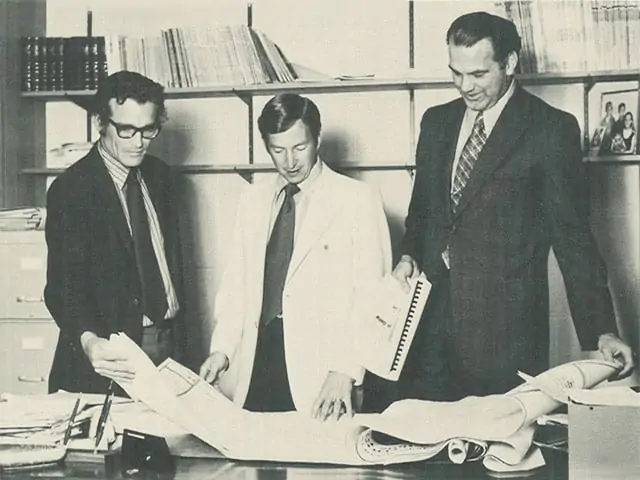
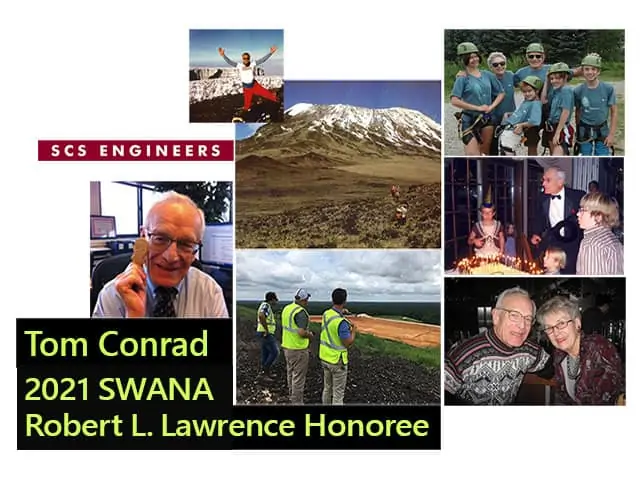
The International Awards Committee and Solid Waste Association of North America (SWANA) Board of Directors unanimously voted to honor Tom Conrad, the “C” in SCS, with the Robert L. Lawrence Distinguished Service Award at WASTECON 2021 in November. The Lawrence award is the highest accolade SWANA bestows on a member of the waste management industry, reserved for those making meaningful and lasting contributions.
“I’m honored and humbled to be selected for the Robert L. Lawrence Award. I thank you and am especially thankful for what SWANA and SCS are today,” stated Tom Conrad.
SWANA recognizes Conrad for over 60 years of significant influence on the waste management and environmental services industry. Conrad, a Founder, Executive Vice President, and Director Emeritus of SCS Engineers, dedicated his career to advancing solid waste management, most notably through the founding of SCS Engineers (Stearns, Conrad, and Schmidt Consulting Engineers) more than 51 years ago.
Tom Conrad worked on a wide range of environmental engineering projects touching almost every aspect of solid waste management throughout his career. As an environmental engineering firm and consultant to the newly created US Environment Protection Agency (EPA), the founders recognized that responsible solid waste management was increasingly important for protecting the environment and the health and safety of the general public.
Leading SCS, he helped the EPA develop the first federal regulations for sanitary landfills, managing and capturing landfill gas, waste sorting protocols, sludge management, and land remediation.
Environmental services, including wastewater management, were always a significant part of SCS services and the waste industry. When new regulatory policies began expanding in the ’80s, SCS’s techniques, technology, and expertise helped a broad range of industries comply with environmental needs and continues today with the firm’s greenhouse gas, landfill technology, renewable energy, remediation, and sustainable materials management programs.
Conrad is also known for hiring and mentoring today’s SCS leaders, many of whom are SWANA leaders, by creating and fostering SCS’s culture encouraging employee participation in industry associations, community, and SCS’s mentorship and leadership programs.
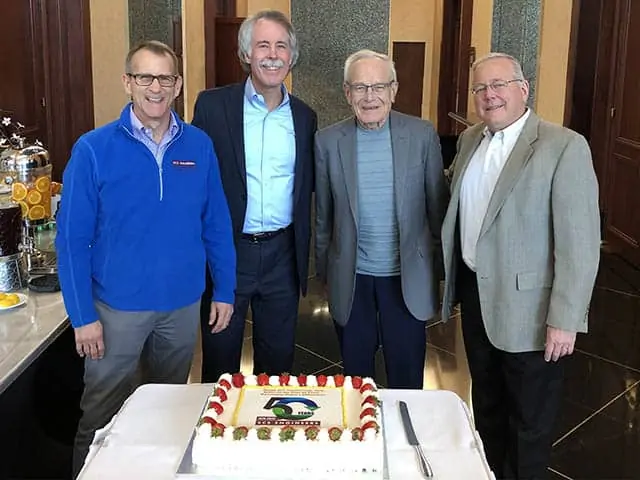
Before his retirement in 2016, Conrad held professional engineering licenses in 24 states. He was a member of SWANA, the American Society of Civil Engineers, the National Waste and Recycling Association, and the Society of American Military Engineers.
He maintains his “work hard – play hard” lifestyle. He is active at SCS, participating in Board of Director meetings and speaking at the Young Professionals Group events and celebrations. While no longer mountain climbing and biking cross-country, he has a vigorous walking, swimming, and biking schedule.

With the frequency and severity of storms on the rise, municipal solid waste landfill operators have to think differently to keep their workers and environment safe. Planning is key to safely hit the ground running in the wake of severe weather.
Federal law does not hold household hazardous waste (HHW) to the same standards as what is classified as hazardous waste (generated by businesses and received at subtitle C landfills). Yet, these materials have the same compounds and are potentially dangerous too.
“Subtitle D landfills routinely receive these wastes, but under normal conditions, it’s in much smaller quantities, and they are typically segregated. So managing them is not a big deal. But, after a storm, operators can be inundated with these oxidizers, corrosives, flammable gases, and flammable solids. It’s all coming in at once and mixed with other storm debris, posing a risk for reactions and workers’ safety,” says Mike Knox, SCS Quality Advisor. He supports landfill operators in safely managing hazardous wastes. Storm season is a busy time for him and his clients. Those unprepared find themselves pulled in multiple directions and need to act quickly and smartly.
If a structure blows down, it may generate waste that contains gallons of dangerous liquid, gas containers, propane tanks, and pesticides mixed in. It’s dangerous, especially if a waste worker does not see it.
Mike’s Planning Advice
Operators set themselves up for success when they’re ready to go with a plan before that first 80-mile-an-hour wind gust hits.
“You must know how to identify hazardous wastes ahead, train staff ahead, and look at worse-case scenarios ahead,” Knox says.
He and his team start by looking at operators’ facilities and identifying materials, workers’ roles, and available equipment and assets. They identify safety areas and set up classrooms. Important are preparing the staging areas to manage the influx, screen, and segregate by waste type.
Then they look at government rules; help operators determine what they need to do; and execute a plan.
Minimizing Risk
Operators need to secure waste, make sure it’s packaged right, and minimize it where possible to stave off mishaps.
The safety of people and equipment is part of a proactive strategy. Trucks can tip over with heavy, wet loads, so do not overload them. Space trucks in the tipping area are at least 10 feet further apart than the dump trailer is long. For a 30-foot trailer, that’s 40 feet.
Setting up this extra space can be difficult unless you’ve established a large tipping area, and don’t take chances with dump trailers; the results have proven deadly in the past, Knox advises.
Check that backup alarms and strobe lights are working. Train equipment operators to look for vehicles and pedestrians. Do not allow cell phones at the working face; a distraction that no one needs. Mandate the use of high-visibility vests and restrict people to stay within five feet of their vehicle. Strictly control scavenging. People cannot wander and pull items from the trash.
Fuel Up
Fuel is the item most often overlooked in Knox’s experience.
“Having enough fuel to operate heavy landfill equipment and hauling fleets is essential to keep waste moving. Severe storms have impacted fuel supplies for several days to a week or more, so stock up,” he recommends. Mike typically arranges for temporary fuel storage tanks so haulers and heavy equipment operators can stay on their mark through and after the storm.
Scenarios in Preparation
Part of safety management is asking “what if” and then answering ahead of a problem. Depending on where ‘what if’ leads, you prioritize and go after the big things first. One big one is, what if floods occur? That question leads to more specifics to plan for, such as roads likely to be impacted and establishing alternate routes available. What other actions will help traffic flow?
Remember: if there’s a lot of rain or clay, trucks can slip going up hills. So alternate tipping areas that are lower and flatter may be needed to accommodate inclement weather access. “And that takes preparation. Sometimes you have to build a road to reroute to an area you are not using. It can take days,” Knox says.
Building wet weather access roads are important, as are measures like cleaning out stormwater ditches. Nevertheless, know that, depending on location, rising water may flood out areas despite these efforts. Pumping water into berms and ponds from flooded ditches can be a temporary solution if your plan and local regulations allow it. Coordinate with regulatory and permit agencies to set up such actions.
You will want to bolster protections of maintenance facilities, the scale house, and other structures that could be damaged or lose power – stock up on tarps, lumber, and power generators.
Many operators find waste screening towers to be especially useful. Knox and his team will build them in advance to prepare for what’s coming. Waste screeners at the gate radio to active face supervisors if hazardous materials are arriving so they can properly place them, ensuring they are covered with dirt before sending staff to the active face.
Knox completes quality evaluations guided by a 200-item checklist to ensure proper procedures are in place. He compliments this list with many questions to prepare.
Know Your Jurisdiction’s Rules and Storm Accommodations
Operators check local permit conditions to take advantage of possible modifications they may make. Some jurisdictions have more lenient weight restrictions for hauling vehicles or the option to set up temporary staging areas.
Knox also suggests coordinating with the local permit and regulatory agencies following the storm to take advantage of emergency relief funds and coordinate across the area’s public and emergency services.
Local government, emergency responders, regulatory and permitting agencies often have Emergency Operations Centers (EOC) to coordinate resources, information, and crisis management. Mayors, County Commissioners, fire departments, hospitals, police, environmental regulatory agencies, and other key industry leaders are typically part of this team.
These groups practice response coordination and stage tabletop exercises or mock disasters. “Take time to participate and plan with the EOC. Check for whatever else may be available in your area to help prepare, and work as a team with these local entities to respond to severe weather or other emergency events,” Knox says.
Circling Back to Planning
“Knowing what to do before the storm hits will make your recovery easier. You will keep your employees, your community, and your site safe. And be ready to go back to normal operations much faster.”
 About the Author: Mike Knox has over 30 years of Ordnance and Hazardous Materials experience. He is a Regional OM&M Compliance Manager with extensive supervisory abilities in hazardous waste emergency response and large-scale clearance operations.
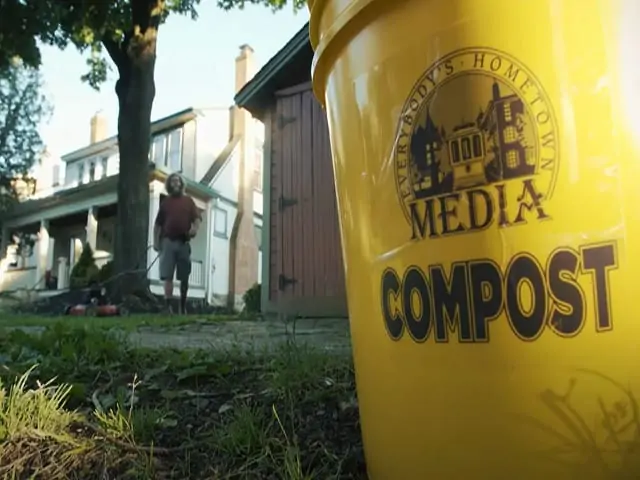
Media Borough, Pennsylvania’s Food Compost Program uses a witty video encouraging participation in its organic waste diversion and composting program. We had to share – not only is it fun – it works!
The Borough launched its pilot program to gauge the feasibility of adding food scrap collection to its current recycling efforts. This month the program is available to all residents. The food scrap collection program provides residents the opportunity to separate food from the rest of their household waste for collection and composting at a local compost farm.
Media Borough estimates it has 70% recycling participation in the community – that’s an impressive number. Its current recycling and yard waste programs divert close to 30% of residential solid waste from landfills and incinerators. Adding a food scrap collection program can reduce residential waste by another 30% and create compost.
The Borough’s Public Works website explains the reasons why organic matter, matters.
Thank you to this Pennsylvania community and its Public Works department for helping to sustain future generations with their reduce, reuse, and recycling actions. We hope by sharing their video and results, we’ll see greater participation in communities nationwide.

Achieving Florida’s 75% Recycling Goal presents unique challenges and opportunities for policymakers and professional staff. Across the country, local governments who had become accustomed to receiving operational cost offsets from their recyclable materials are now paying higher fees to continue their recycling programs. Renewable News covers how Leon County and the city of Tallahassee are managing both through their partnership.
They are uncovering opportunities to improve upon current operations, including but not limited to potential changes to facilities, infrastructure, programs, and partnerships. New opportunities are helping both develop long-term policy strategies and recommendations to continue a financially viable recycling program and meet goals.
Read and share the article here.
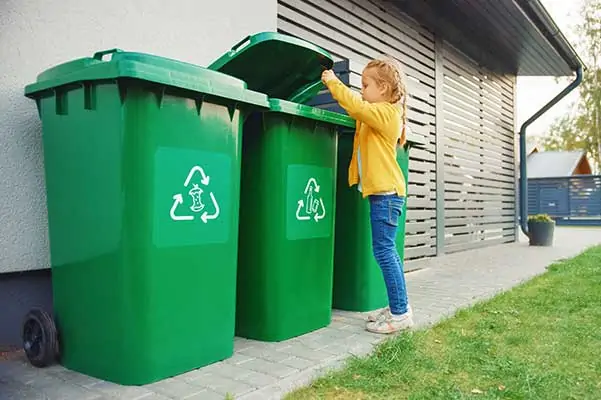
We all enjoy a success story, especially when it comes to reducing contamination in recyclable materials. Congratulations to the city and citizens for their Clean/Green campaign with its many benefits. Bill Bensing, Director of Public Services in Kirkwood, takes us through his journey in this timely APWA Reporter article.
Additional Resources:
As it does nationwide, Florida’s aspirational 75% recycling goal presents unique challenges and opportunities. Specifically, Florida municipal policymakers and professional staff are wrestling with contamination and changing global commodity markets that affect the financial viability of their recycling programs…
The Wisconsin Department of Natural Resources – WDNR is performing a waste sort to determine what’s in the trash going into Wisconsin’s landfills. During the waste audit, the team will collect at least 200 samples of waste from 12 waste disposal sites across the state for eight weeks. It’s a dirty …
Cities have begun to “right-size” their recycling systems by evaluating the usage of community recycling containers and reducing/redistributing containers to maximize the quantity of recyclables each site receives. Communities are evaluating curbside recycling programs to increase efficiency, and decreasing contamination is a priority…
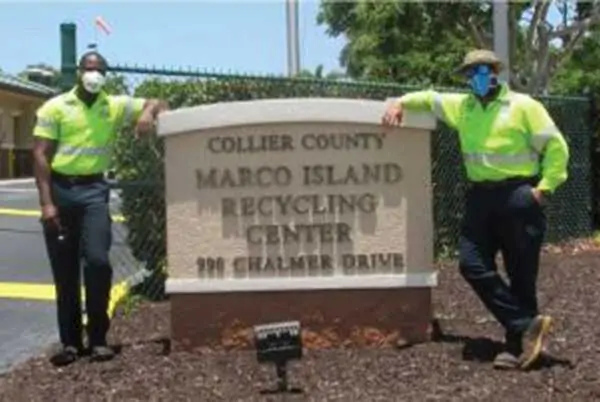
Kari Hodgson, Director of Collier County Solid and Hazardous Waste Management Division, describes the principles and altered practices she implemented to protect staff and the public as these essential services continue. Collier County, Florida, continues its waste management services with zero closures, service disruptions, and zero work-related exposure cases.
We really enjoyed reading Kari’s article. She covers solutions for the industry and operational challenges, recycling, employee safety, cross-training, and benchmarking service impacts.
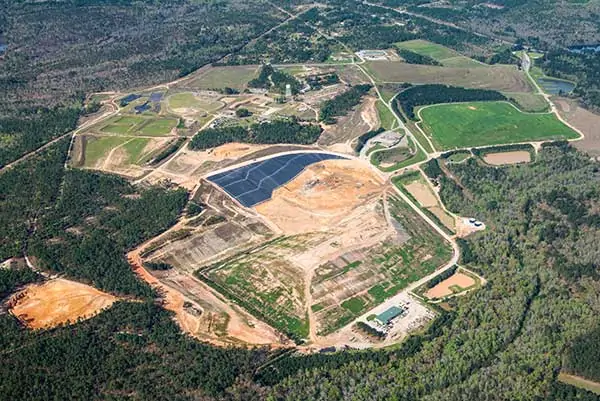
SCS Engineers now provides the Augusta Environmental Services Department with engineering, environmental and testing, and Construction Management & Quality Assurance Services at the Deans Bridge Road Landfill, in Blythe, Georgia. The facility operates under the State of Georgia Environmental Protection Division as a Subtitle D Landfill, accepting up to 1,500 tons per day of waste. Active and closed sections of the landfill comprise approximately 1,177 acres of property. Some additional acreage contains ancillary facilities such as office and maintenance buildings, customer drop off area, sediment ponds, roads, and leachate holding facilities. The Augusta Department of Environmental Services is responsible for the landfill facilities, solid waste management planning for Augusta, and all residential solid waste collections. Additionally, the Department is responsible for the Augusta Brownfield program and other environmental compliance issues.
Landfills are carefully engineered facilities closely regulated and monitored to ensure they have the protections necessary to prevent contamination of groundwater, air, and adjoining land. Best landfill management practices include collecting and treating leachate – the water that passes through a landfill. The methane gas naturally produced from decomposing landfill waste is collected and converted into various forms of energy – including compressed natural gas. This alternative fuel powers Augusta Solid Waste trucks or is a substitute for pipeline natural gas.
The Department consolidated all landfill services assigning them to SCS Engineers, a professional environmental consulting firm with over 50 years of experience in performing landfill site acceptability studies, landfill design services, landfill environmental compliance activities. The firm was already engaged in the Landfill’s Gas Collection and Control System (GCCS) expansion. The consolidation of services provides a more cost-effective approach for permitting, design, operations, monitoring, and maintenance. The comprehensive SCS team is a uniquely qualified and experienced full-service consulting and engineering team with demonstrated relevant field experience in Georgia. Leading the team is Sowmya Bulusu, a Georgia Professional Engineer, with over 12 years of landfill engineering performed in accordance with the Environmental Protection Division (EPD) of the Georgia Department of Natural Resources, the Georgia Solid waste management Act, and other applicable federal, state, and local rules and regulations. As the Project Director, Carlo Lebron is a registered Georgia Professional Engineer for 15 years bringing over 21 years of experience on over one hundred solid waste projects.
“The SCS team brought the five-year permit review submittal package in early, giving Georgia’s Environmental Protection Division plenty of time to deem it administratively complete,” stated Sowmya Bulusu. “Working with our field technicians, we quickly identified and brought at-risk gas wells into compliance, used our drones to provide an aerial survey of the entire landfill, saving Department funds.”
SCS Engineers’ environmental solutions directly result from our experience and dedication to solid waste management and other industries responsible for safeguarding the environment. Click for more information about comprehensive landfill services.

Maura Dougherty is joining SCS’s Southwest Business Unit as a Senior Project Manager in the solid waste engineering practice. Dougherty will execute engineering design, operations support, and construction quality assurance projects. She is responsible for project management, client service, business development, technical leadership, and overseeing professional staff teams. Dougherty reports to Vice President and Southwest Business Unit Director of Engineering, Vidhya Viswanathan, P.E., from SCS’s Pleasanton office.
“Maura is a senior professional with proven extensive success in solid waste engineering, construction, and construction quality assurance solutions,” said Viswanathan. “Her experience managing landfill and landfill gas collection and control system engineering and construction projects strengthen our efforts to support our solid waste and recycling clients.”
Dougherty is a registered Professional Engineer in California, Oregon, Washington, and Hawaii. She brings over 20 years of experience overseeing landfill engineering and construction projects, coordinating with regulatory staff, conducting design and technical reviews, and supporting construction work. Dougherty earned her B.S.E. in civil engineering at the University of Princeton and her M.S. in environmental engineering from U.C. Berkeley.
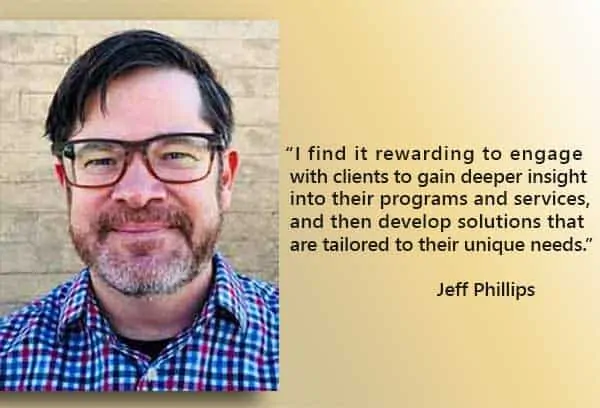
SCS Engineers welcomes Project Manager Jeff Phillips to the Clive, Iowa office. Jeff works with a growing number of solid waste management clients interested in integrating sustainable materials management into their solid waste master plans. The practice is widely known as Integrated Solid Waste Management, ISWM.
Jeff Phillips comes to SCS with over two decades of designing and implementing ISWM programs. His expertise includes a comprehensive list of individual tasks and services, including facilitating strategic planning and consensus-building sessions, performing waste and recycling industry market analyses, developing and presenting comprehensive financial plans to solid waste agencies, identifying, authoring, and managing federal and state grants. He also designs, performs, manages waste characterization analyses, authors and produces videos for training and education purposes, and is involved in community outreach events for solid waste agencies, city councils, and the public.
“Jeff provides innovative approaches to develop and strengthen programs and operations in Iowa,” said Christine Collier, senior project manager. “He fits right into our SCS philosophy of ensuring client success.”
Jeff is an active member of the Solid Waste Association of North America and the Iowa Society of Solid Waste Operations, where he previously served on the Board of Directors and Conference Planning Committee. He earned a Bachelor of Arts, Geography, and Environmental Studies from the University of Iowa.
Corporate Headquarters